
BuddhistCatholicContemplativeEvangelicalGeneral ChristianHinduJewishLatter-day SaintMuslimNew VisionsProgressive Christian
Beliefs
- Buddhist
- Catholic
- Contemplative
- Evangelical
- General Christian
- Hindu
- Jewish
- Latter-day Saint
- More Voices
- Muslim
- New Visions
- Pagan
- Progressive Christian
Topics
- Religion News
- Food and Religion
- Sports and Religion
- Religious Art
- Religious Music and Entertainment
- Religious Events
- History and Religion
- Style and Religion
- Politics and Religion
- Women in Religion
- Recreation Outdoors and Religion
- Business Finance and Religion
- Careers Workplace and Religion
- Education and Religion
- Family Parenting and Religion
- Health Fitness and Religion
- Home and Religion
- Relationships and Religion
- Technology and Religion
- Travel and Religion
Columnists
- Buddhist Columnists
- Business Finance and Religion Columnists
- Careers Workplace and Religion Columnists
- Catholic Columnists
- Contemplative Columnists
- Education and Religion Columnists
- Evangelists Columnists
- Family Parenting and Religion Columnists
- General Christian Columnists
- Health Fitness and Religion Columnists
- Hindu Columnists
- History and Religion Columnists
- Home and Religion Columnists
- Jewish Columnists
- More Voices Columnists
- Latter Day Columnists
- Muslim Columnists
- New Visions Columnists
- Nonreligious Columnists
- Pagan Columnists
- Politics and Religion Columnists
- Progressive Columnists
- Recreation Outdoors and Religion Columnists
- Relationships and Religion Columnists
- Religion News Columnists
- Religious Art Columnists
- Religious Events Columnists
- Religious Music and Entertainment Columnists
- Sports and Religion Columnists
- Style and Religion Columnists
- Technology and Religion Columnists
- Travel and Religion Columnists
- Women in Religion Columnists
Resource Library
- 2026 Calendar
- Library of World Religions
- The 100 Most Holy Places on Earth
- Patheos Answers
- Podcasts
- Videos
- Faith Leaders Database
- Anglican Episcopalian
- Bahai
- Baptist
- Buddhism
- Christianity
- Confucianism
- Eastern Orthodoxy
- Hinduism
- Holiness and Pentecostal
- ISKCON
- Islam
- Judaism
- Lutheran
- Methodist
- The Church of Jesus Christ of Latter-day Saints
- New Age
- Paganism
- Presbytarian and Reformed
- Protestantism
- Religion Behind the Scenes
- Roman Catholic
- Scientology
- Shia Islam
- Sikhism
- Sufism
- Sunni Islam
- Taoism
- Zen
- See all religions
Research Tools
 Ad-Free & Subscriber Log-In Subscription Support
Ad-Free & Subscriber Log-In Subscription Support
Follow Patheos 

- Trending:
- Forgiveness
- |
- Marriage
- |
- Consciousness
- |
- Death Penalty
- |
- Election
- |
- Halloween

- Home
- Evangelical
- I Am Not the King
I Am Not the King
Last updated on: October 26, 2021 at 11:16 am by Frank Viola
I Am Not the King 2021-10-26T11:16:06-04:00 Frank Viola
Patheos Explore the world's faith through different perspectives on religion and spirituality! Patheos has the views of the prevalent religions and spiritualities of the world.
Allen Taylor has written a new book. It’s called I Am Not the King.
I caught up with Allen recently to talk to him about his new book.
Here’s the interview.
Enjoy!
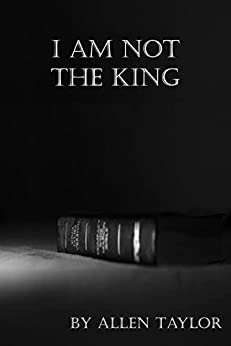
When readers ask “what’s your book about?” they are really wanting to know “how is this book going to solve a problem I have?” How would you answer that question?
For many Christians, knowing what to say to others when witnessing is difficult. They don’t feel comfortable with their knowledge of the Bible, or they don’t have their testimony ready to tell. Maybe they feel hypocritical because they know they still struggle with some sin and don’t feel worthy to share the gospel. They could be afraid of the reaction they’ll receive. Whatever the case, we are called to be witnesses of the power and grace that can only be found in Jesus Christ, but many Christians are not living out that calling due to some of the reasons I just mentioned.
Testimonies make strong witnessing tools because they’re personal stories. We live in a culture that values those types of stories and the world is ripe right now for good faith-based stories. That doesn’t mean the story must be inspirational, uplifting, smarmy, or canned. It just needs to be a good story that shows the power of God’s grace.
At one time, the church shared testimonies. Christians were encouraged to tell each other, and the world, how God has worked in their lives. I Am Not the King is my attempt to take the oral testimony format and make it literary.
A testimony of faith does three things:
- It blesses and encourages other Christians – When we see evidence of God working in other people’s lives, it should encourage us and strengthen us spiritually. That’s what I hope I Am Not the King.
- It provides evidence of God in a way that nonbelievers can easily digest – Rather than preach a sermon, quote Bible verses, or argue philosophy with our non-believing friends, we do them a much better service by sharing how God has worked in our own lives. Personal stories can’t be disputed. Bible facts can. That doesn’t mean we should never quote the Bible or that we can’t use it as a witnessing tool, but personal stories of faith engage people’s imaginations and can touch people where mere facts can’t. I encourage my Christian readers to share my story with their unbelieving friends, particularly if there are common elements between their lives and mine.
- It fulfills the Great Commission – Sharing the gospel message is the church’s foremost mission. There isn’t just one way to do that. Personal testimonies are one way. I share my story with others because I want people to see that coming to faith in Christ does not mean that one becomes perfect overnight. There are struggles, pain points, and many things to unlearn as we walk with the Lord. My story shows a period of growth, along with some spiritual setbacks, which I hope will encourage believers and unbelievers alike so that no one gets the impression that our salvation, redemption, and sanctification are things we can accomplish for ourselves alone. There are many ugly parts to my story, but I Am Not the King ends with the light of Christ and that’s what our witnessing is supposed to show.
I also hope believers and unbelievers alike get the impression that one can believe in Christ without “toeing the party line.” Being a man of ideas, I have spent a lot of time thinking and rethinking precepts that are often taught in church, or that believers have picked up on from the culture and each other, and I Am Not the King illustrates that one can have faith in Christ without following the herd. For example, being an evangelical doesn’t mean one must be a Donald Trump fan or a card-carrying Republican, nor does it mean that one must support every progressive initiative that claims to be in the spirit of the gospel. My story illustrates that God has created us to be individuals without necessitating that we succumb to individualism.
There are countless books on the subject you’ve written on, what is unique about your book? How is it different from all the others?
My book is a personal story of having grown up in a dysfunctional family with a temperamental father. Being the only son and oldest child, I internalized a lot of his rage and entered adulthood angry, broken, and confused. That may not be a unique story, but the first sentence of Leo Tolstoy’s Anna Karenina reads, “Happy families are all alike; every unhappy family is unhappy in its own way.” Someone, probably a psychologist, paraphrased it as, “Healthy families are all alike, but every dysfunctional family is dysfunctional in its own way.” Having grown up in a religiously dysfunctional family, I can attest to that.
I Am Not the King is told in three parts with a Prologue and a concluding section titled Reflections.
- Part I covers the period of my childhood. It describes what life was like growing up in a Holiness-Pentecostal fugue with a verbally abusive father and sets the stage for the rest of the story.
- Part 2 covers my young adult years: leaving home, the military, college, my self-aggrandizing bisexualism anti-family sentiments, and the angry young man I had become.This period can best be characterized as a search for meaning in all the wrong places and I dabbled in philosophy, occultism, New Ageism, esotericism, and whatever I could find outside of God until an atheist college professor challenged me to think more deeply about spiritual matters.
- Part 3 covers my life as a Christian and the many struggles I’ve encountered on my way to maturity, including struggles with Christian brothers and sisters, church leadership, job dissatisfactions, and Body of Christ issues.
My story is different than other books of this nature because it is my story. However, I’m not the protagonist. Rather, more of a supporting character.
I call it a “testimony” because a memoir is, by definition, a reflection of a person’s memories during a certain period of their lives. That’s not really what it is. And it’s not a biography because it leaves out a lot of the mundane details one would expect to see in a biography. I wrote I Am Not the King to be a testimony to how God has worked in my life. Therefore, Jesus is the main character, but you often see Him working in the background.
There is another way that the book is different. At the end of each section, there are some discussion questions. I include these because I hope the book will be used by small groups, book groups, home churches, traditional churches, pastors, evangelists, and mature Christians as way to discuss matters of faith and where the cross intersects with our modern lives. In a world where unbelief runs rampant, often between church walls, there is a dire need for transparency and authenticity. I hope the discussion questions allow people to have frank discussions with their friends, believers and unbelievers alike, about the nature of sin, God’s grace, and our need for Jesus. I’ve essentially made my life an open book (pardon the pun).
What provoked you to write the book? Give us a story behind the decision to take the time and effort to produce this book (which is no small task).
I’ve spent my entire life writing about everything other than me. Getting personal was the last thing I wanted to do. I’ve written poetry and fiction (with publications and awards), I’ve worked as a journalist and a newspaper editor (with several accolades of which I’m very proud), and I’ve spent the last 16 years making a living writing business content as a freelancer. About every 10 to 15 years, I reflect on the last stage of my life and think forward to where I want to go next. I Am Not the King is a transitional work for me in several ways.
First, it takes my writing in a new direction. More broadly, I’m working toward becoming a full-time author. More concisely, I’m working toward making a full-time living from my writing without chasing client work. I Am Not the King represents my first real effort at doing that through the non-fiction medium.I have another book, on a non-spiritual topic, due to be published by a small business press in March 2022.
Secondly, the Lord laid it on my heart to reveal parts of me that I’ve never revealed to anyone before. It’s not a confessional, but I’ve had to search my heart and exhume some deeply buried mummies. For me, the best way to organize my thoughts is to write them down.
Finally, I Am Not the King is a response to some letters I received from my mother. She feels like she didn’t do a good job of teaching her children and grandchildren how to be a good Christian. She sent my sisters and me, and my nieces and nephews, some letters to teach us, I guess, what she feels like she failed to teach us when we were children. In Mom’s own soft-hearted way, they come across preach-y, and I don’t agree with all her theological leanings. I felt the need to respond, so I sat down to write a letter of my own. It turned out to be rather long, but it didn’t have the right tone. So, I let it sit for a year and rewrote it.
In the rewriting, I realized that I was writing my testimony. To my mother! But instead of sending it to her, I decided to publish it as a book. Before doing so, however, as a courtesy, I sent a copy to my parents and to my sisters and said, “I’m going to publish this and thought you might want to know what’s in it before someone blindsides you with questions.” They’ve all been very supportive.
As a writer, I’ve done a lot of work in private — using my imagination, researching subjects and writing about them, and doing my best to craft the perfect sentence. Much of that was because I was trying to hide from the truth of my life. I was running from my heritage. In a way, I was attempting to erase a part of who I am.
Writing was as much a crutch as it was a passion (and one could say the two went hand in hand). Therefore, I Am Not the King serves, in part, as an account for my life. Ultimately, I’m accountable to God, but I don’t believe in “it’s just between God and me,” a Christian ethos that has become popular in recent years. We are all accountable to each other, and that’s a big part of the reason why I felt the need to share my testimony. I didn’t do it to make God happy, to impress anyone, or to atone for my sins. I did it to express my faith in Christ through a mode of communication that I’m familiar with and that I’ve spent so much of my time operating in.
That said, I believe the book market has room for personal testimonies. People talk about spiritual memoirs, but that’s a vague term that doesn’t carry a Christian mark (though it has been adopted by Christians from various corners of the kingdom). I wanted to put the emphasis on Christ, who is all in all, and to show how my faith has resulted in strides of personal growth, but I wanted to do it in a literary way.
Give us 3 points that you make in the book that would give readers a preview of it. Think of those 3 points as your movie trailer that will motivate people reading this interview to get the book.
The “points” are really impressions, or illustrations. I don’t just tell people what to think. I hope, in I Am Not the King, I have shown readers parts of me and parts of God that allow them to arrive at the proper conclusions. Here are three primary illustrations I want readers to see:
- God reaches us through unexpected ways (and in unexpected places) – In Numbers 22, God spoke through a donkey. He spoke to Moses through a burning bush. Scripture is full of strange things and strange ways that God speaks to people. He spoke to me through an atheist college professor, a scene which I describe in I Am Not the King. When I tell people that an atheist college professor made me want to believe in Jesus, their jaws drop. With God, you must expect the unexpected.
- Forgiveness cannot be earned – My greatest sin (and I’m guilty of many) has been the sin of unforgiveness. I walked with a heavy heart toward my father for many years. In the end, it hurt only me. When I finally found the grace to forgive my father, despite his never asking for forgiveness, I felt a heavy weight lifted off my shoulders. I hope readers can see that change in me through the telling.
- Faith in Christ does not lead to immediate moral perfection – Someone said my story is full of dark moments. That is true. And I have not always kept my head above the water, but we see examples in scripture of great men of God who were far from perfect. David, king of Israel, was a murderer and adulterer yet he is described as a “man after God’s own heart.” (Acts 13:22) The Apostle Peter was a man of weak character, but he is hailed as a hero of the faith and was martyred for the sake of the kingdom. I am nothing like David or Peter but coming to faith in Christ did not result in me forsaking all sin immediately (though one could argue that it should have). I’ve struggled, I’ve failed, but I’ve continued to believe. Eventually, God granted me the grace to overcome certain temptations. He’s also given me the gift of a wife to humble me. As Christians,our righteousness is not our own. We wear a cloak of righteousness that is Christ so that we do not have to rely on our own. I hope others find that encouraging about my story.
For me, writing is not just a way to convey information. It’s a way to explore life’s intricacies in a way that connects with others on a deeper emotional level. I Am Not the King is a story that I hope does that well in the tradition of other great stories.
What have been the biggest objections you’ve had to the book so far? And how do you respond to them?
One thing I’ve heard, which isn’t so much a rejection, is that I wrote it as a means of self-healing. That isn’t correct. Jesus has healed me of all the wounds from which I need healing. I do not need to, nor can I, heal myself of anything spiritually. Christ did all that needs to be done on the cross. I Am Not the King is my way of showing the world that faith is not a recipe or a set of step-by-step instructions to be followed. It’s a personal relationship with a personal savior and it deserves a personal explanation.
Another thing that I’ve heard is that I provide too many details about certain things. I understand that some people may not be comfortable with the level of detail that I’ve written, but there is a reason why I’ve included the details that I have.
I have not used real names for many people in my past because their implication in my sins isn’t necessary. They deserve to have their privacy protected and I see no reason to reveal intimate details about their choices. I took certain liberties with my own choices because the point to telling a story is to illustrate something meaningful. The details I’ve included illustrate the kind of person I was before my second birth and the person Christ has made me since.
That could not be illustrated without certain details being disclosed, but I do my best to tell them in a way that is palatable. I chose specific events in my life that would illustrate who I was before Christ raised me to new life so that the young Allen Taylor could be contrasted to the man I would later become because of God’s grace. If I have failed in that endeavor, then I pray that God can use my testimony despite my failures.
How can readers get the book?
The book launches on October 24. I Am Not the King is available on Amazon. The Kindle version is 99 cents until the end of October. It will soon be available at Barnes & Noble, Kobo, Apple, and through other major distribution channels.
Readers can also get a preview by downloading an excerpt for free and joining my mailing list.
Readers can learn more about me and future books on my website.
—
Are you an author? Would you like receive a full-length interview on your book on this blog?
If so, check out the SCRIBE online training for authors. Everyone who goes through the training receives a free interview right here on Patheos.
SCRIBE opens twice a year for registration (the entire training is online, so you don’t have to leave your home). Join the wait list if registration isn’t open and you will be notified. Go to AttendScribe.com
Previous Post

October 21, 2021
Interpreting the Parables
Next Post
October 26, 2021 Thomas Nelson NKJV Abide Bible Review
Browse Our Archives
Select a Category Uncategorized
Select a Month October 2026 September 2026 August 2026 July 2026 June 2026 May 2026 April 2026 March 2026 February 2026 January 2026 December 2025 November 2025 October 2025 September 2025 August 2025 July 2025 June 2025 May 2025 April 2025 March 2025 February 2025 January 2025 December 2024 November 2024 October 2024 September 2024 August 2024 July 2024 June 2024 May 2024 April 2024 March 2024 February 2024 January 2024 December 2023 November 2023 October 2023 September 2023 August 2023 July 2023 June 2023 May 2023 April 2023 March 2023 February 2023 January 2023 December 2022 November 2022 October 2022 September 2022 August 2022 July 2022 June 2022 May 2022 April 2022 March 2022 February 2022 January 2022 December 2021 November 2021 October 2021 September 2021 August 2021 July 2021 June 2021 May 2021 April 2021 March 2021 February 2021 January 2021 December 2020 November 2020 October 2020 September 2020 August 2020 July 2020 June 2020 May 2020 April 2020 March 2020 February 2020 January 2020 December 2019 November 2019 October 2019 September 2019 August 2019 July 2019 June 2019 May 2019 April 2019 March 2019 February 2019 January 2019 December 2018 November 2018 October 2018 September 2018 August 2018 July 2018 June 2018 May 2018 April 2018 March 2018 February 2018 January 2018 December 2017 November 2017 October 2017 September 2017 August 2017 July 2017 June 2017 May 2017 April 2017 March 2017 February 2017 January 2017 December 2016 November 2016 October 2016 September 2016 August 2016 July 2016 June 2016 May 2016 April 2016 March 2016 February 2016 January 2016 December 2015 November 2015 October 2015 September 2015 August 2015 July 2015 June 2015 May 2015 April 2015 March 2015 February 2015 January 2015 December 2014 November 2014 October 2014 September 2014 August 2014 July 2014 June 2014 May 2014 April 2014 March 2014 February 2014 January 2014 December 2013 November 2013 October 2013 September 2013 August 2013 July 2013 June 2013 May 2013 April 2013 March 2013 February 2013 January 2013 December 2012 November 2012 October 2012
TAKE THE
Religious Wisdom Quiz
Who wrote many of the Psalms?
Select your answer to see how you score.
Paul David Solomon Moses
Related posts from The Deeper Journey

Emotion in Early Christianity by Andrew Crislip

Letters on Living the Faith by C.S. Lewis


TRENDING AT PATHEOS Evangelical
Emotion in Early Christianity by Andrew Crislip
Andrew Crislip’s Emotion in Early Christianity examines an often overlooked dimension of...

16 Spiritual Touchstones for a More Grounded Life
After decades of spiritual study, here are 16 principles I try...

Catholic Evangelization: Sharing Your Faith Every Day
Welcome back to the Graceful Awakening mini-series called, “From Faith to Mission.” ...

The Pillar of the Boatmen: the Ancient Monument...
The Pillar of the Boatmen is a Romano-Gaulish sculpture that dates from...

In one sense walking into Westminster Abbey is like walking down the...

'Super Scam Me' Exposes AI Jon Bon Jovi...
Leslie Pickett believed she was in a relationship with Jon Bon Jovi....
view all Evangelical blogs
Ad-Free & Subscriber Log-In Subscription Support
- About Us
- 2026 Calendar
- Videos
- Podcasts
- Library of World Religions
- Faith In Media Tracker
- Advertise With Us
- Write for Us
- Privacy Policy
- Terms of Service
- Do Not Sell My Data
- Contact Us
- Radiant Digital
- Manage Newsletter Subscriptions
- Unsubscribe From Notifications
- Sitemap
Copyright 2008-2026, Patheos. All rights reserved.
Subscription Support Ad-Free & Subscriber Log-In
Follow Patheos