
BuddhistCatholicContemplativeEvangelicalGeneral ChristianHinduJewishLatter-day SaintMuslimNew VisionsProgressive Christian
Beliefs
- Buddhist
- Catholic
- Contemplative
- Evangelical
- General Christian
- Hindu
- Jewish
- Latter-day Saint
- More Voices
- Muslim
- New Visions
- Pagan
- Progressive Christian
Topics
- Religion News
- Food and Religion
- Sports and Religion
- Religious Art
- Religious Music and Entertainment
- Religious Events
- History and Religion
- Style and Religion
- Politics and Religion
- Women in Religion
- Recreation Outdoors and Religion
- Business Finance and Religion
- Careers Workplace and Religion
- Education and Religion
- Family Parenting and Religion
- Health Fitness and Religion
- Home and Religion
- Relationships and Religion
- Technology and Religion
- Travel and Religion
Columnists
- Buddhist Columnists
- Business Finance and Religion Columnists
- Careers Workplace and Religion Columnists
- Catholic Columnists
- Contemplative Columnists
- Education and Religion Columnists
- Evangelists Columnists
- Family Parenting and Religion Columnists
- General Christian Columnists
- Health Fitness and Religion Columnists
- Hindu Columnists
- History and Religion Columnists
- Home and Religion Columnists
- Jewish Columnists
- More Voices Columnists
- Latter Day Columnists
- Muslim Columnists
- New Visions Columnists
- Nonreligious Columnists
- Pagan Columnists
- Politics and Religion Columnists
- Progressive Columnists
- Recreation Outdoors and Religion Columnists
- Relationships and Religion Columnists
- Religion News Columnists
- Religious Art Columnists
- Religious Events Columnists
- Religious Music and Entertainment Columnists
- Sports and Religion Columnists
- Style and Religion Columnists
- Technology and Religion Columnists
- Travel and Religion Columnists
- Women in Religion Columnists
Resource Library
- 2026 Calendar
- Library of World Religions
- The 100 Most Holy Places on Earth
- Patheos Answers
- Podcasts
- Videos
- Faith Leaders Database
- Anglican Episcopalian
- Bahai
- Baptist
- Buddhism
- Christianity
- Confucianism
- Eastern Orthodoxy
- Hinduism
- Holiness and Pentecostal
- ISKCON
- Islam
- Judaism
- Lutheran
- Methodist
- The Church of Jesus Christ of Latter-day Saints
- New Age
- Paganism
- Presbytarian and Reformed
- Protestantism
- Religion Behind the Scenes
- Roman Catholic
- Scientology
- Shia Islam
- Sikhism
- Sufism
- Sunni Islam
- Taoism
- Zen
- See all religions
Research Tools
 Ad-Free & Subscriber Log-In Subscription Support
Ad-Free & Subscriber Log-In Subscription Support
Follow Patheos 

- Trending:
- Forgiveness
- |
- Marriage
- |
- Consciousness
- |
- Death Penalty
- |
- Election
- |
- Halloween

- Home
- Evangelical
- Reimagining John’s Relationship to the Synoptics
Reimagining John’s Relationship to the Synoptics
Last updated on: November 10, 2025 at 11:33 am by Frank Viola
Reimagining John’s Relationship to the Synoptics 2025-11-10T11:33:03-04:00 Frank Viola
Patheos Explore the world's faith through different perspectives on religion and spirituality! Patheos has the views of the prevalent religions and spiritualities of the world.
The Fourth Synoptic Gospel by Mark Goodacre challenges a longstanding consensus in New Testament scholarship by arguing that the Gospel of John was not composed independently of Matthew, Mark, and Luke, but rather demonstrates literary dependence upon them. This provocative thesis upends generations of scholarly assumptions about John’s origins and invites a fundamental reconsideration of how the Fourth Gospel relates to its canonical counterparts.
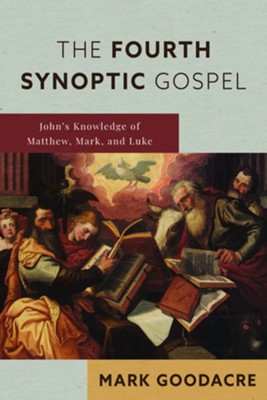
Goodacre’s central argument directly confronts the dominant view that John represents an independent tradition about Jesus, developed separately from the Synoptic stream. Instead, he marshals extensive evidence suggesting John’s author knew and utilized the earlier gospels, particularly Mark, while crafting a distinctive theological narrative. This position, while minority, gains increasing traction as Goodacre systematically demonstrates parallels, shared vocabulary, and narrative overlaps that seem difficult to attribute to coincidence or oral tradition alone.
The book’s methodology is meticulous. Goodacre employs detailed literary analysis, comparing Johannine passages with Synoptic counterparts to identify not just thematic similarities but specific linguistic markers suggesting direct knowledge. He examines shared geographical details, parallel story sequences, and coinciding theological emphases that collectively point toward literary relationship rather than independent development. His treatment of episodes appearing in both traditions—such as the feeding of the five thousand, Jesus’s walking on water, and the anointing at Bethany—reveals subtle connections often overlooked by scholars committed to Johannine independence.
Particularly compelling is Goodacre’s discussion of how John both depends upon and transforms Synoptic material. He shows John’s author engaging in sophisticated rewriting, preserving core narrative elements while elevating christological claims, adding theological commentary, and reshaping chronology for rhetorical effect. This creative engagement with sources, Goodacre argues, mirrors ancient literary practices where authors routinely reworked earlier texts rather than simply reproducing them. Understanding John as “synoptic-aware” thus illuminates interpretive choices that seem puzzling when John is read as entirely independent.
The implications extend beyond source criticism to affect interpretation. If John knew the Synoptics, differences between accounts reflect deliberate authorial decisions rather than alternative traditions. John’s placement of the temple cleansing early in Jesus’s ministry, for instance, becomes a conscious theological repositioning rather than chronological confusion. His omission of certain beloved Synoptic material gains significance as purposeful selection rather than ignorance.
Where Goodacre’s argument faces challenges is in explaining why, if John knew the Synoptics, so much beloved material is absent—no parables, no exorcisms, no Sermon on the Mount. Goodacre addresses this by emphasizing authorial purpose and theological agenda, but some readers may find the selective borrowing he proposes difficult to reconcile with comprehensive Synoptic knowledge. Additionally, the complexity of some literary relationships he traces might strain credulity, appearing occasionally to find connections where simpler explanations suffice.
The book assumes substantial familiarity with Gospel texts and scholarly debates, making it primarily suitable for seminary students, biblical scholars, and serious lay readers. Goodacre writes clearly, but the detailed textual comparisons and engagement with technical scholarship require focused attention and background knowledge.
The Fourth Synoptic Gospel represents a significant contribution to Johannine studies, forcing scholars to reconsider comfortable assumptions about Gospel origins. Whether or not readers ultimately accept Goodacre’s thesis, his work demonstrates the value of questioning consensus views and examining familiar texts with fresh eyes. He models rigorous scholarship that respects tradition while pursuing truth through evidence.
For those interested in how the Gospels were composed, how early Christian communities shaped Jesus traditions, and how literary relationships affect interpretation, Goodacre’s study proves essential reading. It exemplifies how sustained attention to textual details can yield new insights into ancient documents, challenging us to read with greater sophistication and historical awareness.
Previous Post

November 7, 2025
Scholarly Depth Meets Pastoral Sensitivity
Next Post
November 10, 2025 Defending Historical Christianity
Recent Comments
"I get, the more I see that every attempt to debunk it leaves the Shroud ..."
Interview with Leonard Sweet – More ..."
"You're referring to the way things happen in the Industrial Religious Complex. I'm speaking about ..."
"Another insight is that young people want to start their own ministry and are not ..."
"You’re challenging the usual narratives and pointing us toward deeper, more nuanced perspectives. This is ..."
The Origins of Human Government and ..."
Browse Our Archives
Select a Category Uncategorized
Select a Month October 2026 September 2026 August 2026 July 2026 June 2026 May 2026 April 2026 March 2026 February 2026 January 2026 December 2025 November 2025 October 2025 September 2025 August 2025 July 2025 June 2025 May 2025 April 2025 March 2025 February 2025 January 2025 December 2024 November 2024 October 2024 September 2024 August 2024 July 2024 June 2024 May 2024 April 2024 March 2024 February 2024 January 2024 December 2023 November 2023 October 2023 September 2023 August 2023 July 2023 June 2023 May 2023 April 2023 March 2023 February 2023 January 2023 December 2022 November 2022 October 2022 September 2022 August 2022 July 2022 June 2022 May 2022 April 2022 March 2022 February 2022 January 2022 December 2021 November 2021 October 2021 September 2021 August 2021 July 2021 June 2021 May 2021 April 2021 March 2021 February 2021 January 2021 December 2020 November 2020 October 2020 September 2020 August 2020 July 2020 June 2020 May 2020 April 2020 March 2020 February 2020 January 2020 December 2019 November 2019 October 2019 September 2019 August 2019 July 2019 June 2019 May 2019 April 2019 March 2019 February 2019 January 2019 December 2018 November 2018 October 2018 September 2018 August 2018 July 2018 June 2018 May 2018 April 2018 March 2018 February 2018 January 2018 December 2017 November 2017 October 2017 September 2017 August 2017 July 2017 June 2017 May 2017 April 2017 March 2017 February 2017 January 2017 December 2016 November 2016 October 2016 September 2016 August 2016 July 2016 June 2016 May 2016 April 2016 March 2016 February 2016 January 2016 December 2015 November 2015 October 2015 September 2015 August 2015 July 2015 June 2015 May 2015 April 2015 March 2015 February 2015 January 2015 December 2014 November 2014 October 2014 September 2014 August 2014 July 2014 June 2014 May 2014 April 2014 March 2014 February 2014 January 2014 December 2013 November 2013 October 2013 September 2013 August 2013 July 2013 June 2013 May 2013 April 2013 March 2013 February 2013 January 2013 December 2012 November 2012 October 2012
TAKE THE
Religious Wisdom Quiz
What structure did people build to try to reach heaven?
Select your answer to see how you score.
Temple of Solomon Altar of Baal Tower of Babel Ark
Related posts from The Deeper Journey


What Was Jesus’ Central Message?

Can Genuine Christians Learn From the Pagans?
Deconversion From Christianity
TRENDING AT PATHEOS Evangelical

In "Irreplaceable," our book on vocation and technology, Trevor Sutton and I...

I was strolling through the top floor of the brand new Parthenon...

What Does Gêvâh Mean For Kimberley Guifoyle &...
This week, a lot of the news is focused on Kimberly Guilfoyle....

INNER CIRCLE: Profound Mystery (Of Christ In All...
Ephesians 5:31-32 “For this reason, a man will leave his father and...

Do Not Rejoice When Your Enemy Falls: The...
Turning an execution into a public spectacle is a disturbing expression of...

'The Chosen' S6 Trailer: The Passion Gets Very...
Not many watching 'The Chosen' worry about spoilers, but just because they...
view all Evangelical blogs
What Are Your Thoughts?leave a comment
Ad-Free & Subscriber Log-In Subscription Support
- About Us
- 2026 Calendar
- Videos
- Podcasts
- Library of World Religions
- Faith In Media Tracker
- Advertise With Us
- Write for Us
- Privacy Policy
- Terms of Service
- Do Not Sell My Data
- Contact Us
- Radiant Digital
- Manage Newsletter Subscriptions
- Unsubscribe From Notifications
- Sitemap
Copyright 2008-2026, Patheos. All rights reserved.
Subscription Support Ad-Free & Subscriber Log-In
Follow Patheos