
BuddhistCatholicContemplativeEvangelicalGeneral ChristianHinduJewishLatter-day SaintMuslimNew VisionsProgressive Christian
Beliefs
- Buddhist
- Catholic
- Contemplative
- Evangelical
- General Christian
- Hindu
- Jewish
- Latter-day Saint
- More Voices
- Muslim
- New Visions
- Pagan
- Progressive Christian
Topics
- Religion News
- Food and Religion
- Sports and Religion
- Religious Art
- Religious Music and Entertainment
- Religious Events
- History and Religion
- Style and Religion
- Politics and Religion
- Women in Religion
- Recreation Outdoors and Religion
- Business Finance and Religion
- Careers Workplace and Religion
- Education and Religion
- Family Parenting and Religion
- Health Fitness and Religion
- Home and Religion
- Relationships and Religion
- Technology and Religion
- Travel and Religion
Columnists
- Buddhist Columnists
- Business Finance and Religion Columnists
- Careers Workplace and Religion Columnists
- Catholic Columnists
- Contemplative Columnists
- Education and Religion Columnists
- Evangelists Columnists
- Family Parenting and Religion Columnists
- General Christian Columnists
- Health Fitness and Religion Columnists
- Hindu Columnists
- History and Religion Columnists
- Home and Religion Columnists
- Jewish Columnists
- More Voices Columnists
- Latter Day Columnists
- Muslim Columnists
- New Visions Columnists
- Nonreligious Columnists
- Pagan Columnists
- Politics and Religion Columnists
- Progressive Columnists
- Recreation Outdoors and Religion Columnists
- Relationships and Religion Columnists
- Religion News Columnists
- Religious Art Columnists
- Religious Events Columnists
- Religious Music and Entertainment Columnists
- Sports and Religion Columnists
- Style and Religion Columnists
- Technology and Religion Columnists
- Travel and Religion Columnists
- Women in Religion Columnists
Resource Library
- 2026 Calendar
- Library of World Religions
- The 100 Most Holy Places on Earth
- Patheos Answers
- Podcasts
- Videos
- Faith Leaders Database
- Anglican Episcopalian
- Bahai
- Baptist
- Buddhism
- Christianity
- Confucianism
- Eastern Orthodoxy
- Hinduism
- Holiness and Pentecostal
- ISKCON
- Islam
- Judaism
- Lutheran
- Methodist
- The Church of Jesus Christ of Latter-day Saints
- New Age
- Paganism
- Presbytarian and Reformed
- Protestantism
- Religion Behind the Scenes
- Roman Catholic
- Scientology
- Shia Islam
- Sikhism
- Sufism
- Sunni Islam
- Taoism
- Zen
- See all religions
Research Tools
 Ad-Free & Subscriber Log-In Subscription Support
Ad-Free & Subscriber Log-In Subscription Support
Follow Patheos 

- Trending:
- Forgiveness
- |
- Marriage
- |
- Consciousness
- |
- Death Penalty
- |
- Election
- |
- Halloween

- Home
- Evangelical
- A Week in the Life of a Roman Centurion
A Week in the Life of a Roman Centurion
Last updated on: July 27, 2022 at 7:33 am by Frank Viola
A Week in the Life of a Roman Centurion 2022-07-27T07:33:57-04:00 Frank Viola
Patheos Explore the world's faith through different perspectives on religion and spirituality! Patheos has the views of the prevalent religions and spiritualities of the world.
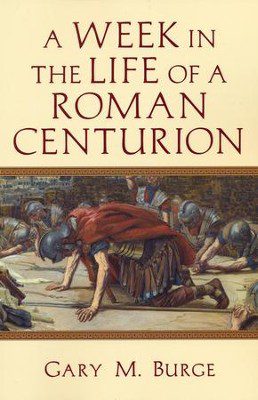
Gary Burge has written an intriguing piece of narrative exegesis. The book is called A Week in the Life of a Roman Centurion.
I caught up with Gary to interview him on the book.
Enjoy!
How long did it take you to write this book?
This project took about a year. But I did not work on it continuously. As a teaching professor, you have to fit in these projects on the side. But unlike other texts, it was more challenging because it required so much imagination and creativity – something that all scholars don’t specialize in!
List 3 “aha” moments that shed light on the New Testament as you did your research.
The book required me to understand through research the structure and presence of the Roman military in the E. Mediterranean. And that was fascinating. It dawned on me that most of the events in the New Testament, even in the gospels, likely happened in the shadow of that military.
Some scholars say a centurion soldier was in charge of roughly 80 men (opposed to the traditional 100). In your book you have 80 to 100 men. Which is correct?
There is no real consensus on this. And this is likely because these units could be built as needed. If they were a part of legion, the entire military organization could become enormous (with cavalry, artillery, archers, etc.) or be a maintenance unit. We like to impose strict numbers on these things and it isn’t necessary. Ask anyone in the US army how many people are in a battalion: in the US it can be a few hundred personnel or one thousand.
On pages 143-145, you describe a meal eaten at dusk. But didn’t the first century people eat their meals during the siesta in the afternoon?
The idea of a major meal eaten during the day was widespread among Jews and Romans. And in the climate of the Middle East, this was likely joined to a rest during the heat of the summer. But evening meals were common too. The remarkable thing to me is the calorie prediction we think we have for these societies. Add physical labor to a low-calorie diet and you can imagine that few were over-weight. Food was precious and for the poor, treasured.
On these pages, you also describe a meal being eaten at a low table in the courtyard of a house placing cushions around the table. The food presented was fresh bread, fruit, olives, and fish stew. Cold water that filled bowls were passed around for washing. Red wine was drunk from carved stoned cups.
Are you describing a Jewish meal or a Gentile meal here?
It could be either. The idea of a reclining meal was widespread around the Roman empire. At Pompeii we have excellent examples of the triclinium (a three-sided table) where innovations made reclining more comfortable. But the Jews adopted this type of setup during the Hellenistic era. The notion of having shared bowls, eating with hands/bread, and reclining is still in the Middle East. I’ve done it many times with Arab families.
To your knowledge, were circumcisions always done in the synagogues by someone who knew how to do them? I’m trying to reconstruct the story of how Paul *likely had Timothy circumcised. Did he do it himself in a home or did he take him to the synagogue to have a rabbi do it (in which case, the local community would know for sure he was circumcised, ANOTHER question I’ve had. How did the Jews know for sure that Timothy was circumcised? Surely, they wouldn’t ask to verify.*
We know that they were done, but the location is a different matter. I suspect that it was done in a home or in a gathering space (synagogue). Apparently it was originally the job of the father to do this. But this evolved into someone who was more skilled (which fully understand!). I’d suspect that anyone with theological training (Paul) could do it himself. But in all of this we are speculating.
When Timothy is said to be “uncircumcised” this is just culture code. This means: he is a Hellenist rather than a Jew. His diet, his clothes, his demeanor around Jewish things all gave him away. Jews just used “uncircumcised” as a code term for the gentiles (see Rom 2).
Can you give us some examples of how your book has shed light on the New Testament story?
What we often miss is that these stories are embedded in culture. We cannot lift a gospel story out of its original setting and think we can understand it fully. We cannot do this with any contemporary culture’s stories today – much less a story that comes from 2,000 years ago. This series “sneaks in” culture study by placing it in a narrative that readers might enjoy.
What else would you like potential readers to know about your book?
This centurion story has been successful beyond anything I imagined. Teachers use it in introductory courses to the New Testament and have students learn about culture and context with it.
Frequently faculty will pair this book with a New Testament Introduction like our The New Testament in Antiquity (Zondervan) and sometimes add a similar narrative coming from Paul’s life. It seems to be successful.
Previous Post

July 15, 2022
NASB 2020 Prime Reference Bible
Next Post
August 14, 2022 Silence, Civility, and Sanity
Browse Our Archives
Select a Category Uncategorized
Select a Month October 2026 September 2026 August 2026 July 2026 June 2026 May 2026 April 2026 March 2026 February 2026 January 2026 December 2025 November 2025 October 2025 September 2025 August 2025 July 2025 June 2025 May 2025 April 2025 March 2025 February 2025 January 2025 December 2024 November 2024 October 2024 September 2024 August 2024 July 2024 June 2024 May 2024 April 2024 March 2024 February 2024 January 2024 December 2023 November 2023 October 2023 September 2023 August 2023 July 2023 June 2023 May 2023 April 2023 March 2023 February 2023 January 2023 December 2022 November 2022 October 2022 September 2022 August 2022 July 2022 June 2022 May 2022 April 2022 March 2022 February 2022 January 2022 December 2021 November 2021 October 2021 September 2021 August 2021 July 2021 June 2021 May 2021 April 2021 March 2021 February 2021 January 2021 December 2020 November 2020 October 2020 September 2020 August 2020 July 2020 June 2020 May 2020 April 2020 March 2020 February 2020 January 2020 December 2019 November 2019 October 2019 September 2019 August 2019 July 2019 June 2019 May 2019 April 2019 March 2019 February 2019 January 2019 December 2018 November 2018 October 2018 September 2018 August 2018 July 2018 June 2018 May 2018 April 2018 March 2018 February 2018 January 2018 December 2017 November 2017 October 2017 September 2017 August 2017 July 2017 June 2017 May 2017 April 2017 March 2017 February 2017 January 2017 December 2016 November 2016 October 2016 September 2016 August 2016 July 2016 June 2016 May 2016 April 2016 March 2016 February 2016 January 2016 December 2015 November 2015 October 2015 September 2015 August 2015 July 2015 June 2015 May 2015 April 2015 March 2015 February 2015 January 2015 December 2014 November 2014 October 2014 September 2014 August 2014 July 2014 June 2014 May 2014 April 2014 March 2014 February 2014 January 2014 December 2013 November 2013 October 2013 September 2013 August 2013 July 2013 June 2013 May 2013 April 2013 March 2013 February 2013 January 2013 December 2012 November 2012 October 2012
TAKE THE
Religious Wisdom Quiz
What did the devil tempt Jesus to turn into bread?
Select your answer to see how you score.
Fish Wood Sand Stones
Related posts from The Deeper Journey

Emotion in Early Christianity by Andrew Crislip

Letters on Living the Faith by C.S. Lewis


TRENDING AT PATHEOS Evangelical
Emotion in Early Christianity by Andrew Crislip
Andrew Crislip’s Emotion in Early Christianity examines an often overlooked dimension of...

16 Spiritual Touchstones for a More Grounded Life
After decades of spiritual study, here are 16 principles I try...

Catholic Evangelization: Sharing Your Faith Every Day
Welcome back to the Graceful Awakening mini-series called, “From Faith to Mission.” ...

The Pillar of the Boatmen: the Ancient Monument...
The Pillar of the Boatmen is a Romano-Gaulish sculpture that dates from...

In one sense walking into Westminster Abbey is like walking down the...

'Super Scam Me' Exposes AI Jon Bon Jovi...
Leslie Pickett believed she was in a relationship with Jon Bon Jovi....
view all Evangelical blogs
Ad-Free & Subscriber Log-In Subscription Support
- About Us
- 2026 Calendar
- Videos
- Podcasts
- Library of World Religions
- Faith In Media Tracker
- Advertise With Us
- Write for Us
- Privacy Policy
- Terms of Service
- Do Not Sell My Data
- Contact Us
- Radiant Digital
- Manage Newsletter Subscriptions
- Unsubscribe From Notifications
- Sitemap
Copyright 2008-2026, Patheos. All rights reserved.
Subscription Support Ad-Free & Subscriber Log-In
Follow Patheos