
BuddhistCatholicContemplativeEvangelicalGeneral ChristianHinduJewishLatter-day SaintMuslimNew VisionsProgressive Christian
Beliefs
- Buddhist
- Catholic
- Contemplative
- Evangelical
- General Christian
- Hindu
- Jewish
- Latter-day Saint
- More Voices
- Muslim
- New Visions
- Pagan
- Progressive Christian
Topics
- Religion News
- Food and Religion
- Sports and Religion
- Religious Art
- Religious Music and Entertainment
- Religious Events
- History and Religion
- Style and Religion
- Politics and Religion
- Women in Religion
- Recreation Outdoors and Religion
- Business Finance and Religion
- Careers Workplace and Religion
- Education and Religion
- Family Parenting and Religion
- Health Fitness and Religion
- Home and Religion
- Relationships and Religion
- Technology and Religion
- Travel and Religion
Columnists
- Buddhist Columnists
- Business Finance and Religion Columnists
- Careers Workplace and Religion Columnists
- Catholic Columnists
- Contemplative Columnists
- Education and Religion Columnists
- Evangelists Columnists
- Family Parenting and Religion Columnists
- General Christian Columnists
- Health Fitness and Religion Columnists
- Hindu Columnists
- History and Religion Columnists
- Home and Religion Columnists
- Jewish Columnists
- More Voices Columnists
- Latter Day Columnists
- Muslim Columnists
- New Visions Columnists
- Nonreligious Columnists
- Pagan Columnists
- Politics and Religion Columnists
- Progressive Columnists
- Recreation Outdoors and Religion Columnists
- Relationships and Religion Columnists
- Religion News Columnists
- Religious Art Columnists
- Religious Events Columnists
- Religious Music and Entertainment Columnists
- Sports and Religion Columnists
- Style and Religion Columnists
- Technology and Religion Columnists
- Travel and Religion Columnists
- Women in Religion Columnists
Resource Library
- 2026 Calendar
- Library of World Religions
- The 100 Most Holy Places on Earth
- Patheos Answers
- Podcasts
- Videos
- Faith Leaders Database
- Anglican Episcopalian
- Bahai
- Baptist
- Buddhism
- Christianity
- Confucianism
- Eastern Orthodoxy
- Hinduism
- Holiness and Pentecostal
- ISKCON
- Islam
- Judaism
- Lutheran
- Methodist
- The Church of Jesus Christ of Latter-day Saints
- New Age
- Paganism
- Presbytarian and Reformed
- Protestantism
- Religion Behind the Scenes
- Roman Catholic
- Scientology
- Shia Islam
- Sikhism
- Sufism
- Sunni Islam
- Taoism
- Zen
- See all religions
Research Tools
 Ad-Free & Subscriber Log-In Subscription Support
Ad-Free & Subscriber Log-In Subscription Support
Follow Patheos 

- Trending:
- Forgiveness
- |
- Marriage
- |
- Consciousness
- |
- Death Penalty
- |
- Election
- |
- Halloween

- Home
- Evangelical
- A Week in the Life of Ephesus
A Week in the Life of Ephesus
Last updated on: May 9, 2022 at 7:14 am by Frank Viola
A Week in the Life of Ephesus 2022-05-09T07:14:54-04:00 Frank Viola
Patheos Explore the world's faith through different perspectives on religion and spirituality! Patheos has the views of the prevalent religions and spiritualities of the world.
One of the top New Testament scholars of our time is David deSilva.
David is a friend. He’s helped answer numerous questions that I’ve pelted him with for the research on my rewrite of The Untold Story of the New Testament Church.
David’s book A Week in the Life of Ephesus is superb.
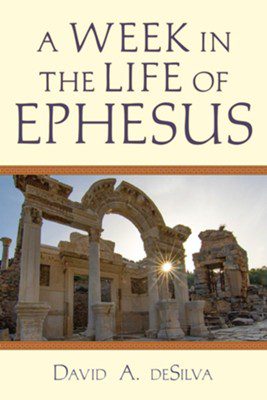
Most scholars have no capacity for writing novels, but David excels here.
In this regard, he’s a switch hitter (hitting both fiction and non-fiction). A rarity in the scholarly guild.
I’m not a fan of historical novels that are based on the Bible. Mainly because they are typically historically inaccurate or historically implausible.
The exception is if those novels are written by a scholar who knows what he/she is talking about. The other exception is if the book was reviewed by a genuine scholar.
Most of the historical fiction works based on the Bible fail in both areas.
(It is for this reason that Craig Keener was my historical adviser for my books God’s Favorite Place on Earth and The Day I Met Jesus, both of which contain creative narratives based on Scripture.)
Since deSilva is a first-rate New Testament scholar, his book is both historically accurate as well as plausible.
And it’s written well.
As a non-fiction reader, I specifically found the explanatory sidebars of interest.
The book is engaging and informative as well as a quick read (167 pages).
Here’s a description from the publisher followed by glowing reviews from other scholars:
Meticulously researched fiction–supplemented with historic images and explanatory sidebars. As the city of Ephesus prepares for a religious festival in honor of the emperor Domitian, a Christian landowner must decide where his loyalties lie. A vividly imagined portrait of the Roman empire in all its power, beneath the looming sky of apocalypse.
How should Christians live in an age of empire? As the city of Ephesus prepares for a religious festival in honor of the emperor Domitian, a Christian landowner feels increasing pressure from the city’s leaders to participate. Can he perform his civic duties and remain faithful to his Lord? Or has the time come for a costly choice? In this historical novel, biblical scholar David deSilva brings to life such compelling struggles faced by the early Christians.
Their insistence on the absolute lordship of their own singular deity brought them into conflict not only with the myriad religious cults of the day, but with all the crushing power of the empire itself. Meticulously researched and supplemented by historical images and explanatory sidebars, A Week in the Life of Ephesus poses anew the timeless question of Christianity and empire. Here is a vividly imaginative portrait of the Roman empire in all its beauty and might—and hanging over it, the looming sky of apocalypse.
“David deSilva’s novel about a week in the life of Christians in Ephesus, living under the shadow of the Roman Empire, is a thrilling story as well as an educational journey through the ancient world. Set against the backdrop of the book of Revelation, this is not a novel that will leave you worried about being ‘left behind,’ but it will make a deep impression on how to be a faithful Christian against the backdrop of malevolent imperial power. . . . Could not put it down!”
— Michael F. Bird, academic dean and lecturer in theology at Ridley College, Melbourne, Australia
“A Week in the Life of Ephesus brings alive the ancient Roman world of religious ritual, daily business, and family loyalties. The Christian’s perennial challenge to follow after God and not money or fame takes shape under deSilva’s skillful hand as first-century Ephesians live out their faith (or not) in the thoroughly pagan city. DeSilva weaves together characters, plot, and historical context, drawing the reader into the story. This is a must-read for those who want a deeper understanding of the ordinary reality of early Christians’ lives.”
— Lynn H. Cohick, provost and dean, professor of New Testament, Denver Seminary
“Ephesus was one of the leading centers of Christianity in the ancient world, and David deSilva invites us to picture it through this imaginative recreation of first-century life. He is well known for his scholarship on Revelation, which addressed churches in Ephesus and other cities in the region. By weaving ancient source materials into his narrative and offering commentary along the way, he links the fictional story to the social world and archaeological remains of Ephesus. This is a resource for those who want a glimpse into the dilemmas faced by Jesus’ followers in a complex urban environment.”
— Craig Koester, Nasby Professor of New Testament at Luther Seminary, St. Paul, Minnesota
“Prepare to be transported to the ancient city of Ephesus! David deSilva writes with a deft hand, proving that he is a gifted storyteller and cultural historian. Spend this week in Ephesus and you will read the New Testament with fresh eyes.”
— Joel B. Green, professor of New Testament interpretation at Fuller Theological Seminary
“Using historical time travel brilliantly, deSilva incarnates the Christian community in Ephesus in the late first century AD. The challenges faced by believers―Christ versus Caesar, economic participation or marginalization, eating idol meat or abstaining―are effectively portrayed by characters known from texts and inscriptions. The reader feels the struggles of brothers and sisters trying to obey God as a fledgling minority while living in this political, commercial, and religious metropolis.”
— Mark Wilson, founder and director of the Asia Minor Research Center in Antalya, Turkey, author of Biblical Turkey: A Guide to the Jewish and Christian Sites of Asia Minor
“Students and scholars have already enjoyed the meticulous historiography, sensitive literary analysis, imaginative flair, and theological depth of David DeSilva’s previous writings, which range in genre from novel to New Testament introduction. In this volume, A Week in the Life of Ephesus, he conjoins these manifest strengths, taking the reader on an intriguing expedition to that ancient city in a crucial week of September in 89 CE. Through the eyes of ancient Christians in Ephesus, portrayed vividly in all their psychological and relational complexity, we come face-to-face with the perennial temptation to accommodate idolatry, with its attending commercial and political implications. DeSilva’s compelling and suspenseful narrative of persons, families, and various strata of society is enhanced by helpful historical and cultural information offered in sidebars.”
— Edith M. Humphrey, William F. Orr Professor of New Testament at Pittsburgh Theological Seminary
“What a great book! What was it like to be a Christian in the city of Ephesus in AD 89? How did Christians respond to the challenges posed by life in this large Greco-Roman city with its gods and temples, markets and gymnasia? In this fictional narrative, David DeSilva helps us to enter into the world of believers in Jesus and to see their struggles and joys, their challenges and hopes. We see how various Christian groups responded differently to the pressures they faced, and in the process we come to understand the book of Revelation more deeply. You’ll not want to put this book down!”
— Paul Trebilco, professor of New Testament studies, University of Otago, Dunedin, New Zealand
“I often tell my students that one of our goals in New Testament courses is to develop our historical imaginations. Those accustomed to viewing faith and religion as a private sphere often struggle to imagine their way into the first-century world, where religion was deeply entwined with governmental structures and the corporate well-being of both city and empire. DeSilva’s story narrates compellingly the very real pressure that early followers of Jesus would have experienced as many of their contemporaries viewed them as threats to the social order; if they refused to honor the gods, including the deified emperors, their reputations, finances, and even lives were at stake. Again and again in this story I asked myself, What would I have done?”
— Holly Beers, associate professor of religious studies at Westmont College, author of A Week in the Life of a Greco-Roman Woman
“Drawing on his vast knowledge of the urban centers of Rome’s empire and the all-powerful Roman religiopolitical machine, David deSilva vividly brings the world of Roman Ephesus to life. Readers are quickly and easily drawn into the material world of Ephesus, including its markets, harbor, neighborhoods, and grand temples, but they are also immersed in Ephesian religious fervor and piety. And it is in this world of religious fervor and piety the readers come not only to understand but also feel the immense pressure on Ephesian Christians to compromise their worship of the one creator God. DeSilva creatively casts this crisis of Christian faith as the setting for the book of Revelation. This superb piece of historical fiction will serve as a valuable asset for introducing students and laity to the urban world of first-century Christians and more specifically the world of the seven churches of John’s Apocalypse.”
— Adam Winn, associate professor of Christian studies at the University of Mary Hardin-Baylor and author of Killing a Messiah: A Novel
David A. deSilva (PhD, Emory University) is Trustees’ Distinguished Professor of New Testament and Greek at Ashland Theological Seminary in Ashland, Ohio. He is the author of over twenty-five books, including An Introduction to the New Testament and Day of Atonement: A Novel of the Maccabean Revolt. He is also an ordained elder in the Florida Conference of the United Methodist Church.
Previous Post

May 7, 2022
Three Podcasts
Next Post
May 10, 2022 The Lexham Geographic Commentaries
Browse Our Archives
Select a Category Uncategorized
Select a Month October 2026 September 2026 August 2026 July 2026 June 2026 May 2026 April 2026 March 2026 February 2026 January 2026 December 2025 November 2025 October 2025 September 2025 August 2025 July 2025 June 2025 May 2025 April 2025 March 2025 February 2025 January 2025 December 2024 November 2024 October 2024 September 2024 August 2024 July 2024 June 2024 May 2024 April 2024 March 2024 February 2024 January 2024 December 2023 November 2023 October 2023 September 2023 August 2023 July 2023 June 2023 May 2023 April 2023 March 2023 February 2023 January 2023 December 2022 November 2022 October 2022 September 2022 August 2022 July 2022 June 2022 May 2022 April 2022 March 2022 February 2022 January 2022 December 2021 November 2021 October 2021 September 2021 August 2021 July 2021 June 2021 May 2021 April 2021 March 2021 February 2021 January 2021 December 2020 November 2020 October 2020 September 2020 August 2020 July 2020 June 2020 May 2020 April 2020 March 2020 February 2020 January 2020 December 2019 November 2019 October 2019 September 2019 August 2019 July 2019 June 2019 May 2019 April 2019 March 2019 February 2019 January 2019 December 2018 November 2018 October 2018 September 2018 August 2018 July 2018 June 2018 May 2018 April 2018 March 2018 February 2018 January 2018 December 2017 November 2017 October 2017 September 2017 August 2017 July 2017 June 2017 May 2017 April 2017 March 2017 February 2017 January 2017 December 2016 November 2016 October 2016 September 2016 August 2016 July 2016 June 2016 May 2016 April 2016 March 2016 February 2016 January 2016 December 2015 November 2015 October 2015 September 2015 August 2015 July 2015 June 2015 May 2015 April 2015 March 2015 February 2015 January 2015 December 2014 November 2014 October 2014 September 2014 August 2014 July 2014 June 2014 May 2014 April 2014 March 2014 February 2014 January 2014 December 2013 November 2013 October 2013 September 2013 August 2013 July 2013 June 2013 May 2013 April 2013 March 2013 February 2013 January 2013 December 2012 November 2012 October 2012
TAKE THE
Religious Wisdom Quiz
What does "blessed are the peacemakers" mean?
Select your answer to see how you score.
Cause trouble Always win Start fights Promote peace
Related posts from The Deeper Journey

Letters on Living the Faith by C.S. Lewis



What Was Jesus’ Central Message?
TRENDING AT PATHEOS Evangelical

The Pillar of the Boatmen: the Ancient Monument...
The Pillar of the Boatmen is a Romano-Gaulish sculpture that dates from...

In one sense walking into Westminster Abbey is like walking down the...

'Super Scam Me' Exposes AI Jon Bon Jovi...
Leslie Pickett believed she was in a relationship with Jon Bon Jovi....

The Brazilian Remake of Kendricks' 'Flywheel' Opens in...
“Flywheel,” the story that launched the Kendrick Brothers’ filmmaking career is getting...

The Dangers of Gradual Accommodation (Winking at Sin)
Recently, the “law of gradualness” resurfaced during the opening of a weeklong,...

The Iron Gates and the Lion of the...
Yesterday, I didn't finish my report about, well, yesterday. So I'll...
view all Evangelical blogs
Ad-Free & Subscriber Log-In Subscription Support
- About Us
- 2026 Calendar
- Videos
- Podcasts
- Library of World Religions
- Faith In Media Tracker
- Advertise With Us
- Write for Us
- Privacy Policy
- Terms of Service
- Do Not Sell My Data
- Contact Us
- Radiant Digital
- Manage Newsletter Subscriptions
- Unsubscribe From Notifications
- Sitemap
Copyright 2008-2026, Patheos. All rights reserved.
Subscription Support Ad-Free & Subscriber Log-In
Follow Patheos