
BuddhistCatholicContemplativeEvangelicalGeneral ChristianHinduJewishLatter-day SaintMuslimNew VisionsProgressive Christian
Beliefs
- Buddhist
- Catholic
- Contemplative
- Evangelical
- General Christian
- Hindu
- Jewish
- Latter-day Saint
- More Voices
- Muslim
- New Visions
- Pagan
- Progressive Christian
Topics
- Religion News
- Food and Religion
- Sports and Religion
- Religious Art
- Religious Music and Entertainment
- Religious Events
- History and Religion
- Style and Religion
- Politics and Religion
- Women in Religion
- Recreation Outdoors and Religion
- Business Finance and Religion
- Careers Workplace and Religion
- Education and Religion
- Family Parenting and Religion
- Health Fitness and Religion
- Home and Religion
- Relationships and Religion
- Technology and Religion
- Travel and Religion
Columnists
- Buddhist Columnists
- Business Finance and Religion Columnists
- Careers Workplace and Religion Columnists
- Catholic Columnists
- Contemplative Columnists
- Education and Religion Columnists
- Evangelists Columnists
- Family Parenting and Religion Columnists
- General Christian Columnists
- Health Fitness and Religion Columnists
- Hindu Columnists
- History and Religion Columnists
- Home and Religion Columnists
- Jewish Columnists
- More Voices Columnists
- Latter Day Columnists
- Muslim Columnists
- New Visions Columnists
- Nonreligious Columnists
- Pagan Columnists
- Politics and Religion Columnists
- Progressive Columnists
- Recreation Outdoors and Religion Columnists
- Relationships and Religion Columnists
- Religion News Columnists
- Religious Art Columnists
- Religious Events Columnists
- Religious Music and Entertainment Columnists
- Sports and Religion Columnists
- Style and Religion Columnists
- Technology and Religion Columnists
- Travel and Religion Columnists
- Women in Religion Columnists
Resource Library
- 2026 Calendar
- Library of World Religions
- The 100 Most Holy Places on Earth
- Patheos Answers
- Podcasts
- Videos
- Faith Leaders Database
- Anglican Episcopalian
- Bahai
- Baptist
- Buddhism
- Christianity
- Confucianism
- Eastern Orthodoxy
- Hinduism
- Holiness and Pentecostal
- ISKCON
- Islam
- Judaism
- Lutheran
- Methodist
- The Church of Jesus Christ of Latter-day Saints
- New Age
- Paganism
- Presbytarian and Reformed
- Protestantism
- Religion Behind the Scenes
- Roman Catholic
- Scientology
- Shia Islam
- Sikhism
- Sufism
- Sunni Islam
- Taoism
- Zen
- See all religions
Research Tools
 Ad-Free & Subscriber Log-In Subscription Support
Ad-Free & Subscriber Log-In Subscription Support
Follow Patheos 

- Trending:
- Forgiveness
- |
- Marriage
- |
- Consciousness
- |
- Death Penalty
- |
- Election
- |
- Halloween
 Why I Still Talk to Jesus -- In Spite of Everything
- Home
- Politics and Religion
- Here Is the Best Piece I’ve Read on Why Susceptibility to fake news has its particular historical origin in Christian fundamentalism’s rejection of expert elites
Here Is the Best Piece I’ve Read on Why Susceptibility to fake news has its particular historical origin in Christian fundamentalism’s rejection of expert elites
Last updated on: February 25, 2017 at 7:32 am by Frank Schaeffer
Here Is the Best Piece I’ve Read on Why Susceptibility to fake news has its particular historical origin in Christian fundamentalism’s rejection of expert elites 2017-02-25T07:32:08-07:00 Frank Schaeffer
Patheos Explore the world's faith through different perspectives on religion and spirituality! Patheos has the views of the prevalent religions and spiritualities of the world.

(photo YouTube)
Susceptibility to fake news has its particular historical origin in Christian fundamentalism’s rejection of expert elites… as Trump bans legitimate news organizations from press briefings and invites fake news bloggers into the White House it’s time to ask why evangelicals seem so thrilled at this UN-American development…
Here’s the best article I’ve read laying out the way theology in fundamentalist circles first embraced then propagated today’s fake news. Want to know why 81 percent of white evangelicals embraced Trump? Read this article first published in Religion Dispatches by Christopher Douglas and republished here in its entirety by permission of the author.
The Religious Origins of Fake News and “Alternative Facts
Perhaps one of the strangest instances of fake news that proliferated in the final months of the 2016 election was the conspiracy known as “Pizzagate.” Supposedly, a D.C. restaurant housed a pedophilia ring involving members of the Democratic Party, including Hillary Clinton’s campaign manager, John Podesta. Podesta’s emails—released by WikiLeaks, and probably hacked by Russia—revealed phrases like “cheese pizza” and other code words for child sex-trafficking. Hillary Clinton herself may have been involved. The ring seemed to include Satanic rituals. The Clinton campaign was engaged, on the side, with running a child sex-trafficking business.
As German Lopez noted at Vox.com, the story seems to have begun on 4chan and spread through news aggregation websites and social media. The restaurant quickly “got hundreds of death threats on their phones and social media.” Then a North Carolina man decided to investigate the pedophilia ring himself, bringing an assault rifle that he fired in the restaurant. (No one was hurt.) As the man later explained about the absence of child sex slaves there, “The intel on this wasn’t 100 percent.”
As we’ve moved from an election dominated by fake news to a new Trump administration run on the principle of “alternative facts,” it’s worth taking some time to ponder what seems to be contemporary conservative credulity. We should certainly be reminded of the term “truthiness” that Stephen Colbert invented in October 2005 to capture some of the pronouncements of the George W. Bush administration. As he explained then, truthiness was the truth that “comes from the gut,” not from actual facts—“the truth we want to exist,” that feels right.
Truthiness is certainly an ancestor of fake news and alternative facts. And the way fake news tends to get better reception among conservatives than liberals, even by a two-to-one margin, has also been recognized. (When one fake news creator was interviewed, he explained, “We’ve tried to do similar things to liberals. It just has never worked, it never takes off. You’ll get debunked within the first two comments, and then the whole thing just kind of fizzles out.”) What is it about Republicans that seems to make them more credulous to fake news than Democrats?
The answer to this question might have to do with the religious roots of today’s Republican Party in the Christian Right. Beginning with the Moral Majority, founded in 1979 by Jerry Falwell and Tim LaHaye, and continuing through church organizations such as Pat Robertson’s Christian Coalition and James Dobson’s Focus on the Family, conservative Christians have helped reshape the Republican Party and its policies. Its “family values” positions on abortion, the sexual revolution, gender roles, pornography, and homosexuality have been heavily influenced by its conservative Christian theology.
Voters have continued to “sort” themselves over the last few decades, as political liberals became less religious and political conservatives more religious. Sociologists call this the “God gap” in partisan religiosity. Conservative white evangelicals have formed a hugely important and highly motivated core group of the Republican electorate for several cycles. In 2016, Donald Trump garnered 81 percent of the white evangelical vote, higher than Mitt Romney, John McCain, and even the born-again George W. Bush.
But it wasn’t Christianity, or religious faith itself in general, that helped make Republican voters more likely to be duped by fake news than their Democratic compatriots. (There were, and continue to be, lots of progressive or liberal people of faith.) Instead, susceptibility to fake news has its particular historical origin in Christian fundamentalism’s rejection of expert elites.
To see this connection, it bears recalling what it meant to be a Christian “fundamentalist” in the early 20th century. Christian fundamentalism was characterized in particular by its rejection of two theologically disturbing bodies of knowledge that emerged from the 19th century: the theory of evolution, and the historical-critical method of Bible scholarship. While mainstream Protestant and Catholic churches have had considerable success in coming to terms with these expert knowledge consensuses, Christian fundamentalism is defined primarily by its rejection of them.
Evolution, we remember, was perceived as a threat to the biblical account of creation in the Book of Genesis (at least, if read literally). It dethroned humans as the culmination of God’s specific acts of creation during six days approximately 6,000 years ago. It replaced this story with a less grand one of natural selection and random mutation across eons. And evolution also undermined the theologically important explanation for human and animal suffering, as the result of God’s fit punishment of Adam and Eve for “original sin.” (Today, 57 percent of white evangelicals reject evolution, believing that humans have always existed in their present form, while another 25 percent believe evolution was guided by God.)
The historical-critical method of Bible scholarship meanwhile threatened the idea of scripture as the inerrant, uniform word of God. There were multiple authors and editors of scripture, scholars began to demonstrate, sometimes with incompatible stories and contradictory theologies. The New Testament’s gospels, this scholarship showed, were not composed shortly after Jesus’ death by his eyewitness disciples like Matthew and John. Rather, they were written accounts based on oral traditions and other now-lost writings, composed decades after Jesus’s death—with all the attendant problems of memory and record-keeping that entails.
Fundamentalist Christians rejected these accounts. But more importantly, fundamentalists critiqued the methods, assumptions, and institutions of the expert elites. Fundamentalists questioned the biologists’ and Bible scholars’ suspension of the question of God’s supernatural intervention. They rejected the secular university as a site of neutral science and objective scholarship. And they didn’t just question the ideas and conclusions of the secular world and its institutions of knowledge. In a form of resistance, they adapted modern institutions and technologies to create bodies of counter-expertise.
Christian fundamentalist Bible colleges and universities, publishers and bookstores, newspapers and magazines, radio and then television shows, museums and campus ministries, together formed a set of institutions that resisted elite, secular expert knowledge. Recognizing the power of expertise’s infrastructure, Christian fundamentalists created this counter-infrastructure to cultivate and curate its alternative forms of knowledge. This alternative knowledge—the forerunner of today’s alternative facts— took the form of creationism and an alternative Bible scholarship demonstrating the Bible’s inerrancy and traditional authorship.
This alternative educational and media ecosystem of knowledge was galvanized and mobilized when the Christian Right emerged in the late 1970s to influence the Republican Party. There were two long-term consequences for our fake news world. First, theologically and politically conservative Christians learned to distrust the proclamations of the supposedly neutral media establishment, just as they had grown to suspect the methods and conclusions of elite experts like scientists or historians. And second, they learned to seek the truth from alternative sources—whether a church sermon, Christian media (newspapers, books, radio or television shows), or a classroom in a Christian college.
The consequence is that theologically fundamentalist Christians have for years explained to themselves that what seems to be worldly wisdom and conclusions are really the results of conspiracies, biases, and misplaced human pride in academic, scientific, and journalist communities. This cognitive training to reject expert knowledge and to seek alternative, more amenable explanations has helped disarm the capacity for critical thinking and analysis.
In the following years, the areas of rejected expert knowledge has grown to include climate change, the efficacy of abstinence-only sex education, and even the supposed link between vaccinations and autism. One could make the argument that even issues that don’t appear to have any religious resonance at all—such as the efficacy of supply-side economic policies, or the idea that Saddam Hussein had Weapons of Mass Destruction and ties to Al Qaeda—are likewise successful partly because of this conservative cognitive training in the rejection of mainstream media and the cultivation of other sources of information, like Fox News at first, but also now websites like Breitbart, 4chan, Infowars, and others.
The goal of “fake news” and “alternative facts” goes beyond providing different data. Their purpose is actually to destroy the notion that there could be impartial news and objective facts. Maria Bustillos calls this endgame “dismediation,” “a form of propaganda that seeks to undermine the medium by which it travels.”
It will rightly be noted that part of this phenomenon is only our shared human condition: our propensity to believe in the comforting things we want to be true rather than accept the tough things we don’t want to be true. And this is correct: we all are vulnerable to these ordinary processes of mental sifting and harmonization. We all suffer from confirmation bias, making it easy for us to uncritically accept ideas we already like, and to resist actual evidence counter to what we already believe.
While this is certainly true, it doesn’t explain the asymmetry of the situation in terms of fake news reception, or that asymmetry’s origin in Christian fundamentalism. It is conservative voters who are measurably more credulous to fake news sites. The origin story of that credulity in fundamentalism holds a similar imbalance.
The truth is that millions of non-fundamentalist Christians believe in evolution and the historical-critical method of Bible scholarship, and there are lots of practicing Christian scholars pursuing research in both those fields! But there are essentially no non-Christians who do “creation science” or believe in the literal Genesis account of creation, and there are essentially no non-Christian scholars who believe the Bible is inerrant and that the authors of the four Gospels (who never identify themselves) are the actual people Matthew, Mark, Luke and John.
This is a highly controversial question because it begins to name that which must not be recognized in polite company: the asymmetrical polarization and extremism in America’s current political climate. That asymmetry was famously expressed by the bipartisan team of Thomas E. Mann and Norman J. Ornstein in It’s Even Worse Than It Looks: How the American Constitutional System Collided With the New Politics of Extremism (2012), where they explained,
However awkward it may be for the traditional press and nonpartisan analysts to acknowledge, the Republican Party has become an insurgent outlier—ideologically extreme; contemptuous of the inherited social and economic policy regime; scornful of compromise; unpersuaded by conventional understanding of facts, evidence and science; and dismissive of the legitimacy of its political opposition. When one party moves this far from the center of American politics, it is extremely difficult to enact policies responsive to the country’s most pressing challenges.
It’s past time for us to consider the possibility that the God gap in partisan religiosity is linked to the asymmetry of whether and how voters consume fake news. Akin to William F. Buckley standing athwart history and yelling stop, the sister conservatism of Christian fundamentalism has stood athwart modern knowledge and yelled NO. In cultivating alternative sources and alternative ideas, Christian fundamentalists laid the ground for the fake news to come.
“““““““““““““““““““““““““““““
P.S. If you want to know a little more about where I’m coming from and my perspective on politics, religion and the intersection of faith and life– here’s a new movie about me. (It’s below the poster on YouTube) scroll down and watch it for free…
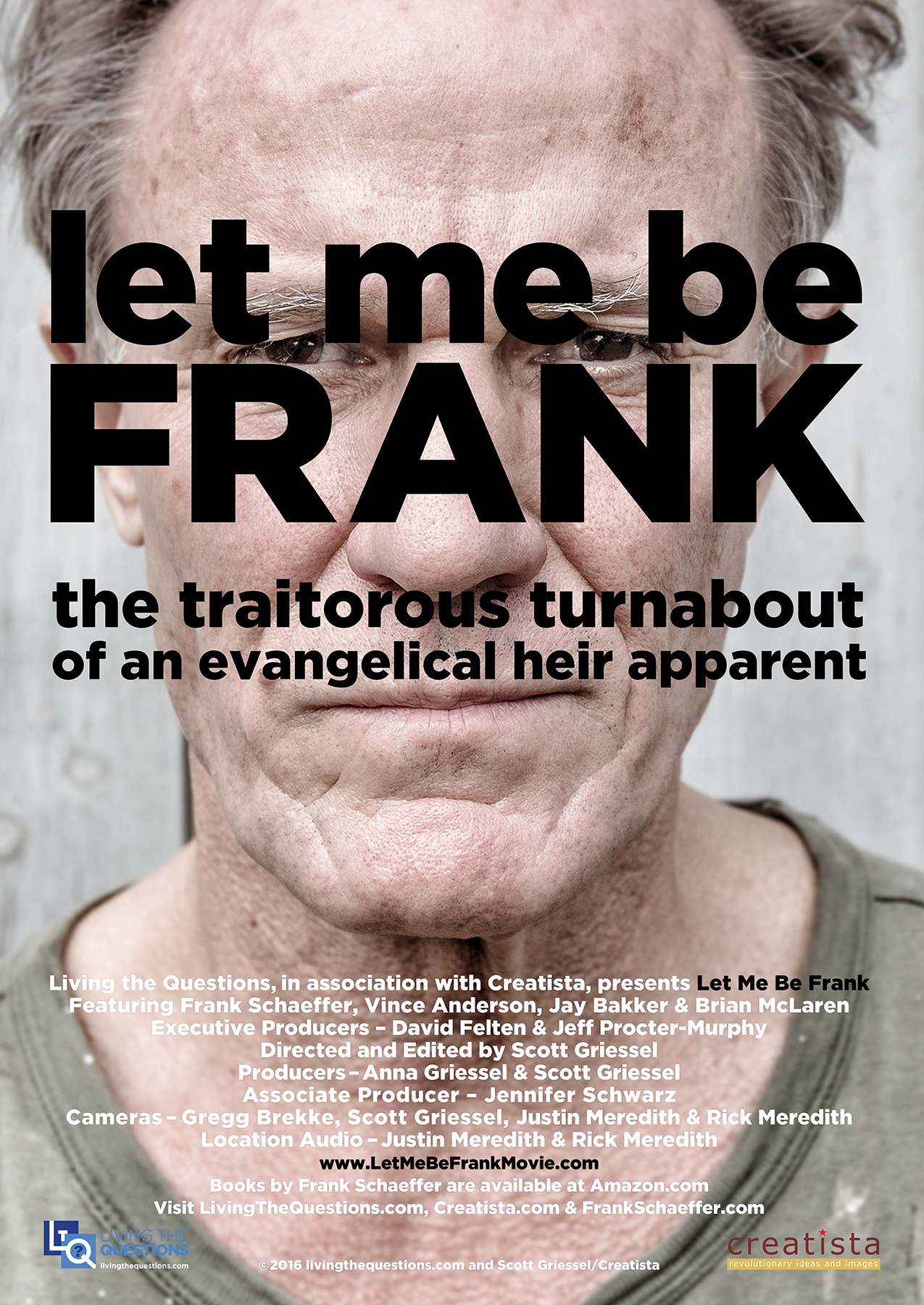
WATCH “Let me be FRANK” HERE:
Follow Frank on Twitter www.twitter.com/frankschaeffer
See Frank’s paintings http://www.frankschaefferart.com/
Follow Frank on Facebook https://www.facebook.com/frank.schaeffer.16 Contact Frank at http://www.frankschaeffer.com
amazon.com
Frank Schaeffer is a writer. His latest book —WHY I AM AN ATHEIST WHO BELIEVES IN GOD: How to give love, create beauty and find peace
Available now on Amazon

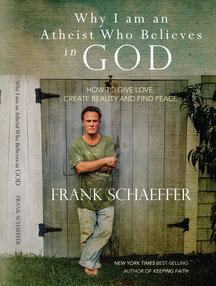
Please read about my journey through then out of the religious right and Republican Party.
Buy it HERE
https://www.amazon.com/Crazy-God-Helped-Relig…/…/ref=sr_1_1…

Browse Our Archives
Select a Category Art children Christmas family parenting political humor politics religion sex Uncategorized
Select a Month May 2017 April 2017 March 2017 February 2017 January 2017 December 2016 November 2016 October 2016 September 2016 August 2016 July 2016 June 2016 May 2016 April 2016 March 2016 February 2016 January 2016 December 2015 November 2015 October 2015 September 2015 August 2015 July 2015 June 2015 May 2015 April 2015 March 2015 February 2015 January 2015 December 2014 November 2014 October 2014 September 2014 August 2014 July 2014 June 2014 May 2014 April 2014 March 2014 February 2014 January 2014 December 2013 November 2013 October 2013 September 2013 August 2013 July 2013 June 2013 May 2013 April 2013 March 2013 February 2013 January 2013 December 2012 November 2012 October 2012 September 2012
Follow Us!
TAKE THE
Religious Wisdom Quiz
Who wrote many of the Psalms?
Select your answer to see how you score.
Solomon Peter David Paul
Related posts from Why I Still Talk to Jesus -- In Spite of Everything

The Terrifying Truth about the USA (And All...
Why I Still Talk to Jesus -- In Spite of Everything

Does U2's Bono Support Donald Trump?
Why I Still Talk to Jesus -- In Spite of Everything

The Case For Impeachment Grows
Why I Still Talk to Jesus -- In Spite of Everything

As we watch Trump abuse and debase the...
Why I Still Talk to Jesus -- In Spite of Everything
TRENDING AT PATHEOS Politics and Religion

Did Prayer Cure His Cancer? Or Was It...
At 4 AM one morning, Joshua W. Brown’s wife awoke to a...

8 Ways a Near-Death Experience Rewires the Soul
Does Consciousness Survive Physical Death? After 50 Years of Research, Dr. Raymond...

Holy Longing: What Our Restlessness Is Telling Us
“One can find so many pains when the rain is falling.” -John...

What this is NOT about. This blog is definitely not about...

Who said the Israelites were God’s chosen? That’s right, they did. Who...

The Spirit World Is the Real World: God...
A Monk’s Wisdom on Body and Spirit I sit with Brother Martin...
view all Politics and Religion blogs
Ad-Free & Subscriber Log-In Subscription Support
- About Us
- 2026 Calendar
- Videos
- Podcasts
- Library of World Religions
- Faith In Media Tracker
- Advertise With Us
- Write for Us
- Privacy Policy
- Terms of Service
- Do Not Sell My Data
- Contact Us
- Radiant Digital
- Manage Newsletter Subscriptions
- Unsubscribe From Notifications
- Sitemap
Copyright 2008-2026, Patheos. All rights reserved.
Subscription Support Ad-Free & Subscriber Log-In
Follow Patheos