
BuddhistCatholicContemplativeEvangelicalGeneral ChristianHinduJewishLatter-day SaintMuslimNew VisionsProgressive Christian
Beliefs
- Buddhist
- Catholic
- Contemplative
- Evangelical
- General Christian
- Hindu
- Jewish
- Latter-day Saint
- More Voices
- Muslim
- New Visions
- Pagan
- Progressive Christian
Topics
- Religion News
- Food and Religion
- Sports and Religion
- Religious Art
- Religious Music and Entertainment
- Religious Events
- History and Religion
- Style and Religion
- Politics and Religion
- Women in Religion
- Recreation Outdoors and Religion
- Business Finance and Religion
- Careers Workplace and Religion
- Education and Religion
- Family Parenting and Religion
- Health Fitness and Religion
- Home and Religion
- Relationships and Religion
- Technology and Religion
- Travel and Religion
Columnists
- Buddhist Columnists
- Business Finance and Religion Columnists
- Careers Workplace and Religion Columnists
- Catholic Columnists
- Contemplative Columnists
- Education and Religion Columnists
- Evangelists Columnists
- Family Parenting and Religion Columnists
- General Christian Columnists
- Health Fitness and Religion Columnists
- Hindu Columnists
- History and Religion Columnists
- Home and Religion Columnists
- Jewish Columnists
- More Voices Columnists
- Latter Day Columnists
- Muslim Columnists
- New Visions Columnists
- Nonreligious Columnists
- Pagan Columnists
- Politics and Religion Columnists
- Progressive Columnists
- Recreation Outdoors and Religion Columnists
- Relationships and Religion Columnists
- Religion News Columnists
- Religious Art Columnists
- Religious Events Columnists
- Religious Music and Entertainment Columnists
- Sports and Religion Columnists
- Style and Religion Columnists
- Technology and Religion Columnists
- Travel and Religion Columnists
- Women in Religion Columnists
Resource Library
- 2026 Calendar
- Library of World Religions
- The 100 Most Holy Places on Earth
- Patheos Answers
- Podcasts
- Videos
- Faith Leaders Database
- Anglican Episcopalian
- Bahai
- Baptist
- Buddhism
- Christianity
- Confucianism
- Eastern Orthodoxy
- Hinduism
- Holiness and Pentecostal
- ISKCON
- Islam
- Judaism
- Lutheran
- Methodist
- The Church of Jesus Christ of Latter-day Saints
- New Age
- Paganism
- Presbytarian and Reformed
- Protestantism
- Religion Behind the Scenes
- Roman Catholic
- Scientology
- Shia Islam
- Sikhism
- Sufism
- Sunni Islam
- Taoism
- Zen
- See all religions
Research Tools
 Ad-Free & Subscriber Log-In Subscription Support
Ad-Free & Subscriber Log-In Subscription Support
Follow Patheos 

- Trending:
- Forgiveness
- |
- Marriage
- |
- Consciousness
- |
- Death Penalty
- |
- Election
- |
- Halloween
 Why I Still Talk to Jesus -- In Spite of Everything
- Home
- Politics and Religion
- Here’s the best article I’ve read on the sensible journey away from the Evangelical World that Hates Our (Clearly) Queer/Trans Creator
Here’s the best article I’ve read on the sensible journey away from the Evangelical World that Hates Our (Clearly) Queer/Trans Creator
Last updated on: April 25, 2016 at 5:11 pm by Frank Schaeffer
Here’s the best article I’ve read on the sensible journey away from the Evangelical World that Hates Our (Clearly) Queer/Trans Creator 2016-04-25T17:11:49-06:00 Frank Schaeffer
Patheos Explore the world's faith through different perspectives on religion and spirituality! Patheos has the views of the prevalent religions and spiritualities of the world.
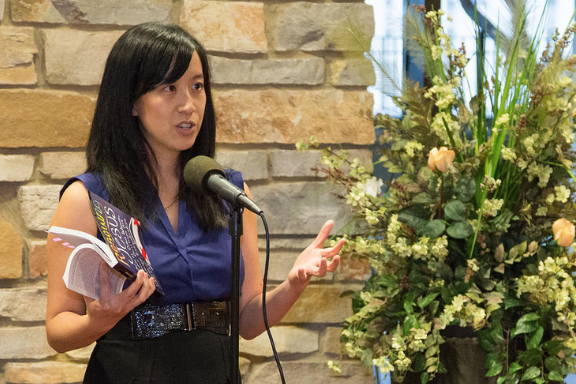
Author Deborah Jian Lee
“So when I became a leader of my college Christian fellowship group, Intervarsity, I was stunned by the entrenched conservatism of so many of my Christian peers. Sure, the group had some theological and political diversity, and I had some amazing young staff mentors (some of whom were people of color) who totally got me. But the overwhelming culture resisted my initiatives on racial justice and gender equality, equated voting Republican with authentic Christianity, called homosexuality a disease, celebrated female submission to male leadership and called conversations about social justice distractions from the ‘core gospel message’ of converting others.”
Here’s the best article I’ve read on the sensible journey away from an Evangelical “Jesus” Who Has no room for a Queer GOD. How did everything fall apart? …
(This was first published in Religion Dispatches and is reprinted here in full by the publisher’s kind permission.
BY ERIC C. MILLER APRIL 21, 2016 Religion Dispatches
IS THERE HOPE FOR A TRULY PROGRESSIVE EVANGELICALISM? AN INTERVIEW WITH DEBORAH JIAN LEE
Journalist Deborah Jian Lee is a few months into a book tour for Rescuing Jesus: How People of Color, Women & Queer Christians Are Reclaiming Evangelicalism. So far, Lee has been approached by non-Christians, newly eager to learn more about the progressive evangelical movement, by young readers like the queer Christian who found a path to acceptance by reading the book with his mother, and by other women of color, who have thanked her for addressing the intersecting oppressions those with marginalized identities face. This summer, a dozen churches and counting across the country have formed an inter-congregational book club, pledging to read the book together.
American evangelicalism has long been associated with the culture of white, middle-class conservatives—a tradition known primarily for its uniformity and exclusion, for its commitment to final lines and hard boundaries. Its leaders have been men—always men—like Jerry Falwell and James Dobson, and its politics are Republican.
The story Lee tells here, though, is of a changing American evangelicalism, one in which those on the margins—women, people of color, and queer Christians—are taking their place at the table. I spoke with Deborah Lee about the book—its genesis and its reception.
You trace the beginning of this book to your college days in the George W. Bush administration, when your progressive commitments clashed with your mostly conservative evangelical community. At one point, a friend asked whether you were “even a Christian anymore.” I relate to this very personally, and I think many young evangelicals can tell similar stories. Was writing this book cathartic for you?
It was cathartic to give language to this experience and to explore the history of how exactly evangelical culture became about boundaries and scarcity rather than diversity and abundance.
I grew up in a wonderful non-religious immigrant home in a white Chicago suburb. Because of my ethnicity, I encountered a range of racism, from subtle discrimination to violence against my body. When I came to faith at a Chinese immigrant church in my teens, I received the gospel as a healing salve to my wounds. It was through this community and Jesus’ words that I became restored.
I was so moved by how Jesus subverted the status quo by lifting the lowly to high places, by healing the broken and by calling his people to serve the least of these. And as I committed my life to Jesus, this is what my faith became about: radical inclusion and justice.
So when I became a leader of my college Christian fellowship group, Intervarsity, I was stunned by the entrenched conservatism of so many of my Christian peers. Sure, the group had some theological and political diversity, and I had some amazing young staff mentors (some of whom were people of color) who totally got me. But the overwhelming culture resisted my initiatives on racial justice and gender equality, equated voting Republican with authentic Christianity, called homosexuality a disease, celebrated female submission to male leadership and called conversations about social justice distractions from the “core gospel message” of converting others.
As a liberal, queer-affirming woman of color I was living in the crosshairs of the culture wars. I didn’t recognize their Jesus or their gospel. Sadly, I believed conservative leaders when they said that crossing their theological and political boundaries disqualified me from the faith.
When I finally left evangelicalism, I felt extreme liberation and extreme loss, and I was left with these burning questions. How did everything fall apart? Why did my Christian friends celebrate me when I conformed to their values but reject me once I started asserting my whole identity and my belief in a radically inclusive gospel? Was I the only one who experienced this? How did conservative white men come to define evangelical culture? Where did evangelicals from the margins—people of color, women, queers—fit in? Was there any hope for evangelicalism’s future? Could Jesus be rescued from the corruption of the religious right? And if so, who would do that and how?
Over the course of reporting and writing this book I dug into these questions. I was floored by what I uncovered and felt my own life changing with every new discovery.
The book intertwines the stories of several young evangelicals as they grow and develop from conformists to skeptics to radicals—a path you know something about. How did you find these folks, and how did you decide to tell their stories in this way?
I interviewed several hundred people for this book, so as you might imagine, I used a range of journalistic strategies to find the people I featured. I immersed myself in the progressive evangelical scene by attending meetings and conferences. I interviewed leaders, friends, strangers and everyone in between. I read thousands of articles. I cold-called and tweeted at a lot of people whose stories intrigued me. The people I chose to feature had stories that I found emblematic of and significant to the broader progressive evangelical movement.
One person I feature is Lisa Sharon Harper, whom I met when she was launching New York Faith and Justice, an organization working to end poverty in New York City. I watched as she built a movement of believers around tackling issues of police brutality, racial profiling, environmental injustice and the country’s broken immigration system.
I followed Lisa’s career from her New York Faith and Justice days to her work at Sojourners, where today she works as the Chief Church Engagement Officer, mobilizing leaders around the common good, with an emphasis on racial justice. When I interviewed Lisa, I was surprised to learn that she came to faith in a white fundamentalist church and once lent her voice to the conservative cause.
Toward the end of college she joined an urban mission trip where she spent time with fellow African Americans and was “reintroduced to myself as a black person.” She began to see herself through God’s eyes “as someone made in the image of God whom God loves.” Lisa learned to embrace her identity as a black woman, but when she brought her newly empowered self back to her conservative white community, she was rejected.
Eventually her vision of evangelicalism took a sharp departure from the Religious Right’s vision. She went on a decades-long journey of disentangling her faith from the Religious Right and centering it on living out the justice calling of the Bible. She spends much of her time bridging the conservative and progressive worlds, like the way she’s been traveling the country convincing conservative white evangelical pastors to lend their support to Black Lives Matter events and protests against police brutality.
Rescuing Jesus follows the conformist-skeptic-radical arc because over the course of all of my interviews, this was the most common trajectory most of progressive evangelicals had followed. I thought it was important to show this in intimate detail because it helps answer important questions. What are the greatest obstacles in disentangling from the Religious Right? How do people change? What are the consequences of change? What are the rewards? Why is inclusivity so difficult and how are people changing the infrastructure of their faith, life and communities to pursue radical inclusion and justice?
If Lisa Sharon Harper represents the struggle as it applies to race, Jennifer Crumpton epitomizes resistance to traditional constraints on women. Why did you decide to feature her story in confronting issues of sex and gender?
Jennifer’s story highlights the consequences of and the journey away from complementarian theology, a widespread evangelical belief that God designed men for authority and women for submission. Jennifer grew up in a Southern Baptist church in Alabama where only men held leadership positions. In her home the women cooked, cleaned and served the men meals. Youth group introduced Jennifer to purity culture, which taught the women to guard their virginity (and bear responsibility for stopping men from escalating intimacy) and to submit to men.
As a young adult, Jennifer focused on playing this part perfectly. She vowed to save sex for marriage. She joined the pageant circuit, a popular local tradition that extolled pageant queens as the community’s most “upstanding, outstanding” Christian women. (The ultra devout pageant girls saluted each other by holding up their fingers in a “V,” calling to each other, “Virgins ‘til marriage!”) Jennifer eventually became a state star and was the runner-up to Miss Alabama.
But beneath the façade, Jennifer was falling apart. The pageant world and the evangelical world demanded that she conform her body, her behavior, her choices and her personality to a certain kind of unrealistic “perfection.” This led to troubling amounts of anxiety and damaging, inequitable relationships.
At one point, a boyfriend raped Jennifer, sending her into a tailspin of post-traumatic stress. Part of her felt at fault. On one hand, the responsibility to remain “pure” rested with her, the woman, or so she was taught. On the other hand, she had learned to never challenge a man’s authority; this time was like any other. Jennifer kept the trauma a secret and even continued dating this boyfriend for a little while. The experience caused years of crippling self-doubt and anxiety.
Healing took many difficult years, and that process prompted her feminist awakening. Jennifer began to question the complementarian ideology she grew up with. She traveled a long, arduous journey toward restoring her sense of self-worth and dignity, which involved voraciously reading feminist theology, seminal secular feminist books, attending seminary and forming Femmevangelical, a ministry aimed at helping women heal from religious patriarchy.
Today Jennifer is an ordained pastor and leading evangelical feminist voice who is working to dismantle patriarchy in the church, pressing old-school leaders to back policies that advance women’s access to family planning services and advancing a conversation among women of faith who face hurdles to gender equality.
The third and final thread follows LGBT students at the ultra-conservative Biola University in Los Angeles. Each begins safely in the closet and proceeds by turns into the activist “Biola Queer Underground.” In a book full of underdog stories, I found this to be the most suspenseful. Would you agree?
When I flew out to California to meet the Biola Queer Underground, the group was on the verge of making a really daring move. As I write in the book, they’re a secret society of queer students at a school that prohibits queer expression. Gaining membership to the group involved cryptic messages and an interview process. BQU founders organized events and meetings through an anonymous email address and anonymous website. And meetings took place far from campus. They took such extreme measures because if they got outed, they feared expulsion, revoked scholarships, reparative therapy, social rejection and/or losing the support (emotional, financial, etc.) of their conservative families.
Queer students at other Christian campuses with similar policies faced these consequences regularly. In fact, I interviewed LGBTQ students whose parents cut them off, who ended up homeless, who faced such severe rejection that they contemplated suicide and suffered from severe psychological trauma. Oftentimes, in environments like Biola, the closet can feel like the safest place to dwell.
I spent time with the Biola Queer Underground in May 2013, when they were about to risk everything by coming out of the closet as a group, in a very public way. They had compiled an online “yearbook” in which all of the senior and transfer students published their names and pictures for the world to see. I arrived a day before this went live and documented the build-up and aftermath of this action. I won’t give it all away here, but suffice it to say, what I saw rocked my world and totally changed my life.
The Biola Queer Underground offers a window into the world of the broader LGBTQ evangelical movement, which is exploding and dramatically changing the landscape of evangelical America. As we enter this era of broader social acceptance of the queer community, more LGBTQ Christians are coming out of the closet, telling their stories, putting familiar faces to a community routinely vilified by evangelical leaders and challenging fellow Christians to rethink their beliefs about queerness. Their lives and faith defy stereotypes, humanize their community and demonstrate what it looks like to minister and love the very people who have rejected you. It’s a tremendous and humbling thing to witness, and it’s transforming congregations, youth groups and even evangelical leadership. Already, we see this in poll numbers that show young evangelicals are twice as likely as those 65 and older to support same-sex marriage. Polls also show that today the majority of Christians are pro-LGBTQ.
Anecdotally, since my book has come out a number of pastors and Christian leaders of major evangelical organizations have reached out to me because this movement has prompted them to become LGBTQ-affirming and they are grappling with how to live out their convictions in a community so divided on this subject. We’re on the brink of something big that could change everything.
Of all the individuals considered in your book, you are the only one who doesn’t find a home in the faith. So I’d like to ask you a pair of questions that people often ask me: What keeps you connected to evangelicalism? Why do you continue to research and write about it?
I was part of the evangelical community during some of the most formative years in my life. During that time I experienced community in beautiful, powerful ways, ways that I haven’t seen the secular world able to replicate. In the evangelical community, I had friends who prayed for me daily, leaders who mentored me, a community that asked the big questions about life, death and meaning.
I remember the end of freshman year, nervously packing for a solo three-month trip to China and Taiwan, where I hoped to reconnect to my heritage. My evangelical friends baked a huge cookie for me in the shape of China and a smaller one in the shape of Taiwan. They laid hands on me and prayed. In that moment, my nervousness washed away, and I felt so secure in their love.
Another time, at the off-campus Pentecostal church I attended, the worship leader, destroyed by the cancer that had crawled across his body, had lain in bed at home with a phone against his ear while my pastor, who had called him from the pulpit, pointed a cordless phone toward the congregation; we all wept and sang him love songs as he lay dying. These are uniquely evangelical experiences that shaped me, that will always be a part of me. I still long for this kind of community—the kind that journeys together through all the peaks and valleys of life.
This is my long way of saying that, even though I’m no longer evangelical, even though the dark side of evangelicalism wounded me and even though so much of evangelical culture and history is problematic, I still believe the rest of us have something to learn from elements of evangelical community. That’s one reason I continue to research and write about evangelicalism. The other reason is that I know that groups on the margins—people of color, women and queer Christians—are redeeming evangelicalism in stunning and surprising ways. The exclusivity of evangelical culture contradicts the gospel message, but as those on the margins reshape the culture, they’re correcting for these gaping errors and making the evangelical church more inclusive. It’s remarkable.
When I think about my departure from evangelicalism, I’m aware that it’s not unique. I’m part of a swarm of young people exiting the church and sleeping in on Sunday. But I can’t help but wonder: What if leaders like Lisa, Jennifer or the Biola Queer Underground had defined evangelicalism, instead of leaders like James Dobson, Jerry Falwell and Mike Huckabee? Would fewer of us be sleeping in on Sunday? Would more of us be engaged in faith communities, mobilizing around social justice issues and working in solidarity with society’s “least of these?”
I wonder this because, after spending years reporting on evangelicals on the margins, I felt like I was being reintroduced to the lessons that brought me to the faith back when I was a teenager in a Chinese immigrant church, back when the gospel was a healing salve to my wounds. In many ways, reporting on progressive evangelicals reignited my own faith. I’m still wary of organized religion, but when I think about the people I encountered while reporting Rescuing Jesus, I’m filled with awe and hope. Their understanding of the gospel includes everyone—insiders, outsiders, the strong and the downtrodden—and that truly is good news.
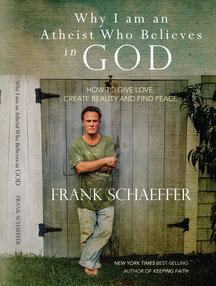
Frank Schaeffer is a writer. His latest book —WHY I AM AN ATHEIST WHO BELIEVES IN GOD: How to give love, create beauty and find peace
Available now on Amazon

Follow Frank on Twitter www.twitter.com/frank_schaefferSee Frank’s paintings http://www.frankschaefferart.com/Follow Frank on Facebook https://www.facebook.com/frank.schaeffer.16Contact Frank at http://www.frankschaeffer.com
Previous Post

April 24, 2016
In Case You Forgot What a Great Man and President Obama is, WATCH
Browse Our Archives
Select a Category Art children Christmas family parenting political humor politics religion sex Uncategorized
Select a Month May 2017 April 2017 March 2017 February 2017 January 2017 December 2016 November 2016 October 2016 September 2016 August 2016 July 2016 June 2016 May 2016 April 2016 March 2016 February 2016 January 2016 December 2015 November 2015 October 2015 September 2015 August 2015 July 2015 June 2015 May 2015 April 2015 March 2015 February 2015 January 2015 December 2014 November 2014 October 2014 September 2014 August 2014 July 2014 June 2014 May 2014 April 2014 March 2014 February 2014 January 2014 December 2013 November 2013 October 2013 September 2013 August 2013 July 2013 June 2013 May 2013 April 2013 March 2013 February 2013 January 2013 December 2012 November 2012 October 2012 September 2012
Follow Us!
TAKE THE
Religious Wisdom Quiz
Who dreamed of a ladder reaching to heaven?
Select your answer to see how you score.
Simeon Joseph Isaac Jacob
Related posts from Why I Still Talk to Jesus -- In Spite of Everything

The Terrifying Truth about the USA (And All...
Why I Still Talk to Jesus -- In Spite of Everything

Does U2's Bono Support Donald Trump?
Why I Still Talk to Jesus -- In Spite of Everything

The Case For Impeachment Grows
Why I Still Talk to Jesus -- In Spite of Everything

As we watch Trump abuse and debase the...
Why I Still Talk to Jesus -- In Spite of Everything
TRENDING AT PATHEOS Politics and Religion

Did Prayer Cure His Cancer? Or Was It...
At 4 AM one morning, Joshua W. Brown’s wife awoke to a...

8 Ways a Near-Death Experience Rewires the Soul
Does Consciousness Survive Physical Death? After 50 Years of Research, Dr. Raymond...

Holy Longing: What Our Restlessness Is Telling Us
“One can find so many pains when the rain is falling.” -John...

What this is NOT about. This blog is definitely not about...

Who said the Israelites were God’s chosen? That’s right, they did. Who...

The Spirit World Is the Real World: God...
A Monk’s Wisdom on Body and Spirit I sit with Brother Martin...
view all Politics and Religion blogs
Ad-Free & Subscriber Log-In Subscription Support
- About Us
- 2026 Calendar
- Videos
- Podcasts
- Library of World Religions
- Faith In Media Tracker
- Advertise With Us
- Write for Us
- Privacy Policy
- Terms of Service
- Do Not Sell My Data
- Contact Us
- Radiant Digital
- Manage Newsletter Subscriptions
- Unsubscribe From Notifications
- Sitemap
Copyright 2008-2026, Patheos. All rights reserved.
Subscription Support Ad-Free & Subscriber Log-In
Follow Patheos