
BuddhistCatholicContemplativeEvangelicalGeneral ChristianHinduJewishLatter-day SaintMuslimNew VisionsProgressive Christian
Beliefs
- Buddhist
- Catholic
- Contemplative
- Evangelical
- General Christian
- Hindu
- Jewish
- Latter-day Saint
- More Voices
- Muslim
- New Visions
- Pagan
- Progressive Christian
Topics
- Religion News
- Food and Religion
- Sports and Religion
- Religious Art
- Religious Music and Entertainment
- Religious Events
- History and Religion
- Style and Religion
- Politics and Religion
- Women in Religion
- Recreation Outdoors and Religion
- Business Finance and Religion
- Careers Workplace and Religion
- Education and Religion
- Family Parenting and Religion
- Health Fitness and Religion
- Home and Religion
- Relationships and Religion
- Technology and Religion
- Travel and Religion
Columnists
- Buddhist Columnists
- Business Finance and Religion Columnists
- Careers Workplace and Religion Columnists
- Catholic Columnists
- Contemplative Columnists
- Education and Religion Columnists
- Evangelists Columnists
- Family Parenting and Religion Columnists
- General Christian Columnists
- Health Fitness and Religion Columnists
- Hindu Columnists
- History and Religion Columnists
- Home and Religion Columnists
- Jewish Columnists
- More Voices Columnists
- Latter Day Columnists
- Muslim Columnists
- New Visions Columnists
- Nonreligious Columnists
- Pagan Columnists
- Politics and Religion Columnists
- Progressive Columnists
- Recreation Outdoors and Religion Columnists
- Relationships and Religion Columnists
- Religion News Columnists
- Religious Art Columnists
- Religious Events Columnists
- Religious Music and Entertainment Columnists
- Sports and Religion Columnists
- Style and Religion Columnists
- Technology and Religion Columnists
- Travel and Religion Columnists
- Women in Religion Columnists
Resource Library
- 2026 Calendar
- Library of World Religions
- The 100 Most Holy Places on Earth
- Patheos Answers
- Podcasts
- Videos
- Faith Leaders Database
- Anglican Episcopalian
- Bahai
- Baptist
- Buddhism
- Christianity
- Confucianism
- Eastern Orthodoxy
- Hinduism
- Holiness and Pentecostal
- ISKCON
- Islam
- Judaism
- Lutheran
- Methodist
- The Church of Jesus Christ of Latter-day Saints
- New Age
- Paganism
- Presbytarian and Reformed
- Protestantism
- Religion Behind the Scenes
- Roman Catholic
- Scientology
- Shia Islam
- Sikhism
- Sufism
- Sunni Islam
- Taoism
- Zen
- See all religions
Research Tools
 Ad-Free & Subscriber Log-In Subscription Support
Follow Patheos 

- Trending:
- Advent
- |
- Forgiveness
- |
- Thanksgiving
- |
- Election
- |
- Seasonal Holidays
- |
- Marriage
 Why I Still Talk to Jesus -- In Spite of Everything
- Home
- Politics and Religion
- Evangelical Authoritarianism and Fear in America: Cruz/Trump Two Christian Failures, One Authoritarian Ethos
Evangelical Authoritarianism and Fear in America: Cruz/Trump Two Christian Failures, One Authoritarian Ethos
Last updated on: April 12, 2016 at 4:18 pm by Frank Schaeffer
Evangelical Authoritarianism and Fear in America: Cruz/Trump Two Christian Failures, One Authoritarian Ethos 2016-04-12T16:18:04-06:00 Frank Schaeffer
Patheos Explore the world's faith through different perspectives on religion and spirituality! Patheos has the views of the prevalent religions and spiritualities of the world.

(Photo by Joe Raedle/Getty Images)
Donald Trump’s bizarre rise seems to prove that that evangelical voters are subordinating theology to politics—as if conservative evangelicals experience theology and politics as fundamentally separate spheres. The evangelicals love authoritarian leaders.
Here is the best article I’ve read on the rise of evangelical authoritarianism and its influence on our blighted political world. It is reprinted here by permission of Religion Dispatches where it first appeared. The author is Christopher Stroop, Provost’s Postdoctoral Scholar in the History Department at the University of South Florida. He is also a freelance writer, a senior research fellow in the School of Public Policy at the Russian Presidential Academy of National Economy and Public Administration, and editor of the academic journal State, Religion and Church. Follow him on Twitter @C_Stroop Twitter
WHY TRUMPVANGELICALS DON’T NEED TED CRUZ: CONSERVATIVE CHRISTIANITY’S AUTHORITARIAN STREAK
Donald Trump’s bizarre rise seems to be, as new research suggests, the result of an increasing American attraction for authoritarian leadership. I’d like to suggest that if “a desire for order and a fear of outsiders” predicts Trump support, the question of why white evangelicals are backing a trash-talking billionaire can be easily answered.
Amid the consternation over white evangelicals who support Trump and whether they are “real” evangelicals, rare serious attempts to understand how authoritarianism functions in conservative evangelical culture have been largely ignored.
Some have argued that evangelical voters are subordinating theology to politics—as if conservative evangelicals experience theology and politics as fundamentally separate spheres. In fact, for conservative evangelicals, Christianity is essentially “total,” permeating and defining every other aspect of life—not something you do in private, or on Sundays.
Here on RD, Daniel Miller has provided an important corrective to the notion of “politicized religion,” which implies that “real” religion is not politicized. As someone who has lived conservative evangelicalism, I agree with Miller that being conservative (and Republican) is “part of being religious” for this demographic.
And while Rob Boston has correctly observed that “there has always been an authoritarian strain in the Religious Right,” most commentators, including Boston himself, seem to be operating on the false assumption that support for Trump is somehow out of keeping with “real” conservative Christianity.
Progressive evangelical commentator David Gushee has recently described evangelical support for Ted Cruz and Trump as “two very different kinds of failures for conservative Christianity.” The difference between the two is that support for Cruz can be explained in light of prior church teaching about the evils of homosexuality, abortion, secularism, and Democrats. But as Trump’s stances on immigration, Muslims, and torture don’t derive from church teaching, Gushee concludes that evangelical leaders must simply have failed to “inoculate” their flocks against Trump’s brand of authoritarianism.
But evangelicals are, in fact, regular producers and consumers in America’s cottage industry of Islamophobia. I have heard Islamequated with terrorism from evangelical pulpits on multiple occasions. I suspect, too, that the Calvinist view of predestination—that the majority of humanity consists of “losers” consigned to eternal torture—might foster a tolerance for torture in the human social scheme. Contra Gushee, I’d argue that there is prior church teaching and theology fueling the “Trumpvangelical” version of bad religion.
It is true that the dominionist Cruz seems to be performing slightly better than Trump among white evangelical Republicans (41% vs. 38%) and that he is performing substantially better than Trump among those Republicans who attend religious services regularly (44% vs. 29%). But what’s missing on most people’s radar is that Cruz’s theocratic vision for America actually represents a more consistently authoritarian ideology than Trump’s generally vague right-wing populism.
It is equally salient, too, that pious evangelicals who do support Trump have provided justifications for that support in characteristic evangelical form, exhibiting what I call a “politics of Providentialism” by mapping Biblical references onto current events in a way that relates them to theologies of the apocalpyse.
Some evangelicals are justifying their support for Trump with a biblical analogy to Cyrus the Great, the ruler of Persia who delivered the Hebrews from Babylonian captivity, for example. The conservative desire for a “strong, even quasi-dictatorial, leader who will keep feminists, multiculturalists, secularists and ‘progressives’ in their place,”as Rob Boston puts it, has biblical echoes.
Evangelical Authoritarianism and Fear in America
That some conservative evangelicals are relaxing their ideological litmus test for presidential candidates does not mean that they have “secularized” their voting—it just means that they perceive themselves as in the political wilderness.
It remains true that the doctrine of biblical inerrancy makes it difficult at best for conservative evangelicals to reconcile themselves to a robust pluralism. This is not to say that conservative evangelicals are monolithic, but the frame for debate they recognize as legitimate is generally narrow, and there is a high expectation of conformity.
Consider the case of evangelical institutions. It is not surprising, for example, that in a moment in which evangelicals are feeling threatened by rapid social and political change, evangelical institutions of higher education, known for ideological homogeneity, are in full inquisition mode.
Administrations are policing boundaries, identifying and rejecting outsiders, and enforcing order by purging professors over evolution, same-sex marriage, and other matters, as I have written about in these pages, even as they scramble to obtain Title IX waivers so that they can continue to receive federal funding while discriminating against members of the LGBTQ community in housing and hiring.
From these cases, it is clear that the order most conservative evangelicals crave entails the unquestioning acceptance of a patriarchal, anti-LGBTQ interpretation of the Bible. In their pursuit of this order, conservative evangelicals use emotional manipulation and indoctrination—and, as is characteristic of authoritarianism in general, their defensive aggression is a product of fear.
Another critical element of evangelical authoritarianism, as of authoritarianism in general, is anti-intellectualism. When I was in high school, a pastor I talked with about my doubts suggested that if I was having difficulty reconciling the apparent contradictions in the Bible, I must be harboring sin in my life. I might be, he said, under the influence of literal demons.
Too much intellectual questioning can be deflected with scriptural passages such as I Corinthians 1:20-25, which discusses how God’s truth appears to the worldly as foolishness. I once heard a Christian singer remark from the stage that it was impossible to be too stupid to accept Christ, but it might be possible to be toosmart.
Of course, there are some conservative evangelicals, like the Southern Baptist Convention’s Russell Moore, who have insistedthat no true “gospel Christian” would vote for Trump.
For my own part, however, I would take this sidestepping of the question of evangelical authoritarianism from Moore with a pillar of salt. And I would suggest that we would do well not to lose sight of the effects of the Christian right’s authoritarianism simply because we live in a time when rather than playing kingmaker, its leaders are forced to contend with the allure of a worldly strongman like Trump.
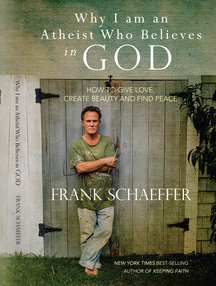
Frank Schaeffer is a writer. His latest book —WHY I AM AN ATHEIST WHO BELIEVES IN GOD: How to give love, create beauty and find peace
Available now on Amazon

Follow Frank on Twitter www.twitter.com/frank_schaefferSee Frank’s paintings http://www.frankschaefferart.com/Follow Frank on Facebook https://www.facebook.com/frank.schaeffer.16Contact Frank at http://www.frankschaeffer.com

Browse Our Archives
Select a Category Art children Christmas family parenting political humor politics religion sex Uncategorized
Select a Month May 2017 April 2017 March 2017 February 2017 January 2017 December 2016 November 2016 October 2016 September 2016 August 2016 July 2016 June 2016 May 2016 April 2016 March 2016 February 2016 January 2016 December 2015 November 2015 October 2015 September 2015 August 2015 July 2015 June 2015 May 2015 April 2015 March 2015 February 2015 January 2015 December 2014 November 2014 October 2014 September 2014 August 2014 July 2014 June 2014 May 2014 April 2014 March 2014 February 2014 January 2014 December 2013 November 2013 October 2013 September 2013 August 2013 July 2013 June 2013 May 2013 April 2013 March 2013 February 2013 January 2013 December 2012 November 2012 October 2012 September 2012
Follow Us!
TAKE THE
Religious Wisdom Quiz
What does 2 Peter say scoffers will say in the last days?
Select your answer to see how you score.
There is no God The world will never end Jesus will never return Where is this 'coming' he promised?
Related posts from Why I Still Talk to Jesus -- In Spite of Everything

The Terrifying Truth about the USA (And All...
Why I Still Talk to Jesus -- In Spite of Everything

Does U2's Bono Support Donald Trump?
Why I Still Talk to Jesus -- In Spite of Everything

The Case For Impeachment Grows
Why I Still Talk to Jesus -- In Spite of Everything

As we watch Trump abuse and debase the...
Why I Still Talk to Jesus -- In Spite of Everything
TRENDING AT PATHEOS Politics and Religion

Did Prayer Cure His Cancer? Or Was It...
At 4 AM one morning, Joshua W. Brown’s wife awoke to a...

8 Ways a Near-Death Experience Rewires the Soul
Does Consciousness Survive Physical Death? After 50 Years of Research, Dr. Raymond...

Holy Longing: What Our Restlessness Is Telling Us
“One can find so many pains when the rain is falling.” -John...

What this is NOT about. This blog is definitely not about...

Who said the Israelites were God’s chosen? That’s right, they did. Who...

The Spirit World Is the Real World: God...
A Monk’s Wisdom on Body and Spirit I sit with Brother Martin...
view all Politics and Religion blogs
Ad-Free & Subscriber Log-In Subscription Support
- About Us
- 2026 Calendar
- Videos
- Podcasts
- Library of World Religions
- Faith In Media Tracker
- Advertise With Us
- Write for Us
- Privacy Policy
- Terms of Service
- Do Not Sell My Data
- Contact Us
- Radiant Digital
- Manage Newsletter Subscriptions
- Unsubscribe From Notifications
- Sitemap
Copyright 2008-2026, Patheos, part of the Radiant Digital network of media brands. All rights reserved.
Subscription Support Ad-Free & Subscriber Log-In
Follow Patheos