
BuddhistCatholicContemplativeEvangelicalGeneral ChristianHinduJewishLatter-day SaintMuslimNew VisionsProgressive Christian
Beliefs
- Buddhist
- Catholic
- Contemplative
- Evangelical
- General Christian
- Hindu
- Jewish
- Latter-day Saint
- More Voices
- Muslim
- New Visions
- Pagan
- Progressive Christian
Topics
- Religion News
- Food and Religion
- Sports and Religion
- Religious Art
- Religious Music and Entertainment
- Religious Events
- History and Religion
- Style and Religion
- Politics and Religion
- Women in Religion
- Recreation Outdoors and Religion
- Business Finance and Religion
- Careers Workplace and Religion
- Education and Religion
- Family Parenting and Religion
- Health Fitness and Religion
- Home and Religion
- Relationships and Religion
- Technology and Religion
- Travel and Religion
Columnists
- Buddhist Columnists
- Business Finance and Religion Columnists
- Careers Workplace and Religion Columnists
- Catholic Columnists
- Contemplative Columnists
- Education and Religion Columnists
- Evangelists Columnists
- Family Parenting and Religion Columnists
- General Christian Columnists
- Health Fitness and Religion Columnists
- Hindu Columnists
- History and Religion Columnists
- Home and Religion Columnists
- Jewish Columnists
- More Voices Columnists
- Latter Day Columnists
- Muslim Columnists
- New Visions Columnists
- Nonreligious Columnists
- Pagan Columnists
- Politics and Religion Columnists
- Progressive Columnists
- Recreation Outdoors and Religion Columnists
- Relationships and Religion Columnists
- Religion News Columnists
- Religious Art Columnists
- Religious Events Columnists
- Religious Music and Entertainment Columnists
- Sports and Religion Columnists
- Style and Religion Columnists
- Technology and Religion Columnists
- Travel and Religion Columnists
- Women in Religion Columnists
Resource Library
- 2026 Calendar
- Library of World Religions
- The 100 Most Holy Places on Earth
- Patheos Answers
- Podcasts
- Videos
- Faith Leaders Database
- Anglican Episcopalian
- Bahai
- Baptist
- Buddhism
- Christianity
- Confucianism
- Eastern Orthodoxy
- Hinduism
- Holiness and Pentecostal
- ISKCON
- Islam
- Judaism
- Lutheran
- Methodist
- The Church of Jesus Christ of Latter-day Saints
- New Age
- Paganism
- Presbytarian and Reformed
- Protestantism
- Religion Behind the Scenes
- Roman Catholic
- Scientology
- Shia Islam
- Sikhism
- Sufism
- Sunni Islam
- Taoism
- Zen
- See all religions
Research Tools
 Ad-Free & Subscriber Log-In Subscription Support
Ad-Free & Subscriber Log-In Subscription Support
Follow Patheos 

- Trending:
- Forgiveness
- |
- Marriage
- |
- Consciousness
- |
- Death Penalty
- |
- Election
- |
- Halloween
 Why I Still Talk to Jesus -- In Spite of Everything
- Home
- Politics and Religion
- how evangelical Protestantism lost me
how evangelical Protestantism lost me
Last updated on: June 30, 2015 at 2:47 am by Frank Schaeffer
how evangelical Protestantism lost me 2015-06-30T02:47:27-06:00 Frank Schaeffer
Patheos Explore the world's faith through different perspectives on religion and spirituality! Patheos has the views of the prevalent religions and spiritualities of the world.
“This essay, which represents my first detailed public statement on how evangelical Protestantism lost me, is addressed both to those evangelicals who are celebrating momentum on LGBTQ acceptance within the “big tent,” as well as to those evangelicals whom I would describe as fundamentalist, or fundamental-ish. The ones who still represent the majority of evangelicals, the ones I come from.” *** So writes Christopher Stroop, PhD, History and Humanities (Stanford University) and Senior Lecturer, School of Public Policy, Humanities Department Russian Presidential Academy of National Economy and Public Administration and Editor of, State, Religion and Church. Chris sent me the link to this remarkable essay that was first published in Religion Dispatches. *** I am republishing it here with the written permission of the author. Please read it!
 RELIGION DISPATCHES
BY CHRISTOPHER STROOP JUNE 26, 2015
ANTI-GAY EVANGELICALISM IS THE NORM: A LESS ROSY TAKE ON THE EVANGELICAL “TIPPING POINT”
We’ve recently seen prominent evangelical speaker and author Tony Campolo generate some buzz by coming around to full LGBTQ affirmation, including here on RD, where senior editor Cathleen Falsani heralded Campolo’s move as “evangelicalism’s tipping point.”
You’ll have to forgive me if I’m not ready to break out the champagne just yet. Well, make that a bottle of non-alcoholic sparkling grape juice, not only as that’s what my evangelical family used to drink on New Year’s Eve, but also because I’m convinced that a sober, rather than celebratory, view of the evangelical tipping point is more appropriate.
This essay, which represents my first detailed public statement on how evangelical Protestantism lost me, is addressed both to those evangelicals who are celebrating momentum on LGBTQ acceptance within the “big tent,” as well as to those evangelicals whom I would describe as fundamentalist, or fundamental-ish. The ones who still represent the majority of evangelicals, the ones I come from.
What I hope members of both groups take away is that they need to listen to the voices of the hurting and the disaffected who have come out from their midst. I waited for years to speak out, because I love the evangelicals I was raised by and among, and I have no desire to hurt them. But I can’t remain silent any longer.
Far too many evangelicals seem more concerned with absolving themselves and their co-religionists of charges of bigotry than they are with the fact that 40% of America’s homeless youth are LGBTQ. Many evangelicals refuse to see it, but part of that is on them. I’m fairly confident that very few would ever dream of kicking their children out of their homes for being gay. At the same time, how many would isolate, pressure, and/or expose their LGBTQ kids to “ex-gay” therapy? Abandonment and aggressive statements aren’t the only ways to harm LGBTQ youth.
In response to private communications I received regarding myrecent post on evangelical reactions to Caitlin Jenner’s transition, I tweeted:
Christopher Stroop @C_Stroop
If you’re not vocally opposing homophobia and transphobia or not concerned with LGBTQ youth at risk of suicide, don’t #NotAllEvangelicals me
10:25 AM – 10 Jun 2015
LGBTQ homelessness and suicide are natural consequences of the perpetuation of views denying the full humanity of lesbian, gay, bi, pan, trans, queer, and all non-heteronormative individuals. Any theology rejecting their full affirmation is clearly tantamount to such denial, as we now have a wealth of testimony that the vast majority of LGBTQ individuals do not experience their sexual orientation or gender identity as a choice. If you like, you can believe in a tyrannical god who creates some people only to condemn them for something innate to their created personhood. I will not. Yet I was terrified of that god for most of my life.
My early childhood was marked by episodes of abject terror over whether I was “really saved.” In my teen years, I wondered whether Calvinism were true and whether I might be part of the predestined reprobate. Later in high school, I moved on to thinking I had committed the unpardonable sin, walking around with a palpable lump of anxiety in my chest for about a week because I had failed to keep a promise to God to stop masturbating.
Much of my youth was consumed by religious fear and anxiety. For quite a while I was deathly afraid to let go of views God supposedly demanded of me that I knew intuitively were not loving or just or reasonable. I was afraid to go to hell, to lose my identity and sense of purpose, to lose the warm evangelical community. But I finally had enough.
I remain true to what I see as the core values I was taught in my evangelical childhood—compassion, standing up for what’s right, taking care of the least of these, loving our neighbors. There’s much good in evangelical culture, and there are many wonderful people among evangelicals. Nevertheless, I struggled through years of cognitive dissonance and self-loathing before managing to jettison the dogma I couldn’t square with the values listed above.
So, What About “Sin”?
The majority of American evangelicals continue to be moved, to greater and lesser degrees, by a fundamentalist ideology tied to an essentially literalist reading of the Bible. And, despite an often large capacity for compassion, this makes it extremely difficult for them to change on key issues, including LGBTQ affirmation and same-sex marriage. Those who are celebrating the “tipping point,” it seems to me, are failing to hold their co-religionists accountable for the harm they have done to all of us who could not conform to the demands of the fundamentalist evangelical worldview—particularly to members of the LGBTQ community. They are also de facto refusing to acknowledge their own complicity in that harm.
However much American evangelical Protestantism is changing for the better—and a significant portion of it is—a hard line on the “sinfulness” of living authentic LGBTQ lives remains thepredominant position among white evangelicals by an overwhelming margin of at least 70%. I say at least 70% because, while this is the 2015 Pew figure for white evangelical opposition to marriage equality, when it comes to LGBTQ issues there are plenty of evangelicals who occupy what Baylor University researchers have called “the messy middle.” While some of these evangelicals support marriage equality for a variety of reasons, they stop short of full LGBTQ affirmation.
There’s been much hype in recent years surrounding a generational shift within evangelicalism. Take, for example, what Rachel Held Evans reported about conversations she had with evangelical youth in 2012. In her words, “most…I daresay all…have expressed to me passionate opposition to legislative action against gays and lesbians.”
This certainly does not match my own anecdotal experience, including with graduates of evangelical colleges and universities such as Wheaton and Cedarville. Most of the evangelicals I grew up with—we are in our late 20s to mid 30s now—were all for Indiana’s RFRA legislation. According to the statistical information we have, they’re not outliers. As of 2014, a minority of 42% of evangelicals under 35 reportedly support marriage equality, as opposed to 27% of white Evangelicals and 33% of black Protestants in all age groups.
On that note, I’d like to address the editorial footnote that RD editors appended to my recent blog post on evangelical responses to Jenner’s transition:
While ‘evangelical’ and ‘fundamentalist’ are highly contested and fluid terms (and certainly not equivalent) the above post uses ‘fundamentalist’ as a blanket label for fringe, conservative evangelicals.
With respect to the terminology of evangelicalism and fundamentalism, I take the point that my usage was imprecise. However, with all due respect, I do object to the characterization of the views I analyzed in my blog post as representing the “fringe” of evangelical Christianity.
In that piece I did choose a marginal figure, charismatic Pastor John Burton, to illustrate my point about the abusive dynamic present in much of American evangelical Christianity. I focused on Burton’s words because they summed up in a clear, concise way the conflation of “love” and “terror” that is present in the widespread conservative version of the evangelical worldview I was socialized in—a version that in my view is fundamentalist in its absolutist insistence on Biblical literalism, inerrancy in the Bible’s original manuscripts, and exclusivity with respect to truth and salvation; in its essentially dominionist drive to enshrine its understanding of Christian principles into laws that are binding on everyone; and in its construction of what scholars associated with the University of Chicago’s Fundamentalism Project have called“enclave communities.”
I grew up in one of these, with my social world (beyond my family) consisting almost entirely of the churches and evangelical Christian schools I attended in Indianapolis and Colorado Springs, and of people associated with them.
When it comes to LGBTQ issues, instead of quoting the marginal Burton I might well have quoted Franklin Graham, who recently said:
So I would encourage churches – preach the gospel, proclaim the gospel, and take a stand against wickedness. And I hear so many arguments that we need to love the gays and lesbians. Of course we love them. And… we should love them enough to warn them that if they don’t repent and turn from their sin and receive Christ by faith into their hearts, into their lives, they will spend eternity in hell.
Here, Graham breezily assumes that sexual orientation is a choice, and that ‘failing’ to be straight means that one is not a true Christian—an attitude that has driven many LGBTQ Christians to depression and suicide in conjunction with attempts to change their sexual orientation and/or gender identity.
Once again, this is not love but abuse. Full stop.
And even if “ex-gay” therapy has been in decline since Exodus International shut its doors and apologized, it’s still Graham, rather than Campolo, who echoes the majority evangelical opinion on these matters. You can’t change this by highlighting Campolo’s shift or by proclaiming Jim Wallis to be “the quintessential evangelical.”
My experience of growing up evangelical was less of a “big tent,” more of what I like to refer to as “the quasi-ecumenism of Biblical literalism,” in which denominational affiliation didn’t particularly matter, but where a literalist reading of the Bible and certain political positions certainly did. “Right belief” was vigilantly policed. There was a little space for less fundamentalist views—for accepting theistic evolution as opposed to young earth creationism, for example—but it was an uncomfortable space.
Sure, in the required chapel services at Heritage Christian School in Indianapolis we would occasionally have a speaker who, Campolo-like, would attack the hypocrisy of middle-class and affluent Christians being insufficiently concerned with the human realities of poverty, but this never for a minute threatened our general understanding that when we became old enough to vote we were morally compelled to be “values voters.”
And ours was not the most hardline Christian school in Indianapolis. While Heritage encouraged students to get involved with Billy Graham’s 1999 crusade in our city, Colonial Christian School essentially forbade its students from even attending. As class of ’99 Colonial graduate Jennifer Berry related to me in a Facebook exchange, “I did get the distinct impression they disapproved of Billy Graham in particular for his association with Martin Luther King, Jr.”
Does that make my high school “evangelical” and hers “fundamentalist”? We’re talking more about matters of degree than kind. Jennifer and I actually went to the same church at the time. My evangelical world was pretty hardline; hers was even more so. The issues may change, but most of evangelicalism remains hardline.
Before we get too celebratory about the “tipping point,” therefore, we need to listen to the voices of those who have been harmed by the fundamentalist tendencies in evangelicalism—for example, those who blog at Homeschoolers Anonymous. These are people who know what it’s like to grow up in enclave communities, in many cases more controlling and sealed off by far than my own was, and who have much to say about the dangers of letting ideology drive education.
Likewise, we need to center the voices of LGBTQ youth, such as transgender teen Leelah Alcorn who was driven to suicide by her evangelical upbringing. Her heartbreaking words survive, including her call for her death “to mean something.” Are evangelicals listening? “We loved him unconditionally,” Carla Alcorn told CNN, misgendering the deceased Leelah and appealing to a fundamentalist “love” that was certainly not unconditional.
In fairness, some evangelicals are listening with open hearts. I have seen some come around to LGBTQ affirmation, some to the “messy middle.” In addition to disheartening exchanges, I have had a number of encouraging conversations of late. Many are trying, in some cases very hard, to come up with a language and approach that prioritizes love over judgment—all while leaving room for the belief that living an authentic LGBTQ life is a sin.
There are calls to drop the hurtful and condescending “love the sinner, hate the sin” rhetoric, which is surely an improvement, but it’s also an attempt to square the circle. As long as the belief persists that same-sex partnerships and transgender identities are inherently sinful, this belief will do psychological harm to LGBTQ people born into evangelical communities. Still, I want to recognize that the “messy middle” is making a genuine effort to listen with compassion. Whether this middle space will end up becoming a transitional halfway house to full LGBTQ affirmation remains unclear.
While I genuinely do not know the extent to which evangelicalism is capable of a thorough sea change, I do know that even if that day is coming, there’s something more than a little off-putting about the gleeful amens shouted by more progressive evangelicals whenever one of their own changes his or her mind and decides to renounce their continued role in perpetuating a culture that harms and kills innocent people. Shouldn’t the recognition of that harm lead rather to more sober reflection and repentance?
While I’ve been unable to call myself evangelical for years, I’m also not an atheist. Confirmed Episcopalian in 2012, I’m a highly infrequent churchgoer these days, as I find myself wondering if the culture-warring and theocratic tendencies in the Christianity that I’ve known are intrinsic aspects of the faith that can never be fully exorcised.
I can already hear the criticism from more moderate to progressive evangelicals who would say that, while they know there are some in the evangelical world who harbor anti-gay views, their experience is different from mine; that I’m trying to universalize my individual experience. But to those who feel this way and have seen the data and the statements (or lack thereof) of influential evangelicals, I ask: who’s really trying to universalize their experience?
I appreciate the Christians, including evangelicals, who are trying to do better, those who are living up to Christ’s example of radical inclusivity that I see as the spirit of the Gospel. The problem is that an awful lot of Christians, particularly in evangelical culture, continue to fetishize the letter and lose sight of the spirit. And not only that, but instead of accepting that we live in a pluralist society, too many of these evangelicals, with a huge assist from conservative Catholics, go off in the name of “religious freedom” to fight tooth and nail to keep members of the LGBTQ community from enjoying the same rights and freedoms they do.
Let’s not mince words. Religiously justified bigotry is still bigotry. And this is why you lost me, evangelicals—because for every Peggy or Tony Campolo among you, there are still more than two Franklin Grahams.
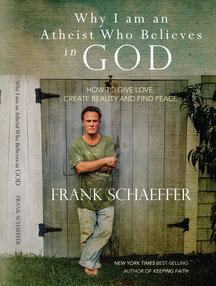
Frank Schaeffer is a writer. His latest book —WHY I AM AN ATHEIST WHO BELIEVES IN GOD: How to give love, create beauty and find peace
Available now on Amazon

Follow Frank on Twitter www.twitter.com/frank_schaeffer See Frank’s paintings http://www.frankschaefferart.com/ Follow Frank on Facebook https://www.facebook.com/frank.schaeffer.16 Contact Frank at http://www.frankschaeffer.com/
Previous Post

June 29, 2015
The Apologetics Lie my Daddy and Me Used to Tell
Next Post
July 1, 2015 a 7-year-old first grader stands up to the religious right WATCH THIS CLIP
Browse Our Archives
Select a Category Art children Christmas family parenting political humor politics religion sex Uncategorized
Select a Month May 2017 April 2017 March 2017 February 2017 January 2017 December 2016 November 2016 October 2016 September 2016 August 2016 July 2016 June 2016 May 2016 April 2016 March 2016 February 2016 January 2016 December 2015 November 2015 October 2015 September 2015 August 2015 July 2015 June 2015 May 2015 April 2015 March 2015 February 2015 January 2015 December 2014 November 2014 October 2014 September 2014 August 2014 July 2014 June 2014 May 2014 April 2014 March 2014 February 2014 January 2014 December 2013 November 2013 October 2013 September 2013 August 2013 July 2013 June 2013 May 2013 April 2013 March 2013 February 2013 January 2013 December 2012 November 2012 October 2012 September 2012
Follow Us!
TAKE THE
Religious Wisdom Quiz
True or False: The fruit of the Spirit includes love, joy, peace, and twelve other qualities.
Select your answer to see how you score.
FALSE TRUE
Related posts from Why I Still Talk to Jesus -- In Spite of Everything

The Terrifying Truth about the USA (And All...
Why I Still Talk to Jesus -- In Spite of Everything

Does U2's Bono Support Donald Trump?
Why I Still Talk to Jesus -- In Spite of Everything

The Case For Impeachment Grows
Why I Still Talk to Jesus -- In Spite of Everything

As we watch Trump abuse and debase the...
Why I Still Talk to Jesus -- In Spite of Everything
TRENDING AT PATHEOS Politics and Religion

Did Prayer Cure His Cancer? Or Was It...
At 4 AM one morning, Joshua W. Brown’s wife awoke to a...

8 Ways a Near-Death Experience Rewires the Soul
Does Consciousness Survive Physical Death? After 50 Years of Research, Dr. Raymond...

Holy Longing: What Our Restlessness Is Telling Us
“One can find so many pains when the rain is falling.” -John...

What this is NOT about. This blog is definitely not about...

Who said the Israelites were God’s chosen? That’s right, they did. Who...

The Spirit World Is the Real World: God...
A Monk’s Wisdom on Body and Spirit I sit with Brother Martin...
view all Politics and Religion blogs
Ad-Free & Subscriber Log-In Subscription Support
- About Us
- 2026 Calendar
- Videos
- Podcasts
- Library of World Religions
- Faith In Media Tracker
- Advertise With Us
- Write for Us
- Privacy Policy
- Terms of Service
- Do Not Sell My Data
- Contact Us
- Radiant Digital
- Manage Newsletter Subscriptions
- Unsubscribe From Notifications
- Sitemap
Copyright 2008-2026, Patheos. All rights reserved.
Subscription Support Ad-Free & Subscriber Log-In
Follow Patheos