
BuddhistCatholicContemplativeEvangelicalGeneral ChristianHinduJewishLatter-day SaintMuslimNew VisionsProgressive Christian
Beliefs
- Buddhist
- Catholic
- Contemplative
- Evangelical
- General Christian
- Hindu
- Jewish
- Latter-day Saint
- More Voices
- Muslim
- New Visions
- Pagan
- Progressive Christian
Topics
- Religion News
- Food and Religion
- Sports and Religion
- Religious Art
- Religious Music and Entertainment
- Religious Events
- History and Religion
- Style and Religion
- Politics and Religion
- Women in Religion
- Recreation Outdoors and Religion
- Business Finance and Religion
- Careers Workplace and Religion
- Education and Religion
- Family Parenting and Religion
- Health Fitness and Religion
- Home and Religion
- Relationships and Religion
- Technology and Religion
- Travel and Religion
Columnists
- Buddhist Columnists
- Business Finance and Religion Columnists
- Careers Workplace and Religion Columnists
- Catholic Columnists
- Contemplative Columnists
- Education and Religion Columnists
- Evangelists Columnists
- Family Parenting and Religion Columnists
- General Christian Columnists
- Health Fitness and Religion Columnists
- Hindu Columnists
- History and Religion Columnists
- Home and Religion Columnists
- Jewish Columnists
- More Voices Columnists
- Latter Day Columnists
- Muslim Columnists
- New Visions Columnists
- Nonreligious Columnists
- Pagan Columnists
- Politics and Religion Columnists
- Progressive Columnists
- Recreation Outdoors and Religion Columnists
- Relationships and Religion Columnists
- Religion News Columnists
- Religious Art Columnists
- Religious Events Columnists
- Religious Music and Entertainment Columnists
- Sports and Religion Columnists
- Style and Religion Columnists
- Technology and Religion Columnists
- Travel and Religion Columnists
- Women in Religion Columnists
Resource Library
- 2026 Calendar
- Library of World Religions
- The 100 Most Holy Places on Earth
- Patheos Answers
- Podcasts
- Videos
- Faith Leaders Database
- Anglican Episcopalian
- Bahai
- Baptist
- Buddhism
- Christianity
- Confucianism
- Eastern Orthodoxy
- Hinduism
- Holiness and Pentecostal
- ISKCON
- Islam
- Judaism
- Lutheran
- Methodist
- The Church of Jesus Christ of Latter-day Saints
- New Age
- Paganism
- Presbytarian and Reformed
- Protestantism
- Religion Behind the Scenes
- Roman Catholic
- Scientology
- Shia Islam
- Sikhism
- Sufism
- Sunni Islam
- Taoism
- Zen
- See all religions
Research Tools
 Ad-Free & Subscriber Log-In Subscription Support
Ad-Free & Subscriber Log-In Subscription Support
Follow Patheos 

- Trending:
- Forgiveness
- |
- Marriage
- |
- Consciousness
- |
- Death Penalty
- |
- Election
- |
- Halloween
 Why I Still Talk to Jesus -- In Spite of Everything
- Home
- Politics and Religion
- Here’s How the Roman Catholic Condemnation of Homosexuality Can and Must Change
Here’s How the Roman Catholic Condemnation of Homosexuality Can and Must Change
Last updated on: March 12, 2015 at 5:34 pm by Frank Schaeffer
Here’s How the Roman Catholic Condemnation of Homosexuality Can and Must Change 2015-03-12T17:34:47-06:00 Frank Schaeffer
Patheos Explore the world's faith through different perspectives on religion and spirituality! Patheos has the views of the prevalent religions and spiritualities of the world.
Gary Gutting is a professor of philosophy at the University of Notre Dame. In this wonderful article I’ve excerpted (reprinted by permission from the New York Times) he brilliantly refutes the primary arguments against gay rights as derived from what’s known as the “natural-law tradition” of ethical thought. This article is a stunner. Please read and share.
Unraveling the Church Ban on Gay Sex
By Gary Gutting
March 12, 2015 3:20 am March 12, 2015 3:20 am
Last month, Salvatore Cordileone, the archbishop of San Francisco, made controversial changes to a handbook for Catholic high school teachers in his jurisdiction. The changes included morals clauses, one of which forbids those teachers from publicly endorsing homosexual behavior. There are plausible legal and educational objections to this move. But there is a deeper issue, one that raises fundamental questions about Catholic teachings on homosexuality and other sexual matters.
Sex can contribute to any couple’s fulfillment as human beings. Isn’t this just what it should mean to live in accord with human nature?
The archbishop has justified of his decision on the grounds that homosexual acts are “contrary to natural law.” Unlike many religions, Catholicism insists that its moral teachings are based not just on faith but also on human reason. For example, the church claims that its moral condemnation of homosexual acts can be established by rigorous philosophical argument, independent of anything in the Bible.
The primary arguments derive from what is known as the “natural-law tradition” of ethical thought, which begins with Plato and Aristotle, continues through Thomas Aquinas and other medieval and modern philosophers…
The problem is that, rightly developed, natural-law thinking seems to support rather than reject the morality of homosexual behavior. Consider this line of thought from John Corvino, a philosopher at Wayne State University: “A gay relationship, like a straight relationship, can be a significant avenue of meaning, growth, and fulfillment. It can realize a variety of genuine human goods; it can bear good fruit. . . . [For both straight and gay couples,] sex is a powerful and unique way of building, celebrating, and replenishing intimacy.” The sort of relationship Corvino describes seems clearly one that would contribute to a couple’s fulfillment as human beings — whether the sex involved is hetero- or homosexual. Isn’t this just what it should mean to live in accord with human nature?
Natural-law ethicists typically don’t see it that way. They judge homosexual acts immoral, and claim that even a relationship like the one Corvino describes would be evil because the sex involved would be of the wrong sort…
…Just trying to formulate the argument shows how strained it is. There are, of course, numerous subtle distinctions employed to defend it, requiring equal subtlety to respond. And many would see the argument as proving too much, since proponents also use it to show the immorality of birth control, masturbation and even non-reproductive sexual acts between heterosexuals.
Most important, however, the argument has no satisfactory response to two crucial questions. First, why, even if nonreproductive sex were somehow less “natural” than reproductive, couldn’t it still play a positive role in a humanly fulfilling life of love between two people of the same sex? Second, why must nonreproductive sex be only for the selfish pleasure of each partner, rather than, as Corvino put it, a way of building, celebrating, and replenishing their shared intimacy?
The natural-law argument might make some sense to those who see homosexuals as dominated by an obsessive desire for pleasure, to which they subordinate any notion of fidelity or integrity. The courageous uncloseting of many homosexuals has revealed them as people like most everyone else, searching for and sometimes achieving a fulfilling human life through rich and complex relationships. Since the official church, under Pope Francis, is more than ever open to this sensible view, the time is overdue for a revision of its philosophical misunderstanding of homosexual acts.
But should the failure of the natural-law case against homosexual behavior bother Catholics, who, after all, can also appeal to the Bible’s denunciations of homosexual behavior? Here another aspect of Catholic thought becomes crucial: The church accepts that there are two distinct sources of truth: divine revelation and reason unaided by revelation (for example, the “natural reason” of scientists and philosophers). But it also holds Thomas Aquinas’s view that there can never be a genuine conflict between these two sources. Therefore, any apparent conflict results from our failure to understand what either God or reason is saying.
Most important, there is no assumption, in any given case, that we must resolve the conflict by revising the apparent conclusion of reason. For example, the church (eventually) decided that the scientific claims of Galileo and Darwin were correct and required revisions in teachings based on biblical passages suggesting otherwise. It is, therefore, an open question whether to accept the reasonable conclusion that homosexual acts need not be immoral and reject the view that this is what the Bible says…
… Christian scholars argue that the acceptance of slavery (even in the New Testament, by Paul) merely reflects the limited perspective of the Bible’s human authors (similar to their belief in geocentrism or six-day creation) and does not reflect God’s revelation.
The condemnation of homosexuality could plausibly be treated in the same way…
…I understand that an archbishop is not politically in a position to deny what is still an official church doctrine. But there is nothing that requires him to vigorously enforce a teaching that is so dubious even in terms of the church’s own view on the two sources of truth…
… the church needs to undertake a thorough rethinking of its teachings on sexual ethics, including premarital sex, masturbation and remarriage after divorce. In every case, the old arguments no longer work (if they ever did), and a vast number of Catholics reject the teachings. It’s time for the church to realize that its sexual ethics are philosophically untenable and theologically unnecessary.

Gary Gutting is a professor of philosophy at the University of Notre Dame, and an editor of Notre Dame Philosophical Reviews. He is the author of, most recently, “Thinking the Impossible: French Philosophy since 1960,” and writes regularly for The Stone.
The Stone features the writing of contemporary philosophers and other thinkers on issues both timely and timeless. The series moderator is Simon Critchley. He teaches philosophy at The New School for Social Research in New York. To contact the editors of The Stone, send an e-mail to [email protected]. Please include “The Stone” in the subject field.
-
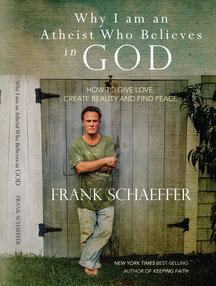
Frank Schaeffer is a writer. His latest book —WHY I AM AN ATHEIST WHO BELIEVES IN GOD: How to give love, create beauty and find peace
Available now on Amazon

Follow Frank on Twitter www.twitter.com/frank_schaefferSee Frank’s paintings http://www.frankschaefferart.com/Follow Frank on Facebook https://www.facebook.com/frank.schaeffer.16Contact Frank at http://www.frankschaeffer.com/
Next Post

March 14, 2015 WATCH: Obama Reads Mean Tweets About Himself on 'Jimmy Kimmel Live' Segment
Browse Our Archives
Select a Category Art children Christmas family parenting political humor politics religion sex Uncategorized
Select a Month May 2017 April 2017 March 2017 February 2017 January 2017 December 2016 November 2016 October 2016 September 2016 August 2016 July 2016 June 2016 May 2016 April 2016 March 2016 February 2016 January 2016 December 2015 November 2015 October 2015 September 2015 August 2015 July 2015 June 2015 May 2015 April 2015 March 2015 February 2015 January 2015 December 2014 November 2014 October 2014 September 2014 August 2014 July 2014 June 2014 May 2014 April 2014 March 2014 February 2014 January 2014 December 2013 November 2013 October 2013 September 2013 August 2013 July 2013 June 2013 May 2013 April 2013 March 2013 February 2013 January 2013 December 2012 November 2012 October 2012 September 2012
Follow Us!
TAKE THE
Religious Wisdom Quiz
What does "Satan" mean in Hebrew?
Select your answer to see how you score.
Adversary Murderer Destroyer Deceiver
Related posts from Why I Still Talk to Jesus -- In Spite of Everything

The Terrifying Truth about the USA (And All...
Why I Still Talk to Jesus -- In Spite of Everything

Does U2's Bono Support Donald Trump?
Why I Still Talk to Jesus -- In Spite of Everything

The Case For Impeachment Grows
Why I Still Talk to Jesus -- In Spite of Everything

As we watch Trump abuse and debase the...
Why I Still Talk to Jesus -- In Spite of Everything
TRENDING AT PATHEOS Politics and Religion

Did Prayer Cure His Cancer? Or Was It...
At 4 AM one morning, Joshua W. Brown’s wife awoke to a...

8 Ways a Near-Death Experience Rewires the Soul
Does Consciousness Survive Physical Death? After 50 Years of Research, Dr. Raymond...

Holy Longing: What Our Restlessness Is Telling Us
“One can find so many pains when the rain is falling.” -John...

What this is NOT about. This blog is definitely not about...

Who said the Israelites were God’s chosen? That’s right, they did. Who...

The Spirit World Is the Real World: God...
A Monk’s Wisdom on Body and Spirit I sit with Brother Martin...
view all Politics and Religion blogs
Ad-Free & Subscriber Log-In Subscription Support
- About Us
- 2026 Calendar
- Videos
- Podcasts
- Library of World Religions
- Faith In Media Tracker
- Advertise With Us
- Write for Us
- Privacy Policy
- Terms of Service
- Do Not Sell My Data
- Contact Us
- Radiant Digital
- Manage Newsletter Subscriptions
- Unsubscribe From Notifications
- Sitemap
Copyright 2008-2026, Patheos. All rights reserved.
Subscription Support Ad-Free & Subscriber Log-In
Follow Patheos