
BuddhistCatholicContemplativeEvangelicalGeneral ChristianHinduJewishLatter-day SaintMuslimNew VisionsProgressive Christian
Beliefs
- Buddhist
- Catholic
- Contemplative
- Evangelical
- General Christian
- Hindu
- Jewish
- Latter-day Saint
- More Voices
- Muslim
- New Visions
- Pagan
- Progressive Christian
Topics
- Religion News
- Food and Religion
- Sports and Religion
- Religious Art
- Religious Music and Entertainment
- Religious Events
- History and Religion
- Style and Religion
- Politics and Religion
- Women in Religion
- Recreation Outdoors and Religion
- Business Finance and Religion
- Careers Workplace and Religion
- Education and Religion
- Family Parenting and Religion
- Health Fitness and Religion
- Home and Religion
- Relationships and Religion
- Technology and Religion
- Travel and Religion
Columnists
- Buddhist Columnists
- Business Finance and Religion Columnists
- Careers Workplace and Religion Columnists
- Catholic Columnists
- Contemplative Columnists
- Education and Religion Columnists
- Evangelists Columnists
- Family Parenting and Religion Columnists
- General Christian Columnists
- Health Fitness and Religion Columnists
- Hindu Columnists
- History and Religion Columnists
- Home and Religion Columnists
- Jewish Columnists
- More Voices Columnists
- Latter Day Columnists
- Muslim Columnists
- New Visions Columnists
- Nonreligious Columnists
- Pagan Columnists
- Politics and Religion Columnists
- Progressive Columnists
- Recreation Outdoors and Religion Columnists
- Relationships and Religion Columnists
- Religion News Columnists
- Religious Art Columnists
- Religious Events Columnists
- Religious Music and Entertainment Columnists
- Sports and Religion Columnists
- Style and Religion Columnists
- Technology and Religion Columnists
- Travel and Religion Columnists
- Women in Religion Columnists
Resource Library
- 2026 Calendar
- Library of World Religions
- The 100 Most Holy Places on Earth
- Patheos Answers
- Podcasts
- Videos
- Faith Leaders Database
- Anglican Episcopalian
- Bahai
- Baptist
- Buddhism
- Christianity
- Confucianism
- Eastern Orthodoxy
- Hinduism
- Holiness and Pentecostal
- ISKCON
- Islam
- Judaism
- Lutheran
- Methodist
- The Church of Jesus Christ of Latter-day Saints
- New Age
- Paganism
- Presbytarian and Reformed
- Protestantism
- Religion Behind the Scenes
- Roman Catholic
- Scientology
- Shia Islam
- Sikhism
- Sufism
- Sunni Islam
- Taoism
- Zen
- See all religions
Research Tools
 Ad-Free & Subscriber Log-In Subscription Support
Ad-Free & Subscriber Log-In Subscription Support
Follow Patheos 

- Trending:
- Forgiveness
- |
- Marriage
- |
- Consciousness
- |
- Death Penalty
- |
- Election
- |
- Halloween
 Franciscan activist
- Home
- Catholic
- Building the Kingdom as Equals
Building the Kingdom as Equals
Last updated on: October 24, 2017 at 7:06 pm by pcarolan
Building the Kingdom as Equals 2017-10-24T19:06:20-04:00 pcarolan
Patheos Explore the world's faith through different perspectives on religion and spirituality! Patheos has the views of the prevalent religions and spiritualities of the world.
 Last week I wrote a blog about gun violence. I started off mentioning how we have fallen into a pattern of outrage, offering prayers and then doing nothing and moving on. This week the prevalent story across the media was about Harvey Weinstein. If you Googled him you would get over 85 million hits. One headline from the New York Times says: “Harvey Weinstein’s Fall Opens the Floodgates in Hollywood.” Opens the floodgates to what I wonder? Was there some big secret in Hollywood about sexual predators preying on young woman? It seems like everyone knew about Weinstein, the whispers were there. But because he was so powerful, no one wanted to act. Sadly we have seen this movie over and over and over. It was just one year ago that Access Hollywood tapes showed president Trump saying that he can do whatever he wants to women because he’s famous: “Grab them by the p…y,” he said. “You can do anything.” Since then, more 15 women have stepped forward to claim that they were assaulted by Trump. The result of their brave confessions: they were attacked and accused of fabricating their stories. Trump won the election receiving a majority of votes from Catholics and Evangelicals. What does this say about our nation, our Christianity our culture? It is not about being conservative or liberal, Democrat or Republican. Bill Clinton was as guilty as Donald Trump.
But it is not just the Clinton’s or Trumps or Weinstein’s or countless other men in power who have used their power to assault woman. Most of us men are not gropers; we do not commit sexual assault. But sometimes our silence is deafening. We will hear the usual excuses and rationalizations for why these assaults keep happening. Boys will be boys, it is because of pornography, and it’s because we did away with prayer in school. It is because we are turning away from the Bible. Then we continue to ignore how prevalent and serious the problem is, and we allow our co-workers, friends, and even family members who act in inappropriate ways to go right on believing that it’s acceptable behavior. In 2008 the New York Subway system put up signs that reminded riders that groping is a crime and encourage any victims to report incidents to an MTA employee or a police officer. Really?!? We need to remind men that it is wrong to grope women? Shouldn’t that be taught to every young boy and reinforced regularly? What does that say about us as a people?
It is so very easy to condemn Trump, Clinton, Weinstein and others, and they should be condemned. But if all we are doing is condemning, thinking these are isolated incidences, and never taking the time to look at the root causes of these actions, we are just like the Pharisee in Luke 18:11. “The Pharisee stood by himself and prayed: ‘God, I thank you that I am not like other people–robbers, evildoers, adulterers–or even like this tax collector.” Trump was very clear in saying when you have “power over”, you can do whatever you want. If we create and continue a system where women are considered lesser, not equal to men, then we have even a system that perpetuates the idea that it is acceptable to mistreat women.
So what are the root causes? How did we get to this place where men feel they have a right to touch, harass, and abuse women? We can certainly look around and find lots of blame. We can feel self righteous thinking that we would never do that. But as Catholics/ Christians we should reflect on what it says in Luke 6:42: “How can you say to your brother, ‘Brother, let me take the speck out of your eye,’ when you yourself fail to see the plank in your own eye? You hypocrite, first take the plank out of your eye, and then you will see clearly to remove the speck from your brother’s eye.” So maybe we should look at our own history first. We can start with Mary Magdalene. She is a woman who has been both honored and reviled by the church. She clearly had an important role in the life, death and resurrection of Jesus. Early church fathers presented her as a key witness to the death and resurrection. Yet in the 6th century, Pope Gregory the Great, in a famous series of sermons given in Rome, described Mary Magdalene as a prostitute and whore, a position which became the official teaching of the church up until the last century.
Why would Gregory and the church feel the need to diminish and demean a woman who, according to early text, is a trusted apostle of Jesus? Ironically around the same time a different Gregory, the Patriarch of Antioch, and a leading theologian of the eastern church, in a homily¹ writes how the risen Christ is supposed to have turned and addressed the women, including Mary Magdalene, who “had run to the tomb” using these words: “Tell my apostles the mysteries you’ve seen. You are the first apostles to the apostles. Let Peter, who denied Me, learn that I’m able to raise women up to be apostles, as well.” Imagine the shock and horror when the leader of the Eastern Catholic Church suggests that Jesus called women to be apostles! There were many reasons why Pope Gregory chose to rewrite the story of Mary Magdalene, but perhaps the most important one was the need to firmly establish the concept of male dominance over women.
Another rather disturbing teaching of the church is the teaching on ensoulment or when a fetus receives the soul. St Thomas Aquinas the 13th century Dominican who is considered one of our church’s leading theologians, suggested in his Summa Theologica that ensoulment happens at 40 days after conception for a male fetus and 90 days for a female fetus. At the The Council of Vienne in 1323, this was approved as official church teaching. There can be many arguments as to why Aquinas believed this. But it is so wrong, that it would be hard in a short blog to comment. But think for a moment what the message is from this teaching by one of our church’s greatest theologians. Aquinas is saying, and the church affirmed, the belief that in God’s eyes women are less than men. You can sugarcoat it, you can rationalize it any way you like, but in the end, if we taught that ensoulment happened at an earlier stage of development for male fetuses than female fetus, then we are teaching that God does not view men and women as equal, and if men have power over women then men can do whatever they like to women.
We also have the rather obtuse argument about the nature of sin and whether masturbation is a greater sin then rape. You may be thinking: This cannot be true; how could anyone think that masturbation is a greater sin than rape? There has been much written about this. Mostly because of what Aquinas wrote in Summa Theologica. In the chapter, Whether the unnatural vice is the greatest sin among the species of lust, Aquinas makes the point that considering only the sexual element, an unnatural act is worse than a natural one, and that’s why he says masturbation is a worse sexual sin than rape. However, rape is also a sin against justice and a sin against charity so therefore it is a greater sin than masturbation. But Aquinas is not the only Catholic theologian who has made this argument. In the late medieval period, Jean Gerson, a Catholic theologian, considered one of the most prominent theologians at the Council of Constance, wrote a confessional manual called “On the Confession of Masturbation.” According to researcher Chloe Taylor, this manual tells clerics to “insist that (male) penitents admit to the sin of masturbation, which… was deemed… even more serious sin than raping a nun, incest, or abducting and raping virgins and wives.” I am not a theologian. I do not consider myself to be well versed in church doctrine, but I cannot imagine anywhere, at any time, and for any reason God would consider masturbation to be a greater sin then rape. There should not have been even the slightest discussion about this. Again, what does that say about how we view women?
You might argue that these are all examples from the Middle Ages or earlier and that times are different now. Yet we have a church leader, Cardinal Burke, suggesting that the Catholic church has become too “feminized.” He talks about it in a way that would leave one to believe he views that as wrong and evil.
Of course it is ludicrous to suggest that we can connect the dots and conclude that the church’s teaching is why people like Trump or Weinstein can act the way they do. They act that way because we have created a culture that allows, and in some cases applauds, such behavior. We have created a culture where men have perceived power over women, where men and women are not equal. Each of us contributes to this culture by our actions. The Catholic church certainly contributed to this culture over the centuries by her actions. If we are all connected, then each of our actions contribute to the whole. Sometimes our actions are actually inaction, like remaining silent when we should speak out. Do we believe that in Heaven, God would find behavior like Trump’s or Weinstein’s acceptable? If not, why do we think God finds it acceptable on Earth? Perhaps if we all started treating each other as equals, respecting each other and speaking out against injustice it would be the first step towards creating the kingdom of Heaven here on Earth.
Peace
- “Gregory of Antioch: Homilia in S.Τheophania, CPG 7385–Gleanings of Text and Theme,” JTS 60 vol. 2 (2009), pp. 531-7
Previous Post

October 17, 2017
The Disease of Apathy
Next Post

October 30, 2017 A Tribute to My Friend, Anne
Browse Our Archives
Select a Category Uncategorized
Select a Month January 2018 December 2017 November 2017 October 2017 September 2017
TAKE THE
Religious Wisdom Quiz
In the Parable of the Wedding Banquet, who accepts the invitation?
Select your answer to see how you score.
Priests Only the king Unexpected guests Nobles
Support this
Column


Related posts from Franciscan activist

The Tax Bill; A Moral Document

A Year End Prayer and Reflection for Policymakers
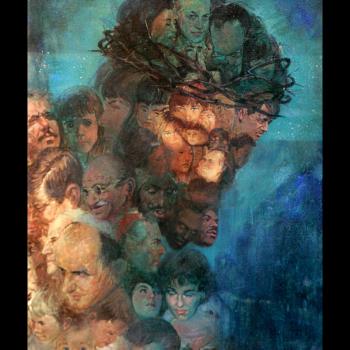
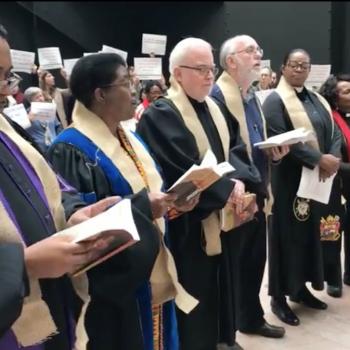
Tell me what church looks like
TRENDING AT PATHEOS Catholic

Creation, Preservation, and Teleology in Catholic Theology
As I write this, it is very early Monday morning. Like millions...

The Parable Of The Sower And The Word...
One of Christ’s most famous parables is that of the sower who...

Rejecting Doom: Christian Hope And Human Action
Christianity is a religion of hope. We are to have hope and...

Why I Choose the Eucharist Over the Sermon
Choose the Eucharist, Not the Sermon What are we supposed to get...

5 Design Elements Found in Spiritually Rooted Homes
Putting Spirituality Into Home Decor Our homes are more than our living...

Credo: A Story of God Told with the...
About 10 years ago, I began to imagine a personal "Credo" that...
view all Catholic blogs
Ad-Free & Subscriber Log-In Subscription Support
- About Us
- 2026 Calendar
- Videos
- Podcasts
- Library of World Religions
- Faith In Media Tracker
- Advertise With Us
- Write for Us
- Privacy Policy
- Terms of Service
- Do Not Sell My Data
- Contact Us
- Radiant Digital
- Manage Newsletter Subscriptions
- Unsubscribe From Notifications
- Sitemap
Copyright 2008-2026, Patheos. All rights reserved.
Subscription Support Ad-Free & Subscriber Log-In
Follow Patheos