
BuddhistCatholicContemplativeEvangelicalGeneral ChristianHinduJewishLatter-day SaintMuslimNew VisionsProgressive Christian
Beliefs
- Buddhist
- Catholic
- Contemplative
- Evangelical
- General Christian
- Hindu
- Jewish
- Latter-day Saint
- More Voices
- Muslim
- New Visions
- Pagan
- Progressive Christian
Topics
- Religion News
- Food and Religion
- Sports and Religion
- Religious Art
- Religious Music and Entertainment
- Religious Events
- History and Religion
- Style and Religion
- Politics and Religion
- Women in Religion
- Recreation Outdoors and Religion
- Business Finance and Religion
- Careers Workplace and Religion
- Education and Religion
- Family Parenting and Religion
- Health Fitness and Religion
- Home and Religion
- Relationships and Religion
- Technology and Religion
- Travel and Religion
Columnists
- Buddhist Columnists
- Business Finance and Religion Columnists
- Careers Workplace and Religion Columnists
- Catholic Columnists
- Contemplative Columnists
- Education and Religion Columnists
- Evangelists Columnists
- Family Parenting and Religion Columnists
- General Christian Columnists
- Health Fitness and Religion Columnists
- Hindu Columnists
- History and Religion Columnists
- Home and Religion Columnists
- Jewish Columnists
- More Voices Columnists
- Latter Day Columnists
- Muslim Columnists
- New Visions Columnists
- Nonreligious Columnists
- Pagan Columnists
- Politics and Religion Columnists
- Progressive Columnists
- Recreation Outdoors and Religion Columnists
- Relationships and Religion Columnists
- Religion News Columnists
- Religious Art Columnists
- Religious Events Columnists
- Religious Music and Entertainment Columnists
- Sports and Religion Columnists
- Style and Religion Columnists
- Technology and Religion Columnists
- Travel and Religion Columnists
- Women in Religion Columnists
Resource Library
- 2026 Calendar
- Library of World Religions
- The 100 Most Holy Places on Earth
- Patheos Answers
- Podcasts
- Videos
- Faith Leaders Database
- Anglican Episcopalian
- Bahai
- Baptist
- Buddhism
- Christianity
- Confucianism
- Eastern Orthodoxy
- Hinduism
- Holiness and Pentecostal
- ISKCON
- Islam
- Judaism
- Lutheran
- Methodist
- The Church of Jesus Christ of Latter-day Saints
- New Age
- Paganism
- Presbytarian and Reformed
- Protestantism
- Religion Behind the Scenes
- Roman Catholic
- Scientology
- Shia Islam
- Sikhism
- Sufism
- Sunni Islam
- Taoism
- Zen
- See all religions
Research Tools
 Ad-Free & Subscriber Log-In Subscription Support
Ad-Free & Subscriber Log-In Subscription Support
Follow Patheos 

- Trending:
- Forgiveness
- |
- Marriage
- |
- Consciousness
- |
- Death Penalty
- |
- Election
- |
- Halloween

- Home
- Catholic
- Politics and Religion
- The Man Who Taught Nagasaki to Pray
The Man Who Taught Nagasaki to Pray
Last updated on: August 8, 2026 at 11:09 am by Fr. Nicholas Sheehy, LC
The Man Who Taught Nagasaki to Pray 2026-08-08T11:09:09-07:00 Fr. Nicholas Sheehy, LC
Patheos Explore the world's faith through different perspectives on religion and spirituality! Patheos has the views of the prevalent religions and spiritualities of the world.
On the morning of August 9, 1945, Nagasaki still knew almost nothing of the catastrophe that had befallen Hiroshima three days earlier. American planes had dropped leaflets warning of terrible destruction, but few paid them much attention. Bombers frequently passed overhead on their way to larger military targets, especially Tokyo. Within hours, the war would arrive in a way no one imagined. It would mark not only the beginning of the end of World War II, but also the collapse of national pride that had carried Japan into it.
Both Hiroshima and Nagasaki were devastated by atomic bombs. Why does Nagasaki remember differently?
Doctor Takashi Nagai
Doctor Takashi Nagai coordinated the efforts to help the wounded at Nagasaki University Hospital. As director of the radiology department, he knew more about the radiation poisoning people could expect than those around him. He already carried in his own body the consequences from his career as a pioneer in radiology. He was diagnosed with leukemia and knew that this disaster would further shorten his life.
When Nagai finally returned home after days at the hospital, he found only ashes where his house had stood. In the ruins he discovered the charred bones of his beloved wife Midori, identified only by the rosary she had been holding. He gathered the remains in silence before returning to care for the living.
His experiences as a military physician in Manchuria had exposed him to the horrors of war long before the atomic bomb fell. Yet he could never imagine the destruction that came with the second atomic bomb that destroyed his home and took the life of his beloved wife. He believed Japan’s wartime pride had helped lead the nation to catastrophe, and he sought to interpret even this unimaginable tragedy through the eyes of faith.
Japan’s military leaders had embraced an expansionist vision fueled by nationalism and a belief in their nation’s destiny. American embargoes tightened the pressure, and by 1941 war seemed inevitable. Four years later, that path ended in unimaginable destruction.
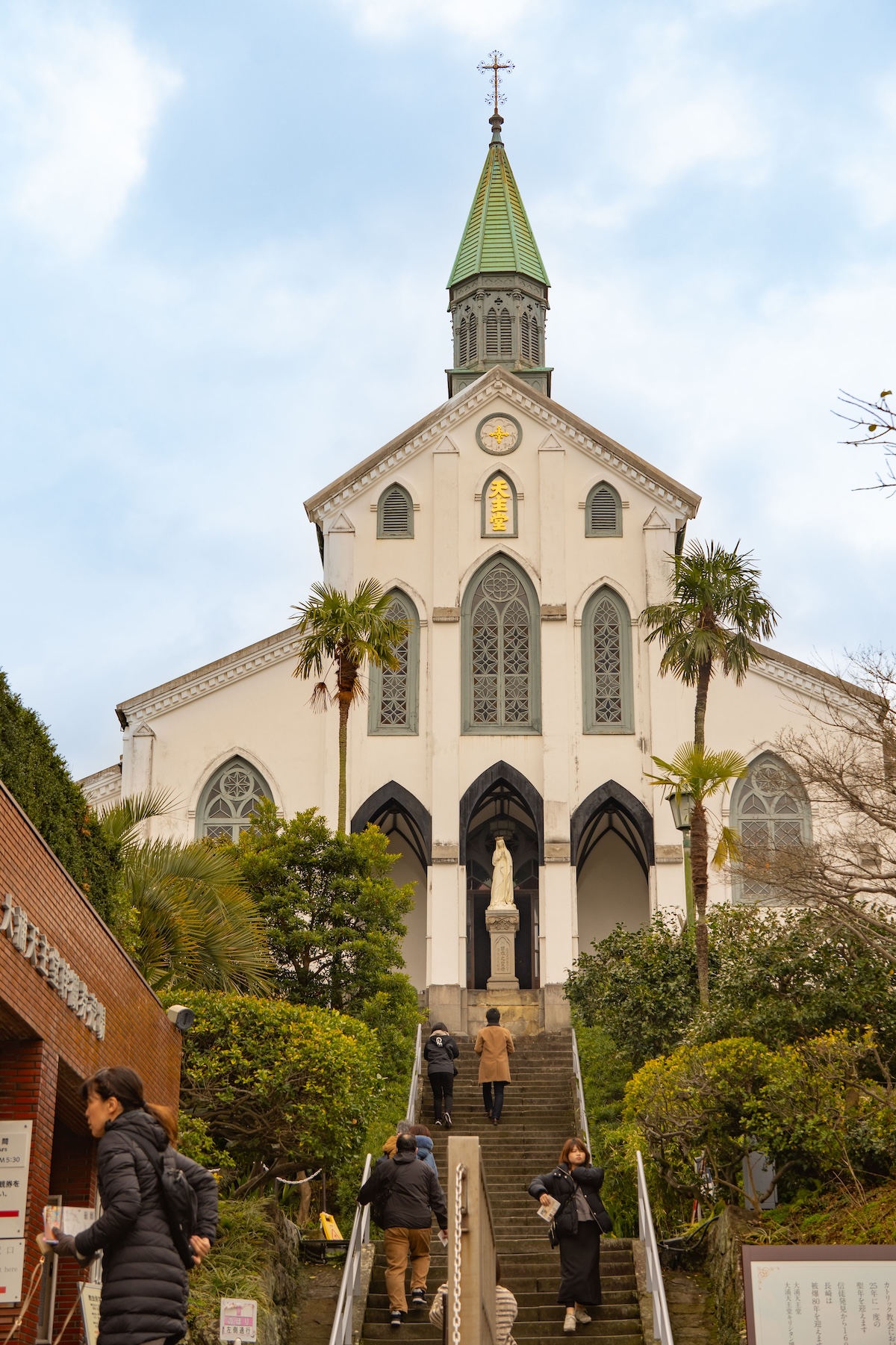
Nagasaki Oura Cathedral | courtesy:Pexels.com
Another Style of Memorial
Still today, memorial services held at Hiroshima often use the symbol of a closed fist, and it tends to be the site of passionate protests against war and especially atomic weapons. Notably, at Nagasaki, the symbol is a pair of praying hands. While many factors have shaped each city’s public memory, this difference owes much to Takashi Nagai, whose witness profoundly influenced Nagasaki’s remembrance of the bombing.
To understand why Nagasaki remembers differently, we have to understand the man who helped shape that memory.
A Call to Heal
Growing up in the country, the son of one of the first doctors to study Western medicine, Takashi had gone to Nagasaki to pursue his dream of becoming a doctor and returning to the country to help his father. He was pressed into military service a couple of times, including the campaign in Manchuria.
Nagasaki was unlike any other Japanese city. For centuries it had been Japan’s principal window to the West, and after the long persecution of Christianity it became home to the country’s largest Catholic community. Takashi’s reading of Pascal’s Pensées made him curious about the Christian religion. He chose to rent a room from a Christian couple, hoping to learn little by little about the faith.
Japanese or Christian?
For him, becoming Christian carried a cultural struggle. Was it ok to be Christian and Japanese? As the Mass was in Latin, even the liturgy reminded him that it was not a Japanese phenomenon, but rather one that came from beyond the shores of his beloved homeland.
So when the war broke out, Takashi already had a lot of practice reconciling outward forces with his deep Japanese identity. He loved poetry, particularly the Japanese forms such as haiku. Yet he recognized as well that some wisdom might come from foreign shores, like the Western medicine he studied and loved so much, hoping to improve the lot of his fellow Japanese citizens.
Call for Peace
At the funeral for the victims, Takashi urged the people to view the catastrophe through the eyes of faith. He suggested that God could bring good even from such immense evil and spoke of the sacrifice of Nagasaki as one that might help bring an end to the war and open the way to peace. His words shocked many at the time, yet over the years they profoundly shaped the city’s culture of remembrance.
Many found his words difficult to accept. Yet over time they came to define the spiritual memory of Nagasaki. They did not forget the horror of the bomb, but they refused to let hatred have the final word. He was not asking others to forgive from a distance. He was asking them to do what he himself had chosen to do after losing everything.
Confined to his bed soon after because of the leukemia, he spent the rest of his life writing and welcoming visitors from around the world, many of whom came as pilgrims seeking hope after the horrors of war.
Understanding the Church’s Calls for Peace
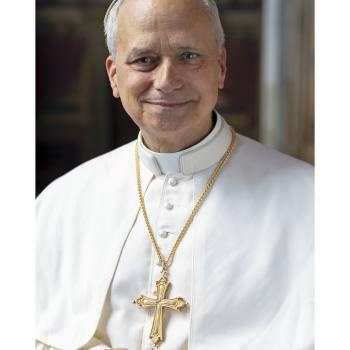
Pope Leo XIV captures something of Nagai’s vision when he writes in Magnifica Humanitas:
More than ever, without prejudice to the right to self-defense in the strictest sense, it is important to reaffirm that the “just war” theory, which has all too often been used to justify any kind of war, is now outdated (Pope Leo XIV, Magnifica Humanitas, 192).
This is not a rejection of the Church’s tradition, but a sober recognition that modern warfare has become increasingly resistant to moral limits. As Machiavelli observed, “Wars begin when you will, but they do not end when you please.” Eighty-one years after the atomic bombing of Nagasaki, perhaps the world needs fewer clenched fists and more folded hands. Like Takashi Nagai, let us pray for peace and work so that such devastation never happens again.
Buddhism

About Fr. Nicholas Sheehy, LC
Fr. Nicholas Sheehy is Assistant Chaplain at the Duke Catholic Center. He was ordained a Catholic priest in 2013 for the Legionaries of Christ. You can read more about the author here.
Previous Post
July 10, 2026
The Big Opportunity for Bishops After the SSPX Consecrations
Next Post
September 10, 2026 Never Forget: What 9/11 Should Teach Us 25 Years Later
Recent Comments
"Peace is a precious resource. Humankind and Planet Earth are thirsting for peace. Long live ..."
The Man Who Taught Nagasaki to ..."
"Searching and finding truth and traveling from truth to Truth is an exciting journey. The ..."
Your Writing Makes the Pope Happy
"Rich or poor, we are all fellow pilgrims enthusiastically marching together to our cherished destination. ..."
"There's no moral difference between avoiding conception by using 'artificial' contraception and using a 'natural' ..."
Browse Our Archives
Select a Category Church News Education Eucharist Faith and Mental Health Family Living the Faith Marriage Relationships Spiritual Direction Uncategorized Vocations Women Young Adults
Select a Month October 2026 September 2026 August 2026 July 2026 June 2026 November 2025 October 2025 September 2025 August 2025 July 2025 May 2025 April 2025 March 2025 February 2025 January 2025 December 2024 November 2024 October 2024 September 2024 August 2024 July 2024 June 2024 May 2024 April 2024 March 2024 February 2024 January 2024 December 2023 November 2023
Follow Us!
TAKE THE
Religious Wisdom Quiz
Who tried to seduce Joseph in Egypt?
Select your answer to see how you score.
Midianite woman Pharaoh's daughter Potiphar's wife Tamar
Related posts from Formation Matters

Why Do We Build? Pope Leo XIV on...
Your Writing Makes the Pope Happy

Beyond Left and Right: Catholic Church on Immigration
If You're Not Building, You're Breaking
TRENDING AT PATHEOS Catholic

I was strolling through the top floor of the brand new Parthenon...

What Does Gêvâh Mean For Kimberley Guifoyle &...
This week, a lot of the news is focused on Kimberly Guilfoyle....

INNER CIRCLE: Profound Mystery (Of Christ In All...
Ephesians 5:31-32 “For this reason, a man will leave his father and...

Do Not Rejoice When Your Enemy Falls: The...
Turning an execution into a public spectacle is a disturbing expression of...

'The Chosen' S6 Trailer: The Passion Gets Very...
Not many watching 'The Chosen' worry about spoilers, but just because they...

The purpose-driven labor priest
A labor activist reads Rick Warren and it gets me wondering about...
view all Catholic blogs
What Are Your Thoughts?leave a comment
Ad-Free & Subscriber Log-In Subscription Support
- About Us
- 2026 Calendar
- Videos
- Podcasts
- Library of World Religions
- Faith In Media Tracker
- Advertise With Us
- Write for Us
- Privacy Policy
- Terms of Service
- Do Not Sell My Data
- Contact Us
- Radiant Digital
- Manage Newsletter Subscriptions
- Unsubscribe From Notifications
- Sitemap
Copyright 2008-2026, Patheos. All rights reserved.
Subscription Support Ad-Free & Subscriber Log-In
Follow Patheos