
BuddhistCatholicContemplativeEvangelicalGeneral ChristianHinduJewishLatter-day SaintMuslimNew VisionsProgressive Christian
Beliefs
- Buddhist
- Catholic
- Contemplative
- Evangelical
- General Christian
- Hindu
- Jewish
- Latter-day Saint
- More Voices
- Muslim
- New Visions
- Pagan
- Progressive Christian
Topics
- Religion News
- Food and Religion
- Sports and Religion
- Religious Art
- Religious Music and Entertainment
- Religious Events
- History and Religion
- Style and Religion
- Politics and Religion
- Women in Religion
- Recreation Outdoors and Religion
- Business Finance and Religion
- Careers Workplace and Religion
- Education and Religion
- Family Parenting and Religion
- Health Fitness and Religion
- Home and Religion
- Relationships and Religion
- Technology and Religion
- Travel and Religion
Columnists
- Buddhist Columnists
- Business Finance and Religion Columnists
- Careers Workplace and Religion Columnists
- Catholic Columnists
- Contemplative Columnists
- Education and Religion Columnists
- Evangelists Columnists
- Family Parenting and Religion Columnists
- General Christian Columnists
- Health Fitness and Religion Columnists
- Hindu Columnists
- History and Religion Columnists
- Home and Religion Columnists
- Jewish Columnists
- More Voices Columnists
- Latter Day Columnists
- Muslim Columnists
- New Visions Columnists
- Nonreligious Columnists
- Pagan Columnists
- Politics and Religion Columnists
- Progressive Columnists
- Recreation Outdoors and Religion Columnists
- Relationships and Religion Columnists
- Religion News Columnists
- Religious Art Columnists
- Religious Events Columnists
- Religious Music and Entertainment Columnists
- Sports and Religion Columnists
- Style and Religion Columnists
- Technology and Religion Columnists
- Travel and Religion Columnists
- Women in Religion Columnists
Resource Library
- 2026 Calendar
- Library of World Religions
- The 100 Most Holy Places on Earth
- Patheos Answers
- Podcasts
- Videos
- Faith Leaders Database
- Anglican Episcopalian
- Bahai
- Baptist
- Buddhism
- Christianity
- Confucianism
- Eastern Orthodoxy
- Hinduism
- Holiness and Pentecostal
- ISKCON
- Islam
- Judaism
- Lutheran
- Methodist
- The Church of Jesus Christ of Latter-day Saints
- New Age
- Paganism
- Presbytarian and Reformed
- Protestantism
- Religion Behind the Scenes
- Roman Catholic
- Scientology
- Shia Islam
- Sikhism
- Sufism
- Sunni Islam
- Taoism
- Zen
- See all religions
Research Tools
 Ad-Free & Subscriber Log-In Subscription Support
Ad-Free & Subscriber Log-In Subscription Support
Follow Patheos 

- Trending:
- Forgiveness
- |
- Marriage
- |
- Consciousness
- |
- Death Penalty
- |
- Election
- |
- Halloween

- Home
- Catholic
- Politics and Religion
- Grace of the Sacraments and the Beauty and the Beast
Grace of the Sacraments and the Beauty and the Beast
Last updated on: May 8, 2025 at 6:33 am by Fr. Nicholas Sheehy, LC
Grace of the Sacraments and the Beauty and the Beast 2025-05-08T06:33:02-07:00 Fr. Nicholas Sheehy, LC
Patheos Explore the world's faith through different perspectives on religion and spirituality! Patheos has the views of the prevalent religions and spiritualities of the world.
Unity and Communion: A Gospel Invitation
Today’s Gospel (cf. Jn. 10:27-30) reveals the intimate union between the Father and the Son – a union that invites us to communion through sacramental grace. We have to learn to understand the sacramental nature of the world, as literature often communicates. For example, we could look at the sacramentality of Beauty and the Beast. First, we have to understand what a sacrament is.
What is a Sacrament? Encountering Christ through Grace
Celebrated worthily in faith, the sacraments confer the grace that they signify. They are efficacious because in them Christ himself is at work: it is he who baptizes, he who acts in his sacraments in order to communicate the grace that each sacrament signifies. The Father always hears the prayer of his Son’s Church, which, in the epiclesis of each sacrament, expresses her faith in the power of the Spirit. As fire transforms into itself everything it touches, so the Holy Spirit transforms into the divine life whatever is subjected to his power (Catechism of the Catholic Church, 1127).
A Tale as Old as Sin: The Beast as a Mirror
The sacraments confer the grace that they signify. We see this happen in the story of Beauty and the Beast. Belle arrives by mistake at the castle of the prince who has fallen into disgrace and has taken on the hideous figure of the Beast. His outward appearance and the enchantment laid upon the castle have embittered his heart, and he acts outwardly just as he seems. He is truly a beast.
The Beast takes the young girl captive, seemingly as a whim and not because of any real need. He feels the pressure to make her fall in love so that he can break the spell that has caused so much pain and sorrow in his heart and in his household. He wants to force her to love him so that he can turn back into a prince before it is too late.
The Need for Grace: Recognizing our Beast
Some have said that the prince represents Adam, so he becomes very much a type of the Biblical sin. Through his sin of inhospitality, he transforms himself into a beast. We might be tempted to look at the story as completely separate from our experience. However, if we are honest, we can see how we have all acted in beastly ways.
Christ at Work: How the Sacraments Transform Us
To properly appreciate the sacraments, we have to recognize our need for them. It is easy to ignore our own beastliness and say “this is the way I am. There is no changing now.” We need time and grace to recognize our need for the sacraments to rescue us from sin.
It is Christ himself who is at work through the sacraments. He is the one who baptizes, though it may be a priest or deacon who is there as the representative of the Church. The Holy Spirit transforms whatever is under his power into the divine life.
Not Thrown, but Called: Communion vs. Chaos
In today’s Gospel, we hear “The Father and I are one” (Jn. 10:30). Jesus reflected frequently on his union with the Father and calls us to communion as well. Philosophers like Heidegger have suggested that human beings are simply ‘thrown’ into the world, with no inherent purpose. But the Gospel reveals something far greater: a God who lovingly calls us into communion, not chaos.
Created for Connection: The Power of Love and Recognition
God made us for connection, but we begin to discover this in the connections we develop for one another. One marriage therapist summarizes the marriage relationship to the phrase that we are “created for connection.” This comes out in the story of the Beauty and the Beast.
At first, Belle is repulsed by the Beast. His disfigured appearance and nasty manners repel her in every way. Slowly, however, she begins to see the goodness that is within him. It is an invitation to all of us to discover the goodness of those around us, especially those who seem more ornery and difficult. At the last moment, when it seems that all hope is lost, she kisses him and the magic begins to work. Her love helps him recognize that he is lovable. The spell is broken, and he returns to his princely state with a new heart.
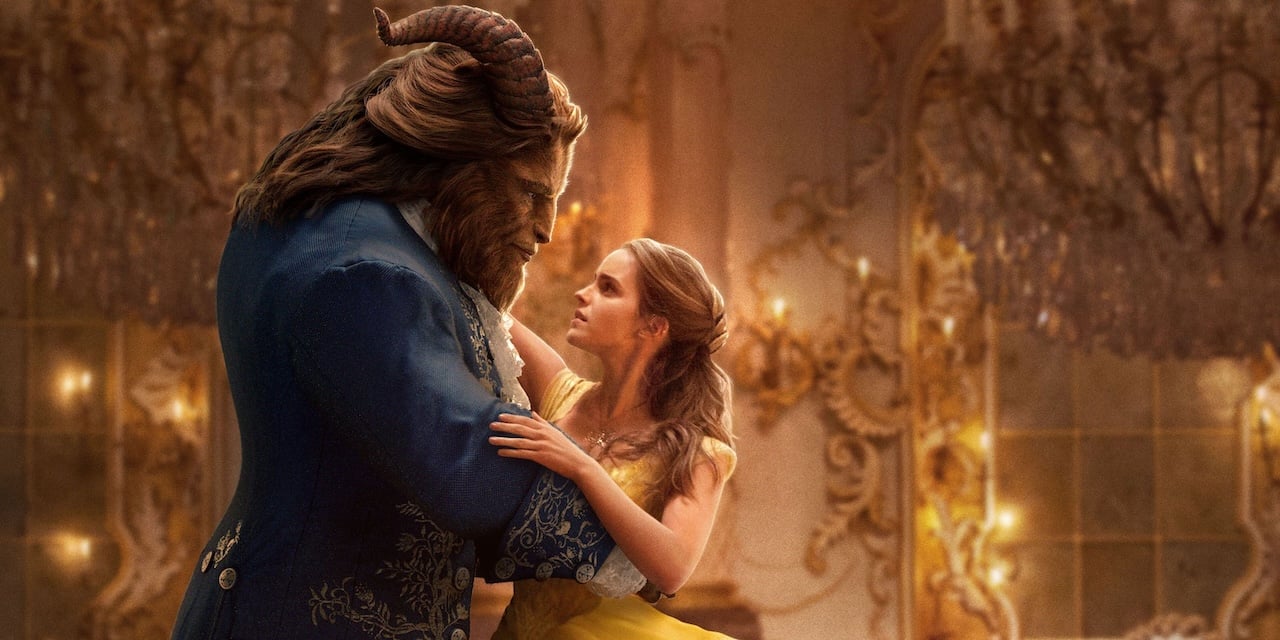
The communion they experience leads to grace| Fair use
Becoming Lovable: Letting Grace Do Its Work
The same thing can happen in us in our relationship with God through the sacraments. It is truly his love that makes us lovable. We have to take advantage of the sacraments so that they can work their effect in us. We know that God always works through the sacraments, but we can block their efficacy through our own lack of faith or unwillingness to accept the grace that he dispenses through them.
Take some time this week to reflect on how you are living the sacraments. Are you allowing God’s generous grace to touch and transform your heart? Just as Belle’s love revealed the true heart of the Beast, so Christ’s love, poured into our hearts through the sacraments, transforms us and restores us to our true dignity. In the sacraments, we discover that we are not alone, not thrown into a meaningless world, but drawn into communion with the God who says, “The Father and I are one” (Jn. 10:30).
Subscribe to the newsletter to never miss an article.

About Fr. Nicholas Sheehy, LC
Fr. Nicholas Sheehy is Assistant Chaplain at the Duke Catholic Center. He was ordained a Catholic priest in 2013 for the Legionaries of Christ. You can read more about the author here.
Previous Post

April 30, 2025
What Trump Can Learn from St. Joseph the Worker
Next Post
May 16, 2025 A Lion's Roar and a Call for Peace
Recent Comments
"Peace is a precious resource. Humankind and Planet Earth are thirsting for peace. Long live ..."
The Man Who Taught Nagasaki to ..."
"Searching and finding truth and traveling from truth to Truth is an exciting journey. The ..."
Your Writing Makes the Pope Happy
"Rich or poor, we are all fellow pilgrims enthusiastically marching together to our cherished destination. ..."
"There's no moral difference between avoiding conception by using 'artificial' contraception and using a 'natural' ..."
Browse Our Archives
Select a Category Church News Education Eucharist Faith and Mental Health Family Living the Faith Marriage Relationships Spiritual Direction Uncategorized Vocations Women Young Adults
Select a Month October 2026 September 2026 August 2026 July 2026 June 2026 November 2025 October 2025 September 2025 August 2025 July 2025 May 2025 April 2025 March 2025 February 2025 January 2025 December 2024 November 2024 October 2024 September 2024 August 2024 July 2024 June 2024 May 2024 April 2024 March 2024 February 2024 January 2024 December 2023 November 2023
Follow Us!
TAKE THE
Religious Wisdom Quiz
What does "Tetragrammaton" refer to in biblical studies?
Select your answer to see how you score.
The first four books of the Bible The first four commandments The four Gospels The four-letter name of God
Related posts from Formation Matters

The Big Opportunity for Bishops After the SSPX...

Let Freedom Ring: Truth and the American Soul

Beyond Left and Right: Catholic Church on Immigration

TRENDING AT PATHEOS Catholic

The Real AI Story Is Adoption Without Trust
Artificial intelligence has crossed a political threshold. It is no longer a...

A new article, written by Jeff Lindsay and Gale L. Pooley,...

Swimfan: Forgotten Aughts Pleasures
This is a recovery effort. In 2002, My Big Fat Greek Wedding...

Top Three Anti-Catholic Lies About Catholicism
This is my initial transcript for the video, "THE 3 WORST...

Pope Leo Celebrates Mass for Nurses & Docs...
I don't have any idea how he did it, but Pope Leo...

The Sermon on the Mount, Part I: Matthew...
The Sermon on the Mount, Part I (Matthew 4:12-5:12) St. Matthew moves...
view all Catholic blogs
What Are Your Thoughts?leave a comment
Ad-Free & Subscriber Log-In Subscription Support
- About Us
- 2026 Calendar
- Videos
- Podcasts
- Library of World Religions
- Faith In Media Tracker
- Advertise With Us
- Write for Us
- Privacy Policy
- Terms of Service
- Do Not Sell My Data
- Contact Us
- Radiant Digital
- Manage Newsletter Subscriptions
- Unsubscribe From Notifications
- Sitemap
Copyright 2008-2026, Patheos. All rights reserved.
Subscription Support Ad-Free & Subscriber Log-In
Follow Patheos