
BuddhistCatholicContemplativeEvangelicalGeneral ChristianHinduJewishLatter-day SaintMuslimNew VisionsProgressive Christian
Beliefs
- Buddhist
- Catholic
- Contemplative
- Evangelical
- General Christian
- Hindu
- Jewish
- Latter-day Saint
- More Voices
- Muslim
- New Visions
- Pagan
- Progressive Christian
Topics
- Religion News
- Food and Religion
- Sports and Religion
- Religious Art
- Religious Music and Entertainment
- Religious Events
- History and Religion
- Style and Religion
- Politics and Religion
- Women in Religion
- Recreation Outdoors and Religion
- Business Finance and Religion
- Careers Workplace and Religion
- Education and Religion
- Family Parenting and Religion
- Health Fitness and Religion
- Home and Religion
- Relationships and Religion
- Technology and Religion
- Travel and Religion
Columnists
- Buddhist Columnists
- Business Finance and Religion Columnists
- Careers Workplace and Religion Columnists
- Catholic Columnists
- Contemplative Columnists
- Education and Religion Columnists
- Evangelists Columnists
- Family Parenting and Religion Columnists
- General Christian Columnists
- Health Fitness and Religion Columnists
- Hindu Columnists
- History and Religion Columnists
- Home and Religion Columnists
- Jewish Columnists
- More Voices Columnists
- Latter Day Columnists
- Muslim Columnists
- New Visions Columnists
- Nonreligious Columnists
- Pagan Columnists
- Politics and Religion Columnists
- Progressive Columnists
- Recreation Outdoors and Religion Columnists
- Relationships and Religion Columnists
- Religion News Columnists
- Religious Art Columnists
- Religious Events Columnists
- Religious Music and Entertainment Columnists
- Sports and Religion Columnists
- Style and Religion Columnists
- Technology and Religion Columnists
- Travel and Religion Columnists
- Women in Religion Columnists
Resource Library
- 2026 Calendar
- Library of World Religions
- The 100 Most Holy Places on Earth
- Patheos Answers
- Podcasts
- Videos
- Faith Leaders Database
- Anglican Episcopalian
- Bahai
- Baptist
- Buddhism
- Christianity
- Confucianism
- Eastern Orthodoxy
- Hinduism
- Holiness and Pentecostal
- ISKCON
- Islam
- Judaism
- Lutheran
- Methodist
- The Church of Jesus Christ of Latter-day Saints
- New Age
- Paganism
- Presbytarian and Reformed
- Protestantism
- Religion Behind the Scenes
- Roman Catholic
- Scientology
- Shia Islam
- Sikhism
- Sufism
- Sunni Islam
- Taoism
- Zen
- See all religions
Research Tools
 Ad-Free & Subscriber Log-In Subscription Support
Ad-Free & Subscriber Log-In Subscription Support
Follow Patheos 

- Trending:
- Forgiveness
- |
- Marriage
- |
- Consciousness
- |
- Death Penalty
- |
- Election
- |
- Halloween

- Home
- Catholic
- Politics and Religion
- Eyes Up to Heaven: Ascension and the Question of Humanity
Eyes Up to Heaven: Ascension and the Question of Humanity
Last updated on: May 30, 2025 at 8:29 am by Fr. Nicholas Sheehy, LC
Eyes Up to Heaven: Ascension and the Question of Humanity 2025-05-30T08:29:23-07:00 Fr. Nicholas Sheehy, LC
Patheos Explore the world's faith through different perspectives on religion and spirituality! Patheos has the views of the prevalent religions and spiritualities of the world.
In The Bicentennial Man, a lifelike robot seeks recognition as human. After two centuries, it concludes that the most human act is to die. It reasons this because death is an experience unique to humanity. Asimov’s story raises a perennial question: What does it mean to be human? The question becomes even more pressing today, in a world reshaped by artificial intelligence and technological advancement.
What It Means To Be Human
The Solemnity of the Ascension offers a Christian response to this question. As we look to Christ ascending into heaven, he reminds us of our divine destiny and inherent worth. We live in a world of rapidly accelerating change, especially through new technologies and the rise of artificial intelligence. In the midst of all of it, we should insistently ask: “What does it mean to be human?”
Significance of the Ascension
“Why are you standing there, looking at the sky?” (Acts 1:11). The angels’ question to the disciples echoes through the centuries. Today, in a particular way, we look to the sky, to the future, with a mixture of hope and trepidation. Christ’s ascension into heaven leaves a clear message about our purpose in life. What does it mean to be human? Much of what the Church has to say to this world, so wrapped up in technological advances, is related to the concept of human dignity.
Dignity is not something granted to the person by others based on their gifts or qualities, such that it could be withdrawn. Were it so bestowed, it would be given in a conditional and alienable way, and then the very meaning of dignity (however worthy of great respect) would remain exposed to the risk of being abolished. Instead, dignity is intrinsic to the person: it is not conferred subsequently (a posteriori), it is prior to any recognition, and it cannot be lost. All human beings possess this same intrinsic dignity, regardless of whether or not they can express it in a suitable manner. (Dicastery for the Doctrine of the Faith, Dignitas Infinita (2024), 15).
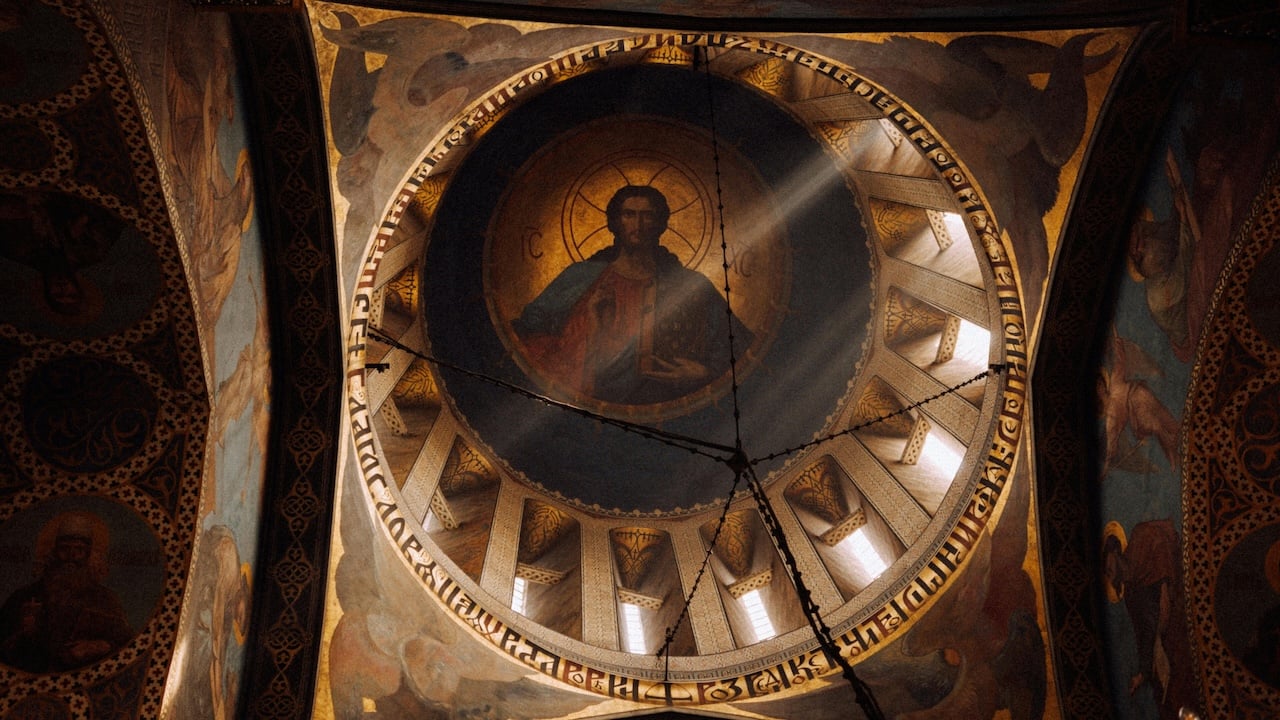
Jesus Shows Us What it Means To Be Human | Courtesy: Pexels.com
Human Dignity at the Center
Putting human dignity at the center provides an objective basis for human freedom. When we forget the value of human dignity, we slip into practices that may be pragmatic but lose any sense of a moral compass. Human dignity does not come from what the human person does but from who the human person is. It helps to counteract the risk of losing the relational structure of the human person.
The relational structure of the human person expresses itself through the fact that we are social by our very nature. Jesus formed a community before he preached a doctrine. He calls us to live with people who might even have very different views regarding the values that we hold dear. Regardless of our differences, God calls us to band together to fight grave violations of human dignity – poverty, war, and violence chief among them – recognizing that our shared humanity demands a common moral response.
Relationship Between Human and Artificial Intelligence
Earlier this year, the Vatican put out a document reflecting on the relationship between artificial intelligence and human intelligence. Artificial intelligence marks a new phase in our relationship with technology, reflecting “what Pope Francis has described as an ‘epochal change’” (Dicastery for the Doctrine of the Faith and Dicastery for Culture and Education, Antiqua et Nova. Note on the Relationship between Artificial Intelligence and Human Intelligence (2025), 4).
It affects the way we deal with each other and how we experience healthcare, law, and international relations, among other things. If we want to mitigate risks from this new technology, it is important to speak up for the concept of Common Good and human dignity from the perspective of Catholic Social Doctrine. The Church may not be the most eloquent about the technical details of the developing technology but certainly has much to share about what it means to be human in a changing world.
Technological Advancement that Respects our Humanity
Technological advancement is inevitable, but to do it in a way that respects our humanity is a challenge where the Church has much to say. The Ascension of the Lord lifts our gaze beyond the boundaries of this world. It reminds us that our lives have a heavenly trajectory. Christians look up to the sky with hope. God created us for more than this earthly existence. We are made for heaven. This hope buoys us in the midst of the travails of human life. Where there is hope, there is meaning. One great champion of the value of meaning is Viktor Frankl.
The Ascension of the Lord reminds us that we are made for more than this world. God made us for heaven. This truth buoys us amid the challenges of life and the uncertainties of our technological age. Viktor Frankl, a Holocaust survivor and founder of logotherapy, once observed that those who survived the camps were not the strongest, but those who had a reason to live. As we celebrate the Ascension, let us keep our eyes on Christ, our reason, and our hope.
Subscribe to the newsletter to never miss an article.
Technology and Religion

About Fr. Nicholas Sheehy, LC
Fr. Nicholas Sheehy is Assistant Chaplain at the Duke Catholic Center. He was ordained a Catholic priest in 2013 for the Legionaries of Christ. You can read more about the author here.
Previous Post
May 24, 2025
Church: Worship or Entertainment?
Next Post
July 31, 2025 University Education and St. John Henry Newman
Recent Comments
"Peace is a precious resource. Humankind and Planet Earth are thirsting for peace. Long live ..."
The Man Who Taught Nagasaki to ..."
"Searching and finding truth and traveling from truth to Truth is an exciting journey. The ..."
Your Writing Makes the Pope Happy
"Rich or poor, we are all fellow pilgrims enthusiastically marching together to our cherished destination. ..."
"There's no moral difference between avoiding conception by using 'artificial' contraception and using a 'natural' ..."
Browse Our Archives
Select a Category Church News Education Eucharist Faith and Mental Health Family Living the Faith Marriage Relationships Spiritual Direction Uncategorized Vocations Women Young Adults
Select a Month October 2026 September 2026 August 2026 July 2026 June 2026 November 2025 October 2025 September 2025 August 2025 July 2025 May 2025 April 2025 March 2025 February 2025 January 2025 December 2024 November 2024 October 2024 September 2024 August 2024 July 2024 June 2024 May 2024 April 2024 March 2024 February 2024 January 2024 December 2023 November 2023
Follow Us!
TAKE THE
Religious Wisdom Quiz
Which tribe first accepted David as king after Saul's death?
Select your answer to see how you score.
Ephraim Dan Judah Benjamin
Related posts from Formation Matters

Your Writing Makes the Pope Happy

Beyond Left and Right: Catholic Church on Immigration


TRENDING AT PATHEOS Catholic

The Problem with False Prophets
Miller’s Station UMC| 10/18/26| Anchor Verse: Jeremiah 23: 1, 9-23 I...

Emotion in Early Christianity by Andrew Crislip
Andrew Crislip’s Emotion in Early Christianity examines an often overlooked dimension of...

16 Spiritual Touchstones for a More Grounded Life
After decades of spiritual study, here are 16 principles I try...

Catholic Evangelization: Sharing Your Faith Every Day
Welcome back to the Graceful Awakening mini-series called, “From Faith to Mission.” ...

The Pillar of the Boatmen: the Ancient Monument...
The Pillar of the Boatmen is a Romano-Gaulish sculpture that dates from...

In one sense walking into Westminster Abbey is like walking down the...
view all Catholic blogs
What Are Your Thoughts?leave a comment
Ad-Free & Subscriber Log-In Subscription Support
- About Us
- 2026 Calendar
- Videos
- Podcasts
- Library of World Religions
- Faith In Media Tracker
- Advertise With Us
- Write for Us
- Privacy Policy
- Terms of Service
- Do Not Sell My Data
- Contact Us
- Radiant Digital
- Manage Newsletter Subscriptions
- Unsubscribe From Notifications
- Sitemap
Copyright 2008-2026, Patheos. All rights reserved.
Subscription Support Ad-Free & Subscriber Log-In
Follow Patheos