
BuddhistCatholicContemplativeEvangelicalGeneral ChristianHinduJewishLatter-day SaintMuslimNew VisionsProgressive Christian
Beliefs
- Buddhist
- Catholic
- Contemplative
- Evangelical
- General Christian
- Hindu
- Jewish
- Latter-day Saint
- More Voices
- Muslim
- New Visions
- Pagan
- Progressive Christian
Topics
- Religion News
- Food and Religion
- Sports and Religion
- Religious Art
- Religious Music and Entertainment
- Religious Events
- History and Religion
- Style and Religion
- Politics and Religion
- Women in Religion
- Recreation Outdoors and Religion
- Business Finance and Religion
- Careers Workplace and Religion
- Education and Religion
- Family Parenting and Religion
- Health Fitness and Religion
- Home and Religion
- Relationships and Religion
- Technology and Religion
- Travel and Religion
Columnists
- Buddhist Columnists
- Business Finance and Religion Columnists
- Careers Workplace and Religion Columnists
- Catholic Columnists
- Contemplative Columnists
- Education and Religion Columnists
- Evangelists Columnists
- Family Parenting and Religion Columnists
- General Christian Columnists
- Health Fitness and Religion Columnists
- Hindu Columnists
- History and Religion Columnists
- Home and Religion Columnists
- Jewish Columnists
- More Voices Columnists
- Latter Day Columnists
- Muslim Columnists
- New Visions Columnists
- Nonreligious Columnists
- Pagan Columnists
- Politics and Religion Columnists
- Progressive Columnists
- Recreation Outdoors and Religion Columnists
- Relationships and Religion Columnists
- Religion News Columnists
- Religious Art Columnists
- Religious Events Columnists
- Religious Music and Entertainment Columnists
- Sports and Religion Columnists
- Style and Religion Columnists
- Technology and Religion Columnists
- Travel and Religion Columnists
- Women in Religion Columnists
Resource Library
- 2026 Calendar
- Library of World Religions
- The 100 Most Holy Places on Earth
- Patheos Answers
- Podcasts
- Videos
- Faith Leaders Database
- Anglican Episcopalian
- Bahai
- Baptist
- Buddhism
- Christianity
- Confucianism
- Eastern Orthodoxy
- Hinduism
- Holiness and Pentecostal
- ISKCON
- Islam
- Judaism
- Lutheran
- Methodist
- The Church of Jesus Christ of Latter-day Saints
- New Age
- Paganism
- Presbytarian and Reformed
- Protestantism
- Religion Behind the Scenes
- Roman Catholic
- Scientology
- Shia Islam
- Sikhism
- Sufism
- Sunni Islam
- Taoism
- Zen
- See all religions
Research Tools
 Ad-Free & Subscriber Log-In Subscription Support
Ad-Free & Subscriber Log-In Subscription Support
Follow Patheos 

- Trending:
- Forgiveness
- |
- Marriage
- |
- Consciousness
- |
- Death Penalty
- |
- Election
- |
- Halloween

- Home
- Catholic
- Politics and Religion
- Our Pope of Mercy
Our Pope of Mercy
Last updated on: March 29, 2025 at 1:05 pm by Fr. Nicholas Sheehy, LC
Our Pope of Mercy 2025-03-29T13:05:31-07:00 Fr. Nicholas Sheehy, LC
Patheos Explore the world's faith through different perspectives on religion and spirituality! Patheos has the views of the prevalent religions and spiritualities of the world.
Pope John Paul II is the “Pope of mercy.” This comes through very clearly in his 1980 encyclical Dives in Misericordia. Pope John Paul II practiced mercy throughout his life. He lived through two totalitarian regimes yet never learned to hate. Six months after publishing his encyclical on mercy, two bullets from attempted assassin Ali Agca’s gun nearly ended his life. He showed his mercy was real when he visited the would-be murderer in jail and pardoned him from the depths of his heart. His years of meditating on the parable of the Prodigal Son shaped his understanding of God’s mercy and influenced his teachings.
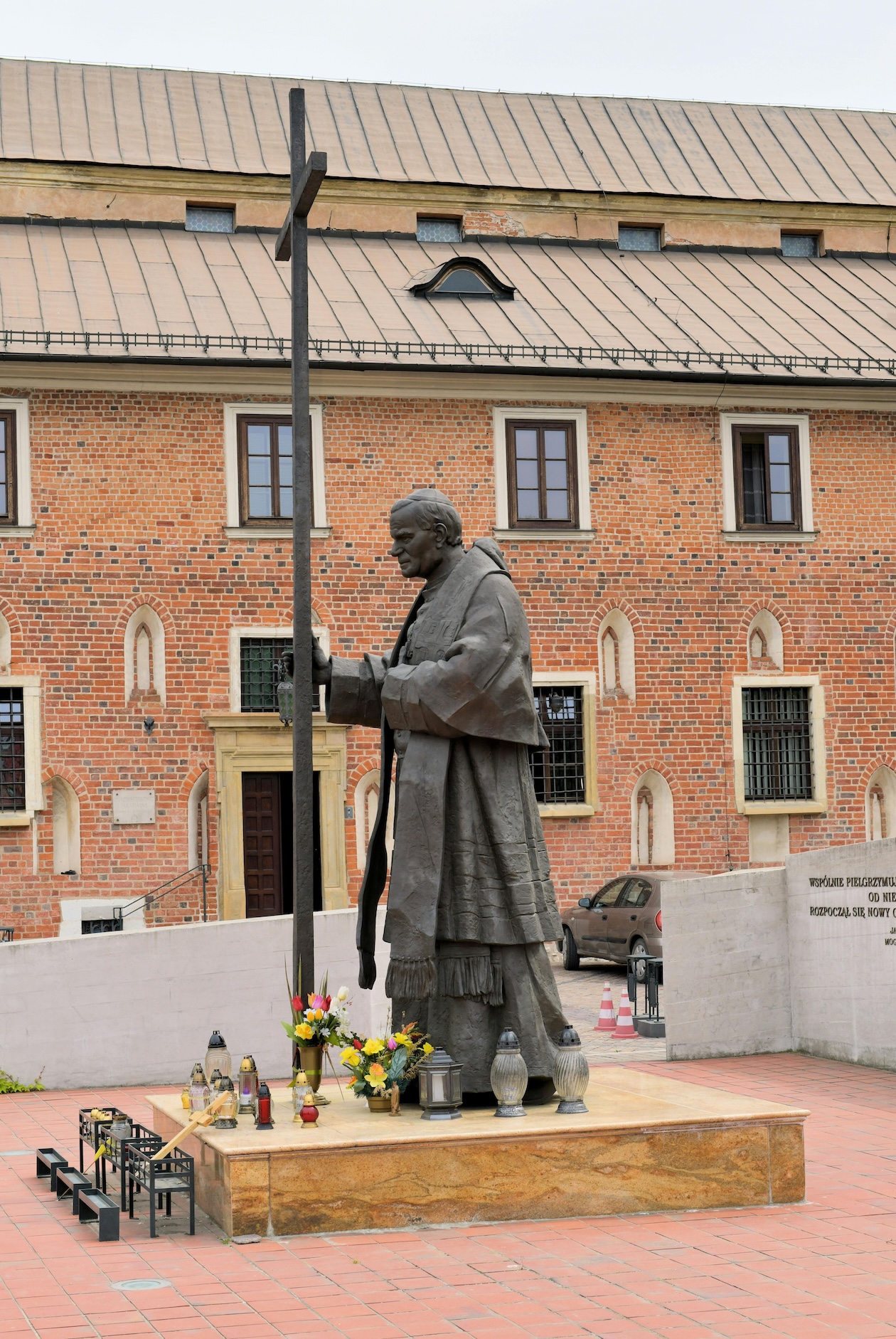
Statue of Pope John Paul II | Courtesy: Pexels.com
The parable of the Prodigal Son (Lk. 15:1-3; 11-32) shows the triumph of mercy over sin and is one of the most powerful stories of western civilization. Along with the parable of the lost sheep (Lk. 15:4-7) and the lost silver coin (Lk. 15:8-10), Luke’s gospel presents parables of mercy and calls to conversion throughout Chapter 15. The challenge to us is to recognize how we are lost and accept our own calls to conversion.
Mercy
Pope John Paul II reflects on the mercy that is present in the passage that we know as the Prodigal Son.
Although the word “mercy” does not appear, it nevertheless expresses the essence of divine mercy in a particularly clear way. This is due not so much to the terminology, as in the Old Testament books, as to the analogy that enables us to understand more fully the very mystery of mercy, as a profound drama played out between the father’s love and the prodigality and sin of the son (Pope John Paul II, Dives in Misericordia, 5).
Lost Son
To penetrate the meaning of the parable of the Prodigal Son, we must recognize how we are lost. Each one of us wanders into a foreign land every time that we fall into sin. We become like that rebellious son who does not recognize everything that he has received from his loving Father.
That son, who receives from the father the portion of the inheritance that is due to him and leaves home to squander it in a far country “in loose living,” in a certain sense is the man of every period, beginning with the one who was the first to lose the inheritance of grace and original justice (Pope John Paul II, Dives in Misericordia, 5).
Each one of us is that man. We all turn our backs on the home that God has prepared for us when we choose to live our lives independently from the plan that he has set out for us. Seeking a life of comfort or power or false independence, we reject the dignity we receive from being in our father’s house.
Repentance
A key moment in the story is when the prodigal son decides to repent. He seems pushed into this by his pitiful failure. Reduced to longing for the scraps left for the pigs he was tending, he recognizes the pitiful situation in which he finds himself. He longs to go home and eat the way his father’s servants do. At the end of the day, this is what moves each of us to repentance: we want to go home. God has created us and redeemed us; he has called us to himself. It is only when we are right with God that we can truly be at home.
Being Fair
Our sin strips us of our dignity, and only by returning to the Father can we regain it. So often, we complain that things are not “fair.” However, we should be careful with such a complaint because, if we are being honest with ourselves, we know that we do not really want things to be “fair.” If God dealt with us solely by justice or “fairness,” we would remain lost. It is only through his mercy that we are restored.
In the parable of the prodigal son, the term “justice” is not used even once; just as in the original text the term “mercy” is not used either. Nevertheless, the relationship between justice and love, that is manifested as mercy, is inscribed with great exactness in the content of the Gospel parable. It becomes more evident that love is transformed into mercy when it is necessary to go beyond the precise norm of justice-precise and often too narrow (Pope John Paul II, Dives in Misericordia, 5).
Meditating on the passage of the Prodigal Son is one of the best ways to understand the mercy of God and feel the need for a deeper conversion of heart. As we continue through Lent, let us truly repent of our sins and throw ourselves into the arms of our heavenly Father. We can do this by going to Confession and letting his mercy restore us to our role as beloved sons and daughters.
Subscribe to the newsletter to never miss an article.
Education and Religion

About Fr. Nicholas Sheehy, LC
Fr. Nicholas Sheehy is Assistant Chaplain at the Duke Catholic Center. He was ordained a Catholic priest in 2013 for the Legionaries of Christ. You can read more about the author here.
Previous Post
March 23, 2025
Finding Holy Ground Every Day
Next Post
April 5, 2025 Forgetting What God Tells Us to Forget
Recent Comments
"Peace is a precious resource. Humankind and Planet Earth are thirsting for peace. Long live ..."
The Man Who Taught Nagasaki to ..."
"Searching and finding truth and traveling from truth to Truth is an exciting journey. The ..."
Your Writing Makes the Pope Happy
"Rich or poor, we are all fellow pilgrims enthusiastically marching together to our cherished destination. ..."
"There's no moral difference between avoiding conception by using 'artificial' contraception and using a 'natural' ..."
Browse Our Archives
Select a Category Church News Education Eucharist Faith and Mental Health Family Living the Faith Marriage Relationships Spiritual Direction Uncategorized Vocations Women Young Adults
Select a Month October 2026 September 2026 August 2026 July 2026 June 2026 November 2025 October 2025 September 2025 August 2025 July 2025 May 2025 April 2025 March 2025 February 2025 January 2025 December 2024 November 2024 October 2024 September 2024 August 2024 July 2024 June 2024 May 2024 April 2024 March 2024 February 2024 January 2024 December 2023 November 2023
Follow Us!
TAKE THE
Religious Wisdom Quiz
What does the name "Abraham" mean?
Select your answer to see how you score.
Father of many My joy He laughs God is my judge
Related posts from Formation Matters

Why Do We Build? Pope Leo XIV on...

Never Forget: What 9/11 Should Teach Us 25...

The Big Opportunity for Bishops After the SSPX...

Let Freedom Ring: Truth and the American Soul
TRENDING AT PATHEOS Catholic

The Dangers of Gradual Accommodation (Winking at Sin)
Recently, the “law of gradualness” resurfaced during the opening of a weeklong,...

The Iron Gates and the Lion of the...
Yesterday, I didn't finish my report about, well, yesterday. So I'll...

Dolly Parton’s Last Song Wins Dove Award with...
Bluegrass band The Grascals, speaking on the red carpet at the 57th...

The Image: On the Horror of Capitalism and...
The Image Then went the Pharisees, and took counsel how they might...

We are approaching the date of our new American national holiday: October...

Letters on Living the Faith by C.S. Lewis
Most of us met C.S. Lewis as a public intellectual. Mere Christianity....
view all Catholic blogs
What Are Your Thoughts?leave a comment
Ad-Free & Subscriber Log-In Subscription Support
- About Us
- 2026 Calendar
- Videos
- Podcasts
- Library of World Religions
- Faith In Media Tracker
- Advertise With Us
- Write for Us
- Privacy Policy
- Terms of Service
- Do Not Sell My Data
- Contact Us
- Radiant Digital
- Manage Newsletter Subscriptions
- Unsubscribe From Notifications
- Sitemap
Copyright 2008-2026, Patheos. All rights reserved.
Subscription Support Ad-Free & Subscriber Log-In
Follow Patheos