
BuddhistCatholicContemplativeEvangelicalGeneral ChristianHinduJewishLatter-day SaintMuslimNew VisionsProgressive Christian
Beliefs
- Buddhist
- Catholic
- Contemplative
- Evangelical
- General Christian
- Hindu
- Jewish
- Latter-day Saint
- More Voices
- Muslim
- New Visions
- Pagan
- Progressive Christian
Topics
- Religion News
- Food and Religion
- Sports and Religion
- Religious Art
- Religious Music and Entertainment
- Religious Events
- History and Religion
- Style and Religion
- Politics and Religion
- Women in Religion
- Recreation Outdoors and Religion
- Business Finance and Religion
- Careers Workplace and Religion
- Education and Religion
- Family Parenting and Religion
- Health Fitness and Religion
- Home and Religion
- Relationships and Religion
- Technology and Religion
- Travel and Religion
Columnists
- Buddhist Columnists
- Business Finance and Religion Columnists
- Careers Workplace and Religion Columnists
- Catholic Columnists
- Contemplative Columnists
- Education and Religion Columnists
- Evangelists Columnists
- Family Parenting and Religion Columnists
- General Christian Columnists
- Health Fitness and Religion Columnists
- Hindu Columnists
- History and Religion Columnists
- Home and Religion Columnists
- Jewish Columnists
- More Voices Columnists
- Latter Day Columnists
- Muslim Columnists
- New Visions Columnists
- Nonreligious Columnists
- Pagan Columnists
- Politics and Religion Columnists
- Progressive Columnists
- Recreation Outdoors and Religion Columnists
- Relationships and Religion Columnists
- Religion News Columnists
- Religious Art Columnists
- Religious Events Columnists
- Religious Music and Entertainment Columnists
- Sports and Religion Columnists
- Style and Religion Columnists
- Technology and Religion Columnists
- Travel and Religion Columnists
- Women in Religion Columnists
Resource Library
- 2026 Calendar
- Library of World Religions
- The 100 Most Holy Places on Earth
- Patheos Answers
- Podcasts
- Videos
- Faith Leaders Database
- Anglican Episcopalian
- Bahai
- Baptist
- Buddhism
- Christianity
- Confucianism
- Eastern Orthodoxy
- Hinduism
- Holiness and Pentecostal
- ISKCON
- Islam
- Judaism
- Lutheran
- Methodist
- The Church of Jesus Christ of Latter-day Saints
- New Age
- Paganism
- Presbytarian and Reformed
- Protestantism
- Religion Behind the Scenes
- Roman Catholic
- Scientology
- Shia Islam
- Sikhism
- Sufism
- Sunni Islam
- Taoism
- Zen
- See all religions
Research Tools
 Ad-Free & Subscriber Log-In Subscription Support
Ad-Free & Subscriber Log-In Subscription Support
Follow Patheos 

- Trending:
- Forgiveness
- |
- Marriage
- |
- Consciousness
- |
- Death Penalty
- |
- Election
- |
- Halloween

- Home
- Catholic
- Politics and Religion
- Escaping Noise to Find the Word
Escaping Noise to Find the Word
Last updated on: December 7, 2024 at 9:20 am by Fr. Nicholas Sheehy, LC
Escaping Noise to Find the Word 2024-12-07T09:20:20-08:00 Fr. Nicholas Sheehy, LC
Patheos Explore the world's faith through different perspectives on religion and spirituality! Patheos has the views of the prevalent religions and spiritualities of the world.
Noise can keep us from hearing what is most important. The noise of the world can easily suck us in and distract us from what is truly important. In a noisy world, we need prophets like John the Baptist to wake us up and call us back to our senses. “John went throughout the whole region of the Jordan, proclaiming a baptism of repentance for the forgiveness of sins” (Lk. 3:3). How do we escape the noise of the world to find the Word? We need to experience this repentance that John the Baptist preaches.
When I was growing up, I remember very well how my family would live out the Penance Service during Advent. I am not saying this is how anyone else should do it, but the dynamic did stay with me. We would go to individual confession somewhere in the church and the priest would give us a piece of straw. We would take the straw over to the manger scene and deposit the straw there. This symbolized our contributing something to prepare a more comfortable place for Jesus to be born in Bethlehem.
Turning Away from Sinful Ways
In today’s Gospel, we see how John was inviting the people to turn away from their sinful ways. Another way to see this is that he was calling them to rediscover their great human dignity, a dignity which we all share. Because of this special kind of God-given dignity, us humans are unique in the way we experience the world.
In the light of faith we know… that God looks at a man and a woman in another manner. He created us not as objects but as people loved and capable of loving; He has created us in His image and likeness (see Gen 1:27). In this way He has given us a unique dignity, calling us to live in communion with Him, in communion with our sisters and our brothers, with respect for all creation. In communion, in harmony, we might say. Creation is the harmony in which we are called to live (Pope Francis, 12 August 2020).
To understand the call to repentance, we must understand the unique place that humans occupy in the whole of creation, this harmony to which we are called. Through faith, we know that God is knocking at the doors of our hearts. When we consider the comparisons between humans and animals, we see how humans have a unique capacity to form a relationship with God.
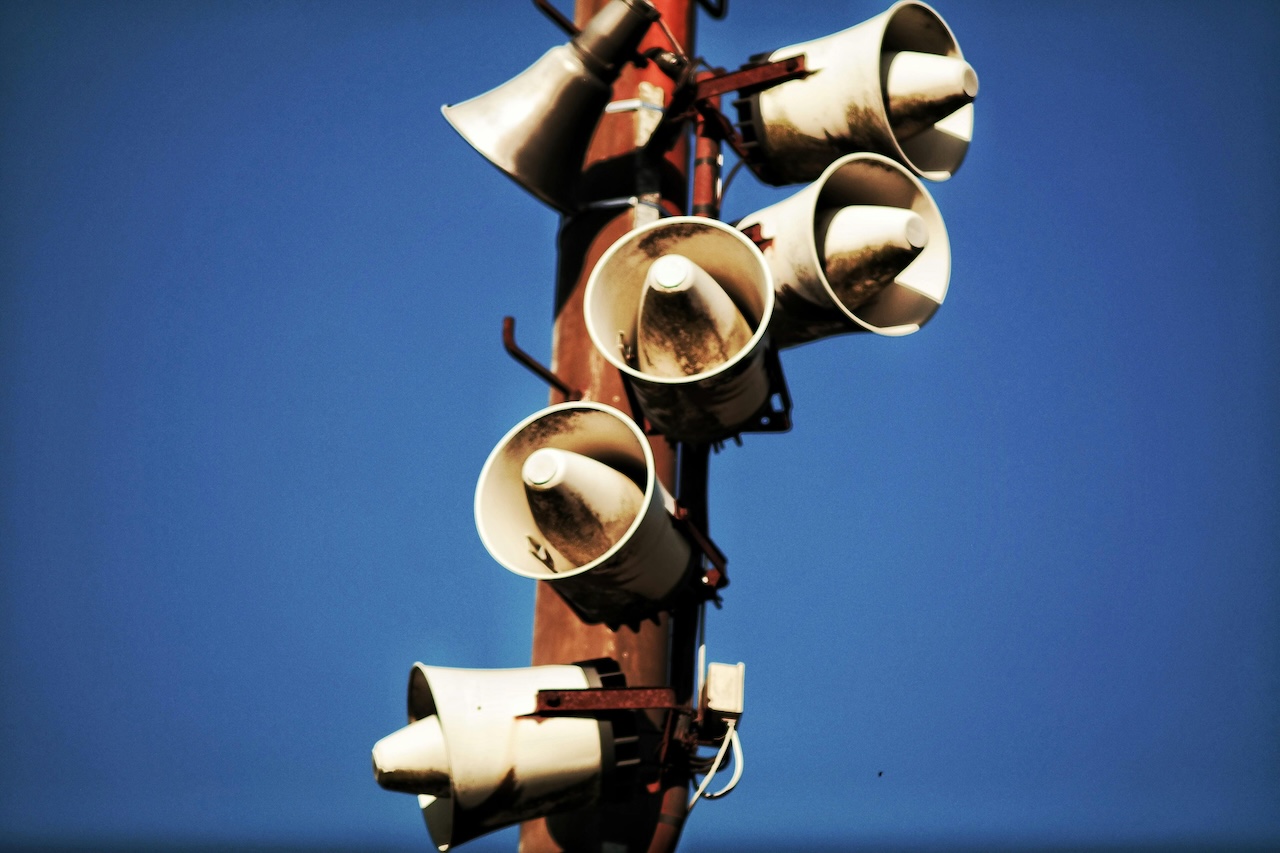
Noise distracts us during Advent | courtesy: Pexels.com
Fundamental Difference Between Animals and Humans
Animal and human cognition, though similar in many respects, differ in two profound dimensions. One is the ability to form nested scenarios, an inner theater of the mind that allows us to envision and mentally manipulate many possible situations and anticipate different outcomes. The second is our drive to exchange our thoughts with others. Taken together, the emergence of these two characteristics transformed the human mind and set us on a world-changing path (T. Suddendorf, “2 Mental Abilities Separate Humans from Animals”).
Our ability for complex thinking and our use of language not only distinguish us from the rest of the animals, but alsp open us in a particular way to receive the revelation of God. There are three types of persons, according to Catholic theology. We know the Divine Persons: God, Father, and Holy Spirit. There are the angelic spirits, both angels and demons. Finally, there are human persons, made by God, male and female. Because we share in personhood, we can communicate with God just as the angelic spirits can. Advent is an excellent time to remind ourselves of this, and to refresh this relationship with God.
Advent and Getting Rid of Noise
As we draw closer to Christmas, the liturgy invites us to receive the proclamation of John the Baptist. Luke the Evangelist, describes him using the words of the prophet Isaiah: “a voice of one crying out in the desert” (Lk. 3:4). To hear that voice in the desert, we need to learn silence and receptivity. We have to listen instead of speaking. At the same time, we can reflect on what too much noise can do to us as human beings.
When our ears perceive unpleasant noise, it goes directly to the stress detection center in our brain. The amygdala triggers a cascade of reactions in our body. Our sympathetic nervous system activates and can quicken our heart rate, raise our blood pressure, and produce inflammatory cells. All of this can lead to damage in the arteries, increasing the risk of heart disease, heart attacks, and stroke. Too much noise can literally kill us (cf. E. Baumgaertner et al., “Noise Could Take Years Off Your Life. Here’s How”). Advent gives us the chance to move away from the noise and listen to the Word.
Escaping Noise to Find Language
Language is essential to our human existence and is very much a part of our experience of God and our own self-image. To experience language more fully, we need to make room for silence in our lives.
It is language and not silence that makes man truly human. The word has supremacy over silence. But language becomes emaciated if it loses its connection with silence. Our task, therefore, is to uncover the world of silence so obscured today — not for the sake of silence but for the sake of language (B. Nortz, Holy Silence: A Practical Guide to Recollection in God, p. 10).
John the Baptist, who figures prominently in today’s liturgy, is one who was in love with the Word. It must have been hard to live a life like John’s, in which silence likely ruled most of the day. For us, it may be difficult to imagine such a life giving any sense of satisfaction. Perhaps we imagine we would be tremendously bored. Precisely for this reason, St. John the Baptist is a prime example of the virtue of waiting and expectant hope which we are called to live in a special way during the Advent season. Like him, we can grow in our love for silence and open our souls to an experience of God that will transform us.
Growing in Love For Silence
We should long for transformative experiences that will revolutionize our way of experiencing God in prayer. We can refer to these spiritual escapes as retreats. These retreats, whether a formal spiritual retreat off in a remote place, or something much more commonplace and ordinary, allow us to encounter God and ourselves.
Subscribe to the newsletter to never miss an article.

About Fr. Nicholas Sheehy, LC
Fr. Nicholas Sheehy is Assistant Chaplain at the Duke Catholic Center. He was ordained a Catholic priest in 2013 for the Legionaries of Christ. You can read more about the author here.
Previous Post
December 1, 2024
Advent is About Not Giving Up
Next Post

December 13, 2024 Finding Meaning During Advent
Recent Comments
"Peace is a precious resource. Humankind and Planet Earth are thirsting for peace. Long live ..."
The Man Who Taught Nagasaki to ..."
"Searching and finding truth and traveling from truth to Truth is an exciting journey. The ..."
Your Writing Makes the Pope Happy
"Rich or poor, we are all fellow pilgrims enthusiastically marching together to our cherished destination. ..."
"There's no moral difference between avoiding conception by using 'artificial' contraception and using a 'natural' ..."
Browse Our Archives
Select a Category Church News Education Eucharist Faith and Mental Health Family Living the Faith Marriage Relationships Spiritual Direction Uncategorized Vocations Women Young Adults
Select a Month October 2026 September 2026 August 2026 July 2026 June 2026 November 2025 October 2025 September 2025 August 2025 July 2025 May 2025 April 2025 March 2025 February 2025 January 2025 December 2024 November 2024 October 2024 September 2024 August 2024 July 2024 June 2024 May 2024 April 2024 March 2024 February 2024 January 2024 December 2023 November 2023
Follow Us!
TAKE THE
Religious Wisdom Quiz
Which prophet anointed both Saul and David as kings of Israel?
Select your answer to see how you score.
Gad Samuel Nathan Eli
Related posts from Formation Matters

Beyond Left and Right: Catholic Church on Immigration



TRENDING AT PATHEOS Catholic

Nearly every morning, I make the drive to Detroit with my high-school-age...

The Real AI Story Is Adoption Without Trust
Artificial intelligence has crossed a political threshold. It is no longer a...

A new article, written by Jeff Lindsay and Gale L. Pooley,...

Swimfan: Forgotten Aughts Pleasures
This is a recovery effort. In 2002, My Big Fat Greek Wedding...

Top Three Anti-Catholic Lies About Catholicism
This is my initial transcript for the video, "THE 3 WORST...

Pope Leo Celebrates Mass for Nurses & Docs...
I don't have any idea how he did it, but Pope Leo...
view all Catholic blogs
What Are Your Thoughts?leave a comment
Ad-Free & Subscriber Log-In Subscription Support
- About Us
- 2026 Calendar
- Videos
- Podcasts
- Library of World Religions
- Faith In Media Tracker
- Advertise With Us
- Write for Us
- Privacy Policy
- Terms of Service
- Do Not Sell My Data
- Contact Us
- Radiant Digital
- Manage Newsletter Subscriptions
- Unsubscribe From Notifications
- Sitemap
Copyright 2008-2026, Patheos. All rights reserved.
Subscription Support Ad-Free & Subscriber Log-In
Follow Patheos