
BuddhistCatholicContemplativeEvangelicalGeneral ChristianHinduJewishLatter-day SaintMuslimNew VisionsProgressive Christian
Beliefs
- Buddhist
- Catholic
- Contemplative
- Evangelical
- General Christian
- Hindu
- Jewish
- Latter-day Saint
- More Voices
- Muslim
- New Visions
- Pagan
- Progressive Christian
Topics
- Religion News
- Food and Religion
- Sports and Religion
- Religious Art
- Religious Music and Entertainment
- Religious Events
- History and Religion
- Style and Religion
- Politics and Religion
- Women in Religion
- Recreation Outdoors and Religion
- Business Finance and Religion
- Careers Workplace and Religion
- Education and Religion
- Family Parenting and Religion
- Health Fitness and Religion
- Home and Religion
- Relationships and Religion
- Technology and Religion
- Travel and Religion
Columnists
- Buddhist Columnists
- Business Finance and Religion Columnists
- Careers Workplace and Religion Columnists
- Catholic Columnists
- Contemplative Columnists
- Education and Religion Columnists
- Evangelists Columnists
- Family Parenting and Religion Columnists
- General Christian Columnists
- Health Fitness and Religion Columnists
- Hindu Columnists
- History and Religion Columnists
- Home and Religion Columnists
- Jewish Columnists
- More Voices Columnists
- Latter Day Columnists
- Muslim Columnists
- New Visions Columnists
- Nonreligious Columnists
- Pagan Columnists
- Politics and Religion Columnists
- Progressive Columnists
- Recreation Outdoors and Religion Columnists
- Relationships and Religion Columnists
- Religion News Columnists
- Religious Art Columnists
- Religious Events Columnists
- Religious Music and Entertainment Columnists
- Sports and Religion Columnists
- Style and Religion Columnists
- Technology and Religion Columnists
- Travel and Religion Columnists
- Women in Religion Columnists
Resource Library
- 2026 Calendar
- Library of World Religions
- The 100 Most Holy Places on Earth
- Patheos Answers
- Podcasts
- Videos
- Faith Leaders Database
- Anglican Episcopalian
- Bahai
- Baptist
- Buddhism
- Christianity
- Confucianism
- Eastern Orthodoxy
- Hinduism
- Holiness and Pentecostal
- ISKCON
- Islam
- Judaism
- Lutheran
- Methodist
- The Church of Jesus Christ of Latter-day Saints
- New Age
- Paganism
- Presbytarian and Reformed
- Protestantism
- Religion Behind the Scenes
- Roman Catholic
- Scientology
- Shia Islam
- Sikhism
- Sufism
- Sunni Islam
- Taoism
- Zen
- See all religions
Research Tools
 Ad-Free & Subscriber Log-In Subscription Support
Ad-Free & Subscriber Log-In Subscription Support
Follow Patheos 

- Trending:
- Forgiveness
- |
- Marriage
- |
- Consciousness
- |
- Death Penalty
- |
- Election
- |
- Halloween

- Home
- Catholic
- Politics and Religion
- How Galileo’s Science Helped Us Read the Bible Better
How Galileo’s Science Helped Us Read the Bible Better
Last updated on: October 24, 2024 at 4:42 pm by Fr. Nicholas Sheehy, LC
How Galileo’s Science Helped Us Read the Bible Better 2024-10-24T16:42:21-07:00 Fr. Nicholas Sheehy, LC
Patheos Explore the world's faith through different perspectives on religion and spirituality! Patheos has the views of the prevalent religions and spiritualities of the world.
Scientists do science and theologians do theology, right? Galileo was one who broke the mold. His controversy of promoting the Copernican theory that the earth orbited the sun rocked the Church world. At the same time, he helped revolutionize the way Churchmen would look at the Bible. The Inquisition accused him of dismissing Aristotelian astronomy; yet he actually ended up teaching them a few things about theology.
Avoiding Literalism
In 1615, Galileo was working on a treatise explaining tidal movement caused by the rotation of the earth. Galileo looked to one of the theologians from the Inquisition, Benito Pereira, as a model for Biblical interpretation for Galileo. This Spanish Jesuit allowed to interpret the Bible in different ways.
Galileo advocated against a literalistic interpretation of Scripture. A literalistic interpretation would oblige us to think of God as having literal hands and feet. He would literally get angry and emotional. Galileo argued that we should look to the meaning of the various passages that use these images. Then, we should decipher the intention of what they were meant to communicate to their original audience. To do this accurately, we must remember that the original audience was a simple ancient people. We can take a ‘figurative’ literal understanding, or a ‘simple’ literal understanding of a passage. This is the difference between understanding “God’s right hand” as a physical appendage versus referring to the power of God.
Galileo argued that some phrases from the Bible, in a literal simple interpretation, would be false taking into account the natural sciences. This is the statement that got him in trouble with the Inquisition, although they most likely misunderstood his affirmation. Between 1613 and 1615, he modified some of his own affirmations so as not to exclude the Bible from making statements about the natural sciences. Rather, he stated that the Bible is principally concerned with salvation.
Cardinal Bellarmine, representing the Pope and the Congregation of the Index at the time, seemed mostly concerned with maintaining the authority of the Church and less concerned with refining principles of Scriptural interpretation. He and Galileo seemed to agree on the relationship between science and scripture, just as they did about the Aristotelian prerequisites for scientific knowledge.
Decree of 1616
In the Decree of 1616, Cardinal Bellarmine made a move to condemn the Copernican theory because he did not think that it corresponded to physical reality, but like the Ptolemaic theory, tried to save the appearances. The Ptolemaic system helped to explain certain phenomena of the night sky without giving a truly scientific reason why they happened. The theologians involved took a literalist reading of Sacred Scripture and did not trust the evidence that Galileo provided. Admittedly, his tools were deficient and his arguments unconvincing. Still, they failed to see the autonomous nature of the physical sciences.
Further, they reflected the maxim that “nature does nothing in vain.” We do not assume that any planet that exists has intelligent life. This was, however, the prevailing view of the day. This would raise serious doubts about original sin, redemption, and other theological truths. If other planets existed and were inhabited, how would those creatures fit into the theology of salvation?
Galileo modified his writings after the condemnation of Copernican theory in 1616, focusing less on new scientific discoveries and more on improving his rhetoric. Church authorities resented his delving into theological issues and the decree of 1616 set the scene for another clash between Galileo and Church authorities down the road.
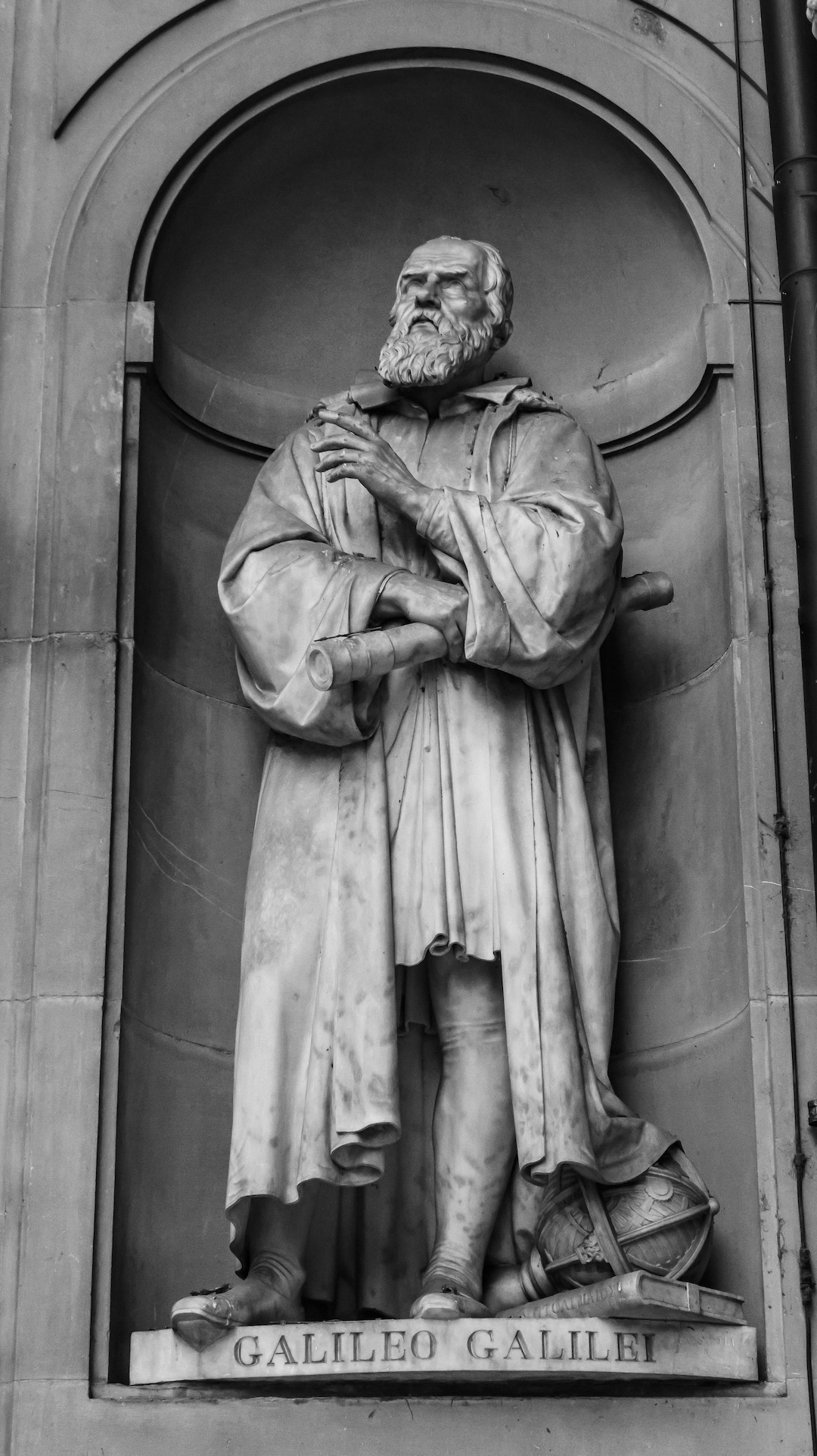
Galileo mathematician, astronomer, theologian? – Courtesy Pexels.com
Galileo’s Trial of 1633
Unfortunately, the Inquisition put Galileo on trial in 1633 for heresy. The Decree of 1616 created the necessary conditions for the persecution that Galileo would face later in life. His desire to stay within the Church led to him humbly accepting the conclusions laid out by the Churchmen. It would take over 350 years for him to be vindicated in the eyes of the Church.
The world learned the result in 1992, 350 years after Galileo’s death. Poupard’s conclusion adopted the analysis developed under the committee’s aegis by the German Jesuit Walter Brandmüller. It surprised unsophisticated people. Brandmüller and Poupard reduced the collision between the cardinals and Galileo to a no-fault accident. Galileo had proceeded correctly along the difficult road of scriptural exegesis; the cardinals had negotiated with equal expertise the equally difficult road of epistemology. Yes, the theologians knew more about the nature of science than Galileo, who mistakenly thought he had proved Copernican theory, and Galileo knew more about the business of theology than the theologians, who mistakenly took scripture as a guide to natural science. This counterintuitive and even comic formulation raised Galileo’s hermeneutics almost to the level of Urban’s medicine. The pope accepted it (John Heilbron, Galileo, p. 363).
Galileo’s case is often seen as emblematic of the supposed contradiction between faith and science. However, I would argue it is a major testament to the unity of truth and the absolute necessity to understand propositions before condemning them. Galileo had been perhaps too free in some of his scientific assertions, just as some Churchmen of the time were too literalistic in their interpretation of Scripture. With the hindsight available to us today, it is easy to see there could have been a very different handling of the situation. Yet, we can now also be very grateful to one of the fathers of modern science for his contribution to scriptural interpretation.
Subscribe to the newsletter to never miss an article.

About Fr. Nicholas Sheehy, LC
Fr. Nicholas Sheehy is Assistant Chaplain at the Duke Catholic Center. He was ordained a Catholic priest in 2013 for the Legionaries of Christ. You can read more about the author here.
Previous Post

October 21, 2024
If You Had One Shot, What Would You Ask of Jesus?
Next Post
October 28, 2024 More than Morality
Recent Comments
"Peace is a precious resource. Humankind and Planet Earth are thirsting for peace. Long live ..."
The Man Who Taught Nagasaki to ..."
"Searching and finding truth and traveling from truth to Truth is an exciting journey. The ..."
Your Writing Makes the Pope Happy
"Rich or poor, we are all fellow pilgrims enthusiastically marching together to our cherished destination. ..."
"There's no moral difference between avoiding conception by using 'artificial' contraception and using a 'natural' ..."
Browse Our Archives
Select a Category Church News Education Eucharist Faith and Mental Health Family Living the Faith Marriage Relationships Spiritual Direction Uncategorized Vocations Women Young Adults
Select a Month October 2026 September 2026 August 2026 July 2026 June 2026 November 2025 October 2025 September 2025 August 2025 July 2025 May 2025 April 2025 March 2025 February 2025 January 2025 December 2024 November 2024 October 2024 September 2024 August 2024 July 2024 June 2024 May 2024 April 2024 March 2024 February 2024 January 2024 December 2023 November 2023
Follow Us!
TAKE THE
Religious Wisdom Quiz
Who wrote most of the New Testament letters?
Select your answer to see how you score.
Peter John Paul James
Related posts from Formation Matters

Beyond Left and Right: Catholic Church on Immigration

The Treasure Meant to Be Shared

TRENDING AT PATHEOS Catholic

In one sense walking into Westminster Abbey is like walking down the...

'Super Scam Me' Exposes AI Jon Bon Jovi...
Leslie Pickett believed she was in a relationship with Jon Bon Jovi....

The Brazilian Remake of Kendricks' 'Flywheel' Opens in...
“Flywheel,” the story that launched the Kendrick Brothers’ filmmaking career is getting...

The Dangers of Gradual Accommodation (Winking at Sin)
Recently, the “law of gradualness” resurfaced during the opening of a weeklong,...

The Iron Gates and the Lion of the...
Yesterday, I didn't finish my report about, well, yesterday. So I'll...

The Image: On the Horror of Capitalism and...
The Image Then went the Pharisees, and took counsel how they might...
view all Catholic blogs
What Are Your Thoughts?leave a comment
Ad-Free & Subscriber Log-In Subscription Support
- About Us
- 2026 Calendar
- Videos
- Podcasts
- Library of World Religions
- Faith In Media Tracker
- Advertise With Us
- Write for Us
- Privacy Policy
- Terms of Service
- Do Not Sell My Data
- Contact Us
- Radiant Digital
- Manage Newsletter Subscriptions
- Unsubscribe From Notifications
- Sitemap
Copyright 2008-2026, Patheos. All rights reserved.
Subscription Support Ad-Free & Subscriber Log-In
Follow Patheos