
BuddhistCatholicContemplativeEvangelicalGeneral ChristianHinduJewishLatter-day SaintMuslimNew VisionsProgressive Christian
Beliefs
- Buddhist
- Catholic
- Contemplative
- Evangelical
- General Christian
- Hindu
- Jewish
- Latter-day Saint
- More Voices
- Muslim
- New Visions
- Pagan
- Progressive Christian
Topics
- Religion News
- Food and Religion
- Sports and Religion
- Religious Art
- Religious Music and Entertainment
- Religious Events
- History and Religion
- Style and Religion
- Politics and Religion
- Women in Religion
- Recreation Outdoors and Religion
- Business Finance and Religion
- Careers Workplace and Religion
- Education and Religion
- Family Parenting and Religion
- Health Fitness and Religion
- Home and Religion
- Relationships and Religion
- Technology and Religion
- Travel and Religion
Columnists
- Buddhist Columnists
- Business Finance and Religion Columnists
- Careers Workplace and Religion Columnists
- Catholic Columnists
- Contemplative Columnists
- Education and Religion Columnists
- Evangelists Columnists
- Family Parenting and Religion Columnists
- General Christian Columnists
- Health Fitness and Religion Columnists
- Hindu Columnists
- History and Religion Columnists
- Home and Religion Columnists
- Jewish Columnists
- More Voices Columnists
- Latter Day Columnists
- Muslim Columnists
- New Visions Columnists
- Nonreligious Columnists
- Pagan Columnists
- Politics and Religion Columnists
- Progressive Columnists
- Recreation Outdoors and Religion Columnists
- Relationships and Religion Columnists
- Religion News Columnists
- Religious Art Columnists
- Religious Events Columnists
- Religious Music and Entertainment Columnists
- Sports and Religion Columnists
- Style and Religion Columnists
- Technology and Religion Columnists
- Travel and Religion Columnists
- Women in Religion Columnists
Resource Library
- 2026 Calendar
- Library of World Religions
- The 100 Most Holy Places on Earth
- Patheos Answers
- Podcasts
- Videos
- Faith Leaders Database
- Anglican Episcopalian
- Bahai
- Baptist
- Buddhism
- Christianity
- Confucianism
- Eastern Orthodoxy
- Hinduism
- Holiness and Pentecostal
- ISKCON
- Islam
- Judaism
- Lutheran
- Methodist
- The Church of Jesus Christ of Latter-day Saints
- New Age
- Paganism
- Presbytarian and Reformed
- Protestantism
- Religion Behind the Scenes
- Roman Catholic
- Scientology
- Shia Islam
- Sikhism
- Sufism
- Sunni Islam
- Taoism
- Zen
- See all religions
Research Tools
 Ad-Free & Subscriber Log-In Subscription Support
Ad-Free & Subscriber Log-In Subscription Support
Follow Patheos 

- Trending:
- Forgiveness
- |
- Marriage
- |
- Consciousness
- |
- Death Penalty
- |
- Election
- |
- Halloween

- Home
- Catholic
- Politics and Religion
- Galileo and Discovering God as the Author of Truth
Galileo and Discovering God as the Author of Truth
Last updated on: October 30, 2024 at 9:52 am by Fr. Nicholas Sheehy, LC
Galileo and Discovering God as the Author of Truth 2024-10-30T09:52:46-07:00 Fr. Nicholas Sheehy, LC
Patheos Explore the world's faith through different perspectives on religion and spirituality! Patheos has the views of the prevalent religions and spiritualities of the world.
To understand Galileo’s struggle with the Church, we must understand the conflict about religious truth after the Protestant Reformation. In the sixteenth century, the Church was still reeling from the Protestant Reformation. When Luther attached his 95 theses to the church door in Wittenberg, he lit fires of discontentment and challenges to traditional Christianity that rocked Europe. The Church responded with the Council of Trent.
Truth and the Canon of Scripture
In response to the actions of Martin Luther, the Council of Trent re-affirmed the Canon of Scriptures. Luther had thrown out the deuterocanonical books. He called them apocryphal because they were composed originally in Greek. He had no similar justification for disregarding the Letter of James from the New Testament, opening him up to the charge of disposing of books simply because they disagreed with his own preferred doctrines.
The Council of Trent re-affirmed the inerrancy of the Bible by declaring the Vulgata to be authentic. What exactly this inerrancy refers to would continue to be debated by theologians. However, the Inquisition tended to take a narrow view which would lead to problems for Galileo and his espousing of the Copernican theory of heliocentrism.
Galileo Galilei
In his letter to the Grand Duchess Christina of Tuscany (1615), Galileo reflected on the relationship between science and Scripture. He responded to concerns that Copernican astronomy had implications for Aristotelian physics, cosmology, and metaphysics. This threatened the traditional interpretation of the Bible and Catholic theology.
Galileo focused on the new astronomy and used certain passages of the Bible to argue for a Copernican understanding of the world in opposition to the accepted views of Ptolemy and Aristotle. This led to conflict with the Inquisition, as the Inquisitors followed Trent’s aversion to personal interpretation of the Bible. They feared that personal interpretation would lead to further division in the Church as marshalled in by Luther.
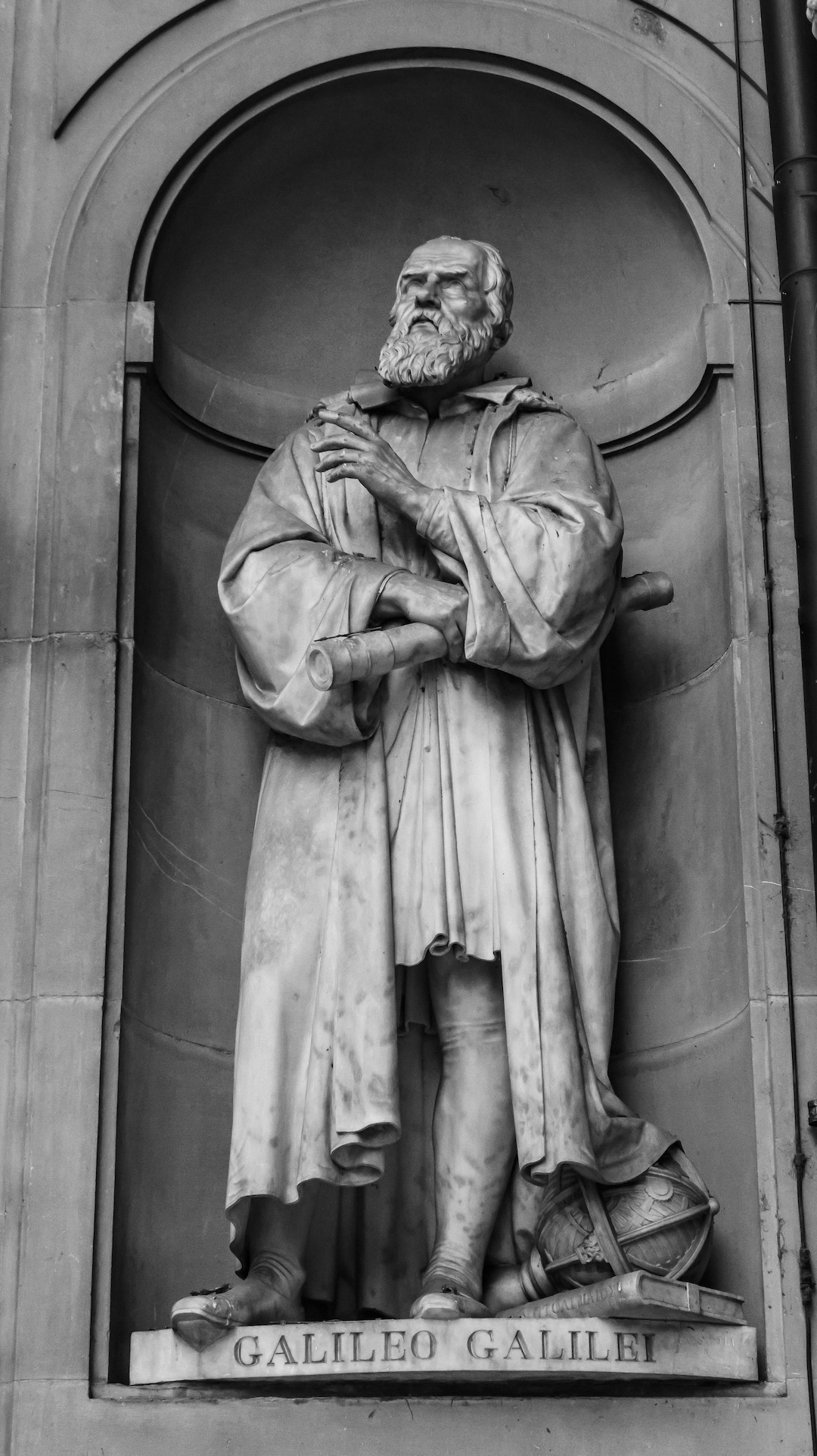
Galileo mathematician, astronomer, theologian? – Courtesy Pexels.com
Subtlety in the Text and the Search for Truth
The Church leaders did not need to fear Galileo would lead a revolution in the faith in the way that Luther had with the publication of his theses. Galileo’s writings were subtler, as he tried to find a nuanced position reconciling theological and scientific truth. His “Letter to the Grand Duchess” defends two principles; namely, that there can be no contradiction between the truths of science and the truths of faith.
“God is the author of all truth: both the truth known through revelation and the truth known through reason alone” (William Carroll, “Galileo”, p. 157).
The main purpose of the Bible is not to teach natural philosophy but to lead all to salvation, so this quote seems to indicate he understood the meaning and purpose of the Bible better than many of the theologians of the day. Although Galileo agreed that truth cannot contradict truth, he thought that there was an epistemological difference between science and religion. Studying science and religion require different methodologies, but this does not mean that they are contradictory. He saw the Book of Nature requiring a different methodology of reading than the Book of Scripture.
One Truth, Many Truths
Galileo did not expect his research to yield a notable difference between religious truths and other truths in the Bible. Rather, he wanted to make an appeal to Church authorities to not condemn Copernican astronomy, since he thought he was about to prove the movement of the earth. Cardinal Bellarmine represented the posture of the Churchmen that astronomy could not be proved. Scholastic debates on the merits of various systems caught Galileo in the middle. The Dominicans and the Jesuits seem to have been feuding and currying favor at court, with Galileo suffering some of the consequences.
It is unfortunate that much of the debate around the Galileo controversy focuses on the unfortunate condemnation he suffered at the hands of Church authorities. It draws our attention away from the epochal change of the world being more open to the contributions of modern science. Pope John Paul II reflects amply on this topic in his seminal encyclical, Fides et Ratio. He helps us to see how the subjective and objective elements of truth can be reconciled.
Modern philosophy clearly has the great merit of focusing attention upon man… Yet the positive results achieved must not obscure the fact that reason, in its one-sided concern to investigate human subjectivity, seems to have forgotten that men and women are always called to direct their steps towards a truth which transcends them… Abandoning the investigation of being, modern philosophical research has concentrated instead upon human knowing. Rather than make use of the human capacity to know the truth, modern philosophy has preferred to accentuate the ways in which this capacity is limited and conditioned (Pope John Paul II, Fides et Ratio, 5).
What should have been a profitable conversation between Galileo and Church officials devolved into a power struggle. It embarrassed the Church. Hundreds of years later, Pope John Paul II addressed the controversy. He underlined the lessons to be made when speaking to the Pontifical Academy for Sciences. If God is the author of all truth, faith cannot contradict reason.
Subscribe to the newsletter to never miss an article.
General Christian

About Fr. Nicholas Sheehy, LC
Fr. Nicholas Sheehy is Assistant Chaplain at the Duke Catholic Center. He was ordained a Catholic priest in 2013 for the Legionaries of Christ. You can read more about the author here.
Previous Post
October 28, 2024
More than Morality
Next Post

November 8, 2024 Trust and Obedience: God Calls Us To Depend On Him
Recent Comments
"Peace is a precious resource. Humankind and Planet Earth are thirsting for peace. Long live ..."
The Man Who Taught Nagasaki to ..."
"Searching and finding truth and traveling from truth to Truth is an exciting journey. The ..."
Your Writing Makes the Pope Happy
"Rich or poor, we are all fellow pilgrims enthusiastically marching together to our cherished destination. ..."
"There's no moral difference between avoiding conception by using 'artificial' contraception and using a 'natural' ..."
Browse Our Archives
Select a Category Church News Education Eucharist Faith and Mental Health Family Living the Faith Marriage Relationships Spiritual Direction Uncategorized Vocations Women Young Adults
Select a Month October 2026 September 2026 August 2026 July 2026 June 2026 November 2025 October 2025 September 2025 August 2025 July 2025 May 2025 April 2025 March 2025 February 2025 January 2025 December 2024 November 2024 October 2024 September 2024 August 2024 July 2024 June 2024 May 2024 April 2024 March 2024 February 2024 January 2024 December 2023 November 2023
Follow Us!
TAKE THE
Religious Wisdom Quiz
True or False: Ezekiel saw a vision of a valley of dry bones that came to life.
Select your answer to see how you score.
FALSE TRUE
Related posts from Formation Matters

Why Do We Build? Pope Leo XIV on...
Never Forget: What 9/11 Should Teach Us 25...
Why is there Catholic Education?

TRENDING AT PATHEOS Catholic

How to Make a Decision When You Can't...
Main point: It’s much more valuable to stay close to God so...

Archdiocese Hosts Military Marriage Retreat in Germany
RASTATT, Germany — The transient military lifestyle, with its frequent deployments and...

Nearly every morning, I make the drive to Detroit with my high-school-age...

The Real AI Story Is Adoption Without Trust
Artificial intelligence has crossed a political threshold. It is no longer a...

A new article, written by Jeff Lindsay and Gale L. Pooley,...

Swimfan: Forgotten Aughts Pleasures
This is a recovery effort. In 2002, My Big Fat Greek Wedding...
view all Catholic blogs
What Are Your Thoughts?leave a comment
Ad-Free & Subscriber Log-In Subscription Support
- About Us
- 2026 Calendar
- Videos
- Podcasts
- Library of World Religions
- Faith In Media Tracker
- Advertise With Us
- Write for Us
- Privacy Policy
- Terms of Service
- Do Not Sell My Data
- Contact Us
- Radiant Digital
- Manage Newsletter Subscriptions
- Unsubscribe From Notifications
- Sitemap
Copyright 2008-2026, Patheos. All rights reserved.
Subscription Support Ad-Free & Subscriber Log-In
Follow Patheos