
BuddhistCatholicContemplativeEvangelicalGeneral ChristianHinduJewishLatter-day SaintMuslimNew VisionsProgressive Christian
Beliefs
- Buddhist
- Catholic
- Contemplative
- Evangelical
- General Christian
- Hindu
- Jewish
- Latter-day Saint
- More Voices
- Muslim
- New Visions
- Pagan
- Progressive Christian
Topics
- Religion News
- Food and Religion
- Sports and Religion
- Religious Art
- Religious Music and Entertainment
- Religious Events
- History and Religion
- Style and Religion
- Politics and Religion
- Women in Religion
- Recreation Outdoors and Religion
- Business Finance and Religion
- Careers Workplace and Religion
- Education and Religion
- Family Parenting and Religion
- Health Fitness and Religion
- Home and Religion
- Relationships and Religion
- Technology and Religion
- Travel and Religion
Columnists
- Buddhist Columnists
- Business Finance and Religion Columnists
- Careers Workplace and Religion Columnists
- Catholic Columnists
- Contemplative Columnists
- Education and Religion Columnists
- Evangelists Columnists
- Family Parenting and Religion Columnists
- General Christian Columnists
- Health Fitness and Religion Columnists
- Hindu Columnists
- History and Religion Columnists
- Home and Religion Columnists
- Jewish Columnists
- More Voices Columnists
- Latter Day Columnists
- Muslim Columnists
- New Visions Columnists
- Nonreligious Columnists
- Pagan Columnists
- Politics and Religion Columnists
- Progressive Columnists
- Recreation Outdoors and Religion Columnists
- Relationships and Religion Columnists
- Religion News Columnists
- Religious Art Columnists
- Religious Events Columnists
- Religious Music and Entertainment Columnists
- Sports and Religion Columnists
- Style and Religion Columnists
- Technology and Religion Columnists
- Travel and Religion Columnists
- Women in Religion Columnists
Resource Library
- 2026 Calendar
- Library of World Religions
- The 100 Most Holy Places on Earth
- Patheos Answers
- Podcasts
- Videos
- Faith Leaders Database
- Anglican Episcopalian
- Bahai
- Baptist
- Buddhism
- Christianity
- Confucianism
- Eastern Orthodoxy
- Hinduism
- Holiness and Pentecostal
- ISKCON
- Islam
- Judaism
- Lutheran
- Methodist
- The Church of Jesus Christ of Latter-day Saints
- New Age
- Paganism
- Presbytarian and Reformed
- Protestantism
- Religion Behind the Scenes
- Roman Catholic
- Scientology
- Shia Islam
- Sikhism
- Sufism
- Sunni Islam
- Taoism
- Zen
- See all religions
Research Tools
 Ad-Free & Subscriber Log-In Subscription Support
Ad-Free & Subscriber Log-In Subscription Support
Follow Patheos 

- Trending:
- Forgiveness
- |
- Marriage
- |
- Consciousness
- |
- Death Penalty
- |
- Election
- |
- Halloween

- Home
- Catholic
- Politics and Religion
- If God Wrote the Bible, Why Are There Errors?
If God Wrote the Bible, Why Are There Errors?
Last updated on: September 4, 2024 at 5:00 am by Fr. Nicholas Sheehy, LC
If God Wrote the Bible, Why Are There Errors? 2024-09-02T19:09:42-07:00 Fr. Nicholas Sheehy, LC
Patheos Explore the world's faith through different perspectives on religion and spirituality! Patheos has the views of the prevalent religions and spiritualities of the world.
One of the great challenges when we begin to read the Bible is discovering what we would first understand as errors. Reading comprehension of complicated and ancient documents is usually challenging enough; interpreting what is already a somewhat opaque religious text adds another layer of difficulty.
Reading the Bible can be a powerful experience, truly incomparable to reading other literary texts. There is a dialogue happening between various actors; we have the human author, the divine author, and the reader. We can’t forget that the Holy Spirit is present and active every time that we open the Bible with a spirit of faith, although a historical person wrote the text and we are reading it thousands of years later.
Human Authors
The Bible is not so much a book as it is a library. In the Catholic Bible, we have 73 books composed by human authors over the course of many centuries. We have the main authors of each book, but even the subsequent generations with their reading and commentary have contributed to the creation of these great literary works of the past. This complicates our relationship with the text. Biblical scholars can sometimes dedicate their entire lives to draw out the full meaning of a single passage. We should not be too quick to judge that we understand everything at a first glance.
We don’t believe that the Sacred Text merely appeared one day–real human beings had to write it down, and this process took centuries. During the first century, the Church made no effort to categorize everything definitively. They simply used texts they considered sacred in the liturgy. This is actually one of the criteria for determining which books form part of the Canon of Scriptures determined in the fourth century.
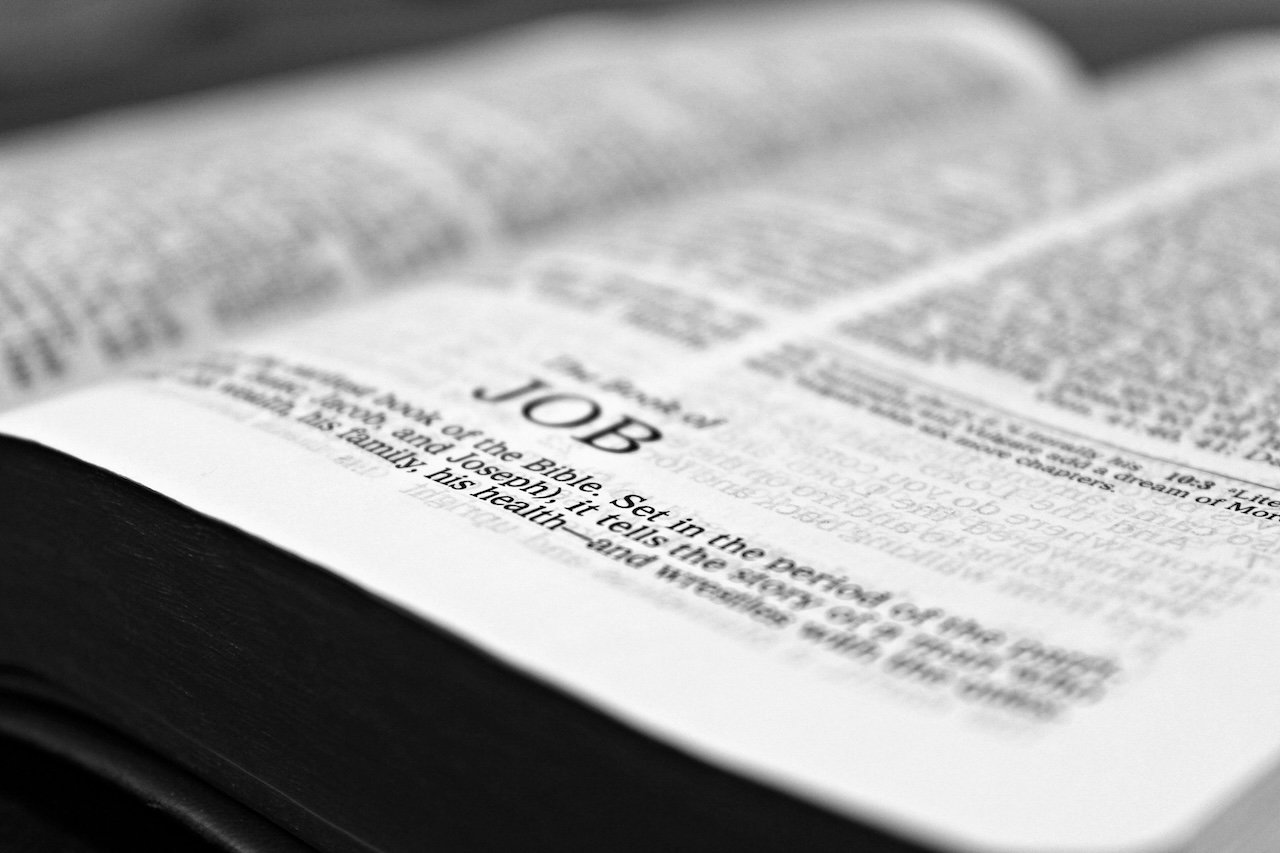
Reading the Bible can be challenging | Courtesy Pixabay
True Authors
It is important to remember that the human authors are true authors. We believe that they acted under divine inspiration, but this does not mean that they were robots simply transcribing word for word what the Holy Spirit whispered in their ear. Rather, God used them as instruments, allowing them to write down what he was inspiring in them according to their own knowledge, grammar, and language.
In composing the sacred books, God chose men and while employed by Him they made use of their powers and abilities, so that with Him acting in them and through them, they, as true authors, consigned to writing everything and only those things which He wanted (Vatican II, Dei Verbum, 11).
The work of the human authors was therefore quite real and essential in the creation of the Sacred Writings.
Not Just Any Ordinary Authors
Perhaps the most important concept to grasp when looking at Sacred Scripture is this aforementioned concept of “inspiration.” Biblical authors, historical men who actually existed in a specific place and time, worked under the inspiration of the Holy Spirit.
A key concept for understanding the sacred text as the word of God in human words is certainly that of inspiration. Here too we can suggest an analogy: as the word of God became flesh by the power of the Holy Spirit in the womb of the Virgin Mary, so sacred Scripture is born from the womb of the Church by the power of the same Spirit. Sacred Scripture is “the word of God set down in writing under the inspiration of the Holy Spirit.” In this way one recognizes the full importance of the human author who wrote the inspired texts and, at the same time, God himself as the true author (Pope Benedict XVI, Verbum Domini, 19).
They contributed what they could to the text. Many of the books are historical, which means the text attempts to tell the story of salvation as it really happened. In the meantime, our understanding of history has changed quite a bit. The authors’ conceptions of history would have intended to speak especially to theological truths as communicated through historical events. But not everything in the Bible is historical in the same way that we expect from a modern history book.
Truth, Reality, and Story
Just because the Bible states something, does not mean that it is being presented as a historical fact – though sometimes it does, which can get a little confusing. The book of Jonah mentions the city of Nineveh. The modern ruins of Nineveh in modern Mosul, Iraq, do not match this description. (If you’re interested in the topic of what is factual in the Bible, look for a future article I will be discussing literary genres and how we know which texts are considered historical fact). The story of Jonah and Nineveh teaches religious truths but does not mean to be a recounting of history.
Recognizing the role of human authors of sacred texts helps us to read the Bible in a more effective way. While we want to be most attentive to the voice of the Holy Spirit when we open our Bibles, it can be helpful to be aware of the impact of the text’s human authors as well – their personal and historical contexts contributed in a very real way. So, why are there errors in the Bible? It is because God chose to use imperfect instruments, and their fingerprints are all over the finished product. It echoes the incarnational nature of our faith, in which the Son of God becomes man so that we can become like God.
Subscribe to the newsletter to never miss an article.
Evangelical
History and Religion

About Fr. Nicholas Sheehy, LC
Fr. Nicholas Sheehy is Assistant Chaplain at the Duke Catholic Center. He was ordained a Catholic priest in 2013 for the Legionaries of Christ. You can read more about the author here.
Previous Post
September 2, 2024
God Opens Our Ears Before He Opens Our Mouths
Next Post
September 9, 2024 Discovering Jesus at the Beatification of Pope John Paul II
Recent Comments
"Peace is a precious resource. Humankind and Planet Earth are thirsting for peace. Long live ..."
The Man Who Taught Nagasaki to ..."
"Searching and finding truth and traveling from truth to Truth is an exciting journey. The ..."
Your Writing Makes the Pope Happy
"Rich or poor, we are all fellow pilgrims enthusiastically marching together to our cherished destination. ..."
"There's no moral difference between avoiding conception by using 'artificial' contraception and using a 'natural' ..."
Browse Our Archives
Select a Category Church News Education Eucharist Faith and Mental Health Family Living the Faith Marriage Relationships Spiritual Direction Uncategorized Vocations Women Young Adults
Select a Month October 2026 September 2026 August 2026 July 2026 June 2026 November 2025 October 2025 September 2025 August 2025 July 2025 May 2025 April 2025 March 2025 February 2025 January 2025 December 2024 November 2024 October 2024 September 2024 August 2024 July 2024 June 2024 May 2024 April 2024 March 2024 February 2024 January 2024 December 2023 November 2023
Follow Us!
TAKE THE
Religious Wisdom Quiz
In what parable does a father run to greet his lost son?
Select your answer to see how you score.
The Lost Sheep The Rich Man and Lazarus The Prodigal Son The Two Sons
Related posts from Formation Matters

Let Freedom Ring: Truth and the American Soul
Your Writing Makes the Pope Happy

Beyond Left and Right: Catholic Church on Immigration

TRENDING AT PATHEOS Catholic

Swimfan: Forgotten Aughts Pleasures
This is a recovery effort. In 2002, My Big Fat Greek Wedding...

Top Three Anti-Catholic Lies About Catholicism
This is my initial transcript for the video, "THE 3 WORST...

Pope Leo Celebrates Mass for Nurses & Docs...
I don't have any idea how he did it, but Pope Leo...

The Sermon on the Mount, Part I: Matthew...
The Sermon on the Mount, Part I (Matthew 4:12-5:12) St. Matthew moves...

What's up from Crossway: Reviewing some of their latest A few weeks...

Janie Learns the Way of the Cross: A...
Teaching children about Jesus' Passion can be challenging. Many parents and educators...
view all Catholic blogs
What Are Your Thoughts?leave a comment
Ad-Free & Subscriber Log-In Subscription Support
- About Us
- 2026 Calendar
- Videos
- Podcasts
- Library of World Religions
- Faith In Media Tracker
- Advertise With Us
- Write for Us
- Privacy Policy
- Terms of Service
- Do Not Sell My Data
- Contact Us
- Radiant Digital
- Manage Newsletter Subscriptions
- Unsubscribe From Notifications
- Sitemap
Copyright 2008-2026, Patheos. All rights reserved.
Subscription Support Ad-Free & Subscriber Log-In
Follow Patheos