
BuddhistCatholicContemplativeEvangelicalGeneral ChristianHinduJewishLatter-day SaintMuslimNew VisionsProgressive Christian
Beliefs
- Buddhist
- Catholic
- Contemplative
- Evangelical
- General Christian
- Hindu
- Jewish
- Latter-day Saint
- More Voices
- Muslim
- New Visions
- Pagan
- Progressive Christian
Topics
- Religion News
- Food and Religion
- Sports and Religion
- Religious Art
- Religious Music and Entertainment
- Religious Events
- History and Religion
- Style and Religion
- Politics and Religion
- Women in Religion
- Recreation Outdoors and Religion
- Business Finance and Religion
- Careers Workplace and Religion
- Education and Religion
- Family Parenting and Religion
- Health Fitness and Religion
- Home and Religion
- Relationships and Religion
- Technology and Religion
- Travel and Religion
Columnists
- Buddhist Columnists
- Business Finance and Religion Columnists
- Careers Workplace and Religion Columnists
- Catholic Columnists
- Contemplative Columnists
- Education and Religion Columnists
- Evangelists Columnists
- Family Parenting and Religion Columnists
- General Christian Columnists
- Health Fitness and Religion Columnists
- Hindu Columnists
- History and Religion Columnists
- Home and Religion Columnists
- Jewish Columnists
- More Voices Columnists
- Latter Day Columnists
- Muslim Columnists
- New Visions Columnists
- Nonreligious Columnists
- Pagan Columnists
- Politics and Religion Columnists
- Progressive Columnists
- Recreation Outdoors and Religion Columnists
- Relationships and Religion Columnists
- Religion News Columnists
- Religious Art Columnists
- Religious Events Columnists
- Religious Music and Entertainment Columnists
- Sports and Religion Columnists
- Style and Religion Columnists
- Technology and Religion Columnists
- Travel and Religion Columnists
- Women in Religion Columnists
Resource Library
- 2026 Calendar
- Library of World Religions
- The 100 Most Holy Places on Earth
- Patheos Answers
- Podcasts
- Videos
- Faith Leaders Database
- Anglican Episcopalian
- Bahai
- Baptist
- Buddhism
- Christianity
- Confucianism
- Eastern Orthodoxy
- Hinduism
- Holiness and Pentecostal
- ISKCON
- Islam
- Judaism
- Lutheran
- Methodist
- The Church of Jesus Christ of Latter-day Saints
- New Age
- Paganism
- Presbytarian and Reformed
- Protestantism
- Religion Behind the Scenes
- Roman Catholic
- Scientology
- Shia Islam
- Sikhism
- Sufism
- Sunni Islam
- Taoism
- Zen
- See all religions
Research Tools
 Ad-Free & Subscriber Log-In Subscription Support
Ad-Free & Subscriber Log-In Subscription Support
Follow Patheos 

- Trending:
- Forgiveness
- |
- Marriage
- |
- Consciousness
- |
- Death Penalty
- |
- Election
- |
- Halloween

- Home
- Catholic
- Politics and Religion
- Overcoming Three Obstacles to Evangelization
Overcoming Three Obstacles to Evangelization
Last updated on: July 12, 2024 at 3:15 pm by Fr. Nicholas Sheehy, LC
Overcoming Three Obstacles to Evangelization 2024-07-12T15:15:11-07:00 Fr. Nicholas Sheehy, LC
Patheos Explore the world's faith through different perspectives on religion and spirituality! Patheos has the views of the prevalent religions and spiritualities of the world.
Evangelization is a hot topic. Should we evangelize? The biggest argument in favor is that Jesus sent out his apostle two by two to preach the Gospel.
Jesus summoned the Twelve and began to send them out two by two (Mk. 6:7).
Importance of Evangelization
Jesus sends his apostles out to evangelize, so it must be important in some way. What do we need to evangelize? Over the course of the centuries, the Church has grown and developed a certain bureaucracy. There are certainly some benefits to this. There are so many needs to which the Church responds daily. It would be a shame that our dedication to service and hospitality could rob from us a missionary drive. This missionary drive comes from a place of joy.
The joy of the gospel fills the hearts and lives of all who encounter Jesus. Those who accept his offer of salvation are set free from sin, sorrow, inner emptiness and loneliness. With Christ joy is constantly born anew (Pope Francis, Evangelii Gaudium, 1).
We can fall into three traps when we desire to evangelize. It is too easy to miss the point by preaching something that is not the Gospel of Jesus Christ. We can misunderstand the problems of the people to whom we are preaching, thus making our message irrelevant. Finally, we can forget the value of evangelical poverty as it places our trust wholly in God.
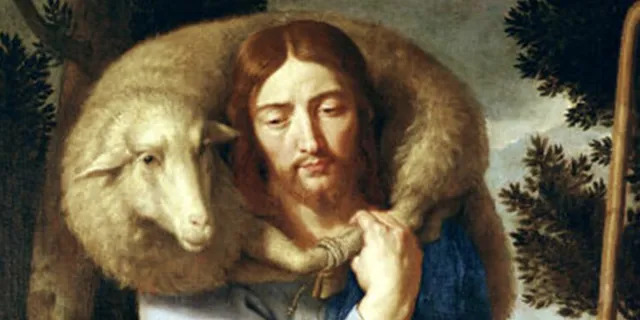
Jesus is the True Good Shepherd | Public Domain
Missing the Point
When the disciples go forth, they leave with a mission to bring the Gospel. Why is it necessary to preach the Gospel? Should we not rather be living tolerance? Is this not the supreme Gospel value? No, it is not. Tolerance is not a Gospel value. It is an invention of our modern culture. We are called to live love, justice, fortitude, and so on but not tolerance. For example, we can never tolerate evil.
If we are going to meet those who are suffering and preach them the Good News of the Gospel, we must be convinced that we are really going to help them. We must be filled with joy and recognize that our joy can change the lives of those around us who are sad.
Forcing the Message
The difficulty I find is that so many people seem satisfied with an unchristian lifestyle. They are far from God and it does not seem to affect them in the least. These are the people whom it is most difficult to help. For 9 years of my life as a Legionary, I have worked with adolescents. One of the phrases that we reflected on was: “don’t give bread to someone who is not hungry.” Too often, it feels that our Church programs are an effort to give bread to people who are already satisfied with what they have.
To evangelize effectively, we have to remember the core message of the Gospel and understand our audience. Most of us are tempted to do one but forget about the other.
Trusting Totally in God
Today’s Gospel also invites us to examine how much we need to preach the Gospel. We can use material things for spiritual benefits. We can speak about rich temporal means and humble temporal means. Rich temporal means are things like committees, buildings, church architecture and decoration. They tempt us to believe in ourselves as the source of evangelization. The second type of means is humble means.
They are marked with the stigma of the Cross and express one of the most profound truths in the Gospel: “Unless a grain of wheat falls to the ground and dies, it remains just a grain of wheat; but if it dies, it produces much fruit” (Jn 12:24). In humble means, a true paradox of the dynamism of faith can be observed: the poorer they are – that is, the more destitute, the more insignificant in themselves, and the less visible – the more efficacious they are. As opposed to rich means, these humble means are not dependent on tangible success, and they do not have any internal need for temporal success. (Tadeusz Dajczer, The Gift of Faith, p. 126).
We have to remember to go back to what is simple and effective in preaching the Gospel. Pastoral programs should not get in the way of the fundamental task of letting others know the Good News that Jesus Christ has come to save them from their sins. We should learn to use humble means, since these are what began the great cultural revolution that was the Christianization of the Western world.
Subscribe to the newsletter to never miss an article.

About Fr. Nicholas Sheehy, LC
Fr. Nicholas Sheehy was ordained a Catholic priest in 2013 for the Legionaries of Christ. He has been involved in youth work including missions, retreats and apostolic outreach in Germany, Italy, the United States and Central America. He is passionate about the New Evangelization and formation for young adults and married couples. He is a spiritual director and retreat director, offering marriage preparation and marriage counseling through the Divine Mercy Clinic and Family Center. He is currently Executive Director and Chaplain of the Newman Center at St. Philip the Apostle Parish in Pasadena, California. You can read more about the author here.
Previous Post

July 4, 2024
Faith, Luke Skywalker, and Trust
Next Post

July 26, 2024 What We Can Learn From Raccoons
Recent Comments
"Peace is a precious resource. Humankind and Planet Earth are thirsting for peace. Long live ..."
The Man Who Taught Nagasaki to ..."
"Searching and finding truth and traveling from truth to Truth is an exciting journey. The ..."
Your Writing Makes the Pope Happy
"Rich or poor, we are all fellow pilgrims enthusiastically marching together to our cherished destination. ..."
"There's no moral difference between avoiding conception by using 'artificial' contraception and using a 'natural' ..."
Browse Our Archives
Select a Category Church News Education Eucharist Faith and Mental Health Family Living the Faith Marriage Relationships Spiritual Direction Uncategorized Vocations Women Young Adults
Select a Month October 2026 September 2026 August 2026 July 2026 June 2026 November 2025 October 2025 September 2025 August 2025 July 2025 May 2025 April 2025 March 2025 February 2025 January 2025 December 2024 November 2024 October 2024 September 2024 August 2024 July 2024 June 2024 May 2024 April 2024 March 2024 February 2024 January 2024 December 2023 November 2023
Follow Us!
TAKE THE
Religious Wisdom Quiz
True or False: The church in Jerusalem sent Barnabas to investigate what was happening in Antioch.
Select your answer to see how you score.
FALSE TRUE
Related posts from Formation Matters

Beyond Left and Right: Catholic Church on Immigration


The Treasure Meant to Be Shared

TRENDING AT PATHEOS Catholic

How to Make a Decision When You Can't...
Main point: It’s much more valuable to stay close to God so...

Archdiocese Hosts Military Marriage Retreat in Germany
RASTATT, Germany — The transient military lifestyle, with its frequent deployments and...

Nearly every morning, I make the drive to Detroit with my high-school-age...

The Real AI Story Is Adoption Without Trust
Artificial intelligence has crossed a political threshold. It is no longer a...

A new article, written by Jeff Lindsay and Gale L. Pooley,...

Swimfan: Forgotten Aughts Pleasures
This is a recovery effort. In 2002, My Big Fat Greek Wedding...
view all Catholic blogs
What Are Your Thoughts?leave a comment
Ad-Free & Subscriber Log-In Subscription Support
- About Us
- 2026 Calendar
- Videos
- Podcasts
- Library of World Religions
- Faith In Media Tracker
- Advertise With Us
- Write for Us
- Privacy Policy
- Terms of Service
- Do Not Sell My Data
- Contact Us
- Radiant Digital
- Manage Newsletter Subscriptions
- Unsubscribe From Notifications
- Sitemap
Copyright 2008-2026, Patheos. All rights reserved.
Subscription Support Ad-Free & Subscriber Log-In
Follow Patheos