
BuddhistCatholicContemplativeEvangelicalGeneral ChristianHinduJewishLatter-day SaintMuslimNew VisionsProgressive Christian
Beliefs
- Buddhist
- Catholic
- Contemplative
- Evangelical
- General Christian
- Hindu
- Jewish
- Latter-day Saint
- More Voices
- Muslim
- New Visions
- Pagan
- Progressive Christian
Topics
- Religion News
- Food and Religion
- Sports and Religion
- Religious Art
- Religious Music and Entertainment
- Religious Events
- History and Religion
- Style and Religion
- Politics and Religion
- Women in Religion
- Recreation Outdoors and Religion
- Business Finance and Religion
- Careers Workplace and Religion
- Education and Religion
- Family Parenting and Religion
- Health Fitness and Religion
- Home and Religion
- Relationships and Religion
- Technology and Religion
- Travel and Religion
Columnists
- Buddhist Columnists
- Business Finance and Religion Columnists
- Careers Workplace and Religion Columnists
- Catholic Columnists
- Contemplative Columnists
- Education and Religion Columnists
- Evangelists Columnists
- Family Parenting and Religion Columnists
- General Christian Columnists
- Health Fitness and Religion Columnists
- Hindu Columnists
- History and Religion Columnists
- Home and Religion Columnists
- Jewish Columnists
- More Voices Columnists
- Latter Day Columnists
- Muslim Columnists
- New Visions Columnists
- Nonreligious Columnists
- Pagan Columnists
- Politics and Religion Columnists
- Progressive Columnists
- Recreation Outdoors and Religion Columnists
- Relationships and Religion Columnists
- Religion News Columnists
- Religious Art Columnists
- Religious Events Columnists
- Religious Music and Entertainment Columnists
- Sports and Religion Columnists
- Style and Religion Columnists
- Technology and Religion Columnists
- Travel and Religion Columnists
- Women in Religion Columnists
Resource Library
- 2026 Calendar
- Library of World Religions
- The 100 Most Holy Places on Earth
- Patheos Answers
- Podcasts
- Videos
- Faith Leaders Database
- Anglican Episcopalian
- Bahai
- Baptist
- Buddhism
- Christianity
- Confucianism
- Eastern Orthodoxy
- Hinduism
- Holiness and Pentecostal
- ISKCON
- Islam
- Judaism
- Lutheran
- Methodist
- The Church of Jesus Christ of Latter-day Saints
- New Age
- Paganism
- Presbytarian and Reformed
- Protestantism
- Religion Behind the Scenes
- Roman Catholic
- Scientology
- Shia Islam
- Sikhism
- Sufism
- Sunni Islam
- Taoism
- Zen
- See all religions
Research Tools
 Ad-Free & Subscriber Log-In Subscription Support
Ad-Free & Subscriber Log-In Subscription Support
Follow Patheos 

- Trending:
- Forgiveness
- |
- Marriage
- |
- Consciousness
- |
- Death Penalty
- |
- Election
- |
- Halloween

- Home
- Catholic
- Politics and Religion
- The “Other” Christians: Re-Examining the Reformation
The “Other” Christians: Re-Examining the Reformation
Last updated on: May 8, 2024 at 12:47 pm by Fr. Nicholas Sheehy, LC
The “Other” Christians: Re-Examining the Reformation 2024-05-08T12:47:38-07:00 Fr. Nicholas Sheehy, LC
Patheos Explore the world's faith through different perspectives on religion and spirituality! Patheos has the views of the prevalent religions and spiritualities of the world.
Most Christians accept the Reformation as something necessary. However, it is a great tragedy in the history of Christianity in the West. I am convinced that many Protestants might be surprised if they took a sincere look at the Catholic faith. This has been the case for notable converts such as Scott and Kimberly Hahn; by studying everything from the Church Fathers to the Church’s doctrine on contraception, they became convinced of the beauty and truth of the Catholic faith.
Here are some of the facts about the Reformation that should give us pause.
-
500 Years Isn’t Long Enough
When did Protestantism begin? Martin Luther nailed the 95 theses to the chapel in Wittenberg in 1517, a watershed year for the Western world. His bold action beginning the Reformation shattered the unity of Christianity of the West to such a degree that it has never recovered. He was perhaps right to question the practice of selling indulgences, but the harm done by his heresy goes far beyond correcting one corrupt practice.
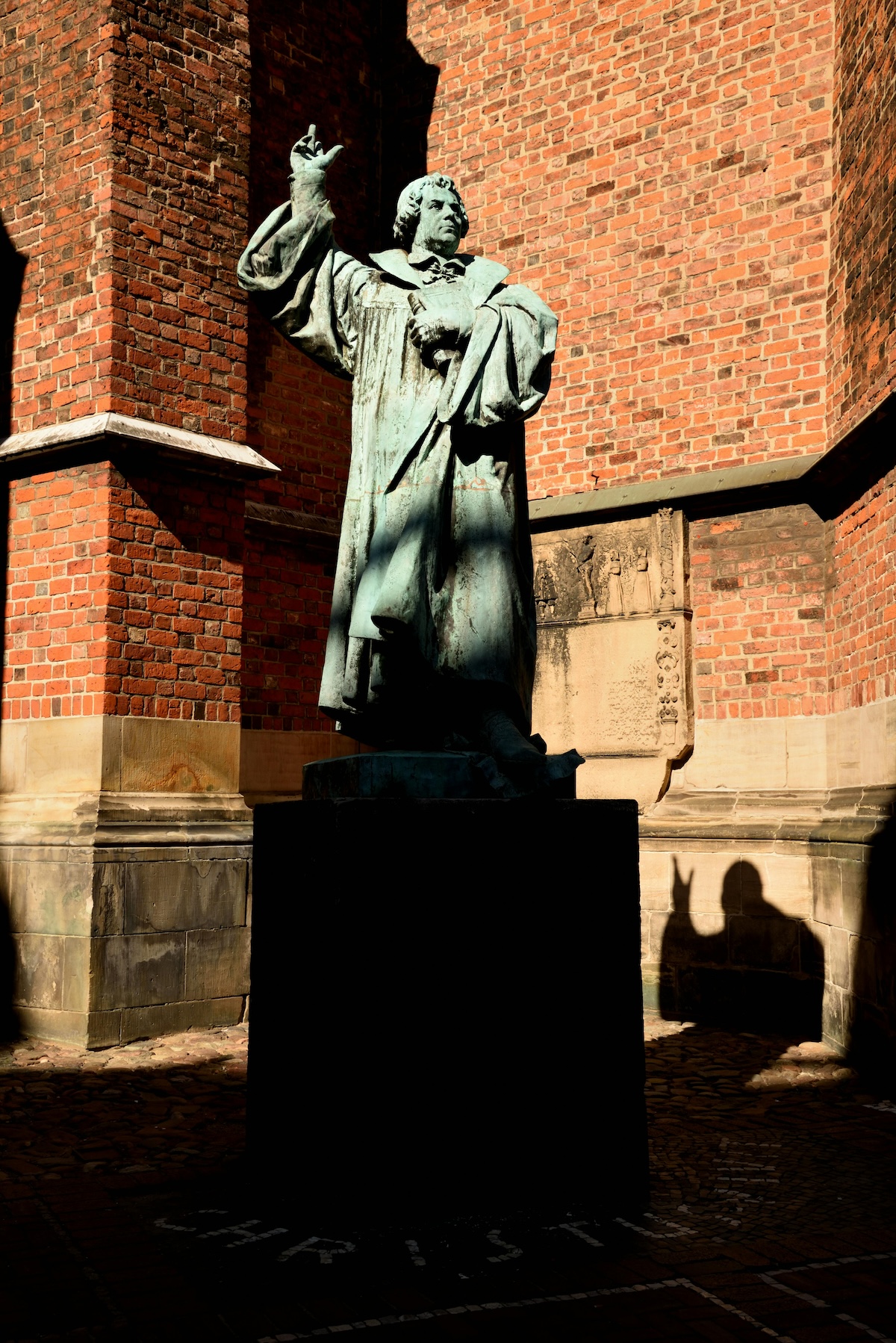
Martin Luther is the father of the Reformation | Courtesy: Pexels.com
“Who founded your church?” is a valid question we should ask ourselves. Let’s take an honest look at the founders and of the main Protestant denominations and when it all happened:
Lutheran church – Martin Luther – October 31, 1517
Anglican Communion – Henry VII – 1534
Calvinist Churches – Huldreich Zwingli, John Calvin – 1536
Presbyterian Church – John Knox – 1560
Baptist Churches – John Smyth and Thomas Helwys – 1606
Methodist Churches – John and Charles Wesley – 1784
Protestant Episcopal Church – Samuel Seabury – 1789
Adventist Churches – William Miller – 1840’s
Salvation Army – William Booth – 1865
Christian Science – Mary Eddy – 1879
Jehovah’s Witnesses – Charles Taze Russell – 1896
Pentecostal Churches – William Seymour – 1901
As Americans, because our country is so young, we are often impressed by something that is two hundred years old. So, we have to admit that the Adventist churches have some clout within the timescale of American history. However, set side-by-side with the multi-millennia history of the Church, we have to be honest that even a few hundred years is not much of a history. It might be hard to swallow that Jesus founded the true Christian Church in the first century, but this claim at least holds more credibility than the idea that the prevailing form of Christianity was false for 1500 years until someone like John Knox or John Wesley came along and finally got it right.
-
Christ’s Most Basic Command
I have always asked myself why Protestants don’t try to celebrate the Eucharist, since Jesus commands it in the Gospel. He tells his apostles to celebrate the Eucharist when he says, “Do this in memory of me” (Lk. 22:19). I completely understand that people think Catholics are crazy because we believe Jesus to be truly present in the Eucharist. However, the reason we believe this is not necessarily because it makes perfect sense in human terms, but because Jesus said it.
Repeating the words of Jesus before eating Ritz crackers and grape juice cannot compare to the richness and power of the mystery of the Eucharist. Jesus says “do this,” not simply “remember me.” Catholic Eucharist takes us back to the happenings at Calvary. A generic Protestant communion service runs the risk of seeming like play-acting. It can be slightly amusing how excited Protestants are about following the Bible, except when they aren’t.
-
What Happened to the Sacraments?
The Reformers quickly reduced the sacraments to basically only Baptism and a communion service approximating the gift of the Eucharist. When Luther attacked the seven sacraments, another eventual reformer, King Henry VIII, leapt into the breach to defend the Catholic position. His Assertio Septem Sacramentorum earned for him the title of “Defender of the Faith.” A few years later, he too would break with Rome.
Protestants seem to miss a lot of what Christ preached in the Gospel when it comes to the sacraments. After all, Jesus himself instituted all seven of them! We see Biblical evidence for all of them in the Gospels and the rest of the New Testament:
Baptism (Mt. 28:19, Eph. 4:4-6)
Confirmation (Jn. 20:22 and Acts 2:1-4)
Eucharist (Mt. 26:26-30, Mk. 14:22-24, Lk. 22:14-20, and 1 Corinthians 11:23-25)
Penance (Jn. 20:23; James 5:15)
Anointing of the Sick (James 5:14)
Matrimony (Mt. 19:6)
Holy Orders (Mt. 10:1-8 and Acts 6:3-6)
From this list, there is really only one sacrament that all Christians agree on: baptism. But even whether or not it is a sacrament is often up for debate: How much further does it go? Is Baptism the only sacrament? What does it mean to have a sacrament?
Since the Reformation, Protestant living of Christianity depends so much on praying and working out your personal salvation, that the sacraments are largely forgotten. They are, however, the most important ordinary means that God has left human beings for our road to salvation.
-
“Sola Scriptura” – Where is That in the Bible?
I find the concept of “Sola Scriptura” to be particularly frightening and prone to fundamentalism. The ironic thing is that Protestants seem to have so much respect for Scripture–except when they don’t.
Matthew Barrett in his recent book, God’s Word Alone, defines sola scriptura this way; sola scriptura means that only scripture, because it is God’s inspired word, is our inherent, sufficient, and final authority for the Church (Trent Horn, Catholic Answers).
The main problem with this argument is that the Bible does not actually teach this doctrine. Christians of other denominations readily concede that Joseph Smith’s story of the tablets being given to him is unlikely. Yet, how do they understand the development of the Bible? It requires a Church to establish the canon determining which books belong in the Bible and which do not.
The development of Sola Scriptura actually began with the idea of being saved “by faith alone,” as Luther taught. While it is true we are saved by your faith, the problem began when he added the word “alone.” The scriptural text actually reads:
For in it is revealed the righteousness of God from faith to faith; as it is written, “The one who is righteous by faith will live.” (Rom. 1:17)
The passage does not include the word “alone.” Luther added this word famously to assure himself of his own salvation. He famously suffered frequent panic attacks due to his own scrupulosity, so he sought refuge in an assurance of his own redemption. As he sought consolation in “faith alone” through his interpretation of Romans 1:17, he determined to trust Scripture alone so as to avoid needing the Church.
Conclusion
I have known an innumerable number of virtuous Protestants and remain continually impressed by their faith. But we must admit that some of their fundamental beliefs are untenable. Have the ensuing generations gone further than the fathers of the Reformation intended? How do we account for the discontinuity of 1500 years between Jesus ascending into Heaven and the first beginnings of Protestant Christianity? Jesus wants so much more for us than the basic tenets of Protestant Christianity. Do you agree with me? Comment below.
This article is part of a series I am writing on the identity of Protestant vs. Catholic Christianity.
Identity of Protestant vs. Catholic Christianity
5 Reasons I Didn’t Become a Protestant
Subscribe to the newsletter to never miss an article.
General Christian
Religion News

About Fr. Nicholas Sheehy, LC
Fr. Nicholas Sheehy was ordained a Catholic priest in 2013 for the Legionaries of Christ. He has been involved in youth work including missions, retreats and apostolic outreach in Germany, Italy, the United States and Central America. He is passionate about the New Evangelization and formation for young adults and married couples. He is a spiritual director and retreat director, offering marriage preparation and marriage counseling through the Divine Mercy Clinic and Family Center. He is currently Executive Director and Chaplain of the Newman Center at St. Philip the Apostle Parish in Pasadena, California. You can read more about the author here.
Previous Post
May 6, 2024
5 Reasons I Didn't Become a Protestant
Next Post
May 10, 2024 Growing Love by Degrees: Lessons from a Medieval Monk
Recent Comments
"Peace is a precious resource. Humankind and Planet Earth are thirsting for peace. Long live ..."
The Man Who Taught Nagasaki to ..."
"Searching and finding truth and traveling from truth to Truth is an exciting journey. The ..."
Your Writing Makes the Pope Happy
"Rich or poor, we are all fellow pilgrims enthusiastically marching together to our cherished destination. ..."
"There's no moral difference between avoiding conception by using 'artificial' contraception and using a 'natural' ..."
Browse Our Archives
Select a Category Church News Education Eucharist Faith and Mental Health Family Living the Faith Marriage Relationships Spiritual Direction Uncategorized Vocations Women Young Adults
Select a Month October 2026 September 2026 August 2026 July 2026 June 2026 November 2025 October 2025 September 2025 August 2025 July 2025 May 2025 April 2025 March 2025 February 2025 January 2025 December 2024 November 2024 October 2024 September 2024 August 2024 July 2024 June 2024 May 2024 April 2024 March 2024 February 2024 January 2024 December 2023 November 2023
Follow Us!
TAKE THE
Religious Wisdom Quiz
In what city was Jesus born?
Select your answer to see how you score.
Capernaum Bethlehem Jerusalem Nazareth
Related posts from Formation Matters
The Man Who Taught Nagasaki to Pray
Your Writing Makes the Pope Happy

Beyond Left and Right: Catholic Church on Immigration
If You're Not Building, You're Breaking
TRENDING AT PATHEOS Catholic

In one sense walking into Westminster Abbey is like walking down the...

'Super Scam Me' Exposes AI Jon Bon Jovi...
Leslie Pickett believed she was in a relationship with Jon Bon Jovi....

The Brazilian Remake of Kendricks' 'Flywheel' Opens in...
“Flywheel,” the story that launched the Kendrick Brothers’ filmmaking career is getting...

The Dangers of Gradual Accommodation (Winking at Sin)
Recently, the “law of gradualness” resurfaced during the opening of a weeklong,...

The Iron Gates and the Lion of the...
Yesterday, I didn't finish my report about, well, yesterday. So I'll...

The Image: On the Horror of Capitalism and...
The Image Then went the Pharisees, and took counsel how they might...
view all Catholic blogs
What Are Your Thoughts?leave a comment
Ad-Free & Subscriber Log-In Subscription Support
- About Us
- 2026 Calendar
- Videos
- Podcasts
- Library of World Religions
- Faith In Media Tracker
- Advertise With Us
- Write for Us
- Privacy Policy
- Terms of Service
- Do Not Sell My Data
- Contact Us
- Radiant Digital
- Manage Newsletter Subscriptions
- Unsubscribe From Notifications
- Sitemap
Copyright 2008-2026, Patheos. All rights reserved.
Subscription Support Ad-Free & Subscriber Log-In
Follow Patheos