
BuddhistCatholicContemplativeEvangelicalGeneral ChristianHinduJewishLatter-day SaintMuslimNew VisionsProgressive Christian
Beliefs
- Buddhist
- Catholic
- Contemplative
- Evangelical
- General Christian
- Hindu
- Jewish
- Latter-day Saint
- More Voices
- Muslim
- New Visions
- Pagan
- Progressive Christian
Topics
- Religion News
- Food and Religion
- Sports and Religion
- Religious Art
- Religious Music and Entertainment
- Religious Events
- History and Religion
- Style and Religion
- Politics and Religion
- Women in Religion
- Recreation Outdoors and Religion
- Business Finance and Religion
- Careers Workplace and Religion
- Education and Religion
- Family Parenting and Religion
- Health Fitness and Religion
- Home and Religion
- Relationships and Religion
- Technology and Religion
- Travel and Religion
Columnists
- Buddhist Columnists
- Business Finance and Religion Columnists
- Careers Workplace and Religion Columnists
- Catholic Columnists
- Contemplative Columnists
- Education and Religion Columnists
- Evangelists Columnists
- Family Parenting and Religion Columnists
- General Christian Columnists
- Health Fitness and Religion Columnists
- Hindu Columnists
- History and Religion Columnists
- Home and Religion Columnists
- Jewish Columnists
- More Voices Columnists
- Latter Day Columnists
- Muslim Columnists
- New Visions Columnists
- Nonreligious Columnists
- Pagan Columnists
- Politics and Religion Columnists
- Progressive Columnists
- Recreation Outdoors and Religion Columnists
- Relationships and Religion Columnists
- Religion News Columnists
- Religious Art Columnists
- Religious Events Columnists
- Religious Music and Entertainment Columnists
- Sports and Religion Columnists
- Style and Religion Columnists
- Technology and Religion Columnists
- Travel and Religion Columnists
- Women in Religion Columnists
Resource Library
- 2026 Calendar
- Library of World Religions
- The 100 Most Holy Places on Earth
- Patheos Answers
- Podcasts
- Videos
- Faith Leaders Database
- Anglican Episcopalian
- Bahai
- Baptist
- Buddhism
- Christianity
- Confucianism
- Eastern Orthodoxy
- Hinduism
- Holiness and Pentecostal
- ISKCON
- Islam
- Judaism
- Lutheran
- Methodist
- The Church of Jesus Christ of Latter-day Saints
- New Age
- Paganism
- Presbytarian and Reformed
- Protestantism
- Religion Behind the Scenes
- Roman Catholic
- Scientology
- Shia Islam
- Sikhism
- Sufism
- Sunni Islam
- Taoism
- Zen
- See all religions
Research Tools
 Ad-Free & Subscriber Log-In Subscription Support
Ad-Free & Subscriber Log-In Subscription Support
Follow Patheos 

- Trending:
- Forgiveness
- |
- Marriage
- |
- Consciousness
- |
- Death Penalty
- |
- Election
- |
- Halloween

- Home
- Catholic
- Politics and Religion
- Roots of the Radicalization of the Protestant Reformation
Roots of the Radicalization of the Protestant Reformation
Last updated on: May 6, 2024 at 9:41 am by Fr. Nicholas Sheehy, LC
Roots of the Radicalization of the Protestant Reformation 2024-05-06T09:41:31-07:00 Fr. Nicholas Sheehy, LC
Patheos Explore the world's faith through different perspectives on religion and spirituality! Patheos has the views of the prevalent religions and spiritualities of the world.
What is the difference between Catholicism and Protestant Christianity? To summarize it in one phrase, Catholicism is the Thing against which Protestant Christianity rebels. I have a lot of compassion and admiration for our devout Protestant brothers and sisters. However, the reason I am a Catholic is because I hold a firm conviction that the way they formulate their identity is flawed on a foundational level. It seems unfortunate that they let their identity rest on the fact that they are not like us. If there was something fundamentally flawed about the Catholic Church that was addressed in the Reformation, this historical event should have finished in the 16th century.
By the way, this article should not be considered in isolation, as I plan to discuss this issue in a series of four articles. In this first article, I am going to question the identity of Protestant Christianity. Then, in the second article I will outline the main reasons I believe the Catholic Church is the true Church Jesus Christ himself founded. After that, in the third article I will outline the way that Protestant Christianity fails in those same areas that the Catholic Church succeeds. Finally, in the fourth article, I will express my admiration for Protestant Christianity and suggest ways that we can help each other grow.
Non-identity Identity
Any baseball fan is probably familiar with the Mets. We could argue that they are the “other team” from New York. If the Mets and Yankees play a game, I would probably root for the Mets, not because I admire the Mets, but because they are not the Yankees. I admit that even I know this is not the best way to establish an identity, even for something as inconsequential as sports.
It is never good to have a “not-identity” be the basis for your sense of self. I worry that this is the case for the views Protestants hold regarding Catholics. They constantly compare themselves to us, going all the way back to the nailing of the 95 theses on the door of the church at Wittenberg. Since that fateful day in 1517, every new branch of Protestant Christianity has continued the reactionary impulse, distinguishing themselves by dividing the Church. These manifestations of heresy force the Catholic Church to re-affirm her doctrine, “cutting away” those who are outside of the acceptable range of Catholic teaching. For those who have thus cut themselves off of the Church, the fragmentation of Christian denominations has not stopped during these five centuries of division.
We might be able to consider the Protestants as haters, always looking for things within the traditions of Catholicism of which they can disapprove. If someone is Catholic, yet rejects basic doctrine, they are falling into heresy. This becomes especially dangerous because the natural result is that the person builds their identity based on dissent rather than communion.
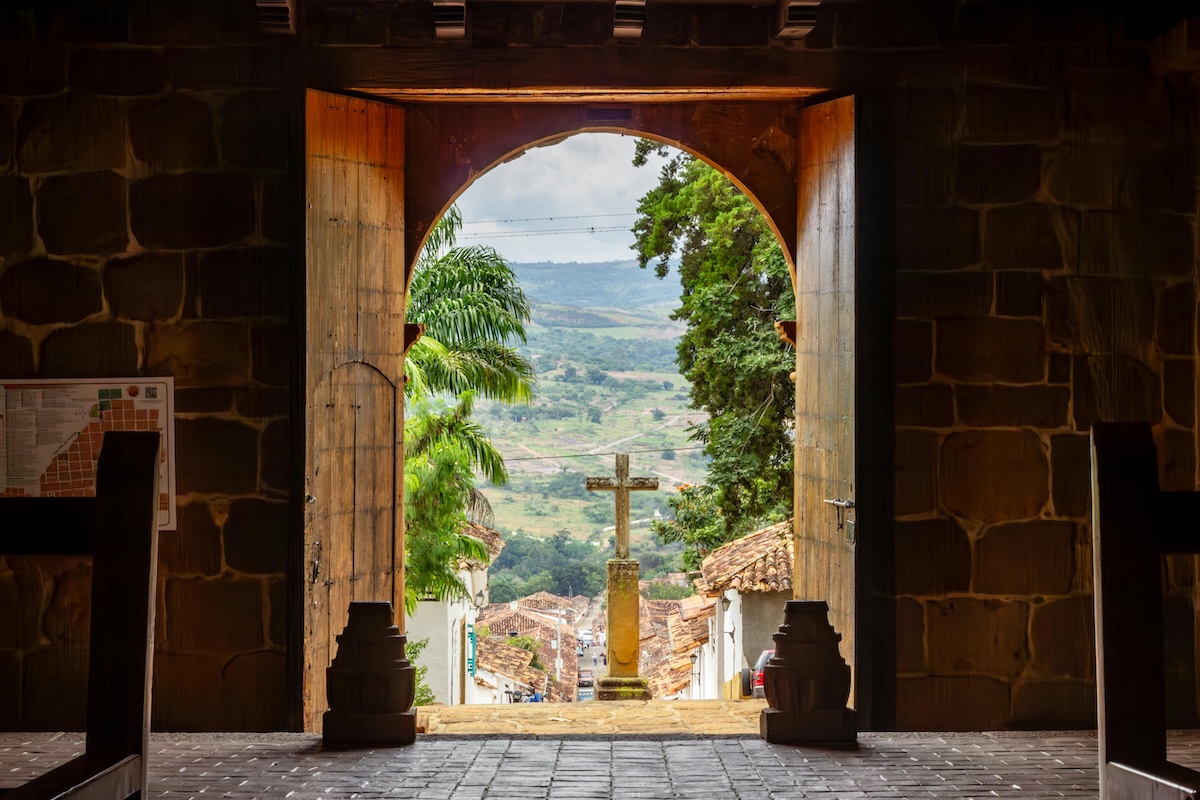
Protestant Christians are looking for Christ, are they looking in the right place? | Courtesy: Pexels.com
Rebel Without a Cause?
James Dean was an American actor famous for starring in the film Rebel Without A Cause. The film tries to capture the “weird ways of teenagers” in a manner that was perhaps too avant-garde for much of its original 1955 audience. Its success at the box office in spite of this speaks to the age-old American sympathy for the rebel. However, as Americans, we should be wary of this turning into blind support for the rebel in every situation. We might think that as Americans, we always support revolution, going back to our own roots. This is far from the case though and even our Founding Fathers were able to distinguish between the American and the French Revolution.
Repeat Radicalization
A Revolution founded on a “not-identity” stands in constant danger of re-radicalizing. The French Revolution is a prime example of this, as progressives are continually moving the goalposts about what they want to achieve and what a good leader looks like. A radicalizing element tends towards the fringes of thought, while a body that seeks to be universal has a much greater tendency to equilibrate in the middle. People break off from the Church in all directions, but they simply must turn towards the middle to find their way home. Chesterton captures well the sentiment of the crisis in his book The Thing.
Chesterton says that all the revolts against the Church, from even before the Reformation until now, tell the same strange story. Every great heretic has always exhibited three remarkable characteristics in combination. First, he picks out some mystical idea from the Church’s balance of mystical ideas. Second, he uses that one mystical idea against all the other mystical ideas. Third, he seems generally to have no notion that his own favorite mystical idea is a mystical idea, as mysterious or dubious or dogmatic as any of the Church’s other mystical ideas that he rejects. Thus Calvinists are obsessed only with the Sovereignty of God, Lutherans with the Grace of God, Methodists with the sin of man, Baptists with the Bible, Quakers with simplicity. The list goes on, it even includes religious and political movements outside of Christianity. Muslims are obsessed with the Oneness of God, Communists with the equality of men, Feminists with the equality of men and women, Materialists with creation apart from the Creator, Spiritualists with the rejection of materialism, and so on. In every case, these sects have taken one of the Church’s mystical ideas and exalted it above the rest, even against the rest. They have lost all the moderating and balancing measures of the Thing, the Catholic Faith (Dale Ahlquist, “Lecture 57: The Thing”).
Roots of the Reformation
If we go back to the roots of the Protestant Reformation, we see a few principal versions. We begin with Lutheranism, inspired by Luther’s revolt against Rome and focusing on a de-sacralization of the Roman rites. Luther originally maintained a version of the sacrament of the Eucharist but quickly began to slide away from the sacramental nature of the Church. Calvin and Zwingli laid a huge emphasis on predestination and challenged the traditional understanding of grace. King Henry VIII caved under the pressure of both his own lust and the political complications of being without an heir. He allowed himself to crumble and found it easier to give abbeys and lands to noblemen and bishops rather than face the rigors of married life as laid out by the Roman Pontiff.
The great difference between Catholicism and Protestant Christianity is that Catholicism is the action and Protestant Christianity is the reaction. This leads necessarily to a gap in the sense of identity of Catholics and Protestants and exposes the deep structural problems that originally led to the tremendous explosion of different sects which continues to this day. From being “one, holy, catholic church,” Christianity has unfortunately developed into literally thousands of sects, each one claiming to be the most faithful representation of Christianity. If the Reformation had worked, we could expect it to end by the close of the 16th century. What we witness instead is the continued proliferation of Protestant sects and the continued splintering of the Church.
What do you think? Comment below.
Subscribe to the newsletter to never miss an article.
General Christian
History and Religion

About Fr. Nicholas Sheehy, LC
Fr. Nicholas Sheehy was ordained a Catholic priest in 2013 for the Legionaries of Christ. He has been involved in youth work including missions, retreats and apostolic outreach in Germany, Italy, the United States and Central America. He is passionate about the New Evangelization and formation for young adults and married couples. He is a spiritual director and retreat director, offering marriage preparation and marriage counseling through the Divine Mercy Clinic and Family Center. He is currently Executive Director and Chaplain of the Newman Center at St. Philip the Apostle Parish in Pasadena, California. You can read more about the author here.
Previous Post

April 29, 2024
Artificial Intelligence, Pope Francis, and the G7
Next Post

May 3, 2024 New Age Movement and Being Spiritual But Not Religious
Recent Comments
"Peace is a precious resource. Humankind and Planet Earth are thirsting for peace. Long live ..."
The Man Who Taught Nagasaki to ..."
"Searching and finding truth and traveling from truth to Truth is an exciting journey. The ..."
Your Writing Makes the Pope Happy
"Rich or poor, we are all fellow pilgrims enthusiastically marching together to our cherished destination. ..."
"There's no moral difference between avoiding conception by using 'artificial' contraception and using a 'natural' ..."
Browse Our Archives
Select a Category Church News Education Eucharist Faith and Mental Health Family Living the Faith Marriage Relationships Spiritual Direction Uncategorized Vocations Women Young Adults
Select a Month October 2026 September 2026 August 2026 July 2026 June 2026 November 2025 October 2025 September 2025 August 2025 July 2025 May 2025 April 2025 March 2025 February 2025 January 2025 December 2024 November 2024 October 2024 September 2024 August 2024 July 2024 June 2024 May 2024 April 2024 March 2024 February 2024 January 2024 December 2023 November 2023
Follow Us!
TAKE THE
Religious Wisdom Quiz
Which king of Judah destroyed Nehushtan, the bronze serpent?
Select your answer to see how you score.
Josiah Manasseh Hezekiah Uzziah
Related posts from Formation Matters

Beyond Left and Right: Catholic Church on Immigration

The Treasure Meant to Be Shared

TRENDING AT PATHEOS Catholic

The Problem with False Prophets
Miller’s Station UMC| 10/18/26| Anchor Verse: Jeremiah 23: 1, 9-23 I...

Emotion in Early Christianity by Andrew Crislip
Andrew Crislip’s Emotion in Early Christianity examines an often overlooked dimension of...

16 Spiritual Touchstones for a More Grounded Life
After decades of spiritual study, here are 16 principles I try...

Catholic Evangelization: Sharing Your Faith Every Day
Welcome back to the Graceful Awakening mini-series called, “From Faith to Mission.” ...

The Pillar of the Boatmen: the Ancient Monument...
The Pillar of the Boatmen is a Romano-Gaulish sculpture that dates from...

In one sense walking into Westminster Abbey is like walking down the...
view all Catholic blogs
What Are Your Thoughts?leave a comment
Ad-Free & Subscriber Log-In Subscription Support
- About Us
- 2026 Calendar
- Videos
- Podcasts
- Library of World Religions
- Faith In Media Tracker
- Advertise With Us
- Write for Us
- Privacy Policy
- Terms of Service
- Do Not Sell My Data
- Contact Us
- Radiant Digital
- Manage Newsletter Subscriptions
- Unsubscribe From Notifications
- Sitemap
Copyright 2008-2026, Patheos. All rights reserved.
Subscription Support Ad-Free & Subscriber Log-In
Follow Patheos