
BuddhistCatholicContemplativeEvangelicalGeneral ChristianHinduJewishLatter-day SaintMuslimNew VisionsProgressive Christian
Beliefs
- Buddhist
- Catholic
- Contemplative
- Evangelical
- General Christian
- Hindu
- Jewish
- Latter-day Saint
- More Voices
- Muslim
- New Visions
- Pagan
- Progressive Christian
Topics
- Religion News
- Food and Religion
- Sports and Religion
- Religious Art
- Religious Music and Entertainment
- Religious Events
- History and Religion
- Style and Religion
- Politics and Religion
- Women in Religion
- Recreation Outdoors and Religion
- Business Finance and Religion
- Careers Workplace and Religion
- Education and Religion
- Family Parenting and Religion
- Health Fitness and Religion
- Home and Religion
- Relationships and Religion
- Technology and Religion
- Travel and Religion
Columnists
- Buddhist Columnists
- Business Finance and Religion Columnists
- Careers Workplace and Religion Columnists
- Catholic Columnists
- Contemplative Columnists
- Education and Religion Columnists
- Evangelists Columnists
- Family Parenting and Religion Columnists
- General Christian Columnists
- Health Fitness and Religion Columnists
- Hindu Columnists
- History and Religion Columnists
- Home and Religion Columnists
- Jewish Columnists
- More Voices Columnists
- Latter Day Columnists
- Muslim Columnists
- New Visions Columnists
- Nonreligious Columnists
- Pagan Columnists
- Politics and Religion Columnists
- Progressive Columnists
- Recreation Outdoors and Religion Columnists
- Relationships and Religion Columnists
- Religion News Columnists
- Religious Art Columnists
- Religious Events Columnists
- Religious Music and Entertainment Columnists
- Sports and Religion Columnists
- Style and Religion Columnists
- Technology and Religion Columnists
- Travel and Religion Columnists
- Women in Religion Columnists
Resource Library
- 2026 Calendar
- Library of World Religions
- The 100 Most Holy Places on Earth
- Patheos Answers
- Podcasts
- Videos
- Faith Leaders Database
- Anglican Episcopalian
- Bahai
- Baptist
- Buddhism
- Christianity
- Confucianism
- Eastern Orthodoxy
- Hinduism
- Holiness and Pentecostal
- ISKCON
- Islam
- Judaism
- Lutheran
- Methodist
- The Church of Jesus Christ of Latter-day Saints
- New Age
- Paganism
- Presbytarian and Reformed
- Protestantism
- Religion Behind the Scenes
- Roman Catholic
- Scientology
- Shia Islam
- Sikhism
- Sufism
- Sunni Islam
- Taoism
- Zen
- See all religions
Research Tools
 Ad-Free & Subscriber Log-In Subscription Support
Ad-Free & Subscriber Log-In Subscription Support
Follow Patheos 

- Trending:
- Forgiveness
- |
- Marriage
- |
- Consciousness
- |
- Death Penalty
- |
- Election
- |
- Halloween

- Home
- Catholic
- Politics and Religion
- The Pope On What Should Offend Us
The Pope On What Should Offend Us
Last updated on: July 6, 2024 at 4:05 pm by Fr. Nicholas Sheehy, LC
The Pope On What Should Offend Us 2024-07-06T16:05:55-07:00 Fr. Nicholas Sheehy, LC
Patheos Explore the world's faith through different perspectives on religion and spirituality! Patheos has the views of the prevalent religions and spiritualities of the world.
We live in a world of people who enjoy being offended. The greatest sin is not to offend someone. And yet, we live in a society that loves to be offended. However, are we offended by the right things? The latest document from the Dicastery of the Doctrine of the Faith teaches us how to be offended.
Much of the secular news media is hostile to the latest document coming out of the Vatican. Those who seek to not offend anyone have been offended by the clarity of the language.
A new Vatican document released April 8 details how the Catholic Church approaches human dignity, but it has raised concern among LGBTQ parishioners and their allies about how it describes gender-affirming surgery (Li Zhou, “The Vatican’s new statement on trans rights undercuts its attempts at inclusion”).
Pope Francis tells us what should offend us | Courtesy of Cathopic
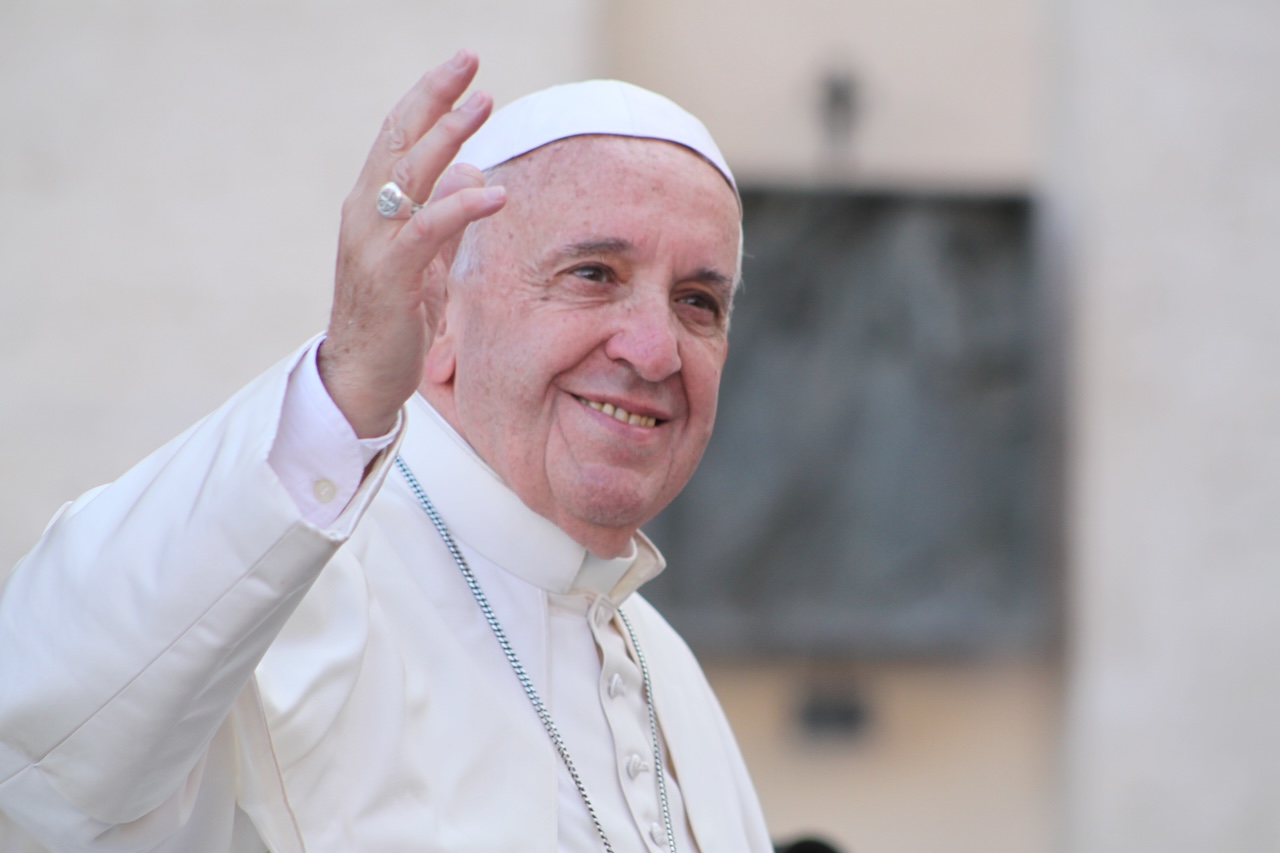
The document is clear and in continuity with thousands of years of Christian tradition. It does not bow to the “spirit of the age” and has offended many Vatican commentators who hoped to see a Church more accepting of postmodern moral trends.
The document has a strong philosophical foundation. In the tradition of many Church documents, the appeal to reason is unmistakable at the beginning of the document.
Every human person possesses an infinite dignity, inalienably grounded in his or her very being, which prevails in and beyond every circumstance, state, or situation the person may ever encounter. This principle, which is fully recognizable even by reason alone, underlies the primacy of the human person and the protection of human rights (Dignitas infinita, 1).
Being a work of Catholic doctrine, it has a theological foundation as well. Catholic documents typically look to Revelation and Tradition for their basic principles from which to draw conclusions about ethics and Christian living.
In the light of Revelation, the Church resolutely reiterates and confirms the ontological dignity of the human person, created in the image and likeness of God and redeemed in Jesus Christ. (Dignitas infinita, 1).
Human dignity is a topic that has been developed historically. While it was present in antiquity, it did not have quite the same meaning. The Biblical worldview contributed a lot before the Church continued to develop the topic. Recently, it has been accepted into the world ethic through the 1948 Universal Declaration of Human Rights published by the United Nations.
Here are five things to keep in mind while reading the document.
-
The Church Proclaims, Promotes, and Guarantees Human Dignity
There is a reason for this. The Church has three reasons to believe that all of us possess human dignity. We all bear God’s indelible image. The Book of Genesis gives witness that we are all formed in the image and likeness of God (cf. Gen. 1:27). Christ himself elevates human dignity.
By proclaiming that the Kingdom of God belongs to the poor, the humble, the despised, and those who suffer in body and spirit; by healing all sorts of illnesses and infirmities, even the most dramatic ones, such as leprosy; by affirming that whatever is done to these individuals is also done to him because he is present in them: in all these ways, Jesus brought the great novelty of recognizing the dignity of every person, especially those who were considered “unworthy” (Dignitas infinita, 19).
Our vocation to our dignity includes a commitment to our own freedom.
Every individual possesses an inalienable and intrinsic dignity from the beginning of his or her existence as an irrevocable gift. However, the choice to express that dignity and manifest it to the full or to obscure it depends on each person’s free and responsible decision (Dignitas infinita, 20).
To be free, we have to make sure that we form ourselves in virtue. To do what we feel like is not freedom, but rather slavery to our own passions.
-
Dignity is the Foundation of Human Rights and Duties
Dignity is a big word. We must respect it unconditionally. So much of our world gives conditional love. “I will do you this favor if you do this other thing for me.” “Like my photos and I will continue to produce tantalizing content.” We seem to have lost our dignity in the modern world, but the Church is giving us a roadmap to get it back.
-
Objective Basis for Human Freedom
The Church has always been in a better position to give a basis for human freedom. To be free, we must be virtuous. We must be in control of ourselves instead of letting our passions take hold of us. As human beings, we are essentially relational. It belongs to our very nature and we cannot avoid this as we move through this world.
-
Getting Free from Social Pressure
To act morally, you must be free. Although we use the word “freedom” a lot in our vocabulary, it seems that our world does not really promote freedom. Perhaps in no other time, has so much social pressure been placed on everyone. The Church has consistently promoted authentic human freedom. The Church has the obligation to teach the truth, even if it may offend someone.
Freedom is a marvelous gift from God. Even when God draws us to him with his grace, he does so in a way that never violates our freedom (Dignitas infinita, 30).
God wants us to be free, and so does the Church. This is the entire inspiration behind this document.
-
Reasons to be Offended
It is so easy to be offended or to offend someone. We have an “offended culture,” represented by the “Karens.” However, our world gets offended by the wrong things. We have a mistaken sense of our own dignity and for this reason allow ourselves to be offended by anything.
The document comes up with a list of things that are truly offensive to us as human beings. This list is precisely what is being disputed in the great media outlets, as it does not fit the progressive agenda that has been pushed over the last several decades.
Poverty, war, mistreatment of immigrants: these are reasons to be offended. Sexual exploitation and human trafficking are offensive, but this message contradicts much of what has been preached through the Sexual Revolution. Abortion and euthanasia are preached as human rights in our modern world, but they are offenses against our basic dignity. Gender theory is also condemned, as well as surrogacy. If the world shouts that it is offensive to list these things; it is a sign that the world’s conscience has been de-sensitized. We need to let go of the Karens and learn to be offended once again by what truly harms our dignity.
Final Thoughts
The Church wants to defend our dignity, not to control or oppress us. As a priest, I see the suffering of people who get themselves into trouble by ignoring the moral teaching of the Church. More and more, I am convinced that God and the Church ask us for nothing that is not what is truly best for us. We do not want to offend, but to preach the freedom that comes from the Gospel of Jesus Christ.
Another article on the same topic
General Christian

About Fr. Nicholas Sheehy, LC
Fr. Nicholas Sheehy was ordained a Catholic priest in 2013 for the Legionaries of Christ. He has been involved in youth work including missions, retreats and apostolic outreach in Germany, Italy, the United States and Central America. He is passionate about the New Evangelization and formation for young adults and married couples. He is a spiritual director and retreat director, offering marriage preparation and marriage counseling through the Divine Mercy Clinic and Family Center. He is currently Executive Director and Chaplain of the Newman Center at St. Philip the Apostle Parish in Pasadena, California. You can read more about the author here.
Previous Post
April 12, 2024
Eucharistic Adoration and the Road to Emmaus
Next Post
April 15, 2024 Infinite Dignity: Seemingly Opposed Theologies Come Together
Recent Comments
"Peace is a precious resource. Humankind and Planet Earth are thirsting for peace. Long live ..."
The Man Who Taught Nagasaki to ..."
"Searching and finding truth and traveling from truth to Truth is an exciting journey. The ..."
Your Writing Makes the Pope Happy
"Rich or poor, we are all fellow pilgrims enthusiastically marching together to our cherished destination. ..."
"There's no moral difference between avoiding conception by using 'artificial' contraception and using a 'natural' ..."
Browse Our Archives
Select a Category Church News Education Eucharist Faith and Mental Health Family Living the Faith Marriage Relationships Spiritual Direction Uncategorized Vocations Women Young Adults
Select a Month October 2026 September 2026 August 2026 July 2026 June 2026 November 2025 October 2025 September 2025 August 2025 July 2025 May 2025 April 2025 March 2025 February 2025 January 2025 December 2024 November 2024 October 2024 September 2024 August 2024 July 2024 June 2024 May 2024 April 2024 March 2024 February 2024 January 2024 December 2023 November 2023
Follow Us!
TAKE THE
Religious Wisdom Quiz
What was the name of the disciple who replaced Judas Iscariot?
Select your answer to see how you score.
Timothy Silas Barnabas Matthias
Related posts from Formation Matters

The Big Opportunity for Bishops After the SSPX...

Let Freedom Ring: Truth and the American Soul
If You're Not Building, You're Breaking
TRENDING AT PATHEOS Catholic

Swimfan: Forgotten Aughts Pleasures
This is a recovery effort. In 2002, My Big Fat Greek Wedding...

Top Three Anti-Catholic Lies About Catholicism
This is my initial transcript for the video, "THE 3 WORST...

Pope Leo Celebrates Mass for Nurses & Docs...
I don't have any idea how he did it, but Pope Leo...

The Sermon on the Mount, Part I: Matthew...
The Sermon on the Mount, Part I (Matthew 4:12-5:12) St. Matthew moves...

What's up from Crossway: Reviewing some of their latest A few weeks...

Janie Learns the Way of the Cross: A...
Teaching children about Jesus' Passion can be challenging. Many parents and educators...
view all Catholic blogs
What Are Your Thoughts?leave a comment
Ad-Free & Subscriber Log-In Subscription Support
- About Us
- 2026 Calendar
- Videos
- Podcasts
- Library of World Religions
- Faith In Media Tracker
- Advertise With Us
- Write for Us
- Privacy Policy
- Terms of Service
- Do Not Sell My Data
- Contact Us
- Radiant Digital
- Manage Newsletter Subscriptions
- Unsubscribe From Notifications
- Sitemap
Copyright 2008-2026, Patheos. All rights reserved.
Subscription Support Ad-Free & Subscriber Log-In
Follow Patheos