
BuddhistCatholicContemplativeEvangelicalGeneral ChristianHinduJewishLatter-day SaintMuslimNew VisionsProgressive Christian
Beliefs
- Buddhist
- Catholic
- Contemplative
- Evangelical
- General Christian
- Hindu
- Jewish
- Latter-day Saint
- More Voices
- Muslim
- New Visions
- Pagan
- Progressive Christian
Topics
- Religion News
- Food and Religion
- Sports and Religion
- Religious Art
- Religious Music and Entertainment
- Religious Events
- History and Religion
- Style and Religion
- Politics and Religion
- Women in Religion
- Recreation Outdoors and Religion
- Business Finance and Religion
- Careers Workplace and Religion
- Education and Religion
- Family Parenting and Religion
- Health Fitness and Religion
- Home and Religion
- Relationships and Religion
- Technology and Religion
- Travel and Religion
Columnists
- Buddhist Columnists
- Business Finance and Religion Columnists
- Careers Workplace and Religion Columnists
- Catholic Columnists
- Contemplative Columnists
- Education and Religion Columnists
- Evangelists Columnists
- Family Parenting and Religion Columnists
- General Christian Columnists
- Health Fitness and Religion Columnists
- Hindu Columnists
- History and Religion Columnists
- Home and Religion Columnists
- Jewish Columnists
- More Voices Columnists
- Latter Day Columnists
- Muslim Columnists
- New Visions Columnists
- Nonreligious Columnists
- Pagan Columnists
- Politics and Religion Columnists
- Progressive Columnists
- Recreation Outdoors and Religion Columnists
- Relationships and Religion Columnists
- Religion News Columnists
- Religious Art Columnists
- Religious Events Columnists
- Religious Music and Entertainment Columnists
- Sports and Religion Columnists
- Style and Religion Columnists
- Technology and Religion Columnists
- Travel and Religion Columnists
- Women in Religion Columnists
Resource Library
- 2026 Calendar
- Library of World Religions
- The 100 Most Holy Places on Earth
- Patheos Answers
- Podcasts
- Videos
- Faith Leaders Database
- Anglican Episcopalian
- Bahai
- Baptist
- Buddhism
- Christianity
- Confucianism
- Eastern Orthodoxy
- Hinduism
- Holiness and Pentecostal
- ISKCON
- Islam
- Judaism
- Lutheran
- Methodist
- The Church of Jesus Christ of Latter-day Saints
- New Age
- Paganism
- Presbytarian and Reformed
- Protestantism
- Religion Behind the Scenes
- Roman Catholic
- Scientology
- Shia Islam
- Sikhism
- Sufism
- Sunni Islam
- Taoism
- Zen
- See all religions
Research Tools
 Ad-Free & Subscriber Log-In Subscription Support
Ad-Free & Subscriber Log-In Subscription Support
Follow Patheos 

- Trending:
- Forgiveness
- |
- Marriage
- |
- Consciousness
- |
- Death Penalty
- |
- Election
- |
- Halloween

- Home
- Catholic
- Politics and Religion
- Dignitas Infinita and the Four Types of Dignity
Dignitas Infinita and the Four Types of Dignity
Last updated on: April 17, 2024 at 1:00 am by Fr. Nicholas Sheehy, LC
Dignitas Infinita and the Four Types of Dignity 2024-04-16T19:22:23-07:00 Fr. Nicholas Sheehy, LC
Patheos Explore the world's faith through different perspectives on religion and spirituality! Patheos has the views of the prevalent religions and spiritualities of the world.
The document Dignitas infinita, recently published by the Dicastery of the Doctrine of the Faith, establishes a strong intellectual foundation for human dignity before delving modern trends that we can identify as offenses to humanity. As prefect of the Dicastery of the Doctrine of the Faith, Cardinal Fernández is the author of the document, even though Cardinal Ladaria began the work on it around five years ago. The opening paragraphs give the impression that the moral judgments will derive from the intellectual basis of these doctrinal affirmations.
Do We Have to Agree with This Document?
The document begins with a strong argument for its own authority, by establishing a two-pronged ontological foundation rooted in both philosophy and theology. At the same time, the document makes sure to establish the Magisterium of Pope Francis as being within continuity of the Magisterium of recent Popes about the importance of human dignity. Intellectual proximity to the ethics of the United Nations is also implied through a reference to the 1948 Universal Declaration of Human Rights.
Philosophical Foundation
The document establishes that even reason alone can recognize the basic premises.
Every human person possesses an infinite dignity, inalienably grounded in his or her very being, which prevails in and beyond every circumstance, state, or situation the person may ever encounter. This principle, which is fully recognizable even by reason alone, underlies the primacy of the human person and the protection of human rights (Dignitas infinita, 1).
In the introduction, Cardinal Fernandez establishes that the phrase “infinite dignity” comes directly from Pope John Paul II. The word “unalienable” should also ring familiarly to American ears, given its prominent position near the beginning of the Declaration of Independence. These references remind us that human dignity finds its basis in the very existence of the person and for this reason cannot be lost.
Theological Foundation
Immediately following this philosophical foundation, the theological reasoning appears by invoking the authority of Divine Revelation.
In the light of Revelation, the Church resolutely reiterates and confirms the ontological dignity of the human person, created in the image and likeness of God and redeemed in Jesus Christ. From this truth, the Church draws the reasons for her commitment to the weak and those less endowed with power, always insisting on “the primacy of the human person and the defense of his or her dignity beyond every circumstance” (Dignitas infinita, 1).
The word “ontological” also makes it abundantly clear that this first paragraph serves as adding to both a philosophical and a theological foundation.
Right off the bat, the document brings pastoral implications of the human person’s ontological dignity to the forefront. The Church must be committed to serving and protecting the weak and powerless among us.
Appeal to Authority
The Church is not the only institution to make some of these reflections. The authors remember the 1948 Universal Declaration of Human Rights issued by the United Nations. Then, they go through recent Popes from Pope Paul VI to Pope Francis, highlighting the preeminent place of human dignity in their pastoral teachings. The document proposes that these teachings reach a certain culmination in the 2020 encyclical of Pope Francis, Fratelli Tutti, calling it a “Magna Carta of our contemporary tasks to protect and promote human dignity” (Dignitas infinita, 6).
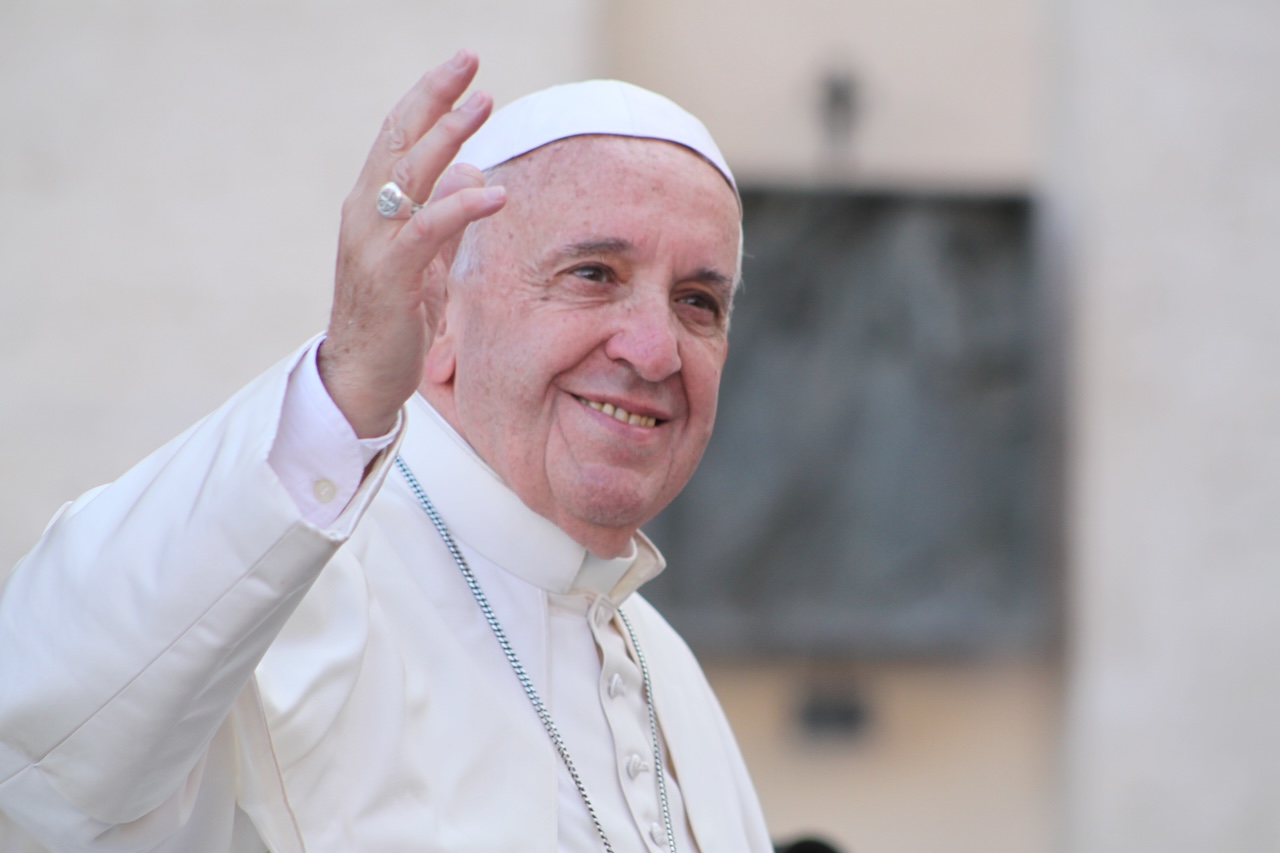
Pope Francis waves to the crowd | Courtesy of Cathopic
The document goes on to clarify the normative dimension of human dignity. The fact that all human beings possess this, even to an infinite degree, has consequences in the moral behavior of all. This means that the fact we all have human dignity directly demonstrates the reality of universally shared human rights.
Four Types of Human Dignity
The document clarifies four distinct aspects of human dignity. Social dignity refers to the quality of the person’s living conditions. Existential dignity comes from valuing our own life.
Ontological dignity comes from the fact that the person is “willed, created, and loved by God” (Dignitas infinita, 7). Moral dignity refers to the way that people exercise their freedom. Tragically, we all offend our own morality through bad choices and sin. These behaviors are “not dignified,” below our value as creatures of our God and King. While profoundly evil acts lessen moral value, the ontological status never diminishes.
We are all persons, and as such, always deserving of humane treatment.
The document lives up to its name of “Infinite Dignity,” giving a clear position that all human beings possess an infinite ontological dignity. This springs forth from our very being, not from the value of our actions. While recognition of social and existential dignity is valuable, it cannot and should not ever take the place for the supreme reverence we should have for man’s ontological dignity.
When the dignity of the human person is respected, and his or her rights recognized and guaranteed, creativity and interdependence thrive, and the creativity of the human personality is released through actions that further the common good (Pope Francis, Fratelli Tutti, 22).
Subscribe to the newsletter to never miss an article.
How Objective Moral Authority and Compassion Fit Together
Seemingly Opposed Theologies Come Together
General Christian
Religion News

About Fr. Nicholas Sheehy, LC
Fr. Nicholas Sheehy was ordained a Catholic priest in 2013 for the Legionaries of Christ. He has been involved in youth work including missions, retreats and apostolic outreach in Germany, Italy, the United States and Central America. He is passionate about the New Evangelization and formation for young adults and married couples. He is a spiritual director and retreat director, offering marriage preparation and marriage counseling through the Divine Mercy Clinic and Family Center. He is currently Executive Director and Chaplain of the Newman Center at St. Philip the Apostle Parish in Pasadena, California. You can read more about the author here.
Previous Post
April 15, 2024
Infinite Dignity: Seemingly Opposed Theologies Come Together
Next Post
April 19, 2024 Death Squads, The Good Shepherd, And Fr. Stanley
Recent Comments
"Peace is a precious resource. Humankind and Planet Earth are thirsting for peace. Long live ..."
The Man Who Taught Nagasaki to ..."
"Searching and finding truth and traveling from truth to Truth is an exciting journey. The ..."
Your Writing Makes the Pope Happy
"Rich or poor, we are all fellow pilgrims enthusiastically marching together to our cherished destination. ..."
"There's no moral difference between avoiding conception by using 'artificial' contraception and using a 'natural' ..."
Browse Our Archives
Select a Category Church News Education Eucharist Faith and Mental Health Family Living the Faith Marriage Relationships Spiritual Direction Uncategorized Vocations Women Young Adults
Select a Month October 2026 September 2026 August 2026 July 2026 June 2026 November 2025 October 2025 September 2025 August 2025 July 2025 May 2025 April 2025 March 2025 February 2025 January 2025 December 2024 November 2024 October 2024 September 2024 August 2024 July 2024 June 2024 May 2024 April 2024 March 2024 February 2024 January 2024 December 2023 November 2023
Follow Us!
TAKE THE
Religious Wisdom Quiz
What did Moses' staff turn into as a sign for Pharaoh?
Select your answer to see how you score.
A frog A serpent A branch A dove
Related posts from Formation Matters

Beyond Left and Right: Catholic Church on Immigration

The Treasure Meant to Be Shared

TRENDING AT PATHEOS Catholic

Emotion in Early Christianity by Andrew Crislip
Andrew Crislip’s Emotion in Early Christianity examines an often overlooked dimension of...

16 Spiritual Touchstones for a More Grounded Life
After decades of spiritual study, here are 16 principles I try...

Catholic Evangelization: Sharing Your Faith Every Day
Welcome back to the Graceful Awakening mini-series called, “From Faith to Mission.” ...

The Pillar of the Boatmen: the Ancient Monument...
The Pillar of the Boatmen is a Romano-Gaulish sculpture that dates from...

In one sense walking into Westminster Abbey is like walking down the...

'Super Scam Me' Exposes AI Jon Bon Jovi...
Leslie Pickett believed she was in a relationship with Jon Bon Jovi....
view all Catholic blogs
What Are Your Thoughts?leave a comment
Ad-Free & Subscriber Log-In Subscription Support
- About Us
- 2026 Calendar
- Videos
- Podcasts
- Library of World Religions
- Faith In Media Tracker
- Advertise With Us
- Write for Us
- Privacy Policy
- Terms of Service
- Do Not Sell My Data
- Contact Us
- Radiant Digital
- Manage Newsletter Subscriptions
- Unsubscribe From Notifications
- Sitemap
Copyright 2008-2026, Patheos. All rights reserved.
Subscription Support Ad-Free & Subscriber Log-In
Follow Patheos