
BuddhistCatholicContemplativeEvangelicalGeneral ChristianHinduJewishLatter-day SaintMuslimNew VisionsProgressive Christian
Beliefs
- Buddhist
- Catholic
- Contemplative
- Evangelical
- General Christian
- Hindu
- Jewish
- Latter-day Saint
- More Voices
- Muslim
- New Visions
- Pagan
- Progressive Christian
Topics
- Religion News
- Food and Religion
- Sports and Religion
- Religious Art
- Religious Music and Entertainment
- Religious Events
- History and Religion
- Style and Religion
- Politics and Religion
- Women in Religion
- Recreation Outdoors and Religion
- Business Finance and Religion
- Careers Workplace and Religion
- Education and Religion
- Family Parenting and Religion
- Health Fitness and Religion
- Home and Religion
- Relationships and Religion
- Technology and Religion
- Travel and Religion
Columnists
- Buddhist Columnists
- Business Finance and Religion Columnists
- Careers Workplace and Religion Columnists
- Catholic Columnists
- Contemplative Columnists
- Education and Religion Columnists
- Evangelists Columnists
- Family Parenting and Religion Columnists
- General Christian Columnists
- Health Fitness and Religion Columnists
- Hindu Columnists
- History and Religion Columnists
- Home and Religion Columnists
- Jewish Columnists
- More Voices Columnists
- Latter Day Columnists
- Muslim Columnists
- New Visions Columnists
- Nonreligious Columnists
- Pagan Columnists
- Politics and Religion Columnists
- Progressive Columnists
- Recreation Outdoors and Religion Columnists
- Relationships and Religion Columnists
- Religion News Columnists
- Religious Art Columnists
- Religious Events Columnists
- Religious Music and Entertainment Columnists
- Sports and Religion Columnists
- Style and Religion Columnists
- Technology and Religion Columnists
- Travel and Religion Columnists
- Women in Religion Columnists
Resource Library
- 2026 Calendar
- Library of World Religions
- The 100 Most Holy Places on Earth
- Patheos Answers
- Podcasts
- Videos
- Faith Leaders Database
- Anglican Episcopalian
- Bahai
- Baptist
- Buddhism
- Christianity
- Confucianism
- Eastern Orthodoxy
- Hinduism
- Holiness and Pentecostal
- ISKCON
- Islam
- Judaism
- Lutheran
- Methodist
- The Church of Jesus Christ of Latter-day Saints
- New Age
- Paganism
- Presbytarian and Reformed
- Protestantism
- Religion Behind the Scenes
- Roman Catholic
- Scientology
- Shia Islam
- Sikhism
- Sufism
- Sunni Islam
- Taoism
- Zen
- See all religions
Research Tools
 Ad-Free & Subscriber Log-In Subscription Support
Ad-Free & Subscriber Log-In Subscription Support
Follow Patheos 

- Trending:
- Forgiveness
- |
- Marriage
- |
- Consciousness
- |
- Death Penalty
- |
- Election
- |
- Halloween

- Home
- Catholic
- Politics and Religion
- 3 Steps To Take Back Control When Life Seems Overwhelming
3 Steps To Take Back Control When Life Seems Overwhelming
Last updated on: April 3, 2024 at 1:00 am by Fr. Nicholas Sheehy, LC
3 Steps To Take Back Control When Life Seems Overwhelming 2024-04-02T15:15:35-07:00 Fr. Nicholas Sheehy, LC
Patheos Explore the world's faith through different perspectives on religion and spirituality! Patheos has the views of the prevalent religions and spiritualities of the world.

When life seems overwhelming | Courtesy: Pexels.com
Life can easily feel overwhelming. Most of us find powerlessness distressing and want to feel like we are always in control. It can be disconcerting when we find ourselves in a situation that is far beyond our capability to handle. Navigating the complexities of life and finding practical solutions to our problems can often feel like an exercise in futility. Nevertheless, we can always find hope, and we can devise a strategy that helps us to feel less overwhelmed. We can learn to accept the situation, go beyond the questions of “why?”, and focus instead on “how” we can act in response.
Step 1: Accept
First, we must accept the situation. We must move from our initial instinct to be emotionally reactive into a recognition of what is objectively happening. For instance, imagine that your house was ripped apart by a tornado. Your first reaction might be “it’s terrible that the tornado destroyed my house.” If you are working on acceptance, you would try to change your statement to “my house is in shambles.” It may not change the reality or gravity of the situation, but it keeps us grounded in the facts.
We must also take care not to fall into the other extreme of ignoring or suppressing our emotions about the situation. Life situations can tempt us to dismiss our emotions as completely subjective and unhelpful reactions, but it is important to give them room for input into our judgment of the situation.
Step 2: Stop Asking Why
Naturally, lots of “why” questions may pop into our heads when we undergo suffering. “Why did this happen to me?” is a common lament we may find ourselves expressing in times of difficulty. We may even throw some “always” statements in there too for good measure as we convince ourselves of how unfortunate we are. When we are suffering, we always look for someone to blame, which is an expression of entitlement and the seeds of pride. It can be dangerous to play the blame game, as it never yields a satisfactory solution and can instead lead to wallowing. This series of questions can contribute to sense that the situation is overwhelming. “Why did this tornado hit our house?” seems like a reasonable question to ask but is not very useful for getting the house rebuilt. Sometimes, we might resort to a very factual, dry, emotionless description of what happened.
After Yale upset Baylor in the 2024 NCAA men’s basketball tournament, Taurean Prince was asked how his team could have been out-rebounded. It can be overwhelming to lose a game at this level and be subsequently grilled by reporters. He responded in a matter-of-fact way, as he knew that dwelling on the “why?” would only lead to greater frustration. Rather than criticize his own team’s performance, he went on to describe a rebound, something that must have been obvious to all the reporters at the press conference. Nevertheless, it helped to show that there are some things in life that are simply beyond our control.
Step 3: Start Asking How
Once we allow our reason to intervene, we can move from “why” to “how” questions: “How am I supposed to live today?” It is always better to focus on what we can do than what we cannot. So often, it is easy to let our anxiety take hold of us and think about all the unpleasant aspects of our current situation. It is much more fruitful, however, to focus on what we can do and how we can react appropriately. By focusing on our actions, we re-gain a sense of agency in our lives and let go of the feeling of helplessness that could otherwise overwhelm us.
Going back to the example of the tornado, we can begin by asking the question of how we are going to recover from the damage and move on. In the immediate aftermath, we can make a headcount to make sure everybody is okay. We then let the rescue workers do their jobs and cooperate with the electric, gas, and water companies to make sure that everything is safe before returning. Maybe we work with the insurance company and begin to examine the wreckage to salvage what we can. Since we have already accepted the situation, now what remains is to work through the practical matters.
Faith at the Beginning and at the End
Our faith is powerful when we are in overwhelming situations. It allows us to establish healthy emotional detachment and to analyze things more objectively. When we recognize that God has the last word, we can begin to let go of our own addiction to control. From a perspective of faith, why does God allow us to be in situations that are beyond our control? He allows us to go through these things partially so we may learn to understand that we do not have ultimate control over our own lives. It is especially in these times that he asks us to learn to trust him.
Pope Benedict XVI reminds us that faith needed especially in the dark moments of life.
Abraham’s journey of faith included the moment of joy in the gift of his son Isaac, but also the period of darkness, when he had to climb Mount Moriah to execute a paradoxical order: God was asking him to sacrifice the son he had just given him (Pope Benedict XVI, 19 December 2012).
If we are going to grow in faith, we must learn to accept the moments of darkness alongside the moments of light. This can help us turn overwhelming situations into opportunities for growth.
Subscribe to the newsletter to never miss an article.
What To Say in your First Spiritual Direction
General Christian
Sports and Religion

About Fr. Nicholas Sheehy, LC
Fr. Nicholas Sheehy was ordained a Catholic priest in 2013 for the Legionaries of Christ. He has been involved in youth work including missions, retreats and apostolic outreach in Germany, Italy, the United States and Central America. He is passionate about the New Evangelization and formation for young adults and married couples. He is a spiritual director and retreat director, offering marriage preparation and marriage counseling through the Divine Mercy Clinic and Family Center. He is currently Executive Director and Chaplain of the Newman Center at St. Philip the Apostle Parish in Pasadena, California. You can read more about the author here.
Previous Post

April 1, 2024
Running And Praying Go Together
Next Post
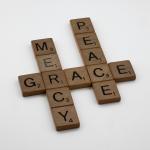
April 5, 2024 From Fear To Peace Through Mercy
Recent Comments
"Peace is a precious resource. Humankind and Planet Earth are thirsting for peace. Long live ..."
The Man Who Taught Nagasaki to ..."
"Searching and finding truth and traveling from truth to Truth is an exciting journey. The ..."
Your Writing Makes the Pope Happy
"Rich or poor, we are all fellow pilgrims enthusiastically marching together to our cherished destination. ..."
"There's no moral difference between avoiding conception by using 'artificial' contraception and using a 'natural' ..."
Browse Our Archives
Select a Category Church News Education Eucharist Faith and Mental Health Family Living the Faith Marriage Relationships Spiritual Direction Uncategorized Vocations Women Young Adults
Select a Month October 2026 September 2026 August 2026 July 2026 June 2026 November 2025 October 2025 September 2025 August 2025 July 2025 May 2025 April 2025 March 2025 February 2025 January 2025 December 2024 November 2024 October 2024 September 2024 August 2024 July 2024 June 2024 May 2024 April 2024 March 2024 February 2024 January 2024 December 2023 November 2023
Follow Us!
TAKE THE
Religious Wisdom Quiz
Which Christian symbol looks like a fish and spells "ichthys" in Greek?
Select your answer to see how you score.
The dove The anchor The triangle The Jesus Fish
Related posts from Formation Matters

Beyond Left and Right: Catholic Church on Immigration
If You're Not Building, You're Breaking

The Treasure Meant to Be Shared
TRENDING AT PATHEOS Catholic

57th Dove Awards Honor Dolly Parton, Crown New...
On gospel music’s biggest night, the 57th annual GMA Dove Awards honored...

The First Eucharistic Controversy: Christ’s Real Presence
For Catholics, the Eucharist is the source and summit of the Christian...

What a Stop Sign Can Teach Us About...
How to Make a Decision When You Can't Hear God Main point:...

Archdiocese Hosts Military Marriage Retreat in Germany
RASTATT, Germany — The transient military lifestyle, with its frequent deployments and...

Nearly every morning, I make the drive to Detroit with my high-school-age...

The Real AI Story Is Adoption Without Trust
Artificial intelligence has crossed a political threshold. It is no longer a...
view all Catholic blogs
What Are Your Thoughts?leave a comment
Ad-Free & Subscriber Log-In Subscription Support
- About Us
- 2026 Calendar
- Videos
- Podcasts
- Library of World Religions
- Faith In Media Tracker
- Advertise With Us
- Write for Us
- Privacy Policy
- Terms of Service
- Do Not Sell My Data
- Contact Us
- Radiant Digital
- Manage Newsletter Subscriptions
- Unsubscribe From Notifications
- Sitemap
Copyright 2008-2026, Patheos. All rights reserved.
Subscription Support Ad-Free & Subscriber Log-In
Follow Patheos