
BuddhistCatholicContemplativeEvangelicalGeneral ChristianHinduJewishLatter-day SaintMuslimNew VisionsProgressive Christian
Beliefs
- Buddhist
- Catholic
- Contemplative
- Evangelical
- General Christian
- Hindu
- Jewish
- Latter-day Saint
- More Voices
- Muslim
- New Visions
- Pagan
- Progressive Christian
Topics
- Religion News
- Food and Religion
- Sports and Religion
- Religious Art
- Religious Music and Entertainment
- Religious Events
- History and Religion
- Style and Religion
- Politics and Religion
- Women in Religion
- Recreation Outdoors and Religion
- Business Finance and Religion
- Careers Workplace and Religion
- Education and Religion
- Family Parenting and Religion
- Health Fitness and Religion
- Home and Religion
- Relationships and Religion
- Technology and Religion
- Travel and Religion
Columnists
- Buddhist Columnists
- Business Finance and Religion Columnists
- Careers Workplace and Religion Columnists
- Catholic Columnists
- Contemplative Columnists
- Education and Religion Columnists
- Evangelists Columnists
- Family Parenting and Religion Columnists
- General Christian Columnists
- Health Fitness and Religion Columnists
- Hindu Columnists
- History and Religion Columnists
- Home and Religion Columnists
- Jewish Columnists
- More Voices Columnists
- Latter Day Columnists
- Muslim Columnists
- New Visions Columnists
- Nonreligious Columnists
- Pagan Columnists
- Politics and Religion Columnists
- Progressive Columnists
- Recreation Outdoors and Religion Columnists
- Relationships and Religion Columnists
- Religion News Columnists
- Religious Art Columnists
- Religious Events Columnists
- Religious Music and Entertainment Columnists
- Sports and Religion Columnists
- Style and Religion Columnists
- Technology and Religion Columnists
- Travel and Religion Columnists
- Women in Religion Columnists
Resource Library
- 2026 Calendar
- Library of World Religions
- The 100 Most Holy Places on Earth
- Patheos Answers
- Podcasts
- Videos
- Faith Leaders Database
- Anglican Episcopalian
- Bahai
- Baptist
- Buddhism
- Christianity
- Confucianism
- Eastern Orthodoxy
- Hinduism
- Holiness and Pentecostal
- ISKCON
- Islam
- Judaism
- Lutheran
- Methodist
- The Church of Jesus Christ of Latter-day Saints
- New Age
- Paganism
- Presbytarian and Reformed
- Protestantism
- Religion Behind the Scenes
- Roman Catholic
- Scientology
- Shia Islam
- Sikhism
- Sufism
- Sunni Islam
- Taoism
- Zen
- See all religions
Research Tools
 Ad-Free & Subscriber Log-In Subscription Support
Follow Patheos 

- Trending:
- Advent
- |
- Forgiveness
- |
- Thanksgiving
- |
- Election
- |
- Seasonal Holidays
- |
- Marriage

- Home
- Catholic
- Politics and Religion
- Is It Unchristian To Feel Anger?
Is It Unchristian To Feel Anger?
Last updated on: March 8, 2024 at 2:56 pm by Fr. Nicholas Sheehy, LC
Is It Unchristian To Feel Anger? 2024-03-08T14:56:13-08:00 Fr. Nicholas Sheehy, LC
Patheos Explore the world's faith through different perspectives on religion and spirituality! Patheos has the views of the prevalent religions and spiritualities of the world.
It can be painful to handle our anger as Christians. It is easy for us to feel ashamed about feeling angry, thinking this emotion is un-Christian. On the other hand, we may justify our anger as “righteous anger,” finding enjoyment in feeling livid all the time. Then, we seem like radicals with an axe to grind. Both perspectives miss the mark.
I remember a story about a man who was a recovering drug addict. Deep down, he recognized that his drug use had only been a symptom of the real, underlying problem: his anger. Half his life, he had been dealing with unresolved anger issues. In the kitchen with his two-year-old toddler running around, he one day confessed that he had recently called a man who had once beat him up to let him know that he forgave him. The former bully did not expect this apology.
The man continued, “but you know what, I made that call not for him but for me.” “It felt great! I slept last night like I have not slept in years. When I am not focused on my own anger, I can be more present to my wife and kids. I can just be present instead of being preoccupied with perceived insults from other people.”
God knows how we’re wired. He tells us to forgive and to get rid of anger. People made in his image would do well to listen. It means everything, not just for us, but for those around us. (Brant Hansen, Unoffendable, p. 86)
God’s Response to our Anger
So often, we want to hold on to our anger, but God is offering us something much greater: peace. Forgiveness overcomes anger and restores peace to our soul.
Today’s Gospel passage that depicts Jesus cleansing the Temple can be confusing for us. We expect Christians to be meek and unassuming, following the example of Jesus Christ, our Master. So many times, he shows himself to be just that: the Suffering Servant of Isaiah, led out to slaughter like a lamb without opening his mouth (cf. Is. 53).
Cleansing of the Temple
Jesus “found in the temple area those who sold oxen, sheep, and doves, as well as the moneychangers seated there. He made a whip out of cords and drove them all of the temple area, with the sheep and oxen, and spilled the coins of the money-changers and overturned their tables” (Jn. 2:14-15). How is this display of anger different from when we develop a bad temper and lose control? Sometimes, people use this Gospel passage to willfully misunderstand what Jesus wants to teach us about emotions in general, and anger in particular.
I love the last verse of today’s passage. Jesus “did not need anyone to testify about human nature. He himself understood it well” (Jn. 2:25). As the Super Bowl commercial stated, “He gets us.” He understands who we are better than we could ever understand ourselves. However, this does not mean that he must accept as good everything that we want to say or do. Instead, he directs us along a better path.
Emotions
Emotions are part of life. We all have feelings, and they affect the way we interact with the world.
The emotions (passiones animae) are natural ways in which one is moved by one’s surroundings; they are also termed “passions” because in feeling them agents are moved as a result of having been acted upon by some external agency. (Stephen Pope, The Ethics of St. Thomas Aquinas, p. 33)
In today’s Gospel passage, we see that Jesus felt anger and even sometimes expressed it in a dramatic and public fashion. He was upset by the misuse that people were making of the Temple meant to honor his Father. We would be mistaken, however, if we were to use this instance to justify giving our emotions free rein over our actions.
Because the emotions are part of our creaturely nature and therefore good in themselves, the key moral challenge they present lies in their proper ordering rather than in their repression. Thomas’s extensive treatment of the emotions, taking up twenty-six questions, indicates their importance within human life (Stephen Pope, The Ethics of St. Thomas Aquinas, p. 33-34).
St. Thomas Aquinas points out that all the emotions are supposed to be ruled by reason. What does this look like with anger?
Challenge to Rule Anger with Reason
“Anger may stand in a twofold relation to reason.” (St. Thomas Aquinas, Summa Theologiae, Q. 158, a. 1, ad 2) The Stoic philosophers rejected anger as something opposed their ideal of ataraxia. However, Aquinas rejects this notion and asserts that anger can be reasonable, inspired in part by the reaction of Jesus to the evil perpetrated by the moneychangers in the Temple. If reason is ruling anger, we are obliged to use our powerful emotional reaction to correct the situation. Thus, a man who sees his family being put in danger may react strongly to protect them in a virtuous manner. When our anger rules our reason and is no longer rightly ordered, we over-react and act wrongly.
Anger is not inherently evil but can be difficult to express virtuously, as most of us tend to exaggerate when we are expressing our anger. This emotion is good only to the extent that it helps us to restore the state of affairs to a just situation as Jesus does when he cleanses the Temple. Jesus was tremendously self-aware; when he cleanses the Temple, he has not lost control of himself. In imitation of Jesus, the virtuous person always maintains self-control.

Angry man with a scowl | Courtesy: Pexels.com
Masking Other Emotions With Anger
A further difficulty with anger is that we can use it to mask other emotions. We must be careful of this and make a good examination of conscience on a regular basis to achieve awareness of what is really happening within us to trigger our anger.
Today, take some time to reflect on the role anger plays in your life. Are you prone to let anger take hold of you and you lose control? If so,let this be a sign that you need to accomplish some emotional equilibrium and let your reason re-assert itself. Don’t lose heart: with God’s grace, all things are possible (cf. Phil. 4:13).
What Should Fill You With Anger?
There are plenty of situations in our world that need us to restore justice. These are situations that should lead us to feel anger. What makes you angry in such a way that you can act to restore justice? Resolve to do that and your anger will be ruled by reason and you will be acting virtuously.
Subscribe to the newsletter to never miss an article.
Marriage Series
Temperament and How It Can Make Your Marriage Flourish
5 Keys to Celebrate Blessings in Your Marriage
Contemplating Your Spouse With God’s Eyes
Love Builds Security: God’s Plan for Marriage
General Christian
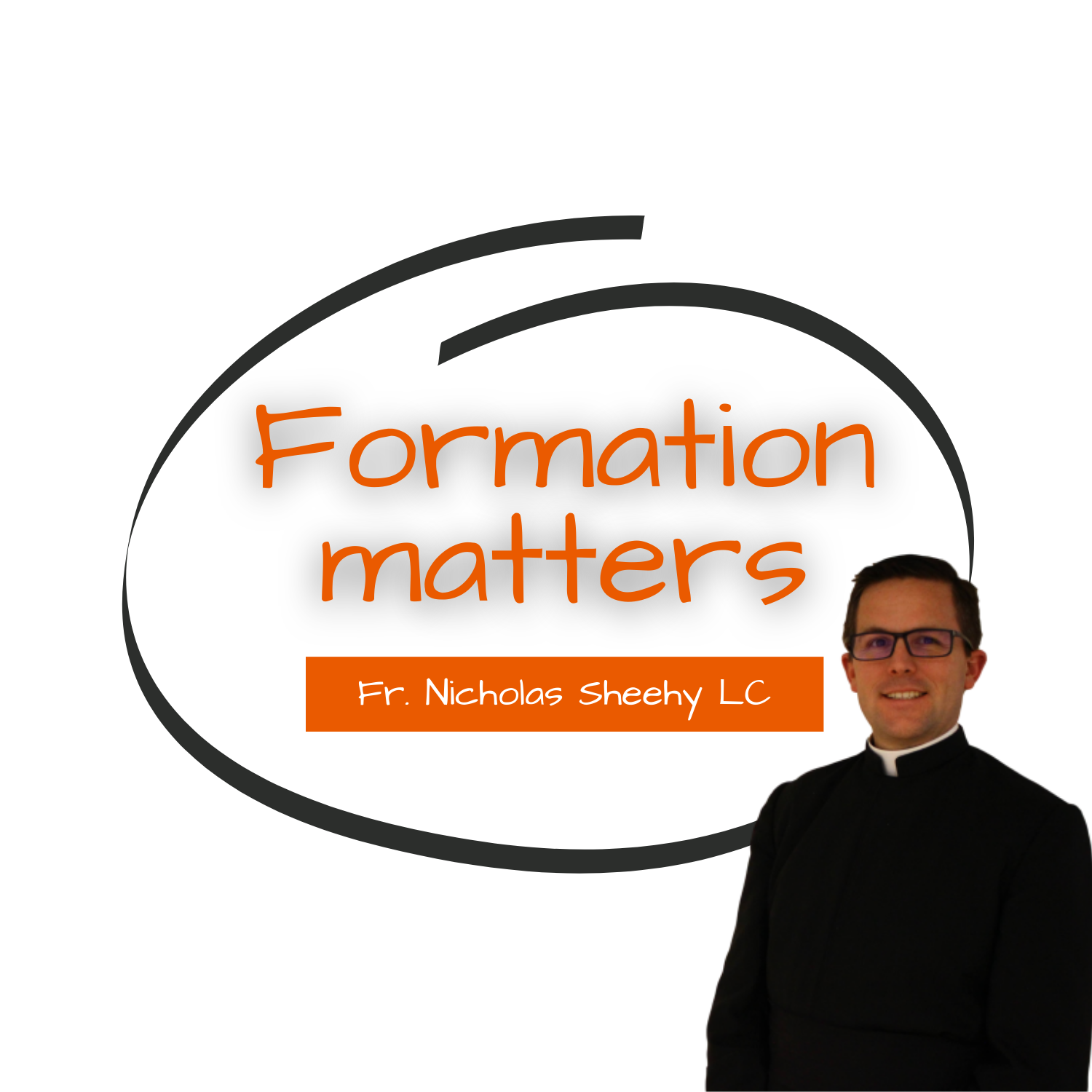
About Fr. Nicholas Sheehy, LC
Fr. Nicholas Sheehy was ordained a Catholic priest in 2013 for the Legionaries of Christ. He has been involved in youth work including missions, retreats and apostolic outreach in Germany, Italy, the United States and Central America. He is passionate about the New Evangelization and formation for young adults and married couples. He is a spiritual director and retreat director, offering marriage preparation and marriage counseling through the Divine Mercy Clinic and Family Center. He is currently Executive Director and Chaplain of the Newman Center at St. Philip the Apostle Parish in Pasadena, California. You can read more about the author here.
Previous Post
February 28, 2024
Why Are There So Many Names for the Eucharist?
Next Post
March 4, 2024 Distracted During Mass? 3 Tips for a Cure
Recent Comments
"Being invited, welcomed, selected, supported, and empowered to join other pilgrims in the task of ..."
Building Without Keeping Score
"Peace is a precious resource. Humankind and Planet Earth are thirsting for peace. Long live ..."
The Man Who Taught Nagasaki to ..."
"Searching and finding truth and traveling from truth to Truth is an exciting journey. The ..."
Your Writing Makes the Pope Happy
"Rich or poor, we are all fellow pilgrims enthusiastically marching together to our cherished destination. ..."
Browse Our Archives
Select a Category Church News Education Eucharist Faith and Mental Health Family Living the Faith Marriage Relationships Spiritual Direction Uncategorized Vocations Women Young Adults
Select a Month November 2026 October 2026 September 2026 August 2026 July 2026 June 2026 November 2025 October 2025 September 2025 August 2025 July 2025 May 2025 April 2025 March 2025 February 2025 January 2025 December 2024 November 2024 October 2024 September 2024 August 2024 July 2024 June 2024 May 2024 April 2024 March 2024 February 2024 January 2024 December 2023 November 2023
Follow Us!
TAKE THE
Religious Wisdom Quiz
What was the primary inheritance method in biblical times?
Select your answer to see how you score.
Equal division Firstborn son Youngest child Oldest daughter
Related posts from Formation Matters

Beyond Left and Right: Catholic Church on Immigration
If You're Not Building, You're Breaking

The Treasure Meant to Be Shared
TRENDING AT PATHEOS Catholic

"Three B's" of My Apologetics Ministry (+ VIDEO)
In early December 2026 (less than a week from the time...

James Ishmael Ford's books on Zen
James Ishmael Ford's Official Website provides the most complete annotated list of...
The Trouble with Taking Chesterton Literally
Guest writer: Pilgrim. On paradox, human nature and the art of seeing...

Somewhere right now, someone is sitting in a parked car with a...

Just as the emergence of leaves on the fig tree signals the...
Belief and Disbelief in Christ's Presence in Holy...
A study found that only 29% of Catholics believe that the bread...
view all Catholic blogs
What Are Your Thoughts?leave a comment
Ad-Free & Subscriber Log-In Subscription Support
- About Us
- 2026 Calendar
- Videos
- Podcasts
- Library of World Religions
- Faith In Media Tracker
- Advertise With Us
- Write for Us
- Privacy Policy
- Terms of Service
- Do Not Sell My Data
- Contact Us
- Radiant Digital
- Manage Newsletter Subscriptions
- Unsubscribe From Notifications
- Sitemap
Copyright 2008-2026, Patheos, part of the Radiant Digital network of media brands. All rights reserved.
Subscription Support Ad-Free & Subscriber Log-In
Follow Patheos