
BuddhistCatholicContemplativeEvangelicalGeneral ChristianHinduJewishLatter-day SaintMuslimNew VisionsProgressive Christian
Beliefs
- Buddhist
- Catholic
- Contemplative
- Evangelical
- General Christian
- Hindu
- Jewish
- Latter-day Saint
- More Voices
- Muslim
- New Visions
- Pagan
- Progressive Christian
Topics
- Religion News
- Food and Religion
- Sports and Religion
- Religious Art
- Religious Music and Entertainment
- Religious Events
- History and Religion
- Style and Religion
- Politics and Religion
- Women in Religion
- Recreation Outdoors and Religion
- Business Finance and Religion
- Careers Workplace and Religion
- Education and Religion
- Family Parenting and Religion
- Health Fitness and Religion
- Home and Religion
- Relationships and Religion
- Technology and Religion
- Travel and Religion
Columnists
- Buddhist Columnists
- Business Finance and Religion Columnists
- Careers Workplace and Religion Columnists
- Catholic Columnists
- Contemplative Columnists
- Education and Religion Columnists
- Evangelists Columnists
- Family Parenting and Religion Columnists
- General Christian Columnists
- Health Fitness and Religion Columnists
- Hindu Columnists
- History and Religion Columnists
- Home and Religion Columnists
- Jewish Columnists
- More Voices Columnists
- Latter Day Columnists
- Muslim Columnists
- New Visions Columnists
- Nonreligious Columnists
- Pagan Columnists
- Politics and Religion Columnists
- Progressive Columnists
- Recreation Outdoors and Religion Columnists
- Relationships and Religion Columnists
- Religion News Columnists
- Religious Art Columnists
- Religious Events Columnists
- Religious Music and Entertainment Columnists
- Sports and Religion Columnists
- Style and Religion Columnists
- Technology and Religion Columnists
- Travel and Religion Columnists
- Women in Religion Columnists
Resource Library
- 2026 Calendar
- Library of World Religions
- The 100 Most Holy Places on Earth
- Patheos Answers
- Podcasts
- Videos
- Faith Leaders Database
- Anglican Episcopalian
- Bahai
- Baptist
- Buddhism
- Christianity
- Confucianism
- Eastern Orthodoxy
- Hinduism
- Holiness and Pentecostal
- ISKCON
- Islam
- Judaism
- Lutheran
- Methodist
- The Church of Jesus Christ of Latter-day Saints
- New Age
- Paganism
- Presbytarian and Reformed
- Protestantism
- Religion Behind the Scenes
- Roman Catholic
- Scientology
- Shia Islam
- Sikhism
- Sufism
- Sunni Islam
- Taoism
- Zen
- See all religions
Research Tools
 Ad-Free & Subscriber Log-In Subscription Support
Ad-Free & Subscriber Log-In Subscription Support
Follow Patheos 

- Trending:
- Forgiveness
- |
- Marriage
- |
- Consciousness
- |
- Death Penalty
- |
- Election
- |
- Halloween

- Home
- Catholic
- Politics and Religion
- Blessing Same-Sex Unions? 5 Things to Keep in Mind
Blessing Same-Sex Unions? 5 Things to Keep in Mind
Last updated on: January 4, 2024 at 8:45 am by Fr. Nicholas Sheehy, LC
Blessing Same-Sex Unions? 5 Things to Keep in Mind 2024-01-04T08:45:20-08:00 Fr. Nicholas Sheehy, LC
Patheos Explore the world's faith through different perspectives on religion and spirituality! Patheos has the views of the prevalent religions and spiritualities of the world.
The Dicastery of the Doctrine of the Faith has published a declaration Fiducia Supplicans, clarifying reflections the Pope had made earlier this year regarding the possibility of blessing same-sex unions.
The United States Conference of Catholic Bishops has left it very clear that “The Church’s teaching on marriage has not changed.”
There are five things to keep in mind.
1. Context of the Dubia
This document is written as an opportunity to take up once again the response to the dubia presented by two cardinals last summer. Cardinal Fernández is clear about this in his introduction to the document. “It is precisely in this context that one can understand the possibility of blessing couples in irregular situations and same-sex couples without officially validating their status or changing in any way the Church’s perennial teaching on marriage.” (Fernández, Introduction to Fiducia Supplicans)
No one was satisfied with the answer that was given earlier. It seems obvious that Pope Francis was very interested in going deeper on the meaning of blessing, regardless of whether we all agree with his theological opinions in this area. More conservative voices who were concerned about his reflections then will also be concerned about this declaration.
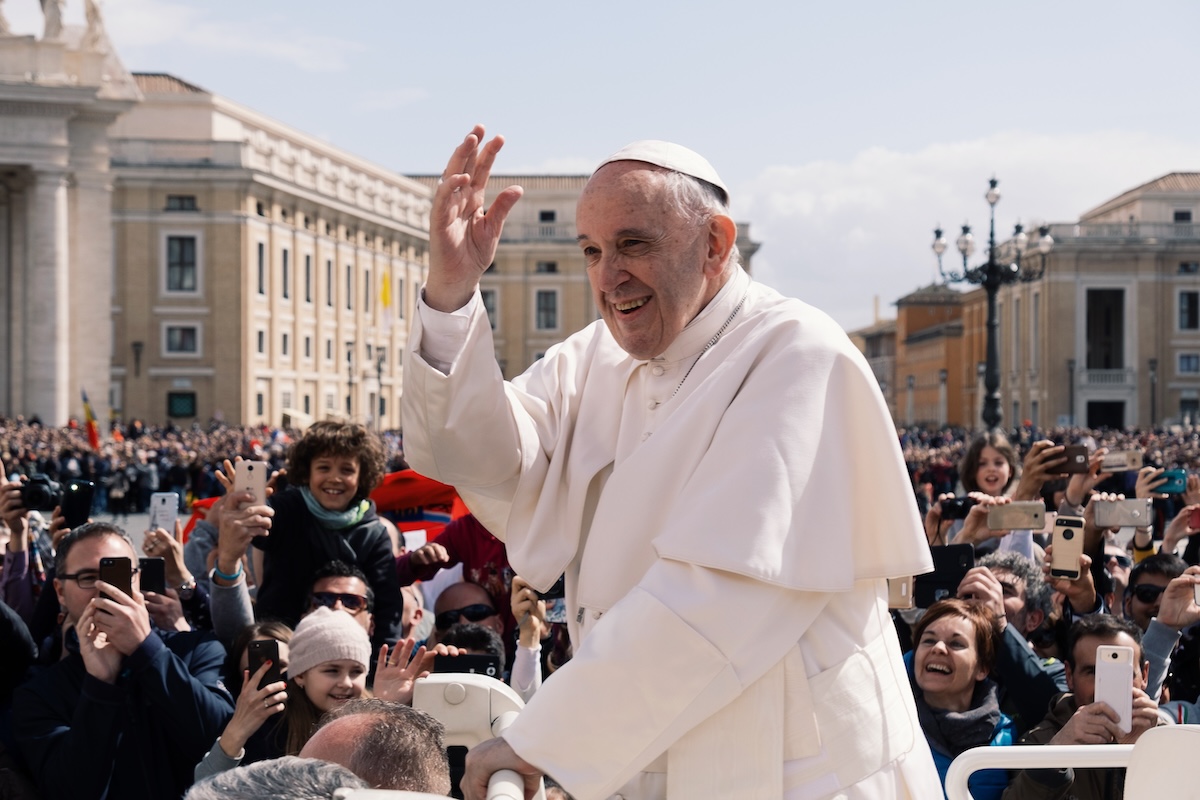
Pope Francis waves at crowd | Courtesy of Unsplash
2. Affirmation on the Uniqueness of Marriage
The document underlines the uniqueness of marriage. Many conservative pundits will miss this aspect in their analysis of the document. Blessing in the context of the sacrament of marriage maintains its unique character. “Rites and prayers that could create confusion between what constitutes marriage—which is the ‘exclusive, stable, and indissoluble union between a man and a woman, naturally open to the generation of children’—and what contradicts it are inadmissible.” (Fiducia Supplicans, 4)
The Rite of Marriage is exclusive to a heterosexual relationship that is open to life. The document does nothing to change that. It is important, while other aspects and interpretations may be troublesome, to continue underlining the sanctity and uniqueness of marriage within God’s salvific plan for humanity. This is very different from blessing same-sex unions.
3. Theological Reflection on Blessing
Pope Francis has wanted to frame much of the atmosphere of the debate in the context of exegesis. What do the Scriptures say? How do we understand blessings? What is the history of this sacramental? “Blessings are among the most widespread and evolving sacramentals. Indeed, they lead us to grasp God’s presence in all the events of life and remind us that, even in the use of created things, human beings are invited to seek God, to love him, and to serve him faithfully.” (Fiducia Supplicans, 8)
Blessing is shown as something abundant in Scripture. Some would take this to be a tacit approval of blessings that go beyond the ordinary scope. However, it is important to note a phrase regarding the liturgical meaning of the rite of blessing. “From a strictly liturgical point of view, a blessing requires that what is blessed be conformed to God’s will, as expressed in the teachings of the Church.” (Fiducia Supplicans, 8) This would be one of the sticking points for many of the interpretations. The document insists that the blessing of a same-sex union may not happen in a liturgical context. Nor may it coincide with a civil ceremony recognizing the union legally.
4. Call to Conformity with the Teaching of the Church
It would seem that there is hope that opening the way to a blessing would help in the way of conversion upon which those asking for it are journeying. “One who asks for a blessing show himself to be in need of God’s saving presence in his life and one who asks for a blessing from the Church recognizes the latter as a sacrament of the salvation that God offers.” (Fiducia Supplicans, 20)
Now, will this happen? The importance of healthy pastoral judgment cannot be over-emphasized. Pastors of the Church should not be turning away those who come with a sincere desire for repentance and conversion. Still, it is pastorally insensitive to give them false hopes that disordered behavior will one day be sanctioned. Pastors must not listen exclusively to the call for orthodoxy or for pastoral care. Rather, they should listen to both at the same time. Pastoral care can never be an excuse for letting go of the authentic teaching of the Church.
“This is a blessing that, although not included in any liturgical rite, unites intercessory prayer with the invocation of God’s help by those who humbly turn to him. God never turns away anyone who approaches him!” (Fiducia Supplicans, 33)
5. Reminder that the Church is the Sacrament of God’s Infinite Love
“The Church is thus the sacrament of God’s infinite love. Therefore, even when a person’s relationship with God is clouded by sin, he can always ask for a blessing, stretching out his hand to God.” (Fiducia Supplicans, 43)
It would be a shame for the Church to reject the hand of one who is reaching out for help in living the Christian life. Now, it is an open question whether blessing same-sex unions fits this purpose.
“Any blessing will be an opportunity for a renewed proclamation of the kerygma, an invitation to draw ever closer to the love of Christ.” (Fiducia Supplicans, 44) Perhaps this can be the litmus test of pastoral initiatives springing forth from this declaration. Does it help those people who approach take the courageous decision to repent from sins and turn to the Gospel?
Do you want to read more? Check out my other blog post on the matter.
General Christian
Family, Parenting and Religion

About Fr. Nicholas Sheehy, LC
Fr. Nicholas Sheehy was ordained a Catholic priest in 2013 for the Legionaries of Christ. He has been involved in youth work including missions, retreats and apostolic outreach in Germany, Italy, the United States and Central America. He is passionate about the New Evangelization and formation for young adults and married couples. He is a spiritual director and retreat director, offering marriage preparation and marriage counseling through the Divine Mercy Clinic and Family Center. He is currently Executive Director and Chaplain of the Newman Center at St. Philip the Apostle Parish in Pasadena, California. You can read more about the author here.
Previous Post
December 18, 2023
Can Catholics Do Yoga?
Next Post
December 22, 2023 Pope Francis Wants a Welcoming Church
Recent Comments
"Peace is a precious resource. Humankind and Planet Earth are thirsting for peace. Long live ..."
The Man Who Taught Nagasaki to ..."
"Searching and finding truth and traveling from truth to Truth is an exciting journey. The ..."
Your Writing Makes the Pope Happy
"Rich or poor, we are all fellow pilgrims enthusiastically marching together to our cherished destination. ..."
"There's no moral difference between avoiding conception by using 'artificial' contraception and using a 'natural' ..."
Browse Our Archives
Select a Category Church News Education Eucharist Faith and Mental Health Family Living the Faith Marriage Relationships Spiritual Direction Uncategorized Vocations Women Young Adults
Select a Month October 2026 September 2026 August 2026 July 2026 June 2026 November 2025 October 2025 September 2025 August 2025 July 2025 May 2025 April 2025 March 2025 February 2025 January 2025 December 2024 November 2024 October 2024 September 2024 August 2024 July 2024 June 2024 May 2024 April 2024 March 2024 February 2024 January 2024 December 2023 November 2023
Follow Us!
TAKE THE
Religious Wisdom Quiz
What was the primary light source in Biblical times?
Select your answer to see how you score.
Bonfire Candle Torch Oil lamp
Related posts from Formation Matters

Beyond Left and Right: Catholic Church on Immigration

The Treasure Meant to Be Shared
TRENDING AT PATHEOS Catholic

The Sermon on the Mount, Part I: Matthew...
The Sermon on the Mount, Part I (Matthew 4:12-5:12) St. Matthew moves...

What's up from Crossway: Reviewing some of their latest A few weeks...

Janie Learns the Way of the Cross: A...
Teaching children about Jesus' Passion can be challenging. Many parents and educators...

Looking For Good Catholic Writing - October 2026
He alone extends the heavens, and he walks upon the waves of...

In "Irreplaceable," our book on vocation and technology, Trevor Sutton and I...

I was strolling through the top floor of the brand new Parthenon...
view all Catholic blogs
What Are Your Thoughts?leave a comment
Ad-Free & Subscriber Log-In Subscription Support
- About Us
- 2026 Calendar
- Videos
- Podcasts
- Library of World Religions
- Faith In Media Tracker
- Advertise With Us
- Write for Us
- Privacy Policy
- Terms of Service
- Do Not Sell My Data
- Contact Us
- Radiant Digital
- Manage Newsletter Subscriptions
- Unsubscribe From Notifications
- Sitemap
Copyright 2008-2026, Patheos. All rights reserved.
Subscription Support Ad-Free & Subscriber Log-In
Follow Patheos