
BuddhistCatholicContemplativeEvangelicalGeneral ChristianHinduJewishLatter-day SaintMuslimNew VisionsProgressive Christian
Beliefs
- Buddhist
- Catholic
- Contemplative
- Evangelical
- General Christian
- Hindu
- Jewish
- Latter-day Saint
- More Voices
- Muslim
- New Visions
- Pagan
- Progressive Christian
Topics
- Religion News
- Food and Religion
- Sports and Religion
- Religious Art
- Religious Music and Entertainment
- Religious Events
- History and Religion
- Style and Religion
- Politics and Religion
- Women in Religion
- Recreation Outdoors and Religion
- Business Finance and Religion
- Careers Workplace and Religion
- Education and Religion
- Family Parenting and Religion
- Health Fitness and Religion
- Home and Religion
- Relationships and Religion
- Technology and Religion
- Travel and Religion
Columnists
- Buddhist Columnists
- Business Finance and Religion Columnists
- Careers Workplace and Religion Columnists
- Catholic Columnists
- Contemplative Columnists
- Education and Religion Columnists
- Evangelists Columnists
- Family Parenting and Religion Columnists
- General Christian Columnists
- Health Fitness and Religion Columnists
- Hindu Columnists
- History and Religion Columnists
- Home and Religion Columnists
- Jewish Columnists
- More Voices Columnists
- Latter Day Columnists
- Muslim Columnists
- New Visions Columnists
- Nonreligious Columnists
- Pagan Columnists
- Politics and Religion Columnists
- Progressive Columnists
- Recreation Outdoors and Religion Columnists
- Relationships and Religion Columnists
- Religion News Columnists
- Religious Art Columnists
- Religious Events Columnists
- Religious Music and Entertainment Columnists
- Sports and Religion Columnists
- Style and Religion Columnists
- Technology and Religion Columnists
- Travel and Religion Columnists
- Women in Religion Columnists
Resource Library
- 2026 Calendar
- Library of World Religions
- The 100 Most Holy Places on Earth
- Patheos Answers
- Podcasts
- Videos
- Faith Leaders Database
- Anglican Episcopalian
- Bahai
- Baptist
- Buddhism
- Christianity
- Confucianism
- Eastern Orthodoxy
- Hinduism
- Holiness and Pentecostal
- ISKCON
- Islam
- Judaism
- Lutheran
- Methodist
- The Church of Jesus Christ of Latter-day Saints
- New Age
- Paganism
- Presbytarian and Reformed
- Protestantism
- Religion Behind the Scenes
- Roman Catholic
- Scientology
- Shia Islam
- Sikhism
- Sufism
- Sunni Islam
- Taoism
- Zen
- See all religions
Research Tools
 Ad-Free & Subscriber Log-In Subscription Support
Ad-Free & Subscriber Log-In Subscription Support
Follow Patheos 

- Trending:
- Forgiveness
- |
- Marriage
- |
- Consciousness
- |
- Death Penalty
- |
- Election
- |
- Halloween
 The Earth is the Lord's
- Home
- Evangelical
- Why Gardening is Fertile Ground for Mission
Why Gardening is Fertile Ground for Mission
Last updated on: February 28, 2013 at 3:38 pm by Alexei Laushkin
Why Gardening is Fertile Ground for Mission 2013-02-28T15:38:19-05:00 Alexei Laushkin
Patheos Explore the world's faith through different perspectives on religion and spirituality! Patheos has the views of the prevalent religions and spiritualities of the world.
by Ben Lowe
“The best place to find God is in a garden. You can dig for Him there.” – George Bernard Shaw
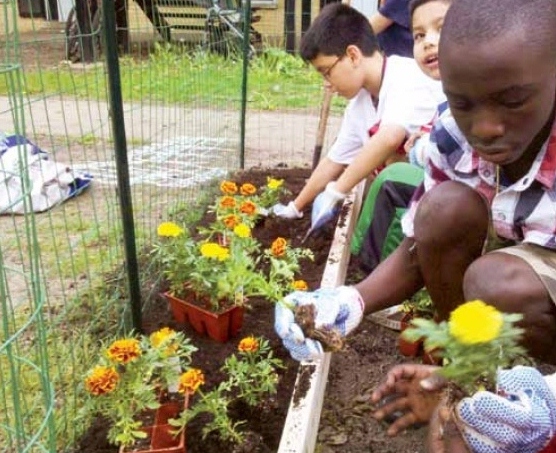
Over the past growing season, I have been managing a community garden in the ethnically diverse low-income apartment complex that I call home. I live in this apartment complex as part of a group of friends from various local churches. Together, we work with our neighbors to seek the welfare of our community.
Life is hard for our neighbors. Most of them are either first generation immigrants or refugees from war-torn countries such as Somalia, Rwanda, Sudan, Iraq, and Burma. Leaving behind everything and everyone they know, they move entire families into small one-bedroom apartments in an unknown country. They do this to stay alive, and with the hope that their children may one day have a future worth working for.
There are a total of one hundred and twenty apartment units in the complex, and the community garden provides us with an opportunity to grow healthy and sustainable food while developing love and respect for one another and the land. This can be especially meaningful for many of our neighbors who come from agrarian backgrounds.
The planting season launched with lots of ideas, enthusiasm, and participation from all ages and cultures. We ran soil nutrient tests with the help of a geology professor from nearby Wheaton College, and then found someone willing to donate a couple tons of sand to help improve the soil quality. We also received generous contributions of tools and seedlings, and spent productive hours tilling the ground, building a fence, separating individual plots out, and laying down mulch. The kids were especially involved and never seemed to run out of energy to help. So we designated a kids plot and helped them plant a variety of veggies and flowers there.
I wish we could say that this is how well the rest of the summer went. I wish we could report that the garden brought our community together in an unprecedented way—healing lives, restoring land, and producing basketfuls of vegetables for all to share.
To be honest, however, our reality has been unexpectedly challenging and my dominant sentiment towards the garden has often been one of frustration: frustration with those who signed up but never actually planted their plots; frustration with those who planted their plots but never watered or weeded them; frustration with the lack of sunlight the garden gets, which makes for some sorry looking tomato and pepper plants; frustration with the damage that strong storms over the summer have caused, especially when a gust of wind blew an upstairs window out of its frame and the glass shattered all over the kids plot; and frustration at the infamous “garden wars”, which broke out over petty disagreements about who got to water whose plot. This particular conflict escalated to the point that an entire plot was destroyed in an act of retaliation, which led to the police being called out and a furious resident marching up and down the complex yelling down curses on her neighbors for three continuous hours.
Things became so exasperating that I started to question whether all the time, money and effort was really worth it. After all, it would be far easier to simply walk across the street and buy the equivalent of our total harvest from the produce section at Jewel (a local grocery store).
But the more I think about it the more my frustration turns to wonder and gratitude. With everything that went wrong this summer, the garden project should have failed. Instead, while pushing through the discouragement—we even held an all-night prayer vigil in the garden after one particularly rough patch—we have begun to see modest but promising signs of healthy progress. New friendships have begun to form, our piece of land is now in better shape in every way than when we started, many of the kids have come to love and protect their plots, and some families have harvested enough tomatoes, peppers, and cilantro from their plots in order to make some salsa. The garden is not all that we hoped it would be. But, against many odds, it has grown into something good. And we will build on this year’s foundation in the seasons ahead, trusting that God will continue to accomplish his purposes through our weak but devoted efforts. As Duane Litfin, President Emeritus at Wheaton College, once put it in a chapel message: “You have a plan. God has a plan. Yours doesn’t matter.”
Recently one of my young neighbors came to the door with a huge smile on her face and filthy hands from being in the garden. “Look at what we grew,” she declared proudly, “it’s our very own cucumber!” A simple cucumber may not be worth much in the eyes of the world, but in this case it was worth the world in the eyes of the little girl.
Our community garden efforts remind me that we are broken and sinful people living in a broken and sinful world. It can be easy to look at the problems we face and despair. But we press on by the power of the Holy Spirit because in Christ we have the victory over sin, and by grace we see hopeful signs that His kingdom is coming even now.
Previous Post

February 27, 2013
A Conversation with Margaret Feinberg
Next Post
March 1, 2013 Young Evangelicals Speak Out On Climate Change
Browse Our Archives
Select a Category Book Review Compassion for a World in Need Mercury and the Unborn Reflections on God's Creation The Christian Life The Public Square Uncategorized Worldview
Select a Month May 2014 April 2014 March 2014 January 2014 December 2013 September 2013 July 2013 June 2013 May 2013 April 2013 March 2013 February 2013 January 2013 December 2012 November 2012 October 2012 September 2012 August 2012 May 2012 April 2012 March 2012
TAKE THE
Religious Wisdom Quiz
What does "Shiloh" mean in Hebrew?
Select your answer to see how you score.
Prince of peace God’s dwelling The chosen one He whose it is
Related posts from The Earth is the Lord's

Suffering, Vocations, St. George, Hope, and Endurance

An Earth Day Reflection- Love the Least of...

Holy Week Creation Care Podcast
Caring for God's Creation is Part of a...
TRENDING AT PATHEOS Evangelical

The REST of Your Life: A Creative Wrestles...
This week I had a conversation with a good friend from church....

How the author of the world's best hymn...
I've been working with John Newton for a while now. This makes...

Long before this Lectio Divina, Psalm 130 - the song - started...

What About the Trees? Another Living Parable
After I finished writing the last article about falling leaves as a...

Why Classical Education Is a Conversation, Not a...
Come and Read: Joy in Classical Education When I was a little...

Cornell University has received a great deal of negative publicity and intense...
view all Evangelical blogs
Ad-Free & Subscriber Log-In Subscription Support
- About Us
- 2026 Calendar
- Videos
- Podcasts
- Library of World Religions
- Faith In Media Tracker
- Advertise With Us
- Write for Us
- Privacy Policy
- Terms of Service
- Do Not Sell My Data
- Contact Us
- Radiant Digital
- Manage Newsletter Subscriptions
- Unsubscribe From Notifications
- Sitemap
Copyright 2008-2026, Patheos. All rights reserved.
Subscription Support Ad-Free & Subscriber Log-In
Follow Patheos