
BuddhistCatholicContemplativeEvangelicalGeneral ChristianHinduJewishLatter-day SaintMuslimNew VisionsProgressive Christian
Beliefs
- Buddhist
- Catholic
- Contemplative
- Evangelical
- General Christian
- Hindu
- Jewish
- Latter-day Saint
- More Voices
- Muslim
- New Visions
- Pagan
- Progressive Christian
Topics
- Religion News
- Food and Religion
- Sports and Religion
- Religious Art
- Religious Music and Entertainment
- Religious Events
- History and Religion
- Style and Religion
- Politics and Religion
- Women in Religion
- Recreation Outdoors and Religion
- Business Finance and Religion
- Careers Workplace and Religion
- Education and Religion
- Family Parenting and Religion
- Health Fitness and Religion
- Home and Religion
- Relationships and Religion
- Technology and Religion
- Travel and Religion
Columnists
- Buddhist Columnists
- Business Finance and Religion Columnists
- Careers Workplace and Religion Columnists
- Catholic Columnists
- Contemplative Columnists
- Education and Religion Columnists
- Evangelists Columnists
- Family Parenting and Religion Columnists
- General Christian Columnists
- Health Fitness and Religion Columnists
- Hindu Columnists
- History and Religion Columnists
- Home and Religion Columnists
- Jewish Columnists
- More Voices Columnists
- Latter Day Columnists
- Muslim Columnists
- New Visions Columnists
- Nonreligious Columnists
- Pagan Columnists
- Politics and Religion Columnists
- Progressive Columnists
- Recreation Outdoors and Religion Columnists
- Relationships and Religion Columnists
- Religion News Columnists
- Religious Art Columnists
- Religious Events Columnists
- Religious Music and Entertainment Columnists
- Sports and Religion Columnists
- Style and Religion Columnists
- Technology and Religion Columnists
- Travel and Religion Columnists
- Women in Religion Columnists
Resource Library
- 2026 Calendar
- Library of World Religions
- The 100 Most Holy Places on Earth
- Patheos Answers
- Podcasts
- Videos
- Faith Leaders Database
- Anglican Episcopalian
- Bahai
- Baptist
- Buddhism
- Christianity
- Confucianism
- Eastern Orthodoxy
- Hinduism
- Holiness and Pentecostal
- ISKCON
- Islam
- Judaism
- Lutheran
- Methodist
- The Church of Jesus Christ of Latter-day Saints
- New Age
- Paganism
- Presbytarian and Reformed
- Protestantism
- Religion Behind the Scenes
- Roman Catholic
- Scientology
- Shia Islam
- Sikhism
- Sufism
- Sunni Islam
- Taoism
- Zen
- See all religions
Research Tools
 Ad-Free & Subscriber Log-In Subscription Support
Ad-Free & Subscriber Log-In Subscription Support
Follow Patheos 

- Trending:
- Forgiveness
- |
- Marriage
- |
- Consciousness
- |
- Death Penalty
- |
- Election
- |
- Halloween
 The Earth is the Lord's
- Home
- Evangelical
- Farming God’s Way
Farming God’s Way
Last updated on: December 17, 2012 at 3:26 pm by Alexei Laushkin
Farming God’s Way 2012-12-17T15:26:11-05:00 Alexei Laushkin
Patheos Explore the world's faith through different perspectives on religion and spirituality! Patheos has the views of the prevalent religions and spiritualities of the world.
by Ed Brown
There is a program in Africa called “Farming God’s Way”. The unusual name comes from a simple premise: Things might go better on our farms if we try to do things “God’s way.”
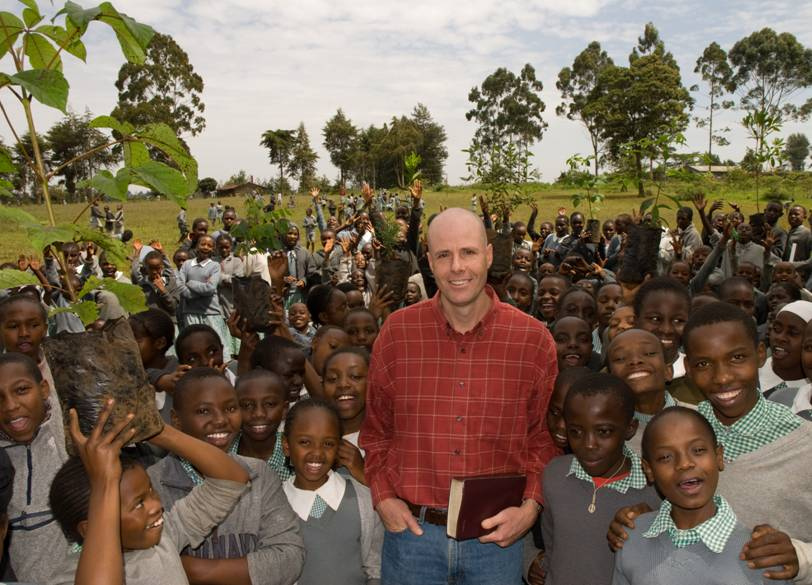 Care of Creation Kenya, a sister organization to my organization, Care of Creation, has been involved in researching, testing and implementing this program in central Kenya on the slopes of the great Rift Valley.
Brian Oldrieve became the manager of Hinton Estates, a large commercial farm in Zimbabwe, in 1982. For his first two years he struggled with the same challenges as all of the other farms around: High input costs, high soil erosion, and rapid loss of soil fertility with corresponding drops in yields. Brian started to pray, asking God to show him how he could manage these fields – God’s fields – in such circumstances.
Here’s how one of Brian’s colleagues describes the process:
Brian asked God to teach him how to overcome the difficulties he was encountering and so the discovery of Farming God’s Way began. God began to speak to him about how he manages creation, where he never tills or inverts the soil and where he never destroys or buries decaying plant matter on the surface. God also spoke clearly of the stewardship and excellence farmers are called to adopt, by caring for and managing the land in a way that would ensure that farmlands could be passed on as an inheritance from one generation to another and bring glory to God. [FGW Training Guide p 11]
For Brian, doing things “God’s Way” meant two things: Learning to work in harmony with how God runs his world, that is, with the natural operations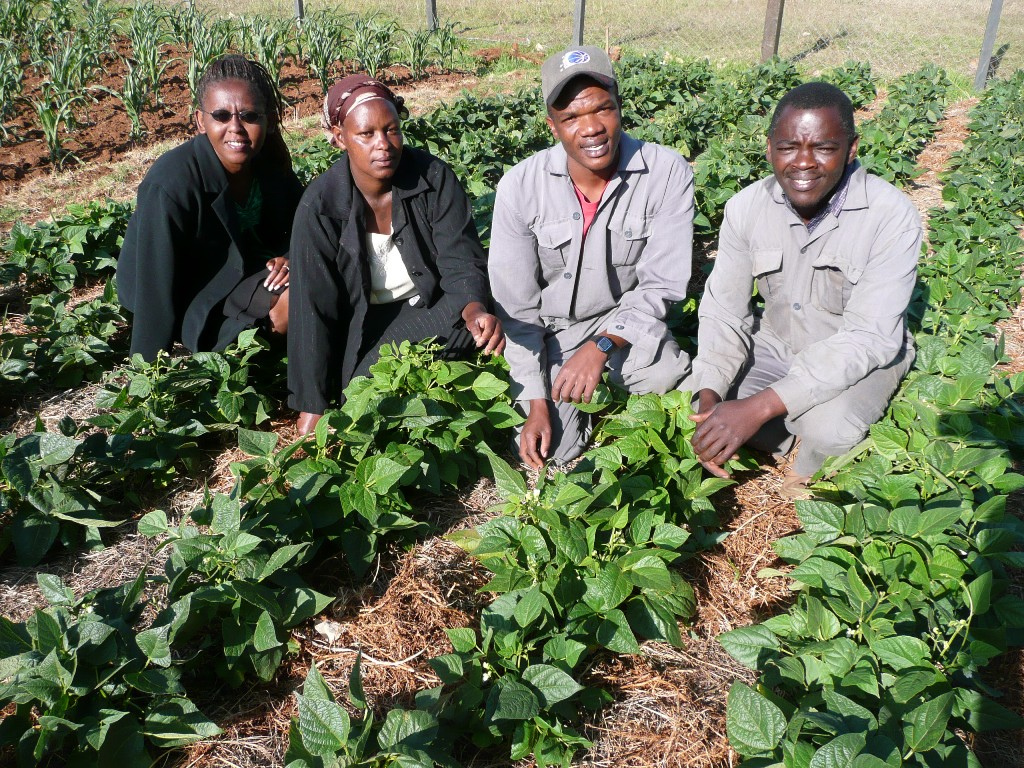 of God’s creation as we can discover them; and learning to work according to the principles of the Word of God, the Bible. Understand the world; study the Word; put them together and do the thing ‘God’s Way’.
Brian’s “discovery”, to use his term, was actually quite close to what research programs in the West had started calling conservation no-till agriculture: Farming without plowing. There is a strong emphasis on organic compost (“God’s blanket” in Farming God’s Way terminology), minimal chemical input and a lot of manual weeding.
But the more important difference is in the second part of the formula. Brian was not just observing the world; he was teaching people to obey the Word. Farming God’s Way is an agricultural program that uses Christian discipleship, and a discipleship program that uses agriculture.
The results back in 1984 were astounding, and the program continues to amaze today. Yields in Farming God’s Way plots double or triple the first year, and continue to increase year after year as the fertility of the soil is restored.
My colleagues at Care of Creation Kenya have been testing this program and teaching it to local farmers for a number of years, and even though their testing has coincided with several years of severe drought, the results are remarkable. In 2008, maize in the Farming God’s Way plot was double that of the control plot (which used traditional farming methods). In 2009, in the same plots, FGW was triple, and 2010 saw a four-fold increase over the control.
Here’s a thought: If ‘Farming God’s Way’ works on a farm, would ‘teaching God’s Way’ would work in a school? How about ‘manufacturing God’s Way’ in a factory? Could we consider ‘Running the World God’s Way’?
No, if we’re going to do things differently, we really have to start from scratch.
Paul Hawken famously said, “Civilization needs a new operating system”. And James Speth’s Bridge at the End of the World: Capitalism, the Environment, and Crossing from Crisis to Sustainability contends that we have to figure out how to run the world completely differently. Our current political and economic systems are not capable of solving the problems they have created. With quotes from such thinkers as Vaclav Havel, Aldo Leopold, Erich Fromm and Thomas Berry, Speth concludes that what we need is some kind of a transformed human mind, a new consciousness:
So let’s get back to the thought behind Farming God’s Way: Things will go better when we learn to work with God and his creation.
There are really two parts to the challenge, corresponding to Brian’s two principles: We need to understand how God’s world works, so we can work in harmony with it; and we need to understand the principles in God’s word, so we can work according to them.
How the world works is the easy part. An important part of the environmental challenges we face is in fact scientific – and many of the solutions we need will come from science. We’re making progress in many areas and I am confident we’ll continue to do so.
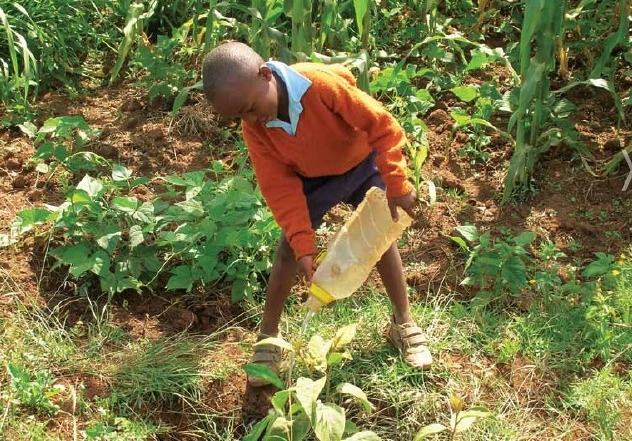
Remember, though: It is a two part challenge. The gap we face today is not in understanding how the world works so much as in knowing how God wants his world to run. What are God’s purposes? What outcomes is he looking for? And that’s where we need to go to work.
Let’s use an analogy.
Suppose you own a large ranch in, say, Texas. You ask me to manage it for you. The length of time is undetermined but not perpetual: You will be returning to take over the property again. You give me complete legal authority over this property – Powers of Attorney are signed, bank accounts have me as a signatory, and off you go into the sunset, leaving me to… Do what, exactly? What am I supposed to do with this vast estate?
My management strategy could go several different directions. I could pursue short term profit-taking, by entering into quick contracts to sell off lumber, cash in water rights, and hold livestock auctions. I could make a great deal of money for both you and me in a very short time. Or I could manage conservatively with a long term horizon in mind. I would want to learn how to manage grazing lands in a way that would keep them healthy; how many cattle I can keep in each quarter-section at a time without damaging the ground cover and causing erosion and long term decline. Remember – I have complete control. I can do either.
What will guide me? Well, I hope that at some point, you and I would have talked about your goals for the property. We might have walked or ridden around the ranch, talking about your dreams, what you had in mind when you acquired the property.
Do you see? Everything I do as your manager should be guided by your dreams and goals for the place, not mine. If you’re planning to sell it in a year, maybe the short-term, cash-it-all-in approach is what you want from me. But it might be that you are looking at this as an investment that you want to pass down to your grandchildren someday. If that’s the case, the last thing you want me to do is liquidate everything in the first year. You will want to be sure that I understand that long-term viability is your goal.
It’s not hard at all to make the connection between this ranch and God’s creation, is it? This is God’s place. And God’s goals should determine how we manage it.
Maybe we should try to figure out what God’s goals are… And then we can think about running God’s world God’s way.
Rev. Edward Brown is Executive Director of Care of Creation Inc. and author of Our Father’s World: Mobilizing the Church to Care for Creation. He has also recently been appointed as Senior Associate for Creation Care for Lausanne. This article excerpted from a forthcoming book in which he will explore God’s goals for his creation, and how understanding those goals could transform the entire human enterprise. Stay tuned!
Compassion for a World in Need
Previous Post

October 10, 2012
Our Common Interest: Climate Change and International Adaptation
Next Post
October 18, 2012 City on Our Knees
Browse Our Archives
Select a Category Book Review Compassion for a World in Need Mercury and the Unborn Reflections on God's Creation The Christian Life The Public Square Uncategorized Worldview
Select a Month May 2014 April 2014 March 2014 January 2014 December 2013 September 2013 July 2013 June 2013 May 2013 April 2013 March 2013 February 2013 January 2013 December 2012 November 2012 October 2012 September 2012 August 2012 May 2012 April 2012 March 2012
TAKE THE
Religious Wisdom Quiz
What did God provide for meat for Israel in the desert?
Select your answer to see how you score.
Quail Beef Goat Fish
Related posts from The Earth is the Lord's

Holy Week Creation Care Podcast
Blinded by Light- Energy Poverty and Climate Change
TRENDING AT PATHEOS Evangelical

The REST of Your Life: A Creative Wrestles...
This week I had a conversation with a good friend from church....

How the author of the world's best hymn...
I've been working with John Newton for a while now. This makes...

Long before this Lectio Divina, Psalm 130 - the song - started...

What About the Trees? Another Living Parable
After I finished writing the last article about falling leaves as a...

Why Classical Education Is a Conversation, Not a...
Come and Read: Joy in Classical Education When I was a little...

Cornell University has received a great deal of negative publicity and intense...
view all Evangelical blogs
Ad-Free & Subscriber Log-In Subscription Support
- About Us
- 2026 Calendar
- Videos
- Podcasts
- Library of World Religions
- Faith In Media Tracker
- Advertise With Us
- Write for Us
- Privacy Policy
- Terms of Service
- Do Not Sell My Data
- Contact Us
- Radiant Digital
- Manage Newsletter Subscriptions
- Unsubscribe From Notifications
- Sitemap
Copyright 2008-2026, Patheos. All rights reserved.
Subscription Support Ad-Free & Subscriber Log-In
Follow Patheos