
BuddhistCatholicContemplativeEvangelicalGeneral ChristianHinduJewishLatter-day SaintMuslimNew VisionsProgressive Christian
Beliefs
- Buddhist
- Catholic
- Contemplative
- Evangelical
- General Christian
- Hindu
- Jewish
- Latter-day Saint
- More Voices
- Muslim
- New Visions
- Pagan
- Progressive Christian
Topics
- Religion News
- Food and Religion
- Sports and Religion
- Religious Art
- Religious Music and Entertainment
- Religious Events
- History and Religion
- Style and Religion
- Politics and Religion
- Women in Religion
- Recreation Outdoors and Religion
- Business Finance and Religion
- Careers Workplace and Religion
- Education and Religion
- Family Parenting and Religion
- Health Fitness and Religion
- Home and Religion
- Relationships and Religion
- Technology and Religion
- Travel and Religion
Columnists
- Buddhist Columnists
- Business Finance and Religion Columnists
- Careers Workplace and Religion Columnists
- Catholic Columnists
- Contemplative Columnists
- Education and Religion Columnists
- Evangelists Columnists
- Family Parenting and Religion Columnists
- General Christian Columnists
- Health Fitness and Religion Columnists
- Hindu Columnists
- History and Religion Columnists
- Home and Religion Columnists
- Jewish Columnists
- More Voices Columnists
- Latter Day Columnists
- Muslim Columnists
- New Visions Columnists
- Nonreligious Columnists
- Pagan Columnists
- Politics and Religion Columnists
- Progressive Columnists
- Recreation Outdoors and Religion Columnists
- Relationships and Religion Columnists
- Religion News Columnists
- Religious Art Columnists
- Religious Events Columnists
- Religious Music and Entertainment Columnists
- Sports and Religion Columnists
- Style and Religion Columnists
- Technology and Religion Columnists
- Travel and Religion Columnists
- Women in Religion Columnists
Resource Library
- 2026 Calendar
- Library of World Religions
- The 100 Most Holy Places on Earth
- Patheos Answers
- Podcasts
- Videos
- Faith Leaders Database
- Anglican Episcopalian
- Bahai
- Baptist
- Buddhism
- Christianity
- Confucianism
- Eastern Orthodoxy
- Hinduism
- Holiness and Pentecostal
- ISKCON
- Islam
- Judaism
- Lutheran
- Methodist
- The Church of Jesus Christ of Latter-day Saints
- New Age
- Paganism
- Presbytarian and Reformed
- Protestantism
- Religion Behind the Scenes
- Roman Catholic
- Scientology
- Shia Islam
- Sikhism
- Sufism
- Sunni Islam
- Taoism
- Zen
- See all religions
Research Tools
 Ad-Free & Subscriber Log-In Subscription Support
Ad-Free & Subscriber Log-In Subscription Support
Follow Patheos 

- Trending:
- Forgiveness
- |
- Marriage
- |
- Consciousness
- |
- Death Penalty
- |
- Election
- |
- Halloween
 The Earth is the Lord's
- Home
- Evangelical
- The Vision of Narnia
The Vision of Narnia
Last updated on: September 24, 2012 at 9:39 am by Alexei Laushkin
The Vision of Narnia 2012-09-24T09:39:57-05:00 Alexei Laushkin
Patheos Explore the world's faith through different perspectives on religion and spirituality! Patheos has the views of the prevalent religions and spiritualities of the world.
by Dean Ohlman
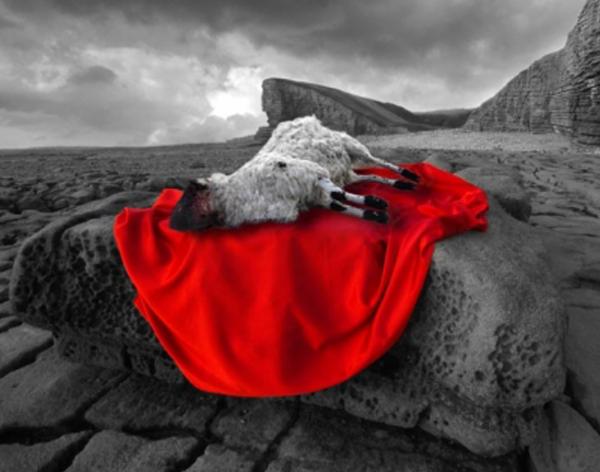 It was in preparation for this post that I first saw the amazing parallel between Psalm 148:1-6, 11-13 and Revelation 5:5:11-13. Each passage offers hymns of praise to the Creator–the Psalm written almost a thousand years before the first coming of Messiah and the Revelation envisioning a celebration in heaven as Messiah (“the Lamb who was slain”) is honored before His coming back to earth to reign forever as Lord of the universe.
KEY SCRIPTURE:
Praise the LORD from the heavens, praise Him in the heights above. Praise Him, all his angels, praise Him, all His heavenly hosts. Praise Him, sun and moon, praise Him, all you shining stars. Praise Him, you highest heavens and you waters above the skies. Let them praise the name of the LORD, for He commanded and they were created. He set them in place for ever and ever; He gave a decree that will never pass away.
Praise the LORD from the earth, you great sea creatures and all ocean depths, lightning and hail, snow and clouds, stormy winds that do his bidding, you mountains and all hills, fruit trees and all cedars, wild animals and all cattle, small creatures and flying birds, kings of the earth and all nations, you princes and all rulers on earth, young men and maidens, old men and children.
Let them praise the name of the LORD, for His name alone is exalted; His splendor is above the earth and the heavens (Psalm 148:1-6, 11-13).
I looked and heard the voice of many angels, numbering thousands upon thousands, and ten thousand times ten thousand. They encircled the throne and the living creatures and the elders. In a loud voice they sang: “Worthy is the Lamb, who was slain, to receive power and wealth and wisdom and strength and honor and glory and praise!”
Then I heard every creature in heaven and on earth and under the earth and on the sea, and all that is in them, singing: “To him who sits on the throne and to the Lamb be praise and honor and glory and power, for ever and ever!” (Revelation 5:11-13)
Each passage also has a simple two-part structure: First the beings of heaven (who have always been intimate with the Creator/Savior) offer up their praise. Then the creatures of earth–elements, animals, and people (who have often spurned intimacy with their Creator/Savior)–offer their praise. Central to it all is the recognition that the Lord is above both heaven and earth.
But how do the cosmic elements and animals praise their Creator? Theological tradition says they do it by carrying out their God-given functions within the creation. That’s probably true; but is that all the truth? In the Revelation passage we see more than mere utility in the non-human creation. There we see content and some level of consciousness in nature. By all appearances, all things created have within their different natures some capacity to respond to their Creator. This was also alluded to by the apostle Paul: “The creation waits in eager expectation for the sons of God to be revealed. For the creation was subjected to frustration, not by its own choice, but by the will of the one who subjected it, in hope that the creation itself will be liberated from its bondage to decay and brought into the glorious freedom of the children of God” (Romans 8:19-21).
There is expectation and hope in the non-human creation, expectation and hope tied directly to people–those who were made to be creation’s stewards, guardians, rulers, and keepers. Forty years ago, Francis Schaeffer encouraged us to be involved in a “substantial healing” of all the rifts created by the Fall–including the rift between people and nature. How have we been doing?
For those who are familiar with The Chronicles of Narnia and The Cosmic Trilogy, it does not come as a surprise to understand that  Scripture in many ways hints at the reality behind these works of fiction so artfully crafted by C. S. Lewis (and more complexly by Tolkein): the evil and the good of human behavior are tied directly to the state and temporary fate of the creation. Creation’s ultimate fate, however, awaits the coming again of Messiah, who will ensure that justice once again reigns on earth–justice not only for those people have given themselves faithfully to the cause of love, goodness, and stewardship through the power of the Holy Spirit and have accepted the atoning sacrifice of the “Lamb who was slain,” but justice for all His creatures who have suffered at the hand of those who have not been given to love, goodness, and faithful stewardship.
Take courage, His people. Take courage, His suffering creatures. As the excited hosts of heaven already know, justice and reconciliation is on the way! (Colossians 1:20)
[You may want to read a PDF article on this website related to this devotional: The Lion, the Curse, and the Evangelical.]
Dean Ohlman is a statesman of the creation care movement. You can follow his excellent work at the Wonder of Creation site.
Previous Post

September 21, 2012
Fearfully and Wonderfully Made
Next Post
September 24, 2012 Leaning Into the One Who Loves You
Browse Our Archives
Select a Category Book Review Compassion for a World in Need Mercury and the Unborn Reflections on God's Creation The Christian Life The Public Square Uncategorized Worldview
Select a Month May 2014 April 2014 March 2014 January 2014 December 2013 September 2013 July 2013 June 2013 May 2013 April 2013 March 2013 February 2013 January 2013 December 2012 November 2012 October 2012 September 2012 August 2012 May 2012 April 2012 March 2012
TAKE THE
Religious Wisdom Quiz
True or False: John's Gospel does not record any parables.
Select your answer to see how you score.
FALSE TRUE
Related posts from The Earth is the Lord's
Suffering, Vocations, St. George, Hope, and Endurance

Holy Week Creation Care Podcast
Caring for God's Creation is Part of a...

Confessions of a Non-Sustainable Carnivore
TRENDING AT PATHEOS Evangelical

The REST of Your Life: A Creative Wrestles...
This week I had a conversation with a good friend from church....

How the author of the world's best hymn...
I've been working with John Newton for a while now. This makes...

Long before this Lectio Divina, Psalm 130 - the song - started...

What About the Trees? Another Living Parable
After I finished writing the last article about falling leaves as a...

Why Classical Education Is a Conversation, Not a...
Come and Read: Joy in Classical Education When I was a little...

Cornell University has received a great deal of negative publicity and intense...
view all Evangelical blogs
Ad-Free & Subscriber Log-In Subscription Support
- About Us
- 2026 Calendar
- Videos
- Podcasts
- Library of World Religions
- Faith In Media Tracker
- Advertise With Us
- Write for Us
- Privacy Policy
- Terms of Service
- Do Not Sell My Data
- Contact Us
- Radiant Digital
- Manage Newsletter Subscriptions
- Unsubscribe From Notifications
- Sitemap
Copyright 2008-2026, Patheos. All rights reserved.
Subscription Support Ad-Free & Subscriber Log-In
Follow Patheos