
BuddhistCatholicContemplativeEvangelicalGeneral ChristianHinduJewishLatter-day SaintMuslimNew VisionsProgressive Christian
Beliefs
- Buddhist
- Catholic
- Contemplative
- Evangelical
- General Christian
- Hindu
- Jewish
- Latter-day Saint
- More Voices
- Muslim
- New Visions
- Pagan
- Progressive Christian
Topics
- Religion News
- Food and Religion
- Sports and Religion
- Religious Art
- Religious Music and Entertainment
- Religious Events
- History and Religion
- Style and Religion
- Politics and Religion
- Women in Religion
- Recreation Outdoors and Religion
- Business Finance and Religion
- Careers Workplace and Religion
- Education and Religion
- Family Parenting and Religion
- Health Fitness and Religion
- Home and Religion
- Relationships and Religion
- Technology and Religion
- Travel and Religion
Columnists
- Buddhist Columnists
- Business Finance and Religion Columnists
- Careers Workplace and Religion Columnists
- Catholic Columnists
- Contemplative Columnists
- Education and Religion Columnists
- Evangelists Columnists
- Family Parenting and Religion Columnists
- General Christian Columnists
- Health Fitness and Religion Columnists
- Hindu Columnists
- History and Religion Columnists
- Home and Religion Columnists
- Jewish Columnists
- More Voices Columnists
- Latter Day Columnists
- Muslim Columnists
- New Visions Columnists
- Nonreligious Columnists
- Pagan Columnists
- Politics and Religion Columnists
- Progressive Columnists
- Recreation Outdoors and Religion Columnists
- Relationships and Religion Columnists
- Religion News Columnists
- Religious Art Columnists
- Religious Events Columnists
- Religious Music and Entertainment Columnists
- Sports and Religion Columnists
- Style and Religion Columnists
- Technology and Religion Columnists
- Travel and Religion Columnists
- Women in Religion Columnists
Resource Library
- 2026 Calendar
- Library of World Religions
- The 100 Most Holy Places on Earth
- Patheos Answers
- Podcasts
- Videos
- Faith Leaders Database
- Anglican Episcopalian
- Bahai
- Baptist
- Buddhism
- Christianity
- Confucianism
- Eastern Orthodoxy
- Hinduism
- Holiness and Pentecostal
- ISKCON
- Islam
- Judaism
- Lutheran
- Methodist
- The Church of Jesus Christ of Latter-day Saints
- New Age
- Paganism
- Presbytarian and Reformed
- Protestantism
- Religion Behind the Scenes
- Roman Catholic
- Scientology
- Shia Islam
- Sikhism
- Sufism
- Sunni Islam
- Taoism
- Zen
- See all religions
Research Tools
 Ad-Free & Subscriber Log-In Subscription Support
Ad-Free & Subscriber Log-In Subscription Support
Follow Patheos 

- Trending:
- Forgiveness
- |
- Marriage
- |
- Consciousness
- |
- Death Penalty
- |
- Election
- |
- Halloween
 The Earth is the Lord's
- Home
- Evangelical
- The Biblical Art of Naming
The Biblical Art of Naming
Last updated on: September 27, 2012 at 11:46 am by Alexei Laushkin
The Biblical Art of Naming 2012-09-27T11:46:53-05:00 Alexei Laushkin
Patheos Explore the world's faith through different perspectives on religion and spirituality! Patheos has the views of the prevalent religions and spiritualities of the world.
by Dean Ohlman
Abram traveled through the land as far as Shechem. There he set up camp beside the oak of Moreh (Genesis 12:6). Abram moved his camp to Hebron and settled near the oak grove belonging to Mamre. There he built another altar to the Lord (Genesis 13:18).
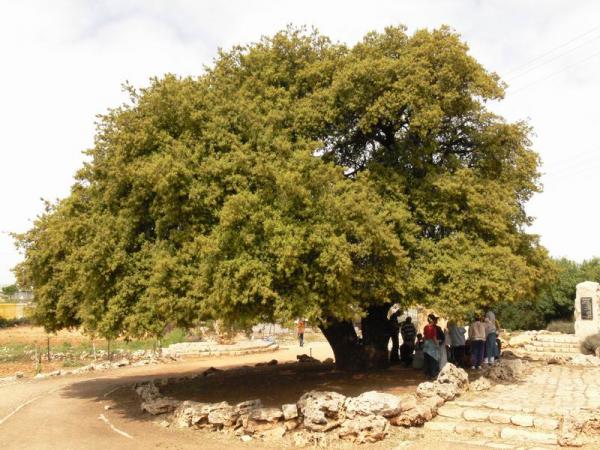
“Remember to turn in between the big red oak and the silver maple,” I would sometimes say to Marge as directions for turning into the right driveway to a home we often visited. She, not being a tree aficionado, would simply roll her eyes and tell me the name of the cross street and signs she used as a reference point. In Abram’s time, however, it was obviously common to use trees or other natural features as reference points”especially if tents in the great outdoors were your living quarters and you were miles from a city or major settlement. Knowing the essence (names) of natural features was critical to life in his day”as it is to us today. [Oak tree photo source]
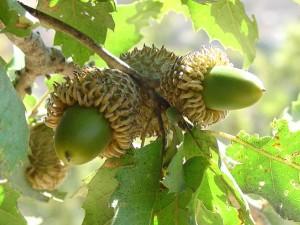 We know that naming was an important act in Old Testament times: mountains, landmarks, memorials, and especially children. But Adam had the most significant naming responsibility of all: he was asked by the Creator to name the domestic and wild animals and the birds. Henri Nouwen wrote an insightful commentary on this act of Adam that’s made the importance of naming stick with me. Having such a privilege, Nouwen said, meant that you needed to understand the essence (character, core, and soul) of what it was you were naming. Since we are on the far side of Babel, we don’t know what Adam’s names were, but we can be fairly certain that the lion-ness of lions and the duck-ness of ducks were assumed in whatever name was given [And was he also the only man to truly understand a woman?!]. Adam was clearly the first naturalist, but he probably didn’t use the common practice in naming species today: incorporating the name of the discoverer in the scientific name. Having the names of all birds and wild and domesticated animals end with adamii would not be helpful naming!
Scientific naming, however, still seeks to include some of the essence of the species, and that is helpful.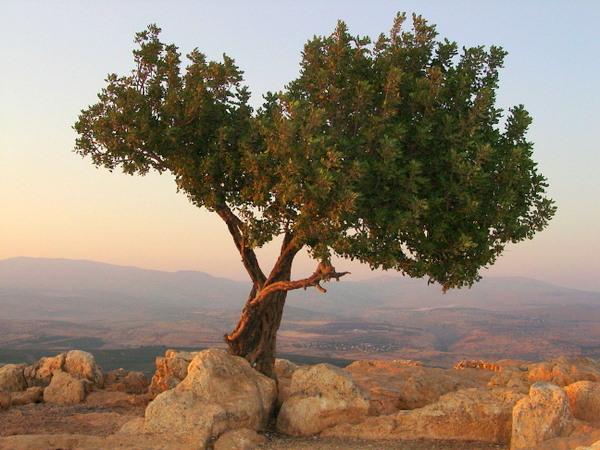 But there is something else important in naming nature that I think we miss in our age. It’s implied in the fact that even children know the names and character of Target, Wal-Mart, and MacDonald’s (sadly, also the PR “nature” of Coors, Budweiser, and Miller Light); but they don’t know much about the essence of maple, oak, and willow. They will eagerly look up the made-up name and imaginary characteristics of the latest “Made in China” Webkinz stuffed animal on the Internet, but typically will not look up the real name and actual characteristics of the trees that grow along their streets”nor are they given a reason to care.
Children don’t care because adults don’t care. And because adults don’t care, the natural world, without which we could not live, often lacks our care and attention. If we came to understand the essence of all the natural features and living things that surround us, we would be the richer for it. And we would 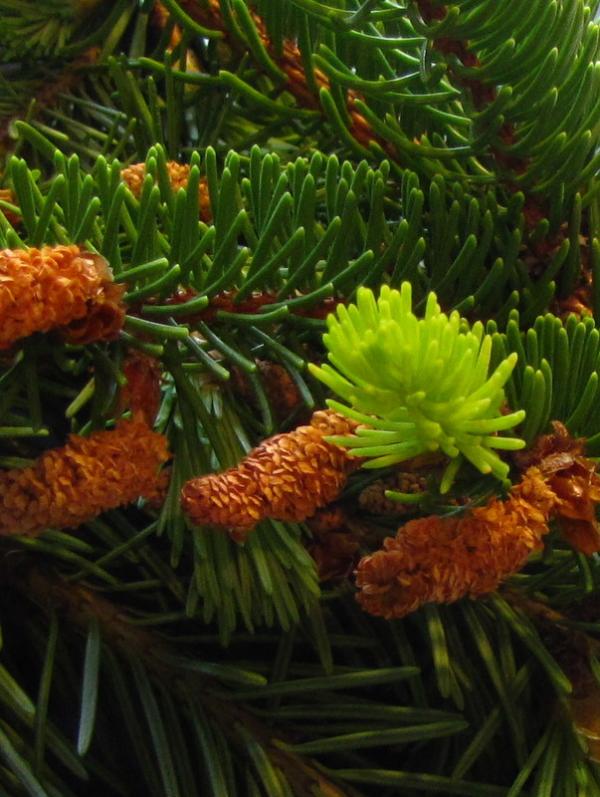 seek to protect what is threatened (another of Adam’s tasks). When you consider how significant the oaks of Moreh and Mamre were to Abram and his fellow travelers, you could also image their outrage at someone deliberately cutting them down. That oak grove of Mamre, was more than a resource. It was a cherished natural companion for years. It was important to their sense of place.
What we don’t know and understand we typically don’t care for, and what we don’t care for, we readily come to abuse. The elements of God’s natural creation are as important and significant today as they were in the days of Adam. And I believe we do still have the responsibility of knowing and understanding them: learning their names and their essence.
When we moved to our condo ten years ago, I took note of the trees that lined our drive: mostly red maples, Norway 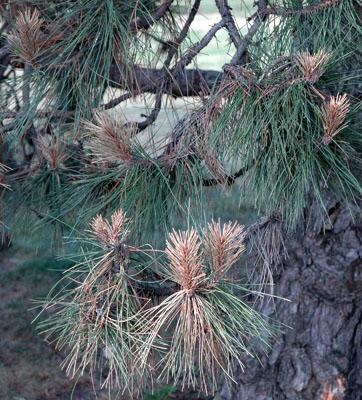 maples, Colorado spruces, red pines, and Austrian pines. This last spring I wrote one of my Ambling posts [May 24] on the reproduction and growth process of the pines near our condo. I posted photos of their cones and their new growth. Last month, I noticed that almost all the new growth on the pines had died. I discovered that they are succumbing to two different blights, and within a couple years the 35-year-old trees will themselves die and need to be removed. And I will miss them, just like I miss the dozens of ash trees that have died all around us: victims of the invasive emerald ash-borer.
Such is the burden of knowing and understanding- of naming what we are to care for. How many trees, wildflowers, birds, insects, rocks, clouds, crops, and domesticated animals in your area can you name? Do you know much about their essence? Do you care?
re-posted with permission
Dean Ohlman is a statesman of the creation care movement. You can follow his excellent work at the Wonder of Creation site.
Previous Post

September 26, 2012
7 Reasons the Church Can't Afford to Ignore Creation Care
Next Post
October 3, 2012 Praying for Full Provision for All
Browse Our Archives
Select a Category Book Review Compassion for a World in Need Mercury and the Unborn Reflections on God's Creation The Christian Life The Public Square Uncategorized Worldview
Select a Month May 2014 April 2014 March 2014 January 2014 December 2013 September 2013 July 2013 June 2013 May 2013 April 2013 March 2013 February 2013 January 2013 December 2012 November 2012 October 2012 September 2012 August 2012 May 2012 April 2012 March 2012
TAKE THE
Religious Wisdom Quiz
Who walked on water with Jesus before losing faith and sinking?
Select your answer to see how you score.
Peter Thomas Philip James
Related posts from The Earth is the Lord's
Suffering, Vocations, St. George, Hope, and Endurance

Holy Week Creation Care Podcast
Caring for God's Creation is Part of a...

Confessions of a Non-Sustainable Carnivore
TRENDING AT PATHEOS Evangelical

The REST of Your Life: A Creative Wrestles...
This week I had a conversation with a good friend from church....

How the author of the world's best hymn...
I've been working with John Newton for a while now. This makes...

Long before this Lectio Divina, Psalm 130 - the song - started...

What About the Trees? Another Living Parable
After I finished writing the last article about falling leaves as a...

Why Classical Education Is a Conversation, Not a...
Come and Read: Joy in Classical Education When I was a little...

Cornell University has received a great deal of negative publicity and intense...
view all Evangelical blogs
Ad-Free & Subscriber Log-In Subscription Support
- About Us
- 2026 Calendar
- Videos
- Podcasts
- Library of World Religions
- Faith In Media Tracker
- Advertise With Us
- Write for Us
- Privacy Policy
- Terms of Service
- Do Not Sell My Data
- Contact Us
- Radiant Digital
- Manage Newsletter Subscriptions
- Unsubscribe From Notifications
- Sitemap
Copyright 2008-2026, Patheos. All rights reserved.
Subscription Support Ad-Free & Subscriber Log-In
Follow Patheos