
BuddhistCatholicContemplativeEvangelicalGeneral ChristianHinduJewishLatter-day SaintMuslimNew VisionsProgressive Christian
Beliefs
- Buddhist
- Catholic
- Contemplative
- Evangelical
- General Christian
- Hindu
- Jewish
- Latter-day Saint
- More Voices
- Muslim
- New Visions
- Pagan
- Progressive Christian
Topics
- Religion News
- Food and Religion
- Sports and Religion
- Religious Art
- Religious Music and Entertainment
- Religious Events
- History and Religion
- Style and Religion
- Politics and Religion
- Women in Religion
- Recreation Outdoors and Religion
- Business Finance and Religion
- Careers Workplace and Religion
- Education and Religion
- Family Parenting and Religion
- Health Fitness and Religion
- Home and Religion
- Relationships and Religion
- Technology and Religion
- Travel and Religion
Columnists
- Buddhist Columnists
- Business Finance and Religion Columnists
- Careers Workplace and Religion Columnists
- Catholic Columnists
- Contemplative Columnists
- Education and Religion Columnists
- Evangelists Columnists
- Family Parenting and Religion Columnists
- General Christian Columnists
- Health Fitness and Religion Columnists
- Hindu Columnists
- History and Religion Columnists
- Home and Religion Columnists
- Jewish Columnists
- More Voices Columnists
- Latter Day Columnists
- Muslim Columnists
- New Visions Columnists
- Nonreligious Columnists
- Pagan Columnists
- Politics and Religion Columnists
- Progressive Columnists
- Recreation Outdoors and Religion Columnists
- Relationships and Religion Columnists
- Religion News Columnists
- Religious Art Columnists
- Religious Events Columnists
- Religious Music and Entertainment Columnists
- Sports and Religion Columnists
- Style and Religion Columnists
- Technology and Religion Columnists
- Travel and Religion Columnists
- Women in Religion Columnists
Resource Library
- 2026 Calendar
- Library of World Religions
- The 100 Most Holy Places on Earth
- Patheos Answers
- Podcasts
- Videos
- Faith Leaders Database
- Anglican Episcopalian
- Bahai
- Baptist
- Buddhism
- Christianity
- Confucianism
- Eastern Orthodoxy
- Hinduism
- Holiness and Pentecostal
- ISKCON
- Islam
- Judaism
- Lutheran
- Methodist
- The Church of Jesus Christ of Latter-day Saints
- New Age
- Paganism
- Presbytarian and Reformed
- Protestantism
- Religion Behind the Scenes
- Roman Catholic
- Scientology
- Shia Islam
- Sikhism
- Sufism
- Sunni Islam
- Taoism
- Zen
- See all religions
Research Tools
 Ad-Free & Subscriber Log-In Subscription Support
Ad-Free & Subscriber Log-In Subscription Support
Follow Patheos 

- Trending:
- Forgiveness
- |
- Marriage
- |
- Consciousness
- |
- Death Penalty
- |
- Election
- |
- Halloween
 Food and Faith
- Home
- Food and Religion
- The Apple. The Forbidden Fruit. But Probably Not.
The Apple. The Forbidden Fruit. But Probably Not.
Last updated on: June 11, 2022 at 4:50 pm by Kevin Juhasz
The Apple. The Forbidden Fruit. But Probably Not. 2022-06-11T16:50:29-06:00 Kevin Juhasz
Patheos Explore the world's faith through different perspectives on religion and spirituality! Patheos has the views of the prevalent religions and spiritualities of the world.
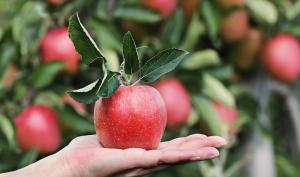 It’s not the first food mentioned in the Bible, but it may be one of the most famous foods in history — the forbidden fruit.
So when the woman saw that the tree was good for food, that it was [a]pleasant to the eyes, and a tree desirable to make one wise, she took of its fruit and ate. She also gave to her husband with her, and he ate. — Genesis 3:6 (KJV)
Nobody can say for sure what the fruit that Adam and Eve consumed, but at some point along the way, the apple became the go-to fruit for bringing shame to the couple and their subsequent banishment from the Garden of Eden. We can thank translations and culture for eventually making the apple the center of attention.
In fact, the apple we enjoy today was very unlikely to be the fruit from the Tree of Knowledge. The Hebrew word peri was the original one used in Genesis, and it is a generic term for fruit. It’s believed that when the Bible was translated into Latin, the word malum was used, and the English word for that is apple. However, the word apple in those times was a generic term for fruit and nuts, except for berries.
The Quran also makes no mention of an apple and states that Adam and Eve were instructed that they may eat anything in Paradise save for one tree.
Lots of fruits used the word apple in their descriptions in history. Tomatoes? Love apple. Potatoes? Ground apples. Peach? Persian apple. Pomegranate? Seedy apple. Dates? Finger apple. Cucumbers? Earth apple. Pineapple? Uh, well, pineapple. The last one actually comes from the Middle Ages term for pinecone (pineappel) and was likely given to the modern pineapple based on appearance.
The apple likely got its place as the forbidden fruit thanks to paintings and other art. Many artists chose the apple, but apricots and pomegranates have also appeared in items depicting the Garden of Eden. The forbidden fruit could have been a number of fruits that were common to the area at the time the Bible was written, such as figs, grapes, citron, or even wheat.
Christianity is not the only religion that depiction of apples. Ancient Greeks believed that Dionysus, the god of wine, fertility, and theater, was the creator of the apple, which he presented to Aphrodite. The garden of the goddess Hera contained the Golden Apples of Hesperides. Both of these made apples the symbol of fertility and apple trees were viewed as sacred.
The delicious combination of apples dipped in honey is one of the foods of Rosh Hashanah, which is celebrated 163 days after the first day of Passover. This year it begins on the evening of September 25 and ends on the evening of September 27. Rabbi Shimon Apisdorf, in a post about the holiday, explains their use, “On most fruit trees the leaves appear before the fruit, thus providing a protective cover for the young fruit. The apple, however, makes a preemptive move by appearing before the leaves. The Jewish people are compared to an apple because we are willing to live out our Jewish lives even if this seems to leave us unprotected. We have confidence that God and the instructions in the Torah could never mislead us. A bee can inflict pain by its sting, yet it also produces delicious honey. Life has this same duality of potential.”
The Apple Feast of the Savior is one of three Feasts of the Savior in Russian Orthodox Christianity, although it was a celebration before Christianity. It is celebrated every August 19th and people bring fruits to the church to be blessed and then enjoyed. The other two feasts are the Honey Feast of the Savior and the Nut Feast of the Savior. You may also notice that honey frequently makes an appearance in religion. I will be covering that food in a future post.
Previous Post

June 10, 2022
Welcome to Food and Faith
Next Post

June 23, 2022 Finding Community and Combating Loneliness at Shabbat
Browse Our Archives
Select a Category Easter Fasting and Restrictions Fruit Make It Monday Religious Meals Shabbat Uncategorized
Select a Month March 2023 February 2023 August 2022 June 2022
TAKE THE
Religious Wisdom Quiz
I made a rash vow that cost me my only child after a military victory. Who am I?
Select your answer to see how you score.
Samson Jephthah Barak Gideon
Related posts from Food and Faith


Creating a Worldly Easter Meal

What's the Bunny Bringing This Year?
TRENDING AT PATHEOS Food and Religion

Celebrating Light and Love On Diwali
Welcome back to my blog, Hope and Joy In Life. May peace...

Celebrating National Dashi Day
A Taste of Simplicity and Tradition Welcome back to Hope and Joy...

Religion and a Plant-Based Diet
Religion and a Plant-Based Diet Religion and a plant-based diet are intricately...
The Keys to Solving World Hunger
How I Would Solve World Hunger The keys to solving world hunger...

8 Fun Church Event Ideas To Boost Church...
Church event ideas that worked 20 years ago just don't work any...

How To Get Teenagers And Millennials To Become...
Over the years, teenagers and millennials church attendance has decreased. A research...
view all Food and Religion blogs
Ad-Free & Subscriber Log-In Subscription Support
- About Us
- 2026 Calendar
- Videos
- Podcasts
- Library of World Religions
- Faith In Media Tracker
- Advertise With Us
- Write for Us
- Privacy Policy
- Terms of Service
- Do Not Sell My Data
- Contact Us
- Radiant Digital
- Manage Newsletter Subscriptions
- Unsubscribe From Notifications
- Sitemap
Copyright 2008-2026, Patheos. All rights reserved.
Subscription Support Ad-Free & Subscriber Log-In
Follow Patheos