
BuddhistCatholicContemplativeEvangelicalGeneral ChristianHinduJewishLatter-day SaintMuslimNew VisionsProgressive Christian
Beliefs
- Buddhist
- Catholic
- Contemplative
- Evangelical
- General Christian
- Hindu
- Jewish
- Latter-day Saint
- More Voices
- Muslim
- New Visions
- Pagan
- Progressive Christian
Topics
- Religion News
- Food and Religion
- Sports and Religion
- Religious Art
- Religious Music and Entertainment
- Religious Events
- History and Religion
- Style and Religion
- Politics and Religion
- Women in Religion
- Recreation Outdoors and Religion
- Business Finance and Religion
- Careers Workplace and Religion
- Education and Religion
- Family Parenting and Religion
- Health Fitness and Religion
- Home and Religion
- Relationships and Religion
- Technology and Religion
- Travel and Religion
Columnists
- Buddhist Columnists
- Business Finance and Religion Columnists
- Careers Workplace and Religion Columnists
- Catholic Columnists
- Contemplative Columnists
- Education and Religion Columnists
- Evangelists Columnists
- Family Parenting and Religion Columnists
- General Christian Columnists
- Health Fitness and Religion Columnists
- Hindu Columnists
- History and Religion Columnists
- Home and Religion Columnists
- Jewish Columnists
- More Voices Columnists
- Latter Day Columnists
- Muslim Columnists
- New Visions Columnists
- Nonreligious Columnists
- Pagan Columnists
- Politics and Religion Columnists
- Progressive Columnists
- Recreation Outdoors and Religion Columnists
- Relationships and Religion Columnists
- Religion News Columnists
- Religious Art Columnists
- Religious Events Columnists
- Religious Music and Entertainment Columnists
- Sports and Religion Columnists
- Style and Religion Columnists
- Technology and Religion Columnists
- Travel and Religion Columnists
- Women in Religion Columnists
Resource Library
- 2026 Calendar
- Library of World Religions
- The 100 Most Holy Places on Earth
- Patheos Answers
- Podcasts
- Videos
- Faith Leaders Database
- Anglican Episcopalian
- Bahai
- Baptist
- Buddhism
- Christianity
- Confucianism
- Eastern Orthodoxy
- Hinduism
- Holiness and Pentecostal
- ISKCON
- Islam
- Judaism
- Lutheran
- Methodist
- The Church of Jesus Christ of Latter-day Saints
- New Age
- Paganism
- Presbytarian and Reformed
- Protestantism
- Religion Behind the Scenes
- Roman Catholic
- Scientology
- Shia Islam
- Sikhism
- Sufism
- Sunni Islam
- Taoism
- Zen
- See all religions
Research Tools
 Ad-Free & Subscriber Log-In Subscription Support
Ad-Free & Subscriber Log-In Subscription Support
Follow Patheos 

- Trending:
- Forgiveness
- |
- Marriage
- |
- Consciousness
- |
- Death Penalty
- |
- Election
- |
- Halloween

- Home
- Evangelical
- Relationships and Religion
- What Are Angels Really Like?
What Are Angels Really Like?
Last updated on: November 3, 2024 at 7:07 am by Talley Cross
What Are Angels Really Like? 2024-11-03T07:07:53-05:00 Talley Cross
Patheos Explore the world's faith through different perspectives on religion and spirituality! Patheos has the views of the prevalent religions and spiritualities of the world.
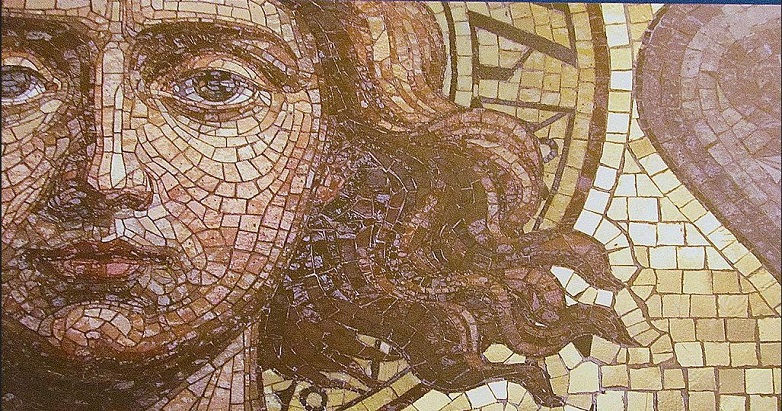
Mosaic (detail) of St. Michael the archangel, Saint Spyridon Serbian orthodox Church, Trieste, Wikimedia Commons
The Bible says that humankind is made in the image of God. What about angels? Throughout the Bible, they are called “the sons of God.” (1 Pet. 3:19–20; 2 Pet. 2:4; Jude 6; Job 1:6; 2:1; 38:7). We know that a son or a daughter is made in the image of his or her father. So aren’t angels made in God’s image too? What are angels really like, and how do we relate to them?
I normally blog about topics on gender relations, but here I want to explore how humans and angels relate to each other. To do that, I’ll try to unpack the Bible’s portrayal of various angelic roles and capabilities. Some of these are obvious. Others may be surprising!
Angels as messengers and guardians
Angels are messengers to us from God; the Greek word angelos means one who brings a message. Gabriel’s announcement to Mary of Jesus’ coming birth (Luke 1: 26-33) is probably the most famous example of an angel in this role, but there are many others in Scripture.
Another common perception of angels is that of the guardian angel, described in Psalm 91: 11-12: “For God will command his angels concerning you to guard you in all your ways; they will lift you up in their hands, so that you will not strike your foot against a stone.” There is abundant scriptural evidence of angels’ role as protectors of humankind (Matt 18:10, Acts 12:15, Acts 5:17-20).
But is there more to angels than their conspicuous roles as guardians and messengers?
A study of Scripture suggests that there is.
Angels as co-creators with God
Have you ever noticed that when God announces what he is creating in the first five days of creation, he says,“Let there be” x thing – light, water, animals, etc. But on day six, when God makes people, he says: “Let us make humankind in our image, according to our likeness” (Gen. 1:26). With these words, God is explicit that the creation of humankind, in contrast to other created things, is a joint effort he and others facilitate. The original author of Genesis (probably Moses) and its Jewish hearers would have understood the “others” to be the heavenly, angelic court.
But to what extent did angels participate in our creation? Did they help design us? Did they praise and encourage God in his handiwork? Who knows exactly.
We often reduce God’s communal exhortation to create humankind “in our image, according to our likeness” to a singular “in his image, in his likeness,” as we emphasize how human beings mirror God. While that’s absolutely true, the actual language of the text invites us to consider the others involved in our creation. We are like God, but we are also like the angels.
Angels as rebels against God
A bit later in Genesis, a personal encounter between an angel and a human results in the Fall: the serpent deceives Eve, and she sins. The text in Genesis 3 does not refer to the serpent as Satan or as a fallen angel; however, other verses in the Bible name Satan as the serpent who deceives humankind, confirming that the two are one and the same, and describe Satan leading an angelic rebellion in heaven (Rev. 12:9, Rev. 20:2).
The Book of Revelation is an important resource here. While it is difficult to peg some of the events described in Revelation to a historical timeline, chapter 12 describes a war in heaven that seems to have occurred before the Fall. Michael and his angels battle against a dragon (later defined as Satan) and his angels, casting them out of heaven. The metaphor is that of a dragon’s tail sweeping a third of heaven’s stars down to the earth. These passages suggest that a third of the angels, known as fallen angels or demons, fell with Satan. Michael leads the remaining holy angels (a comforting majority!). The Bible elsewhere refers to Michael as a “chief prince,” or archangel, and the protector of Israel (Dan. 10:13, 12:1, Jude 1:9).
Rev. 20:1-3 speaks more on the interaction between holy and fallen angels, but some details are hard to understand: “Then I saw an angel coming down from heaven…He seized the dragon, that ancient serpent, who is the Devil and Satan, and bound him for a thousand years, and threw him into the pit, and locked and sealed it over him, so that he would deceive the nations no more, until the thousand years were ended.”
Why rebel against God?
The Book of Revelation indicates that Satan is the one who leads the world astray, who rebels against God and is cast out of heaven accordingly. But why rebel against God?
The Old Testament prophets drop some clues.
When Isaiah prophesies the fall of the wicked King of Bablylon (14: 12-15), he seems to speak of Satan as described in the passages from Revelation cited above. I’ve highlighted words and phrases below that are common to both passages:
“How you have fallen from heaven,
morning star, son of the dawn!
You have been cast down to the earth,
you who once laid low the nations!
You said in your heart,
‘I will ascend to the heavens;
I will raise my throne
above the stars of God;
I will sit enthroned on the mount of assembly,
on the utmost heights of Mount Zaphon.
I will ascend above the tops of the clouds;
I will make myself like the Most High.’
But you are brought down to the realm of the dead,
to the depths of the pit.”
Given the commonalities, it’s difficult not to read these verses in Isaiah as a dual prophecy against both the earthly king of Isaiah’s time and Satan.
Moreover, Jesus himself uses similar language to describe Satan in Luke 10: “Jesus told them: ‘I saw Satan fall from heaven like a flash of lightning.’ ” Again, we have the themes of light/stars and an expulsion from heaven. In Isaiah, the phrase “morning star” is also translated as Lucifer, one of Satan’s names.
We can thus infer a bit about the “why” of Satan’s rebellion collectively from the Biblical passages of Isaiah, Revelation, Luke, and others. Evidently he was originally good but, in his unchecked pride, desired to make himself like God and became wicked.
Angels as fallen procreators
This angelic role is more a sub-category of “Angels as rebels against God”, but I mention it separately due to its interesting implications. Note these passages in Genesis 6:
“When human beings began to increase in number on the earth and daughters were born to them, the sons of God saw that the daughters of humans were beautiful, and they married any of them they chose. Then the Lord said, ‘My Spirit will not remain in humans forever, for they are corrupt’….. The Nephilim were on the earth in those days – and also afterward – when the sons of God went to the daughters of humans and had children by them. They were the mighty men of old times, men of renown. (1-4)
Most scholars believe that the “sons of God” referred to here are angels, and that is the traditional Jewish view. We also see that interpretation in the Epistle of Jude, where Jesus’ brother indicates that the “sons of God” from Genesis 6 are fallen angels:
“And the angels who did not keep their positions of authority but abandoned their proper dwelling – these he [God] has kept in darkness, bound with everlasting chains for judgment on the great Day. In a similar way, Sodom and Gomorrah and the surrounding towns gave themselves up to sexual immorality and perversion.” (Jude 1: 6-7)
By connecting Sodom and Gomorrah’s sexual immorality to that of the angels who “abandoned” the heavens, Jude is almost certainly referring to the “sons of God” (now bound in “everlasting chains”) who sinfully abandoned their natural, heavenly estate to mate with human women on earth. This interpretation of Genesis 6 is even more explicitly conveyed in the Book of Enoch, which Jude also quotes from. Although the Book of Enoch is apocryphal, based on Jude’s references, it seems to have been authoritative among Jews during Jesus’ time, and Jesus himself quoted from it.
Interestingly, the story of Sodom and Gomorrah (Gen. 19) reiterates that angels and humans can technically have sex, as a mob tries to rape Lot’s angelic visitors.
Thus we see that both angels and humans have historically initiated this kind of inter-sexual activity and that when it happens (or is attempted), the circumstances are always sinful. This point may seem sordid, but it’s fair to consider if we’re going to honestly ask, “what are angels really like?” in their relational context with humans.
But what is the meaning of angels’ sexual / procreative capabilities beyond serving as a stage for sin?
In the natural world, only species that are extremely close in their genetic material are capable of reproducing together. That humans and angels can indicates how proximal we are. I wonder what kind of relationships will be possible between angels and humans in the resurrected, perfected world? What kinds of things (or perhaps even beings?) will we create together?
Jude indicates that the angels’ sexual immorality stems from their disrespect of sacred boundaries between heaven and earth. But in the resurrection, the context changes: heaven is brought to earth, the two are united, the boundaries are gone! Will the erasure of borders between heaven and earth permit relationships between human and angels that are currently forbidden?
Perhaps angels’ procreative capabilities can be redeemed in the age to come.
Angels as unique persons
So what are angels really like? They are without sin, created by God, and dedicated to God. Yet as holy and heavenly as they are, their activities are often bound up in ours. They have their own individual names, personalities, desires, and powers. They are worshipful, faithful, warlike, humble, musical, creative, protective, and mighty. And we can actually ask for their help in our daily struggles, as we might ask the help of a trusted friend who is close to God. I conclude with the Catholic prayer to St. Michael:
St. Michael the Archangel,
defend us in battle.
Be our defense against the wickedness
and snares of the Devil.
May God rebuke him, we humbly pray,
and do thou, O Prince of the heavenly hosts,
by the power of God,
thrust into hell Satan,
and all the evil spirits,
who prowl about the world
seeking the ruin of souls.
Amen.
Previous Post

July 9, 2024
On Sex, Evangelicals Need to Get Real
Next Post

February 3, 2025 Jeff Taylor & the Cruelty of Unrepentant Priests
Recent Comments
"Hi, I see that something you sent over awhile back was automatically put in the ..."
"Hi Talley. It's been 18 days since I replied to this. Is there a reason ..."
"You don't need to read others' comments on my posts on this topic to know ..."
"Thank you for your response however you saying that I won't find wide support for ..."
Browse Our Archives
Select a Category ACNA angels Anglican Communion bliblical womanhood Christian dating complementarianism ESV female submission feminism Gender love marriage patriarchy prayer Resurrection sexual abuse sexual ethics Sexuality singleness the Fall Uncategorized
Select a Month October 2026 August 2026 June 2026 April 2026 February 2026 December 2025 November 2025 August 2025 July 2025 May 2025 March 2025 February 2025 October 2024 July 2024 June 2024 April 2024 March 2024 February 2024 December 2023 October 2023 September 2023 July 2023 June 2023 May 2023 April 2023 March 2023 February 2023 January 2023 December 2022 November 2022 October 2022 September 2022 August 2022
TAKE THE
Religious Wisdom Quiz
Who was the mother of Samuel?
Select your answer to see how you score.
Ruth Hannah Rebekah Deborah
Related posts from Flesh of My Flesh
Getting Comfortable in the Company of Angels
Jeff Taylor & the Cruelty of Unrepentant Priests

On Sex, Evangelicals Need to Get Real

The Jeff Taylor Scandal: Bad Theology & Sexual...
TRENDING AT PATHEOS Evangelical

In one sense walking into Westminster Abbey is like walking down the...

'Super Scam Me' Exposes AI Jon Bon Jovi...
Leslie Pickett believed she was in a relationship with Jon Bon Jovi....

The Brazilian Remake of Kendricks' 'Flywheel' Opens in...
“Flywheel,” the story that launched the Kendrick Brothers’ filmmaking career is getting...

The Dangers of Gradual Accommodation (Winking at Sin)
Recently, the “law of gradualness” resurfaced during the opening of a weeklong,...

The Iron Gates and the Lion of the...
Yesterday, I didn't finish my report about, well, yesterday. So I'll...

The Image: On the Horror of Capitalism and...
The Image Then went the Pharisees, and took counsel how they might...
view all Evangelical blogs
What Are Your Thoughts?leave a comment
Ad-Free & Subscriber Log-In Subscription Support
- About Us
- 2026 Calendar
- Videos
- Podcasts
- Library of World Religions
- Faith In Media Tracker
- Advertise With Us
- Write for Us
- Privacy Policy
- Terms of Service
- Do Not Sell My Data
- Contact Us
- Radiant Digital
- Manage Newsletter Subscriptions
- Unsubscribe From Notifications
- Sitemap
Copyright 2008-2026, Patheos. All rights reserved.
Subscription Support Ad-Free & Subscriber Log-In
Follow Patheos