
BuddhistCatholicContemplativeEvangelicalGeneral ChristianHinduJewishLatter-day SaintMuslimNew VisionsProgressive Christian
Beliefs
- Buddhist
- Catholic
- Contemplative
- Evangelical
- General Christian
- Hindu
- Jewish
- Latter-day Saint
- More Voices
- Muslim
- New Visions
- Pagan
- Progressive Christian
Topics
- Religion News
- Food and Religion
- Sports and Religion
- Religious Art
- Religious Music and Entertainment
- Religious Events
- History and Religion
- Style and Religion
- Politics and Religion
- Women in Religion
- Recreation Outdoors and Religion
- Business Finance and Religion
- Careers Workplace and Religion
- Education and Religion
- Family Parenting and Religion
- Health Fitness and Religion
- Home and Religion
- Relationships and Religion
- Technology and Religion
- Travel and Religion
Columnists
- Buddhist Columnists
- Business Finance and Religion Columnists
- Careers Workplace and Religion Columnists
- Catholic Columnists
- Contemplative Columnists
- Education and Religion Columnists
- Evangelists Columnists
- Family Parenting and Religion Columnists
- General Christian Columnists
- Health Fitness and Religion Columnists
- Hindu Columnists
- History and Religion Columnists
- Home and Religion Columnists
- Jewish Columnists
- More Voices Columnists
- Latter Day Columnists
- Muslim Columnists
- New Visions Columnists
- Nonreligious Columnists
- Pagan Columnists
- Politics and Religion Columnists
- Progressive Columnists
- Recreation Outdoors and Religion Columnists
- Relationships and Religion Columnists
- Religion News Columnists
- Religious Art Columnists
- Religious Events Columnists
- Religious Music and Entertainment Columnists
- Sports and Religion Columnists
- Style and Religion Columnists
- Technology and Religion Columnists
- Travel and Religion Columnists
- Women in Religion Columnists
Resource Library
- 2026 Calendar
- Library of World Religions
- The 100 Most Holy Places on Earth
- Patheos Answers
- Podcasts
- Videos
- Faith Leaders Database
- Anglican Episcopalian
- Bahai
- Baptist
- Buddhism
- Christianity
- Confucianism
- Eastern Orthodoxy
- Hinduism
- Holiness and Pentecostal
- ISKCON
- Islam
- Judaism
- Lutheran
- Methodist
- The Church of Jesus Christ of Latter-day Saints
- New Age
- Paganism
- Presbytarian and Reformed
- Protestantism
- Religion Behind the Scenes
- Roman Catholic
- Scientology
- Shia Islam
- Sikhism
- Sufism
- Sunni Islam
- Taoism
- Zen
- See all religions
Research Tools
 Ad-Free & Subscriber Log-In Subscription Support
Ad-Free & Subscriber Log-In Subscription Support
Follow Patheos 

- Trending:
- Forgiveness
- |
- Marriage
- |
- Consciousness
- |
- Death Penalty
- |
- Election
- |
- Halloween

- Home
- Pagan
- I’m Not Like a Regular Wiccan. I’m a Cool Wiccan.
I’m Not Like a Regular Wiccan. I’m a Cool Wiccan.
Last updated on: April 21, 2022 at 10:25 pm by Thumper Forge
I’m Not Like a Regular Wiccan. I’m a Cool Wiccan. 2022-04-21T22:25:34+06:00 Thumper Forge
Patheos Explore the world's faith through different perspectives on religion and spirituality! Patheos has the views of the prevalent religions and spiritualities of the world.

“Do you want a little bit? Because if you’re going to drink I’d rather you do it in the house.” (Image courtesy of Victoria Borodinova via Pixabay.)
So remember back in February, when I tweeted about Pagans freaking out over love spells, and it got shared and reposted all over the place, and I was Internet Famous for like 20 whole seconds? The tweet eventually landed on a Pagan memes page, where it sparked a lot of commentary — mainly from people who kept trying to correct “Pagan” to “Wiccan.”
One lady in particular just latched on and wouldn’t let it drop. I’m normally not big on acknowledging negative comments — the worst review being no review — but after her third or fourth “NOOOOO, THIS MEME IS ABOUT WICCANS,” I was like, “I wrote the tweet, hon. If I’d meant Wiccans, I would’ve said so.” And then I guess she had to go to work or take a phone call or something, because she never wrote back.
Alas, the floodgates had been opened, and a roving band of Pagans who get triggered whenever they see the word “Wicca” entered the chat.

“On Wednesdays, we wear pink.” (Image courtesy of Victoria Borodinova via Pixabay.)
One guy posted a damn dissertation, haranguing the Threefold Law and anyone who dared follow it. When asked by someone where his resentments were coming from, he replied, “This isn’t a Wiccan page. Not everyone follows and obeys the Law of Three, but Wiccans are always hurling it onto others whenever someone posts a meme or poses a question even hinting at a love spell.”
I had stepped away from participating in the conversation, since my hands were too greasy from all the popcorn I was eating to type. But it was gently explained to him that he was the one dragging Wicca and the Threefold Law into the discussion in the first place, and that maybe it wasn’t kind to make sweeping generalizations about a practice to which he did not adhere.
At which point he was like, “Plot twist. I’m Wiccan. And I’m the only one who doesn’t blah blah mergh blee blah etc.”
I stopped paying attention as soon as he said he was the only one. Because I realized that the real issue at hand was not Wiccans, or even Wicca in general: The real issue was terminal uniqueness.

“So you agree? You think you’re really pretty?” (Image courtesy of Victoria Borodinova via Pixabay.)
Within 12-Step Recovery, terminal uniqueness is the belief that one’s personal experience with addiction is inherently different from everyone else’s, and because of that, other recovering addicts aren’t able to understand what one has gone through (or is going through). Terminal uniqueness is characterized by comparison, overgeneralizing, one-upmanship, attention seeking, and a penchant for off-the-wall demands or exemptions.
All of which I was very guilty of when I first quit drinking, but two things eradicated those defects from my system.
The first occurred when I’d been sober for maybe two weeks, and someone in a meeting said, “My disease talks to me.” And that blew my mind, because I’d always felt like my own alcoholism had a sinister, persuasive voice, which seemed far too schizophrenic to ever mention to anyone. I told a friend at another meeting about this, and she was like, “Oh, yeah, definitely. I call my addiction Audrey II, because it keeps trying to talk me into feeding it.”

“That’s why her hair is so big. It’s full of secrets.” (Image courtesy of Victoria Borodinova via Pixabay.)
So basically, early on in recovery, I learned that whatever may have happened in my drunken history, I was not alone in the experience. But the second thing, which went down a few years later, just clinched the solidarity.
I was in a meeting, and someone shared about how they once drank hairspray. And the next person to share said, “I know I’m an alcoholic, because all I can think about right now is what hairspray would taste like.” And myself and the 20 other alcoholics in the room went, “OH, MY GOD, ME TOO,” in unison.
Not a one of us was as freakish as we may have wanted to be.
Outside of recovery circles, terminal uniqueness is similar to — and often used interchangeably with — the concept of personal exceptionalism, which is when someone believes themself to be unusually extraordinary, and therefore superior to the people around them. Like, you know how every Billy Joel song is about how he’s just a little bit better than you? That’s personal exceptionalism.
It’s also important to note that terminal uniqueness and/or personal exceptionalism is not a disorder, like narcissism or sociopathy: It’s more of a personality quirk, or, in some cases, a defense mechanism.

“Whatever. I’m getting cheese fries.” (Image courtesy of Victoria Borodinova via Pixabay.)
For instance, in the incident described at the beginning of this post, we have someone presenting himself as different than those other Wiccans. One might logically assume that he’d want stand up for his fellow Wiccans (including the Wiccan who wrote the tweet), or at the very least attempt to correct some of the misinformation surrounding his religion. But instead, he chose to set himself apart. Which may seem vaguely traitorous, but it makes sense if you think about it in terms of him wanting to feel special and better about himself.
Terminal uniqueness tends to run rampant in the greater Pagan community, I think mainly because we don’t have the language to address it (which is a big part of why I’m writing about it). But when left unchecked, it creates power differentials that are impossible to negotiate.
I once met someone who desperately wanted to be Gardnerian, but who had some hard limits around ritual nudity. I tried to explain that nudity wasn’t something she needed to worry about at the moment, and that it would be at least a year before initiation was an option, so she had plenty of time to get comfortable with the idea, but she had a solution ready to go: “Why don’t you just initiate me, and I’ll wear a robe while everyone else is skyclad?”
And just… no. That’s not a level playing field. Like, have you ever read the Apprentice Adept series by Piers Anthony? If not, the setting is a society divided between Citizens and serfs: Citizens control all the wealth and have the luxury of wearing clothes, while serfs own nothing and have to remain nude at all times. In a clothing-optional situation, power will drift towards whoever is dressed… because that person is above their peers.

“I’m sorry that people are so jealous of me.” (Image courtesy of Victoria Borodinova via Pixabay.)
And y’all, I’ve got nothing but love for my Alexandrian siblings, but think about all those publicity photos of Alex Sanders dressed in fancy robes while his coven bops around naked. Even if you knew nothing about Witchcraft, there would be no doubt in your mind as to who was in charge.
Here’s another situation in which I’ve found myself, with which you may also be familiar. Someone posted to a Witchcraft group needing help with a ritual, but terminal uniqueness was on the table, and any suggestion offered was immediately shot down as unfeasible:
“I want to cast this spell, but I can’t burn incense in my apartment.”
“No problem! You can use an aroma jar instead.”
“I don’t have an aroma jar.”
“In which case you can simmer herbs on your stove.”
“I don’t know how to use my stove.”
“Okay, so just put a bowl of essential oil on your altar to represent the incense.”
“I don’t have a bowl.”

“Get in, loser. We’re going shopping.” (Image courtesy of Victoria Borodinova via Pixabay.)
“I mean, I don’t know what else to tell you.”
“Why aren’t you helping me?”
And that’s another side of terminal uniqueness — I don’t think this person ever intended to cast a spell. Their goal was to show how incapable they were, so that someone else would take pity and do the work on their behalf. Again, it’s a move to create a power differential. And a very passive-aggressive one at that.
The biggest frustration here is that there’s not much we can do about it. Just like an addict has to want to get sober before recovery can help them, the terminally unique individual has to want to change the way they’re interacting with the rest of the world. So really, the best approach we can take is to keep our boundaries firm, and to not relent when someone expects us to change the policies and procedures of our traditions to accommodate their outlandish stipulations.
But we can also identify common ground and shared experiences, and make sure those facets are visible for others to see. If more of us do that, maybe the guy at the start of all this will meet some Wiccans who don’t fit the stereotype he’s constructed, and he’ll find that there’s more power in being part of a greater whole than there is in being too different to function.

“I wish I could bake a cake filled with rainbows and smiles, and everyone would eat and be happy.” (Image courtesy of Victoria Borodinova via Pixabay.)
Plus it never hurts to spot-check our own behavior to make sure we’re not slipping into an exceptionalist mindset. Because here’s the crux of the matter: Terminal uniqueness gets in the way of spirituality. We can’t become who we’re supposed to be if we’re mired in thinking that we’re better than everyone else.
And ultimately, we can’t control anyone else, and we can’t pull anyone away from terminal uniqueness if they’re determined to stay in the middle of it. But we can continue to grow, and we can set an example worth following. And if others decide to come along with us on our journey, we can be grateful that their uniqueness is totally compatible with ours.
More discord, you say? But of course! Follow Fivefold Law on Twitter, Instagram, Facebook, and Zazzle.
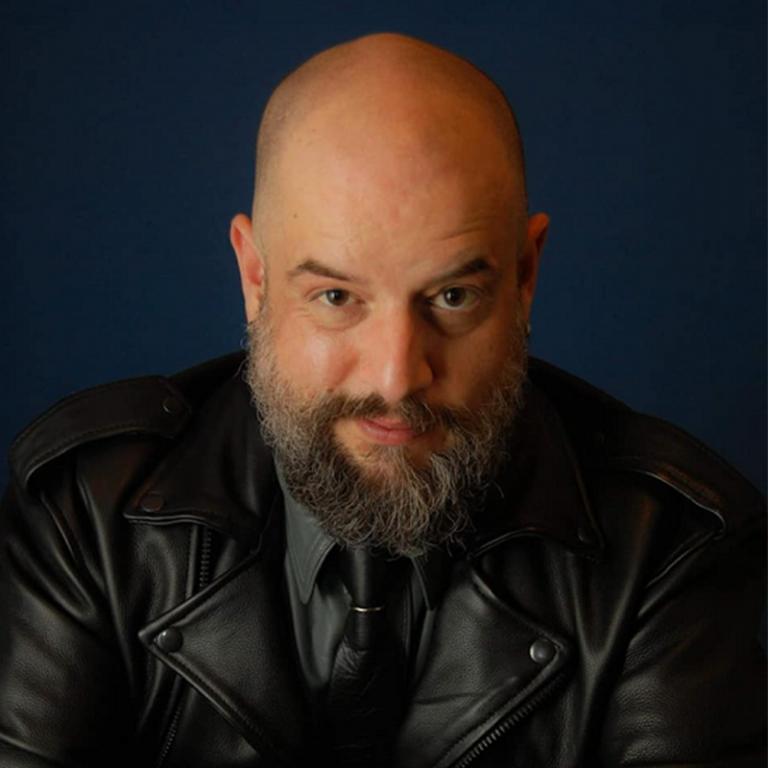
About Thumper
Thumper Marjorie Splitfoot Forge is a Gardnerian High Priest, an initiate of the Minoan Brotherhood, an Episkopos of the Dorothy Clutterbuck Memorial Cabal of Laverna Discordia, a recovering alcoholic, and a notary public from Houston, TX. You can read more about the author here.
Previous Post

March 24, 2022
Fertility Symbols and the Witch Who Won't Stop Hoarding Them
Next Post

March 29, 2022 May the Freak Occurrences Be Ever in Your Favor
Browse Our Archives
Select a Category 12-Step Recovery Chaos Magic Discordianism Divination Gender and Sexual Minorities Greek Mythology Neurodiversity Pagan Saints Uncategorized Wicca Witch This Not That Witchcraft
Select a Month September 2026 May 2026 April 2026 February 2026 January 2026 October 2025 September 2025 August 2025 May 2025 March 2025 February 2025 January 2025 November 2024 October 2024 August 2024 July 2024 June 2024 May 2024 April 2024 March 2024 February 2024 January 2024 December 2023 November 2023 October 2023 September 2023 July 2023 June 2023 May 2023 March 2023 February 2023 January 2023 December 2022 November 2022 August 2022 July 2022 June 2022 May 2022 April 2022 March 2022 February 2022 January 2022 December 2021 November 2021 October 2021 September 2021 August 2021 July 2021 June 2021 May 2021 April 2021 March 2021 February 2021 January 2021
Follow Us!
TAKE THE
Religious Wisdom Quiz
What separated the Holy Place from the Most Holy Place in the Tabernacle?
Select your answer to see how you score.
A bronze door A curtain (veil) An incense altar A stone wall
Related posts from Fivefold Law

Zach Cregger Thinks I'm a Parasite: A Weaponized...
Lucky Thirteen and Not Thinking About Drinking


Zoinks, Ruh-roh, Jinkies, Jeepers, Wicca
TRENDING AT PATHEOS Pagan

'Super Scam Me' Exposes AI Jon Bon Jovi...
Leslie Pickett believed she was in a relationship with Jon Bon Jovi....

The Brazilian Remake of Kendricks' 'Flywheel' Opens in...
“Flywheel,” the story that launched the Kendrick Brothers’ filmmaking career is getting...

The Dangers of Gradual Accommodation (Winking at Sin)
Recently, the “law of gradualness” resurfaced during the opening of a weeklong,...

The Iron Gates and the Lion of the...
Yesterday, I didn't finish my report about, well, yesterday. So I'll...

The Image: On the Horror of Capitalism and...
The Image Then went the Pharisees, and took counsel how they might...

We are approaching the date of our new American national holiday: October...
view all Pagan blogs
Ad-Free & Subscriber Log-In Subscription Support
- About Us
- 2026 Calendar
- Videos
- Podcasts
- Library of World Religions
- Faith In Media Tracker
- Advertise With Us
- Write for Us
- Privacy Policy
- Terms of Service
- Do Not Sell My Data
- Contact Us
- Radiant Digital
- Manage Newsletter Subscriptions
- Unsubscribe From Notifications
- Sitemap
Copyright 2008-2026, Patheos. All rights reserved.
Subscription Support Ad-Free & Subscriber Log-In
Follow Patheos