
BuddhistCatholicContemplativeEvangelicalGeneral ChristianHinduJewishLatter-day SaintMuslimNew VisionsProgressive Christian
Beliefs
- Buddhist
- Catholic
- Contemplative
- Evangelical
- General Christian
- Hindu
- Jewish
- Latter-day Saint
- More Voices
- Muslim
- New Visions
- Pagan
- Progressive Christian
Topics
- Religion News
- Food and Religion
- Sports and Religion
- Religious Art
- Religious Music and Entertainment
- Religious Events
- History and Religion
- Style and Religion
- Politics and Religion
- Women in Religion
- Recreation Outdoors and Religion
- Business Finance and Religion
- Careers Workplace and Religion
- Education and Religion
- Family Parenting and Religion
- Health Fitness and Religion
- Home and Religion
- Relationships and Religion
- Technology and Religion
- Travel and Religion
Columnists
- Buddhist Columnists
- Business Finance and Religion Columnists
- Careers Workplace and Religion Columnists
- Catholic Columnists
- Contemplative Columnists
- Education and Religion Columnists
- Evangelists Columnists
- Family Parenting and Religion Columnists
- General Christian Columnists
- Health Fitness and Religion Columnists
- Hindu Columnists
- History and Religion Columnists
- Home and Religion Columnists
- Jewish Columnists
- More Voices Columnists
- Latter Day Columnists
- Muslim Columnists
- New Visions Columnists
- Nonreligious Columnists
- Pagan Columnists
- Politics and Religion Columnists
- Progressive Columnists
- Recreation Outdoors and Religion Columnists
- Relationships and Religion Columnists
- Religion News Columnists
- Religious Art Columnists
- Religious Events Columnists
- Religious Music and Entertainment Columnists
- Sports and Religion Columnists
- Style and Religion Columnists
- Technology and Religion Columnists
- Travel and Religion Columnists
- Women in Religion Columnists
Resource Library
- 2026 Calendar
- Library of World Religions
- The 100 Most Holy Places on Earth
- Patheos Answers
- Podcasts
- Videos
- Faith Leaders Database
- Anglican Episcopalian
- Bahai
- Baptist
- Buddhism
- Christianity
- Confucianism
- Eastern Orthodoxy
- Hinduism
- Holiness and Pentecostal
- ISKCON
- Islam
- Judaism
- Lutheran
- Methodist
- The Church of Jesus Christ of Latter-day Saints
- New Age
- Paganism
- Presbytarian and Reformed
- Protestantism
- Religion Behind the Scenes
- Roman Catholic
- Scientology
- Shia Islam
- Sikhism
- Sufism
- Sunni Islam
- Taoism
- Zen
- See all religions
Research Tools
 Ad-Free & Subscriber Log-In Subscription Support
Ad-Free & Subscriber Log-In Subscription Support
Follow Patheos 

- Trending:
- Forgiveness
- |
- Marriage
- |
- Consciousness
- |
- Death Penalty
- |
- Election
- |
- Halloween

- Home
- Pagan
- Spongy Moths, Tramps & Thieves
Spongy Moths, Tramps & Thieves
Last updated on: March 16, 2022 at 3:29 am by Thumper Forge
Spongy Moths, Tramps & Thieves 2022-03-16T03:29:07+06:00 Thumper Forge
Patheos Explore the world's faith through different perspectives on religion and spirituality! Patheos has the views of the prevalent religions and spiritualities of the world.
As of March 2, the Entomological Society of America (a private, non-profit organization that is almost entirely funded by membership dues and publication subscriptions; this will be important in a second) officially adopted “spongy moth” as the new common name of Lymantria dispar, the insect formerly known as the gypsy moth.
And then, predictably, a whole bunch of people who’d never spent a day of their lives thinking about moths got all butthurt about it.
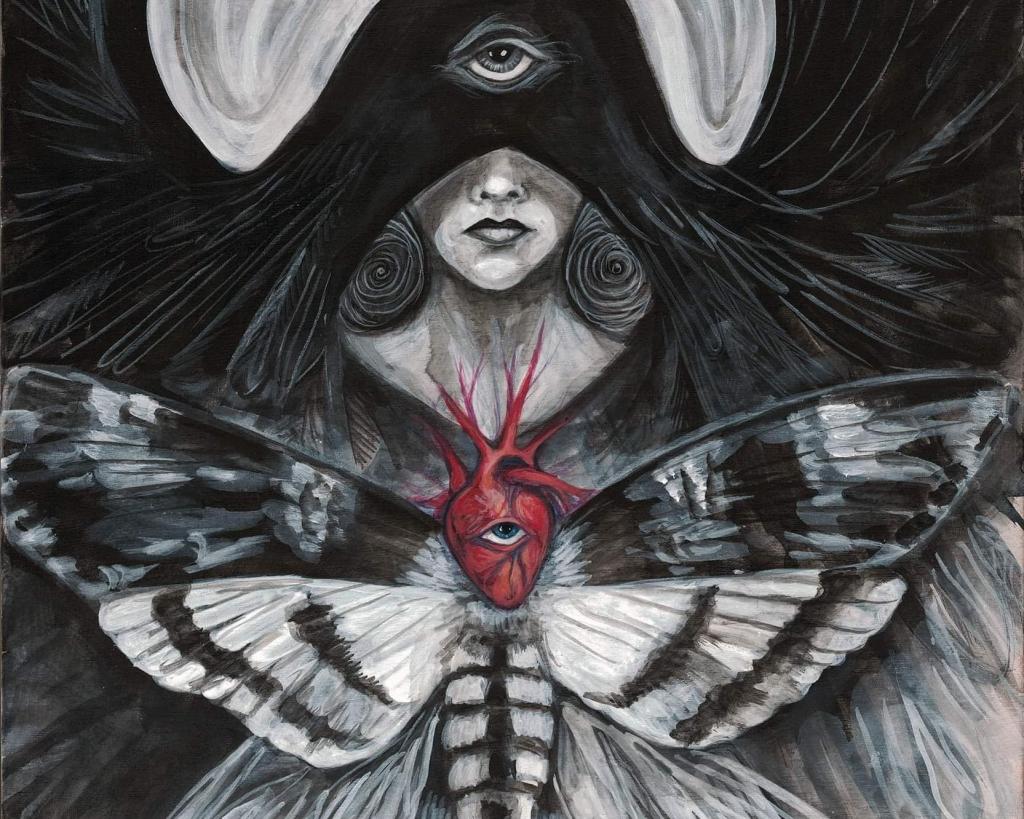
A segment of Witch Essence: Seer by Laura Tempest Zakroff, the eyes of which are not having willful ignorance today. (Reprinted with permission from the artist.)
I cruised through the comments sections of several articles about the spongy moth’s new name, and found pretty much exactly what you’d expect: lots of complaints about “cancel culture” and “woke nonsense,” along with some whining about “how many of my tax dollars were wasted on this.” (Literally none, Karen.) And, of course, there were a number of people using the word “gypsy” as a slur while demanding that marginalized communities “get over it.”
Here are my favorites, though:
“Next they will be changing the name of black walnuts, red peppers, brown sugar and Irish potatoes.”
“I want the airport changed to planeport, because it does not Port Air!”
“I insist that every single store in the world eliminate the cracker section since that’s also a racial slur.”
The general consensus amongst these yokels was that the word wasn’t a slur until two weeks ago, when the censors at Big Insect arbitrarily deemed it unacceptable. But it’s always been a pejorative, and it’s always conveyed a stereotype. Not being aware of its negative connotations doesn’t make it any less hurtful.

“Welp. We’ve had our say over moths. Time to go defend some Confederate monuments.” (Image via Pixabay.)
To understand why it’s a slur, let’s take a quick look at an extremely abbreviated history of Roma culture in Europe.
Europeans: “So, where y’all from?”
Romani: “Well, we’ve always been nomadic, but our ancestors originally inhabited northern areas of India before migrating to West Asia.”
Europeans: “So like Egypt?”
Romani: “Um… no. We are definitely not from Egypt.”
Europeans: “Yeah, you look Egyptian. We’re gonna call y’all ‘gypsies’ for short. And we’re gonna shorten that to ‘gyp,’ a verb meaning, ‘to cheat or swindle,’ which is what we assume you people do.”
Romani: “Absolutely none of that is okay.”
Europeans: “Also, we’re gonna compose a racist narrative about y’all inventing Tarot cards, just to, y’know, make them seem more exotic. And then we’re gonna condemn you as devil worshippers for using them, even though it was our idea in the first place.”
Romani: “…”
Europeans: “NO CAMPING.”
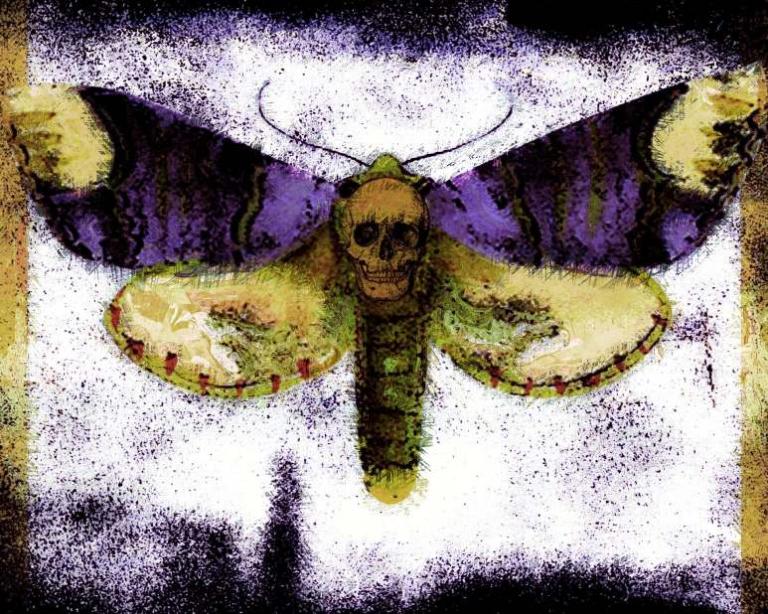
Fun Fact: The death’s-head hawkmoth squeaks when startled. This has nothing to do with the topic at hand — I just thought it was kind of neat. (Image via Public Domain Pictures.)
The spongy moth itself is native to Europe, although it was introduced to North America in 1868 by an artist, astronomer, and armchair entomologist named Étienne Léopold Trouvelot, who had the genius idea of breeding spongy moths with silk moths to establish a domestic silkworm industry in Massachusetts. He imported some Lymantria egg cases (which are spongy — hence the name) and nestled them in the trees behind his home, and of course they hatched and flew away and reproduced and went on to defoliate millions of acres of crops and woodlands.
Oops.
Since taking hold, spongy moths have spread throughout the northern and midwestern United States, with occasional infestations reported in other regions. They are currently listed as one of the 100 most invasive alien species, and the damage they cause leaves forested areas vulnerable to other pests and diseases.
Steps have been taken to curtail spongy moth populations, including quarantining and the introduction of natural predators, but nobody’s been able to eradicate them or get them fully under control. Thanks to Trouvelot, they are here to stay.
Regular, standard-issue silk moths are perfectly good as-is. And hindsight is 20/20. Should’ve stuck to astronomy, Trouvelot. (Silk Moth Emergent courtesy of Sandra Strait via Flickr.)
Now that we know a bit about spongy moths, we can process how they ended up with an ethnic slur as a name. Which is simple, really: They are unwelcome, destructive, and hard to get rid of… much like how people view the Romani.
So yeah, “gypsy moth” is a shitty name, and it always has been. And semi-literate diatribes against “wokeness” aren’t going to change that.
Speaking of, though, a common thread running through the comments was that the name change was a useless gesture. As one cynic put it, “I’m sure this will fix everything [eyeroll emoji].” But it has already had a beneficial effect: It’s brought awareness to the fact that a given word is a lot more problematic than some would care to believe, and it has caused a bunch of bigots to out themselves.
And for every Republican xenophobe having a conniption over spongy moths, there’s a sane, sensible person who reads one of those articles and goes, “Oh, wow, I did not know ‘gypsy’ was a slur. I’m not going to use it in casual conversation anymore.” And every time that happens, a little piece of oppression gets eaten away, like a spongy caterpillar happily munching on oak leaves. And that is never not a good thing.

An abstract moth to conclude this chronicled abstaction. (Image via Pixabay.)
PS: For more thoughts on the power of nomenclature, go check out The Witch’s Name by Storm Faerywolf. (He didn’t pay me to mention it or anything. It just looks like a really good read.)
More discord, you say? But of course! Follow Fivefold Law on Twitter, Instagram, Facebook, and Zazzle.
Entomological Society of America

About Thumper
Thumper Marjorie Splitfoot Forge is a Gardnerian High Priest, an initiate of the Minoan Brotherhood, an Episkopos of the Dorothy Clutterbuck Memorial Cabal of Laverna Discordia, a recovering alcoholic, and a notary public from Houston, TX. You can read more about the author here.
Previous Post

March 13, 2022
Eris Go Bragh: Discordian Omens Fnord the Win
Next Post

March 17, 2022 Nobody Expects the Irish Extrasensory Perception
Browse Our Archives
Select a Category 12-Step Recovery Chaos Magic Discordianism Divination Gender and Sexual Minorities Greek Mythology Neurodiversity Pagan Saints Uncategorized Wicca Witch This Not That Witchcraft
Select a Month September 2026 May 2026 April 2026 February 2026 January 2026 October 2025 September 2025 August 2025 May 2025 March 2025 February 2025 January 2025 November 2024 October 2024 August 2024 July 2024 June 2024 May 2024 April 2024 March 2024 February 2024 January 2024 December 2023 November 2023 October 2023 September 2023 July 2023 June 2023 May 2023 March 2023 February 2023 January 2023 December 2022 November 2022 August 2022 July 2022 June 2022 May 2022 April 2022 March 2022 February 2022 January 2022 December 2021 November 2021 October 2021 September 2021 August 2021 July 2021 June 2021 May 2021 April 2021 March 2021 February 2021 January 2021
Follow Us!
TAKE THE
Religious Wisdom Quiz
What is the main symbol of Christianity?
Select your answer to see how you score.
Rainbow Olive branch The cross Lion
Related posts from Fivefold Law

The Keys to Witchcraft: A Post-Mystic South Misadventure
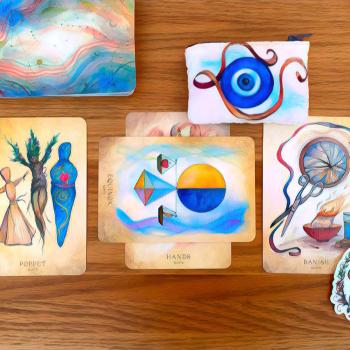
Anatomy of a Witch Oracle: A Neurodiverse Review
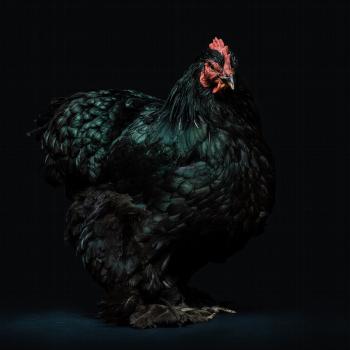
Persephone and the Poultry of the Night

And Then Devin Hunter Called Me a Sell-Out,...
TRENDING AT PATHEOS Pagan

Methodist Central Hall and Westminster Abbey
Situated on the same square is Methodist Central Hall and Westminster Abbey. ...

57th Dove Awards Honor Dolly Parton, Crown New...
On gospel music’s biggest night, the 57th annual GMA Dove Awards honored...

The First Eucharistic Controversy: Christ’s Real Presence
For Catholics, the Eucharist is the source and summit of the Christian...

What a Stop Sign Can Teach Us About...
How to Make a Decision When You Can't Hear God Main point:...

Archdiocese Hosts Military Marriage Retreat in Germany
RASTATT, Germany — The transient military lifestyle, with its frequent deployments and...

Nearly every morning, I make the drive to Detroit with my high-school-age...
view all Pagan blogs
Ad-Free & Subscriber Log-In Subscription Support
- About Us
- 2026 Calendar
- Videos
- Podcasts
- Library of World Religions
- Faith In Media Tracker
- Advertise With Us
- Write for Us
- Privacy Policy
- Terms of Service
- Do Not Sell My Data
- Contact Us
- Radiant Digital
- Manage Newsletter Subscriptions
- Unsubscribe From Notifications
- Sitemap
Copyright 2008-2026, Patheos. All rights reserved.
Subscription Support Ad-Free & Subscriber Log-In
Follow Patheos