
BuddhistCatholicContemplativeEvangelicalGeneral ChristianHinduJewishLatter-day SaintMuslimNew VisionsProgressive Christian
Beliefs
- Buddhist
- Catholic
- Contemplative
- Evangelical
- General Christian
- Hindu
- Jewish
- Latter-day Saint
- More Voices
- Muslim
- New Visions
- Pagan
- Progressive Christian
Topics
- Religion News
- Food and Religion
- Sports and Religion
- Religious Art
- Religious Music and Entertainment
- Religious Events
- History and Religion
- Style and Religion
- Politics and Religion
- Women in Religion
- Recreation Outdoors and Religion
- Business Finance and Religion
- Careers Workplace and Religion
- Education and Religion
- Family Parenting and Religion
- Health Fitness and Religion
- Home and Religion
- Relationships and Religion
- Technology and Religion
- Travel and Religion
Columnists
- Buddhist Columnists
- Business Finance and Religion Columnists
- Careers Workplace and Religion Columnists
- Catholic Columnists
- Contemplative Columnists
- Education and Religion Columnists
- Evangelists Columnists
- Family Parenting and Religion Columnists
- General Christian Columnists
- Health Fitness and Religion Columnists
- Hindu Columnists
- History and Religion Columnists
- Home and Religion Columnists
- Jewish Columnists
- More Voices Columnists
- Latter Day Columnists
- Muslim Columnists
- New Visions Columnists
- Nonreligious Columnists
- Pagan Columnists
- Politics and Religion Columnists
- Progressive Columnists
- Recreation Outdoors and Religion Columnists
- Relationships and Religion Columnists
- Religion News Columnists
- Religious Art Columnists
- Religious Events Columnists
- Religious Music and Entertainment Columnists
- Sports and Religion Columnists
- Style and Religion Columnists
- Technology and Religion Columnists
- Travel and Religion Columnists
- Women in Religion Columnists
Resource Library
- 2026 Calendar
- Library of World Religions
- The 100 Most Holy Places on Earth
- Patheos Answers
- Podcasts
- Videos
- Faith Leaders Database
- Anglican Episcopalian
- Bahai
- Baptist
- Buddhism
- Christianity
- Confucianism
- Eastern Orthodoxy
- Hinduism
- Holiness and Pentecostal
- ISKCON
- Islam
- Judaism
- Lutheran
- Methodist
- The Church of Jesus Christ of Latter-day Saints
- New Age
- Paganism
- Presbytarian and Reformed
- Protestantism
- Religion Behind the Scenes
- Roman Catholic
- Scientology
- Shia Islam
- Sikhism
- Sufism
- Sunni Islam
- Taoism
- Zen
- See all religions
Research Tools
 Ad-Free & Subscriber Log-In Subscription Support
Ad-Free & Subscriber Log-In Subscription Support
Follow Patheos 

- Trending:
- Forgiveness
- |
- Marriage
- |
- Consciousness
- |
- Death Penalty
- |
- Election
- |
- Halloween

-
Articles
- Home
- Religious Music & Entertainment
- Sidney Poitier marathon: Guess Who’s Coming to Dinner (1967)
Sidney Poitier marathon: Guess Who’s Coming to Dinner (1967)
Last updated on: February 12, 2021 at 5:00 am by Peter T. Chattaway
Sidney Poitier marathon: Guess Who’s Coming to Dinner (1967) 2021-02-06T07:48:11-08:00 Peter T. Chattaway
Patheos Explore the world's faith through different perspectives on religion and spirituality! Patheos has the views of the prevalent religions and spiritualities of the world.
The latest in a month-long series of re-posts from my Facebook marathon in April 2020.
–
Sidney Poitier marathon part 13 (1967c):
After flirting with interracial romance in 1965’s A Patch of Blue and 1967’s To Sir with Love, Sidney Poitier finally Goes There in Guess Who’s Coming to Dinner (1967), the film in which a black man and a white woman shock their parents by falling in love and getting engaged.
Rotten Tomatoes says the film is “more well-intentioned than insightful”, and that about sums it up. But while the film does have its problems, it’s an interesting time capsule, and what leaps out at the viewer now is how the statements the characters make regarding the future of social progress do or don’t coincide with what has actually happened over the past 54 years.
For example, Poitier and his fiancee meet in Hawaii, and he says she believes that all of their children will be president some day — and, well, it turns out this movie came out just six years after Barack Obama, himself the child of a black man and a white woman, was born in Hawaii.
Later, the woman’s father, who is played by Spencer Tracy, notes that interracial marriage is against the law in 16 or 17 states. That line of dialogue was already outdated before the movie had even come out: the film finished shooting in May 1967, and in June — just two or three weeks later — the Supreme Court struck down all anti-miscegenation laws in Loving v. Virginia. (The film did not come to theatres until December, six months after the Supreme Court ruling.)
The Tracy character also says that the social change the lovers represent might come about in 50 years or 100 years but not in his lifetime. As it happens, Tracy himself died just two days before the Loving v. Virginia ruling — so he not only didn’t get to see the social change, he also didn’t get to see what sort of reception the movie got! — but the “50 years” line got me thinking about how the film’s 50th anniversary was the year in which Obama finished his second term, nine years after he was first elected.
Other predictions took a little longer to come true, and some statements don’t resonate today the way they might have when the film came out. To the former point, Tracy says Willie Mays could be mayor of San Francisco now if he wanted to, but San Francisco did not elect its first non-white mayor until 1996 (when Willie Brown — another Willie! — got the job). And to the latter point, Poitier chastises his father for thinking of himself as “a coloured man” rather than simply “a man”, but today’s identity politics (a term I use descriptively, not pejoratively) tend to emphasize racial, sexual and other distinctions, lest minority experience be trumped by majority-driven definitions.
As for the film itself: Once again, Poitier plays a character who is so perfect that the only way someone could object to him is if the person objected to the colour of his skin — and the film, to its credit I guess, recognizes that the Poitier character is too good to be true. After getting someone to look up some info on Poitier and hearing all about his schooling and work experience, Tracy says, “Well, I can certainly understand why he didn’t say much about himself. Who the hell would believe him?”
The entire story takes place in one day, as Poitier and his fiancee reveal to their parents that they met a couple of weeks ago and are planning to get married just a week or two later. So even without the interracial stuff, there are some pretty good reasons why someone might want to hit the pause button (not stop, just pause) on their plans: Everything is moving so quickly, they only just met, and oh, by the way, he is 14 years older than her, too (which, admittedly, his father says is a good thing because women age faster than men; make of that what you will). The fiancee is also one of those characters who is so annoyingly sure of herself that she steamrolls past anyone and everyone who might get in the way of her plans; at some point she and her perfect lover are going to have an argument about something, and she won’t know how to deal with it because, as far as this film is concerned, she has never learned how to compromise, negotiate, or see anything from another person’s point of view.
The age gap does put Poitier in an interesting position, though. He was 40 when the film came out, and his character is 37, and this makes him young enough to be part of the young, revolutionary generation, sort of (he says people like him won’t be free until his father’s generation has died out), but it also makes him old enough to appeal to the parents’ generation: He has lived long enough to have a thriving career (so there are no worries about the couple’s financial security, the way there might be if he was 23 like his bride-to-be), and he declines to have sex with his fiancee until after they are married (or at least until after he has met her parents) — though the film does make it clear that she comes from a more permissive generation and that he is okay with that (her friends lived together for two years before they got married, and Poitier smiles and wags his finger at them in mock disapproval).
But this is ultimately a movie made by and for white liberals. It is Tracy, not Poitier, who gets top billing, and it is Tracy who has the closest thing to a movie-length character arc (as Roger Ebert used to say, you can tell what a movie is about by what changes between the beginning and end, and it is Tracy who does all the changing here), and the film concludes with Tracy giving a speech that sums up all the arguments given throughout the film and where he does or doesn’t agree with them. And then the last words of the film literally consist of Tracy asking his black cook, “When the hell are we going to get some dinner?” All very genial, but the film ends on a note that lets the wealthy white elite keep their position of privilege.
A few other quick points:
— You might think that the title refers to Poitier, but when Katherine Hepburn speaks the line, she is actually referring to the imminent arrival of the Poitier character’s parents.
— This is one of those films where someone walks out onto the balcony and comments on how lovely the view is, and you spend the rest of the movie thinking it’s just a painted backdrop.
— I very much appreciated the fact that the one character who is utterly unfazed by the interracial relationship is a Catholic monsignor. Not only does he say that he has seen many interracial marriages work out all right, he has even heard of the Poitier character specifically, via an article in the Catholic magazine Commonweal — which makes the monsignor seem like a more informed person than Poitier’s future in-laws (and the Tracy character is supposed to be a famous newspaper editor!).
— This is the second Poitier film of 1967, following To Sir with Love, to mention the Beatles. In this case, it is the monsignor who cites them, when he quotes the 1965 song ‘We Can Work It Out’.
— To Sir with Love used the sound of a passing train to drown out Lulu’s use of “son of a bitch”, but there is no censorship in this film when Tracy says, “I’ll be a son of a bitch.”
— Tracy says less than 12% of San Francisco is black. Wikipedia says the African-American share of the population in that city has gone down from 13.4% in 1970 to 5.2% in 2019. There was a movie inspired by this phenomenon in 2019 called The Last Black Man in San Francisco.
— Reunions: Poitier’s mother is played by Beah Richards, who played a backstreet abortionist just a few months earlier in In the Heat of the Night, and his father is played by Roy Glenn, who co-starred with Poitier in 1957’s Edge of the City, 1959’s Porgy and Bess and 1961’s A Raisin in the Sun. This was also the third film Poitier starred in for producer-director Stanley Kramer, following 1958’s The Defiant Ones and 1962’s Pressure Point.
— Poitier was 40 years old when the film came out, and his character is 37. At one point, the Poitier character says his dad is 30 years older than him — so apparently the Glenn character is in his mid- to late 60s — but Glenn was actually 53 when the film came out, and was thus only 13 years older than Poitier in real life. Richards, for her part, was 47 when the film came out, and was thus only 7 years older than Poitier, despite the fact that she was playing his mother.
— The age gap is a lot bigger between the white actors: Katherine Houghton was 22 when the film came out, and the actors playing her parents were both in their 60s (Katherine Hepburn was 60, and Tracy was 67). The Houghton character is 23, but no age is specified for her parents.
— The film won Oscars for Hepburn and its script. It was Hepburn’s tenth nomination and second win (following 1933’s Morning Glory); she went on to win two more. The film was nominated in eight other categories: it lost picture, actor (Tracy) and film editing to In the Heat of the Night, director to The Graduate, supporting actor (Cecil Kellaway, who played the monsignor) to Cool Hand Luke, supporting actress (Richards) to Bonnie and Clyde, and art direction and music to Camelot.
— This is one of 15 films to get Oscar nominations in all four acting categories — and, together with Bonnie and Clyde, it marks the only time that two films got nominations in all four acting categories in the same year.
— Notably, while four of his co-stars were nominated for Oscars, Poitier himself was not nominated for this or for either of the other films he starred in that year (To Sir with Love, In the Heat of the Night), despite the fact that all three films were big critical and commercial hits. Was it because the Poitier vote was split between three movies? Was it because voters genuinely thought the five nominated lead actors gave better performances than he did? (The five nominees were Tracy, In the Heat of the Night’s Rod Steiger, Bonnie and Clyde’s Warren Beatty, The Graduate’s Dustin Hoffman and Cool Hand Luke’s Paul Newman.) Was it because there was some uncertainty as to whether Poitier’s role belonged in the lead or supporting categories? You can’t quite say that the Oscars were ignoring black actors that year, given that Richards was nominated.
–
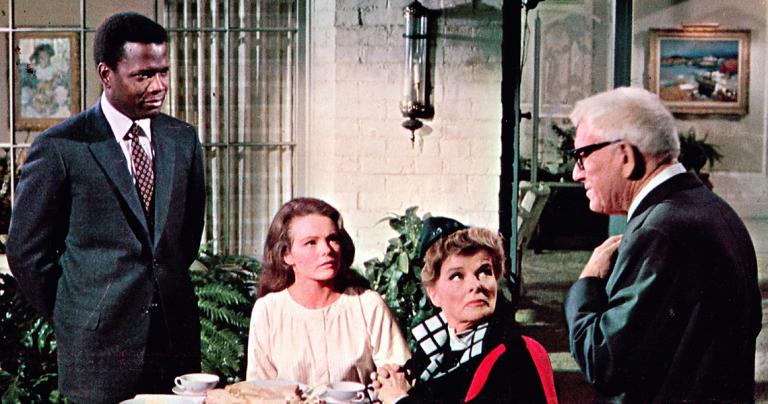
The image above shows Sidney Poitier, Katharine Houghton, Katharine Hepburn and Spencer Tracy in Guess Who’s Coming to Dinner*.*
last black man in san francisco
Previous Post

February 11, 2021
Watch: The trailer for Resurrection, coming soon to Discovery+
Next Post

February 15, 2021 Sidney Poitier marathon: For Love of Ivy (1968) - The Lost Man (1969)
Browse Our Archives
Select a Category Anglican Planet Articles BC Christian News BC Report Bible Movies Bible Review Blog Books & Culture Campus Times CBC Radio Christianity Today ChristianWeek Essays Faith Today Festival Cinemas Guide Film Journals Georgia Straight Interviews MB Herald National Catholic Register Salvationist Today's Christian Two Chairs Ubyssey Uncategorized Vancouver Courier Vancouver Sun
Select a Month August 2025 April 2025 January 2025 December 2024 November 2024 May 2024 February 2024 December 2023 May 2023 March 2023 November 2022 July 2022 June 2022 May 2022 April 2022 February 2022 January 2022 December 2021 November 2021 October 2021 September 2021 August 2021 July 2021 June 2021 April 2021 March 2021 February 2021 January 2021 December 2020 November 2020 October 2020 August 2020 July 2020 June 2020 May 2020 March 2020 February 2020 January 2020 December 2019 November 2019 September 2019 July 2019 May 2019 April 2019 March 2019 February 2019 January 2019 December 2018 November 2018 October 2018 September 2018 July 2018 June 2018 May 2018 April 2018 March 2018 February 2018 January 2018 December 2017 November 2017 October 2017 September 2017 August 2017 July 2017 June 2017 May 2017 April 2017 March 2017 February 2017 January 2017 December 2016 November 2016 October 2016 September 2016 August 2016 July 2016 June 2016 May 2016 April 2016 March 2016 February 2016 January 2016 December 2015 November 2015 October 2015 September 2015 August 2015 July 2015 June 2015 May 2015 April 2015 March 2015 February 2015 January 2015 December 2014 November 2014 October 2014 September 2014 August 2014 July 2014 June 2014 May 2014 April 2014 March 2014 February 2014 January 2014 December 2013 November 2013 October 2013 September 2013 August 2013 July 2013 June 2013 May 2013 April 2013 March 2013 February 2013 January 2013 December 2012 November 2012 October 2012 September 2012 August 2012 July 2012 June 2012 April 2012 January 2012 January 2011 December 2010 November 2010 October 2010 September 2010 August 2010 July 2010 June 2010 May 2010 April 2010 March 2010 February 2010 January 2010 December 2009 November 2009 October 2009 September 2009 August 2009 July 2009 June 2009 May 2009 April 2009 March 2009 February 2009 January 2009 December 2008 November 2008 October 2008 September 2008 August 2008 July 2008 June 2008 May 2008 April 2008 March 2008 February 2008 January 2008 December 2007 November 2007 October 2007 September 2007 August 2007 July 2007 June 2007 May 2007 April 2007 March 2007 February 2007 January 2007 December 2006 November 2006 October 2006 September 2006 August 2006 July 2006 June 2006 May 2006 April 2006 March 2006 February 2006 January 2006 December 2005 November 2005 October 2005 September 2005 August 2005 July 2005 June 2005 May 2005 April 2005 March 2005 January 2005 December 2004 November 2004 October 2004 September 2004 August 2004 July 2004 June 2004 May 2004 April 2004 March 2004 February 2004 January 2004 November 2003 October 2003 August 2003 July 2003 June 2003 May 2003 January 2003 December 2002 November 2002 August 2002 July 2002 June 2002 May 2002 March 2002 January 2002 December 2001 November 2001 September 2001 August 2001 July 2001 June 2001 April 2001 March 2001 February 2001 December 2000 November 2000 October 2000 September 2000 August 2000 July 2000 June 2000 May 2000 April 2000 March 2000 January 2000 October 1999 August 1999 May 1999 April 1999 February 1999 January 1999 December 1998 November 1998 October 1998 August 1998 July 1998 June 1998 April 1998 March 1998 January 1998 November 1997 September 1997 July 1997 June 1997 April 1997 March 1997 February 1997 January 1997 December 1996 October 1996 September 1996 June 1996 March 1996 February 1996 January 1996 April 1995 November 1994 September 1994 September 1991
Follow Us!
TAKE THE
Religious Wisdom Quiz
To whom did God give the commandments, engraved on stone tablets?
Select your answer to see how you score.
Peter Adam Moses Noah
Related posts from FilmChat

Joseph of Egypt – the Chosen spin-off announces...

Exclusive: A clip from Angel Studios' The King...

Exclusive: Watch a clip from Angel Studios' Brave...

Exclusive: Watch a clip from Angel Studios' Homestead
TRENDING AT PATHEOS Religious Music & Entertainment

"Les Diabolique" and Transgression
Alongside something like Arrival, Vertigo, or Charade, Les Diaboliques is a...

"The Plague Dogs" and Mortality
So, flashback to the late 70s, early 80s. Walt Disney Studios is...

With the recent and highly successful release of Christopher Nolan’s epic film,...

"L'avventura" and Human Weakness
Today's piece is going to be a little different for a few...

I first want to apologize for not posting or writing anything. I'm...

I've engaged in the multi-year project of reading through the Church Fathers,...
view all Religious Music & Entertainment blogs
Ad-Free & Subscriber Log-In Subscription Support
- About Us
- 2026 Calendar
- Videos
- Podcasts
- Library of World Religions
- Faith In Media Tracker
- Advertise With Us
- Write for Us
- Privacy Policy
- Terms of Service
- Do Not Sell My Data
- Contact Us
- Radiant Digital
- Manage Newsletter Subscriptions
- Unsubscribe From Notifications
- Sitemap
Copyright 2008-2026, Patheos. All rights reserved.
Subscription Support Ad-Free & Subscriber Log-In
Follow Patheos