
BuddhistCatholicContemplativeEvangelicalGeneral ChristianHinduJewishLatter-day SaintMuslimNew VisionsProgressive Christian
Beliefs
- Buddhist
- Catholic
- Contemplative
- Evangelical
- General Christian
- Hindu
- Jewish
- Latter-day Saint
- More Voices
- Muslim
- New Visions
- Pagan
- Progressive Christian
Topics
- Religion News
- Food and Religion
- Sports and Religion
- Religious Art
- Religious Music and Entertainment
- Religious Events
- History and Religion
- Style and Religion
- Politics and Religion
- Women in Religion
- Recreation Outdoors and Religion
- Business Finance and Religion
- Careers Workplace and Religion
- Education and Religion
- Family Parenting and Religion
- Health Fitness and Religion
- Home and Religion
- Relationships and Religion
- Technology and Religion
- Travel and Religion
Columnists
- Buddhist Columnists
- Business Finance and Religion Columnists
- Careers Workplace and Religion Columnists
- Catholic Columnists
- Contemplative Columnists
- Education and Religion Columnists
- Evangelists Columnists
- Family Parenting and Religion Columnists
- General Christian Columnists
- Health Fitness and Religion Columnists
- Hindu Columnists
- History and Religion Columnists
- Home and Religion Columnists
- Jewish Columnists
- More Voices Columnists
- Latter Day Columnists
- Muslim Columnists
- New Visions Columnists
- Nonreligious Columnists
- Pagan Columnists
- Politics and Religion Columnists
- Progressive Columnists
- Recreation Outdoors and Religion Columnists
- Relationships and Religion Columnists
- Religion News Columnists
- Religious Art Columnists
- Religious Events Columnists
- Religious Music and Entertainment Columnists
- Sports and Religion Columnists
- Style and Religion Columnists
- Technology and Religion Columnists
- Travel and Religion Columnists
- Women in Religion Columnists
Resource Library
- 2026 Calendar
- Library of World Religions
- The 100 Most Holy Places on Earth
- Patheos Answers
- Podcasts
- Videos
- Faith Leaders Database
- Anglican Episcopalian
- Bahai
- Baptist
- Buddhism
- Christianity
- Confucianism
- Eastern Orthodoxy
- Hinduism
- Holiness and Pentecostal
- ISKCON
- Islam
- Judaism
- Lutheran
- Methodist
- The Church of Jesus Christ of Latter-day Saints
- New Age
- Paganism
- Presbytarian and Reformed
- Protestantism
- Religion Behind the Scenes
- Roman Catholic
- Scientology
- Shia Islam
- Sikhism
- Sufism
- Sunni Islam
- Taoism
- Zen
- See all religions
Research Tools
 Ad-Free & Subscriber Log-In Subscription Support
Ad-Free & Subscriber Log-In Subscription Support
Follow Patheos 

- Trending:
- Forgiveness
- |
- Marriage
- |
- Consciousness
- |
- Death Penalty
- |
- Election
- |
- Halloween

-
Articles
- Home
- Religious Music & Entertainment
- Sidney Poitier marathon: For Love of Ivy (1968) – The Lost Man (1969)
Sidney Poitier marathon: For Love of Ivy (1968) – The Lost Man (1969)
Last updated on: February 15, 2021 at 5:00 am by Peter T. Chattaway
Sidney Poitier marathon: For Love of Ivy (1968) – The Lost Man (1969) 2021-02-08T16:34:46-08:00 Peter T. Chattaway
Patheos Explore the world's faith through different perspectives on religion and spirituality! Patheos has the views of the prevalent religions and spiritualities of the world.
The latest in a month-long series of re-posts from my Facebook marathon in April 2020.
–
Sidney Poitier marathon part 14 (1968-1969):
Sidney Poitier finished the 1960s by reuniting, at the peak of his career, with Robert Alan Aurthur, the man who wrote one of his earliest critical successes, 1957’s Edge of the City — and together they made two new movies, in two very different genres.
First up, a romantic comedy called For Love of Ivy (1968).
The film — based on an original story by Poitier (his only writing credit ever) — is about a 27-year-old black domestic servant named Ivy, who has spent her entire adult life working for a white family, and who now decides that she wants to move to the city, get her high school diploma, and become a secretary. The family doesn’t know how it will cope without her, so the two adult children convince a black ladies’ man played by Poitier to romance Ivy, in the hope that she will fall in love and stay right where she is.
It’s a familiar romantic-comedy set-up, and, naturally, it takes some familiar turns towards the end, as things get more serious than Poitier expected, and Ivy is outraged to discover the degree to which he and the adult children have been deceiving her about their motives. (Poitier agreed to the scheme in the first place partly because his company was doing business with the family’s company.) It’s a classic cad-meets-girl, cad-loses-girl, cad-changes-his-ways-to-get-girl-back kind of storyline.
What is not so familiar is the fact that this film is a comedy starring Sidney Poitier! His previous films had flashes of humour here and there — and I guess a feel-good movie like 1963’s Lilies of the Field could count as a sort of comedy — but he had never made a movie like this before, and his deadpan delivery of some lines, especially when he’s dealing with the adult son of the family (played by Beau Bridges) and the racial profiling that that man engages in, is a hoot to witness.
Which is not to say that this film is particularly great or anything like that. But it’s a striking change of pace for Poitier, and an interesting cultural snapshot in its own way, just like the more iconic films he had made the year before. And, once again, it is a film that pays special attention to a black woman’s desire for self-empowerment, a la 1961’s A Raisin in the Sun.
A few other quick points:
— Some of the humour revolves around making you think the characters are referring to race and then having the characters reveal that they were thinking of something else. E.g., when Bridges says Ivy needs a lover, his sister says “I’m afraid none of my friends would qualify” — and you might assume that the sister is saying this because none of her friends are black — but Bridges replies, “You’re right, none of them are good enough.” Later, when Bridges himself proposes to Ivy, he says he knows there’s a reason she might not think a marriage between them would work — and it turns out he’s referring to the age gap between them.
— Speaking of age gaps: Poitier is 41 playing 36, Abbey Lincoln (Ivy) is 37 playing 27, and Bridges is 26 playing 21.
— This time in LGBT references: Before asking Poitier to date Ivy, Bridges asks if Poitier is gay. Poitier’s eyes narrow, as if to say he takes offense at the question, before he says, “No I’m not.” Bridges replies, “No, well, you can’t hardly tell these days, man.” Note: this movie came out one year before the Stonewall riots.
— Poitier messes with Bridges and his sister at one point by pretending to have drugs in his pocket (it’s actually aspirin) and by pretending to be interested in an inter-racial orgy. “I know where it’s at with people like you in the suburbs,” he says. “Wife-swapping and key parties!”
— Ivy reveals that she’s been using birth-control pills. They were given to her by the daughter/sister of the family, but Ivy says the pills were the wife/mother’s originally. Birth control pills were first made available in the U.S. in 1960, just eight years before this movie came out.
— When Poitier’s character first meets Ivy, she can tell he’s from the West Indies because of his accent. (Poitier grew up in the Bahamas.) In a later scene, when she’s really angry with him, she uses “West Indian” as an epithet.
— This film arguably has Poitier’s first bed scene, though Ivy is wearing something (i.e. a robe). In 1970’s They Call Me Mister Tibbs, Poitier and his character’s wife will both appear to be naked under the covers, though the covers will go up to their chests.
— This is one of only three films that Lauri Peters starred in; she plays the adult daughter of the family. I recognized her from 1963’s Summer Holiday, where she played Cliff Richard’s love interest.
— Reunions: In addition to Aurthur the screenwriter, the film reunited Poitier with composer Quincy Jones and actor Carroll O’Connor, who had had a bit part as a truck driver in 1958’s The Defiant Ones. (O’Connor would go on to play the Rod Steiger role in a TV-series version of In the Heat of the Night between 1988 and 1995.)
— This was the last of Poitier’s films to receive any Oscar nominations. In this case, the nomination was for the theme song, co-written by Jones and Bob Russell; it lost to ‘The Windmills of Your Mind’ from The Thomas Crown Affair, which was co-written by Alan and Marilyn Bergman, who had collaborated with Jones on the songs for 1967’s In the Heat of the Night.
Next up, a crime film called The Lost Man (1969).
This film was a loose remake of the 1947 Carol Reed film Odd Man Out, with Poitier in the James Mason role as a political militant (Irish in the original film, African-American in the remake) who is wounded during a robbery.
Poitier spends the first part of the movie behind sunglasses that give him a harder, tougher look, but after the robbery goes bad, he is essentially unmasked, and he becomes more and more vulnerable as the story progresses. Most notably, the Poitier character becomes involved with a white social worker played by Joanna Shimkus, who went on to become Poitier’s second wife in real life. (He had already been divorced from his first wife for four years when this movie came out.)
I didn’t take a whole lot of notes during this one. I did notice how the dialogue was full of words like “groovy”, “bread” (for money) and “pigs” (for cops), and I enjoyed seeing Paul Winfield (who I know primarily from 1982’s Star Trek II: The Wrath of Khan and 1984’s The Terminator) in his first credited big-screen role, as a member of Poitier’s gang. The score by Quincy Jones — his fourth for a Poitier film — is also pretty good, and probably better than the film deserves.
A few extra notes:
— Poitier’s character mentions that his dad was a preacher. This is vaguely reminiscent of how his character in 1958’s The Defiant Ones said his dad was a “Bible thumper”.
— This was not only the third Poitier film written by Aurthur, it was also the only film directed by him. (You might be familiar with Aurthur’s ex-wife Bea, of Maude and Golden Girls fame; she kept a version of his surname as part of her stage name after they got divorced in 1950.)
— Reunions: In addition to Jones and Aurthur, both of whom had worked with Poitier on For Love of Ivy, this film also brings back folk singer Leon Bibb, who had small roles in both films (as Poitier’s business partner in For Love of Ivy and as a member of Poitier’s gang in The Lost Man). Bibb moved to Vancouver the year this movie came out and lived here until his death in 2015.
–
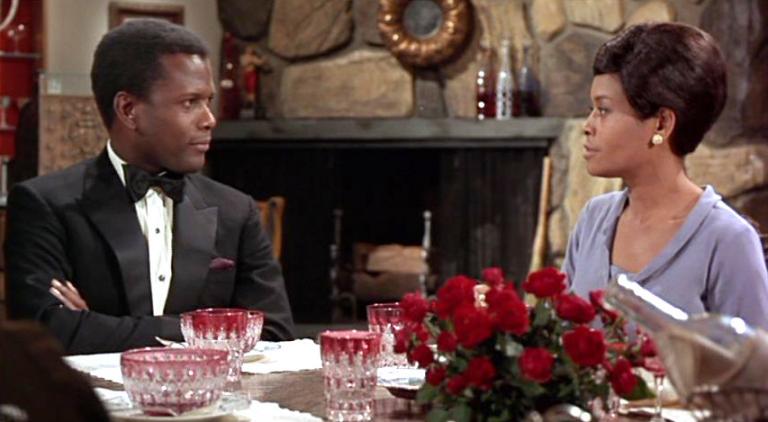
The image above shows Sidney Poitier and Abbey Lincoln in For Love of Ivy*.*
Previous Post

February 12, 2021
Sidney Poitier marathon: Guess Who's Coming to Dinner (1967)

Browse Our Archives
Select a Category Anglican Planet Articles BC Christian News BC Report Bible Movies Bible Review Blog Books & Culture Campus Times CBC Radio Christianity Today ChristianWeek Essays Faith Today Festival Cinemas Guide Film Journals Georgia Straight Interviews MB Herald National Catholic Register Salvationist Today's Christian Two Chairs Ubyssey Uncategorized Vancouver Courier Vancouver Sun
Select a Month August 2025 April 2025 January 2025 December 2024 November 2024 May 2024 February 2024 December 2023 May 2023 March 2023 November 2022 July 2022 June 2022 May 2022 April 2022 February 2022 January 2022 December 2021 November 2021 October 2021 September 2021 August 2021 July 2021 June 2021 April 2021 March 2021 February 2021 January 2021 December 2020 November 2020 October 2020 August 2020 July 2020 June 2020 May 2020 March 2020 February 2020 January 2020 December 2019 November 2019 September 2019 July 2019 May 2019 April 2019 March 2019 February 2019 January 2019 December 2018 November 2018 October 2018 September 2018 July 2018 June 2018 May 2018 April 2018 March 2018 February 2018 January 2018 December 2017 November 2017 October 2017 September 2017 August 2017 July 2017 June 2017 May 2017 April 2017 March 2017 February 2017 January 2017 December 2016 November 2016 October 2016 September 2016 August 2016 July 2016 June 2016 May 2016 April 2016 March 2016 February 2016 January 2016 December 2015 November 2015 October 2015 September 2015 August 2015 July 2015 June 2015 May 2015 April 2015 March 2015 February 2015 January 2015 December 2014 November 2014 October 2014 September 2014 August 2014 July 2014 June 2014 May 2014 April 2014 March 2014 February 2014 January 2014 December 2013 November 2013 October 2013 September 2013 August 2013 July 2013 June 2013 May 2013 April 2013 March 2013 February 2013 January 2013 December 2012 November 2012 October 2012 September 2012 August 2012 July 2012 June 2012 April 2012 January 2012 January 2011 December 2010 November 2010 October 2010 September 2010 August 2010 July 2010 June 2010 May 2010 April 2010 March 2010 February 2010 January 2010 December 2009 November 2009 October 2009 September 2009 August 2009 July 2009 June 2009 May 2009 April 2009 March 2009 February 2009 January 2009 December 2008 November 2008 October 2008 September 2008 August 2008 July 2008 June 2008 May 2008 April 2008 March 2008 February 2008 January 2008 December 2007 November 2007 October 2007 September 2007 August 2007 July 2007 June 2007 May 2007 April 2007 March 2007 February 2007 January 2007 December 2006 November 2006 October 2006 September 2006 August 2006 July 2006 June 2006 May 2006 April 2006 March 2006 February 2006 January 2006 December 2005 November 2005 October 2005 September 2005 August 2005 July 2005 June 2005 May 2005 April 2005 March 2005 January 2005 December 2004 November 2004 October 2004 September 2004 August 2004 July 2004 June 2004 May 2004 April 2004 March 2004 February 2004 January 2004 November 2003 October 2003 August 2003 July 2003 June 2003 May 2003 January 2003 December 2002 November 2002 August 2002 July 2002 June 2002 May 2002 March 2002 January 2002 December 2001 November 2001 September 2001 August 2001 July 2001 June 2001 April 2001 March 2001 February 2001 December 2000 November 2000 October 2000 September 2000 August 2000 July 2000 June 2000 May 2000 April 2000 March 2000 January 2000 October 1999 August 1999 May 1999 April 1999 February 1999 January 1999 December 1998 November 1998 October 1998 August 1998 July 1998 June 1998 April 1998 March 1998 January 1998 November 1997 September 1997 July 1997 June 1997 April 1997 March 1997 February 1997 January 1997 December 1996 October 1996 September 1996 June 1996 March 1996 February 1996 January 1996 April 1995 November 1994 September 1994 September 1991
Follow Us!
TAKE THE
Religious Wisdom Quiz
What was the name of the disciple in Damascus who was sent to pray for Saul after his conversion?
Select your answer to see how you score.
Ananias Philip Silas Barnabas
Related posts from FilmChat

Joseph of Egypt – the Chosen spin-off announces...

Exclusive: A clip from Angel Studios' The King...

Exclusive: Watch a clip from Angel Studios' Brave...

Exclusive: Watch a clip from Angel Studios' Homestead
TRENDING AT PATHEOS Religious Music & Entertainment

"Les Diabolique" and Transgression
Alongside something like Arrival, Vertigo, or Charade, Les Diaboliques is a...

"The Plague Dogs" and Mortality
So, flashback to the late 70s, early 80s. Walt Disney Studios is...

With the recent and highly successful release of Christopher Nolan’s epic film,...

"L'avventura" and Human Weakness
Today's piece is going to be a little different for a few...

I first want to apologize for not posting or writing anything. I'm...

I've engaged in the multi-year project of reading through the Church Fathers,...
view all Religious Music & Entertainment blogs
Ad-Free & Subscriber Log-In Subscription Support
- About Us
- 2026 Calendar
- Videos
- Podcasts
- Library of World Religions
- Faith In Media Tracker
- Advertise With Us
- Write for Us
- Privacy Policy
- Terms of Service
- Do Not Sell My Data
- Contact Us
- Radiant Digital
- Manage Newsletter Subscriptions
- Unsubscribe From Notifications
- Sitemap
Copyright 2008-2026, Patheos. All rights reserved.
Subscription Support Ad-Free & Subscriber Log-In
Follow Patheos