
BuddhistCatholicContemplativeEvangelicalGeneral ChristianHinduJewishLatter-day SaintMuslimNew VisionsProgressive Christian
Beliefs
- Buddhist
- Catholic
- Contemplative
- Evangelical
- General Christian
- Hindu
- Jewish
- Latter-day Saint
- More Voices
- Muslim
- New Visions
- Pagan
- Progressive Christian
Topics
- Religion News
- Food and Religion
- Sports and Religion
- Religious Art
- Religious Music and Entertainment
- Religious Events
- History and Religion
- Style and Religion
- Politics and Religion
- Women in Religion
- Recreation Outdoors and Religion
- Business Finance and Religion
- Careers Workplace and Religion
- Education and Religion
- Family Parenting and Religion
- Health Fitness and Religion
- Home and Religion
- Relationships and Religion
- Technology and Religion
- Travel and Religion
Columnists
- Buddhist Columnists
- Business Finance and Religion Columnists
- Careers Workplace and Religion Columnists
- Catholic Columnists
- Contemplative Columnists
- Education and Religion Columnists
- Evangelists Columnists
- Family Parenting and Religion Columnists
- General Christian Columnists
- Health Fitness and Religion Columnists
- Hindu Columnists
- History and Religion Columnists
- Home and Religion Columnists
- Jewish Columnists
- More Voices Columnists
- Latter Day Columnists
- Muslim Columnists
- New Visions Columnists
- Nonreligious Columnists
- Pagan Columnists
- Politics and Religion Columnists
- Progressive Columnists
- Recreation Outdoors and Religion Columnists
- Relationships and Religion Columnists
- Religion News Columnists
- Religious Art Columnists
- Religious Events Columnists
- Religious Music and Entertainment Columnists
- Sports and Religion Columnists
- Style and Religion Columnists
- Technology and Religion Columnists
- Travel and Religion Columnists
- Women in Religion Columnists
Resource Library
- 2026 Calendar
- Library of World Religions
- The 100 Most Holy Places on Earth
- Patheos Answers
- Podcasts
- Videos
- Faith Leaders Database
- Anglican Episcopalian
- Bahai
- Baptist
- Buddhism
- Christianity
- Confucianism
- Eastern Orthodoxy
- Hinduism
- Holiness and Pentecostal
- ISKCON
- Islam
- Judaism
- Lutheran
- Methodist
- The Church of Jesus Christ of Latter-day Saints
- New Age
- Paganism
- Presbytarian and Reformed
- Protestantism
- Religion Behind the Scenes
- Roman Catholic
- Scientology
- Shia Islam
- Sikhism
- Sufism
- Sunni Islam
- Taoism
- Zen
- See all religions
Research Tools
 Ad-Free & Subscriber Log-In Subscription Support
Ad-Free & Subscriber Log-In Subscription Support
Follow Patheos 

- Trending:
- Forgiveness
- |
- Marriage
- |
- Consciousness
- |
- Death Penalty
- |
- Election
- |
- Halloween

-
Articles
- Home
- Religious Music & Entertainment
- Sidney Poitier marathon: Brother John (1971) – Buck and the Preacher (1972)
Sidney Poitier marathon: Brother John (1971) – Buck and the Preacher (1972)
Last updated on: February 16, 2021 at 5:00 am by Peter T. Chattaway
Sidney Poitier marathon: Brother John (1971) – Buck and the Preacher (1972) 2021-02-15T13:51:54-08:00 Peter T. Chattaway
Patheos Explore the world's faith through different perspectives on religion and spirituality! Patheos has the views of the prevalent religions and spiritualities of the world.
The latest in a month-long series of re-posts from my Facebook marathon in April 2020.
–
Sidney Poitier marathon part 15 (1971a + 1972):
Brother John (1971) may be the closest Sidney Poitier ever came to science fiction. In this film, he plays a mysterious figure who has been roaming the Earth since his teens, and who has returned to the American town of his birth on only a few occasions — always when one of his relatives was just about to die. For most of its running time, the film leads you to think that there may be something simply supernatural about this character, but in its final moments, the film hints that there is something else going on — something that reminded me of some of Arthur C. Clarke’s stories.
The film’s supernatural vibe comes through in its use of religious symbols and language: one of the more notable supporting characters is a local minister; the Poitier character keeps a Bible and a Koran in his suitcase; and there is some talk about Judgment Day. At one point Poitier tells a woman that people might not end up answering for their sins as individuals but collectively, as a species — and he says that, when the time comes, they might not answer for what they did in the past but for what they might become in the future.
The significance of that line is expanded upon in the film’s final moments, when Poitier tells the old doctor who brought him into the world that he has seen “people swarming all over the world like maggots on a rotten apple, getting ready to leap off the Earth. First, to the moon, and then, to the stars,” and the doctor replies, “Is that it? They just don’t want us out there?” And by “they”, the doctor does not mean the people of this planet. The strong implication is that Poitier was sent here by aliens, and may be an alien himself — albeit one who was born a human — and that these aliens are going to destroy us before we pose a threat to them, the way Klaatu said the robots overseeing his species might wipe us out if we don’t change our ways in 1951’s The Day the Earth Stood Still.
And why do I say the movie reminds me of Clarke’s stories? For two reasons: First, the basic concept, of aliens being concerned about humans going to the moon and then to the stars, echoes Clarke’s short story ‘The Sentinel’, which was the inspiration for 2001: A Space Odyssey; in that story, humans discover an alien device on the moon that sends a signal deep into space, to warn its makers that we have made the first step towards encroaching on their territory. And second, in 2010 (the movie version, at least), the “ghost” of David Bowman returns to Earth to say goodbye to Bowman’s wife and mother, which indicates that Bowman still feels an attachment to his relatives here on Earth even though he has become something of an emissary for the aliens; similarly, the Poitier character in this film clearly feels an attachment to his human relatives and expresses a desire to live a conventional human life — he even finds time to hook up with a woman from town — despite the fact that he has a larger extra-terrestrial mission.
I have to say, the sci-fi twist at the end came as something of a relief to me, as I’m not a fan of half-baked mysticism and, to the extent that I thought the earlier scenes were about a quasi-Christ figure, I found them maddeningly vague. Learning that the Poitier character was actually not a Christ-figure — i.e. a figure of salvation — but, rather, a harbinger of doom was thankfully clarifying, even if the film stayed light on the details of how and why the Poitier character came to us in the form that he did. (The old doctor asks if the aliens planned to send Poitier as a black man born in a town like theirs, or if it was just “luck of the draw” that he came to Earth in that place and that form, and Poitier does not answer.)
Along the way, the film shows us many of the reasons why the Earth might merit judgment: racism, political protests, wars, pollution, industrialism, people shooting rodents for sport in garbage dumps, etc. The news isn’t all bad — a black union leader says it would have seemed impossible even five years ago that he’d be part of a “functioning alliance” with white people — but, as Poitier puts it when the old doctor points out that humans are capable of love, “It might not be enough.”
Brother John is not a great film by any stretch, but I have to say that I appreciated how it shines a different light than we might have expected on the moon-landing era (which lasted just three years, 1969-1972). What some saw as a sign of progress, this film depicts as an act that — seen in connection with all of the world’s problems — could very well invite judgment and catastrophe. What some saw as the embodiment of an era’s optimism, this film sees as cause for pessimism.
And for Christians like me who are used to thinking of the Incarnation as an example of how God empathizes with his people (the one mediator between God and humans is the man Jesus Christ, Jesus is our brother who makes it possible for us to call God our Father, Jesus understands our temptations because he has faced them himself, etc.), this film posits that a being who was born and raised as one of us might eventually be too familiar with us — too weary of us — to intercede on our behalf. Which is also an interesting downer twist on a generally positive premise.
A few other quick points:
— This was the first Poitier film to come out after I was born.
— The film was directed by James Goldstone, who worked mostly in television. Among other things, he directed the second Star Trek pilot, ‘Where No Man Has Gone Before’, which was the first episode to feature Kirk, Scotty and Sulu.
— Poitier has a moustache in one of the flashbacks! Is this the first time we’ve seen him with one? Or with facial hair of any kind?
— It is mentioned that Poitier’s character served in the army in the Korean War, and he says he has also seen war in Sinai, Biafra and Vietnam. Poitier had already starred in a Korean War movie (1960’s All the Young Men). “Sinai” presumably refers to the Suez Crisis of 1956, which is known in Israel as the Sinai War; the Sinai peninsula would become the site of another battle during the Yom Kippur War in 1973. The Biafran War came to an end in 1970, just one year before this movie came out. And this might be the first of Poitier’s movies to even mention the Vietnam War, which began in 1957 and would not end until 1975, four years after the movie came out.
— I don’t believe the film ever specifies how old the Poitier character is, but if he fought in the Korean War he would have been born in the 1930s at the very latest. (Poitier was born in 1927.) That would be at least two decades before the beginning of the Space Age in 1957, and over three decades before the moon landing. If our movement towards the stars is what prompted the aliens to send Poitier, then they can apparently see into the future — which makes sense, given that Poitier can anticipate when certain people will die.
— This might be the first Poitier film in which anyone uses the word “shit”.
— Poitier previously played a Christ-figure of sorts in 1957’s Edge of the City, where his character died in a way that changed the lives of others. Poitier also literally helped Jesus carry the cross when he played Simon of Cyrene in 1965’s The Greatest Story Ever Told. Other roles of his earned him the (derisive) nickname “the ebony saint”, which is not quite the same thing as a Christ-figure but points in a similar direction. This film plays into that persona while undermining it in some ways (e.g. the character’s sexual activity).
— Reunions: Several of the people involved with this film were also involved with 1969’s The Lost Man, including co-stars Beverly Todd (who also appeared in 1970’s They Call Me Mister Tibbs!), Lincoln Kilpatrick and Paul Winfield, and composer Quincy Jones (this was the last of six Poitier films that Jones scored, though he went on to be executive music producer on a film that Poitier directed in the 1980s).
Brother John was sandwiched between the two Mister Tibbs sequels. After that, Poitier made his directorial debut with Buck and the Preacher (1972), in which Poitier plays a Civil War veteran who guides a wagon train of former Louisiana slaves to a new home in the Kansas Territory.
Buck and the Preacher was Poitier’s second western, following 1966’s Duel at Diablo, but in some ways it plays like one of the blaxploitation films that had started coming out in the early 1970s. All of the protagonists are black, and all of the villains are white, and there are shoot-outs, ambushes and bank robberies in which the black heroes come out on top.
But comparisons to the blaxploitation genre only go so far. For one thing, it’s hard to escape the feeling that Poitier and his co-star Harry Belafonte — both of whom were in their mid-40s at the time — were a little old, a little too part of the “Hollywood” establishment, compared to the stars of films like Shaft and Foxy Brown, who were in their 20s and represented a younger, hungrier demographic. Buck and the Preacher reportedly underperformed at the box office, and it could be because the film was both too different from the westerns that older (white) audiences were familiar with, and too stodgy for younger (black) audiences who wanted something hipper.
In any case, whatever one makes of the film’s marketability or even its entertainment value, I do appreciate the way it sheds light on an aspect of the west, and the post-slavery years, that doesn’t often get mainstream attention: the way some black Americans migrated west, the way white southerners paid bounty hunters to try to force the black Americans to go back “home”, etc.
A few other quick points:
— One major subplot involves the relationship between Buck and the Native Americans with whom he negotiates safe passage through their territory. Interestingly, the Natives refuse to help the black Americans at one point because black Americans fought alongside white Americans against their own people — a point that the Poitier character concedes, as if to suggest that black Americans owe Natives as much of an apology as white Americans do. No mention is made of the fact that some Natives owned black slaves (thus leading to, e.g., the 1842 slave revolt within the Cherokee nation).
— In 1966’s Duel at Diablo, the Native American chief was played by white actor John Hoyt. Here, the chief is played by Mexican actor Enrique Lucero. (The film was shot in Mexico.)
— Belafonte’s character is called “the Preacher”, and he uses a lot of religious language in non-pious ways, but it turns out his Bible has been hollowed out to hide a gun, and he got both the Bible and his preacher’s clothes from a white man he once killed for enslaving him and his mother.
— Buck’s wife, played by Ruby Dee, is an active participant in the bank robbery and in some of the other action as well, and the film’s final freeze-framed image puts her, rather than one of the men, in the centre. She also delivers a significant bit of dialogue about how America is still poisoned — the Civil War didn’t change anything — so she’d rather move north to Canada than out west.
— The film goes out of its way to make the bank robbery seem morally “acceptable” — or at any rate, less objectionable — by having it take place at the very moment that a racist white brothel madam is making a deposit and bragging to the teller about the profit she’s making from “the wages of sin”.
— This film came out only three years after Gordon Parks’ The Learning Tree, which was the first major-studio movie to be made by a black director. By the time Buck and the Preacher came out, Parks had directed the original Shaft, too — and the sequel, Shaft’s Big Score!, came out just seven weeks after Buck and the Preacher.
— This was the first of two films that Poitier made with his old friend Belafonte.
— Reunions: Ruby Dee, who co-starred with Poitier in five films between 1950’s No Way Out and 1961’s A Raisin in the Sun, makes her sixth and final appearance with him on the big screen in this film. Once again, as in most of those other films, she is playing Poitier’s wife.
–
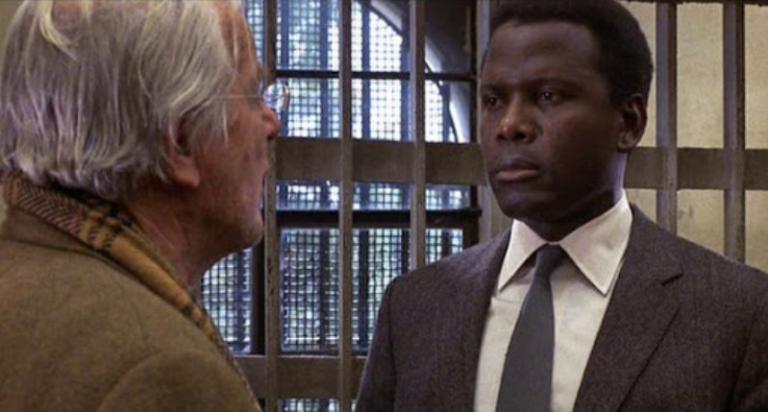
The image above shows Will Geer and Sidney Poitier in Brother John*.*
day the earth stood still 1951


Browse Our Archives
Select a Category Anglican Planet Articles BC Christian News BC Report Bible Movies Bible Review Blog Books & Culture Campus Times CBC Radio Christianity Today ChristianWeek Essays Faith Today Festival Cinemas Guide Film Journals Georgia Straight Interviews MB Herald National Catholic Register Salvationist Today's Christian Two Chairs Ubyssey Uncategorized Vancouver Courier Vancouver Sun
Select a Month August 2025 April 2025 January 2025 December 2024 November 2024 May 2024 February 2024 December 2023 May 2023 March 2023 November 2022 July 2022 June 2022 May 2022 April 2022 February 2022 January 2022 December 2021 November 2021 October 2021 September 2021 August 2021 July 2021 June 2021 April 2021 March 2021 February 2021 January 2021 December 2020 November 2020 October 2020 August 2020 July 2020 June 2020 May 2020 March 2020 February 2020 January 2020 December 2019 November 2019 September 2019 July 2019 May 2019 April 2019 March 2019 February 2019 January 2019 December 2018 November 2018 October 2018 September 2018 July 2018 June 2018 May 2018 April 2018 March 2018 February 2018 January 2018 December 2017 November 2017 October 2017 September 2017 August 2017 July 2017 June 2017 May 2017 April 2017 March 2017 February 2017 January 2017 December 2016 November 2016 October 2016 September 2016 August 2016 July 2016 June 2016 May 2016 April 2016 March 2016 February 2016 January 2016 December 2015 November 2015 October 2015 September 2015 August 2015 July 2015 June 2015 May 2015 April 2015 March 2015 February 2015 January 2015 December 2014 November 2014 October 2014 September 2014 August 2014 July 2014 June 2014 May 2014 April 2014 March 2014 February 2014 January 2014 December 2013 November 2013 October 2013 September 2013 August 2013 July 2013 June 2013 May 2013 April 2013 March 2013 February 2013 January 2013 December 2012 November 2012 October 2012 September 2012 August 2012 July 2012 June 2012 April 2012 January 2012 January 2011 December 2010 November 2010 October 2010 September 2010 August 2010 July 2010 June 2010 May 2010 April 2010 March 2010 February 2010 January 2010 December 2009 November 2009 October 2009 September 2009 August 2009 July 2009 June 2009 May 2009 April 2009 March 2009 February 2009 January 2009 December 2008 November 2008 October 2008 September 2008 August 2008 July 2008 June 2008 May 2008 April 2008 March 2008 February 2008 January 2008 December 2007 November 2007 October 2007 September 2007 August 2007 July 2007 June 2007 May 2007 April 2007 March 2007 February 2007 January 2007 December 2006 November 2006 October 2006 September 2006 August 2006 July 2006 June 2006 May 2006 April 2006 March 2006 February 2006 January 2006 December 2005 November 2005 October 2005 September 2005 August 2005 July 2005 June 2005 May 2005 April 2005 March 2005 January 2005 December 2004 November 2004 October 2004 September 2004 August 2004 July 2004 June 2004 May 2004 April 2004 March 2004 February 2004 January 2004 November 2003 October 2003 August 2003 July 2003 June 2003 May 2003 January 2003 December 2002 November 2002 August 2002 July 2002 June 2002 May 2002 March 2002 January 2002 December 2001 November 2001 September 2001 August 2001 July 2001 June 2001 April 2001 March 2001 February 2001 December 2000 November 2000 October 2000 September 2000 August 2000 July 2000 June 2000 May 2000 April 2000 March 2000 January 2000 October 1999 August 1999 May 1999 April 1999 February 1999 January 1999 December 1998 November 1998 October 1998 August 1998 July 1998 June 1998 April 1998 March 1998 January 1998 November 1997 September 1997 July 1997 June 1997 April 1997 March 1997 February 1997 January 1997 December 1996 October 1996 September 1996 June 1996 March 1996 February 1996 January 1996 April 1995 November 1994 September 1994 September 1991
Follow Us!
TAKE THE
Religious Wisdom Quiz
Who was Rahab's husband?
Select your answer to see how you score.
Jesse Boaz Salmon Obed
Related posts from FilmChat

Joseph of Egypt – the Chosen spin-off announces...

Exclusive: A clip from Angel Studios' The King...

Exclusive: Watch a clip from Angel Studios' Brave...

Exclusive: Watch a clip from Angel Studios' Homestead
TRENDING AT PATHEOS Religious Music & Entertainment

"Les Diabolique" and Transgression
Alongside something like Arrival, Vertigo, or Charade, Les Diaboliques is a...

"The Plague Dogs" and Mortality
So, flashback to the late 70s, early 80s. Walt Disney Studios is...

With the recent and highly successful release of Christopher Nolan’s epic film,...

"L'avventura" and Human Weakness
Today's piece is going to be a little different for a few...

I first want to apologize for not posting or writing anything. I'm...

I've engaged in the multi-year project of reading through the Church Fathers,...
view all Religious Music & Entertainment blogs
Ad-Free & Subscriber Log-In Subscription Support
- About Us
- 2026 Calendar
- Videos
- Podcasts
- Library of World Religions
- Faith In Media Tracker
- Advertise With Us
- Write for Us
- Privacy Policy
- Terms of Service
- Do Not Sell My Data
- Contact Us
- Radiant Digital
- Manage Newsletter Subscriptions
- Unsubscribe From Notifications
- Sitemap
Copyright 2008-2026, Patheos. All rights reserved.
Subscription Support Ad-Free & Subscriber Log-In
Follow Patheos