
BuddhistCatholicContemplativeEvangelicalGeneral ChristianHinduJewishLatter-day SaintMuslimNew VisionsProgressive Christian
Beliefs
- Buddhist
- Catholic
- Contemplative
- Evangelical
- General Christian
- Hindu
- Jewish
- Latter-day Saint
- More Voices
- Muslim
- New Visions
- Pagan
- Progressive Christian
Topics
- Religion News
- Food and Religion
- Sports and Religion
- Religious Art
- Religious Music and Entertainment
- Religious Events
- History and Religion
- Style and Religion
- Politics and Religion
- Women in Religion
- Recreation Outdoors and Religion
- Business Finance and Religion
- Careers Workplace and Religion
- Education and Religion
- Family Parenting and Religion
- Health Fitness and Religion
- Home and Religion
- Relationships and Religion
- Technology and Religion
- Travel and Religion
Columnists
- Buddhist Columnists
- Business Finance and Religion Columnists
- Careers Workplace and Religion Columnists
- Catholic Columnists
- Contemplative Columnists
- Education and Religion Columnists
- Evangelists Columnists
- Family Parenting and Religion Columnists
- General Christian Columnists
- Health Fitness and Religion Columnists
- Hindu Columnists
- History and Religion Columnists
- Home and Religion Columnists
- Jewish Columnists
- More Voices Columnists
- Latter Day Columnists
- Muslim Columnists
- New Visions Columnists
- Nonreligious Columnists
- Pagan Columnists
- Politics and Religion Columnists
- Progressive Columnists
- Recreation Outdoors and Religion Columnists
- Relationships and Religion Columnists
- Religion News Columnists
- Religious Art Columnists
- Religious Events Columnists
- Religious Music and Entertainment Columnists
- Sports and Religion Columnists
- Style and Religion Columnists
- Technology and Religion Columnists
- Travel and Religion Columnists
- Women in Religion Columnists
Resource Library
- 2026 Calendar
- Library of World Religions
- The 100 Most Holy Places on Earth
- Patheos Answers
- Podcasts
- Videos
- Faith Leaders Database
- Anglican Episcopalian
- Bahai
- Baptist
- Buddhism
- Christianity
- Confucianism
- Eastern Orthodoxy
- Hinduism
- Holiness and Pentecostal
- ISKCON
- Islam
- Judaism
- Lutheran
- Methodist
- The Church of Jesus Christ of Latter-day Saints
- New Age
- Paganism
- Presbytarian and Reformed
- Protestantism
- Religion Behind the Scenes
- Roman Catholic
- Scientology
- Shia Islam
- Sikhism
- Sufism
- Sunni Islam
- Taoism
- Zen
- See all religions
Research Tools
 Ad-Free & Subscriber Log-In Subscription Support
Follow Patheos 

- Trending:
- Advent
- |
- Forgiveness
- |
- Thanksgiving
- |
- Election
- |
- Seasonal Holidays
- |
- Marriage

-
Articles
- Home
- Religious Music & Entertainment
- The Chosen — season one, episode one
The Chosen — season one, episode one
Last updated on: August 25, 2022 at 5:34 pm by Peter T. Chattaway
The Chosen — season one, episode one 2022-08-25T17:34:08-07:00 Peter T. Chattaway
Patheos Explore the world's faith through different perspectives on religion and spirituality! Patheos has the views of the prevalent religions and spiritualities of the world.
Season 1, Episode 1 — ‘I Have Called You by Name’
Luke 8:2
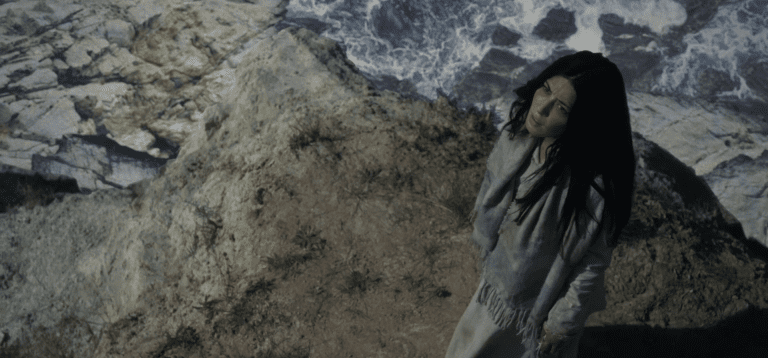
Synopsis. Mary Magdalene is living in Capernaum and haunted by demons, both literal and figurative. When a man flees her home and calls her possessed, the Romans ask Nicodemus, a rabbi visiting from Jerusalem, to perform an exorcism on her — but it fails. Meanwhile, Simon and Andrew are worried that they will lose their fishing boat because they cannot pay their taxes — so Simon stalls for time by lying and telling the tax collector Matthew that he is secretly working for the Roman praetor. Mary Magdalene considers throwing herself off a cliff, but holds back and goes to a pub, where she is about to have a drink when Jesus shows up and reveals that he knows who she is.
–
Gospels. There is very little in this episode that can be tied directly to the gospels, as the series, at this point, is primarily concerned with establishing backgrounds for its main characters before it gets to the stories about them that we know from the Bible.
That being said, the main arc of this episode follows Mary Magdalene — her affliction by demons, and her eventual exorcism by Jesus. These things are mentioned in Luke 8:2, which is the only biblical reference to her outside of the passion narratives.
The episode also suggests that Mary was a prostitute, which is an old tradition in the Western churches but not supported by anything in the gospels. However, to the extent that she might be a prostitute within this series, it is portrayed as a consequence of her victimization by demons and humans alike (it is suggested that she was raped by a Roman soldier once). This stands in stark contrast to other films that have portrayed her prostitution as a form of self-assertive defiance against the moral or patriarchal norms of her time (see, e.g., Coyle & Pichel’s Day of Triumph, Roger Young’s Jesus, etc.).
The episode also suggests that Mary has been suffering from her affliction her whole life; in the prologue, when she is a little girl, it is said that her head hurts sometimes.
The final scene, between Mary and Jesus, foreshadows the way Jesus will appear to Mary — and greet her by name — outside the empty tomb in John 20:18. By putting Mary’s exorcism at the beginning of the series — and by depicting it the way that they do — the producers have allowed for the possibility that the series will come full circle and end on a note that harks back to the beginning, as Jesus greets Mary the way he did before.
–
This episode introduces several other characters who appear in the gospels, though the series has not yet dramatized any of the stories about them from the gospels.
These include:
- Simon, the fisherman who will one day be known as Peter, who figures prominently not just in the gospels but in Acts and the epistles as well;
- Simon’s brother Andrew, who appears in all four gospels as well as the list of apostles in Acts 1:13;
- Matthew the tax collector, who appears in the three Synoptic gospels (Matthew, Mark, and Luke) as well as the list of apostles in Acts 1:13; and
- Nicodemus the Pharisee, who is mentioned only in John’s gospel.
The episode also introduces Simon’s wife, whose existence is implied by the reference to Simon’s mother-in-law in Mark 1:30-31, Matthew 8:14-15 and Luke 4:38-39. It is also explicitly stated in I Corinthians 9:5 that Simon took his wife with him on his missionary journeys. The Bible does not give her a name, but she is called Eden in the series.
Simon also refers to Andrew’s “bug-eating friend”, which would be John the Baptist, who ate locusts and wild honey (Mark 1:6, Matthew 3:4). Andrew was a follower of John’s before he followed Jesus, and he will eventually meet Jesus through John (John 1:35-42).
–
The episode has bits of dialogue that allude to other passages within the New Testament.
For example, Nicodemus tells the people who have gathered to hear him that “what goes into the body of a man defiles him.” Jesus teaches the opposite in Mark 7:14-23 and Matthew 15:10-20, and says it is what comes out of a man that defiles him.
Later, Nicodemus uses his imperfect reflection in a mirror to tell his wife their knowledge of God is incomplete; this echoes Paul’s line of thought in I Corinthians 13:12.
Meanwhile, in another scene, a centurion steps inside a synagogue and says it looks like the Romans aren’t the only ones who are taxing the people. This may be a reference to the temple tax in Matthew 17:24-27, though it is not clear to me that any of the money that went to the Jerusalem temple would have gone to the synagogues in Galilee.
–
Old Testament. The episode begins and ends with Isaiah 43:1 (“Thus says the Lord who created you, O Jacob, and he who formed you, O Israel: Fear not, for I have redeemed you; I have called you by name; you are mine”). It is the passage that Mary Magdalene recites with her father when she is a girl, and it is the passage that Jesus recites when he calls to her by her birth name (and not by the name she is known by in the Red Quarter).
–
Nicodemus says he needs sulfur, nettles, hyssop and wormwood for the exorcism ritual. This does not seem to conform to anything we see in the Old Testament, nor does it match the ancient or modern Jewish rituals described in this Wikipedia article.
During the ritual, Nicodemus calls on “the Watchers and the holy ones” — synonyms for angels, used three times in Daniel 4 — and he mentions the angels Michael, Gabriel, Rafael, Uriel and Reziel by name. Michael and Gabriel are mentioned in the book of Daniel and the New Testament; Rafael is mentioned in the book of Tobit; and Uriel and Reziel come from the apocryphal, pseudepigraphal, or mystical traditions.
Nicodemus also calls the demons “spawn of Beelzebub, Abbadon and Sheol”. Beelzebub or its variant Beelzebul were names for Satan used by the Jews of Jesus’ day (cf. Luke 11:14-20), and they come from the name of a Philistine god in II Kings 1. Abaddon (which means “destruction”) and Sheol are names for the realm of the dead in the Hebrew Bible; Revelation 9:11 says Abaddon is also the name of “the angel of the Abyss”.
–
Throughout the episode, Mary Magdalene is known to her neighbours as “Lilith”, which is the name of a quasi-demonic figure in the Jewish tradition who is thought to have been Adam’s first wife, before Eve. The idea that Adam had a wife before Eve grew out of speculation that the wife who was created with Adam in Genesis 1:27 was not the same person as Eve, who was created at some point after Adam as per Genesis 2:20-25.
The Hebrew word “lilith” appears in the Bible just once, in Isaiah 34:14.
–
Themes. One of the running themes throughout this episode is Jewish adherence to the Law, particularly where the Sabbath is concerned. Nicodemus is a teacher of the Law and complains about people going fishing on the Sabbath; Simon comes up with a scheme to expose rival fisherman who are fishing on the Sabbath; and Andrew cautions Simon against fishing on the Sabbath himself, which Simon says would be permissible under the Pharisaic principle that exceptions can be made when lives are at stake.
–
The episode also underscores the Jewish hope for the messiah. A beggar asks Matthew if he is the messiah (does the beggar ask everyone this?) and then asks him to tell him when the messiah comes, and Hebrew graffiti says the messiah will destroy the Romans.
–
The episode also draws attention to the fact that Simon and other characters would have been married at the time, even if the gospels don’t always mention this.
As noted above, the Bible actually mentions that Simon (aka Peter) had a wife, and it is strongly implied that at least some of the other disciples had wives, too. Jesus tells his disciples that they will be rewarded for leaving their wives, siblings, children and parents in order to follow him (Matthew 19:27-29, Luke 18:28-30), and Paul says Peter and “the other apostles” took their wives with them on their journeys (I Corinthians 9:5).
Most films, however, have ignored the fact that some of the disciples were married.
The existence of Peter’s wife has been acknowledged in a few films, but even then, she is rarely shown onscreen. Peter and Paul has one scene between Peter and his wife, but that film is set during the time of Acts, after Jesus’ ministry. And in The Big Fisherman and A.D. The Bible Continues, Peter’s wife is dead before the story even begins.
So the fact that The Chosen features Simon’s wife as a fairly major character from its very first episode is more than a little groundbreaking. The series even extends the family dynamic, by giving Eden brothers (and, thus, by giving Peter brothers-in-law)!
The episode also gives Nicodemus a wife, who seems to exist mainly to give him someone to express his ideas to when he isn’t with his fellow Pharisees. But whatever the reason for her inclusion might be, it is another sign of how fleshed-out this world is.
–
Historical quibbles. Simon gives himself the nickname “Wine Hands” after punching his brother-in-law near the liver. The idea is that Simon can damage a person’s liver the same way drinking too much wine can damage a person’s liver. However, the connection between excessive drinking and damage to the liver was not made until centuries after this story takes place, and director Dallas Jenkins admits in the roundtable discussion of this episode (embedded below) that this is an anachronism within the episode.
–
Nicodemus tells a joke riffing on the name of the Dead Sea. But was it called the Dead Sea in Bible times? The Hebrew Bible calls it the Salt Sea (Genesis 14:3, Numbers 34:3, Deuteronomy 3:17, etc.), the Desert Sea or the Sea of Arabah (Deuteronomy 4:49, II Kings 14:25), and the Eastern Sea (Ezekiel 47:18, Joel 2:20, Zechariah 14:8). It was known to the Greeks as Lake Asphaltites because of the asphalt there. Apparently one of its Arabic names can be translated “the Dead Sea”, but I don’t know how far back that goes.
–
The episode is set in Capernaum, and an introductory subtitle calls Capernaum a “city”. It would probably be more accurate to call Capernaum a “town” or “village”; the original Hebrew name of the place, Kfar Naḥūm, literally means “Nahum’s village”.
–
Nicodemus and his wife are first seen riding in a carriage that is pulled not by animals but by servants. Was this a thing in first-century Jewish culture, especially for non-royals?
–
Timeline. It’s not entirely clear when this episode is set.
The version that was posted to YouTube in June 2019 says the prologue takes place in AD 2, but the version that is currently streaming on the VidAngel website and the version that was livestreamed in March 2020 both say the prologue takes place in 2 BC.
All three versions agree that the rest of the episode takes place “28 years later”, so the bulk of the episode takes place in AD 30 or in AD 27, depending on which version you are watching. (The two YouTube versions are embedded at the bottom of this post.)
No one knows exactly when the ministry of Jesus took place.
Luke 3:1 says the ministry of John the Baptist began “in the fifteenth year of the reign of Tiberius Caesar, when Pontius Pilate was governor of Judea,” which would be no earlier than AD 26 — and Jesus began his own ministry sometime after that.
Luke 3:23 also states that Jesus was “about thirty years old” when he began his ministry — so if Jesus was born during the reign of Herod the Great (as per Matthew 2:1-20 and Luke 1:5), and Herod died in 4 BC, Jesus would have been 30 by AD 27 at the latest.
The two figures most responsible for Jesus’ death — Pilate and the chief priest Caiaphas, who became high priest in AD 18 — were both removed from office in AD 36. So that is the absolute latest date when the events of the gospels could have taken place.
So both AD 27 and AD 30 fall within the range of plausible dates for this episode.
–
In the prologue, Mary Magdalene’s father says a “new star” has appeared in the heavens. Is this a reference to the star of Bethlehem mentioned in Matthew 2:1-10?
Those who think the star was a natural phenomenon and not a supernatural one have proposed a number of planetary conjunctions and the like that could have been the basis for what the Magi saw, at least one of which did occur in 2 BC. But that would be two years after the generally accepted date of Herod’s death.
So Mary’s father could be referring to the conjunction that took place in 2 BC, but even if he was, he wouldn’t necessarily be referring to the star of Bethlehem.
–
Language issues. A disclaimer at the beginning of the episode says all names, locations and phrases have been “transliterated into English”. So, the film uses names like Jesus instead of Yeshua, Mary instead of Miriam, Simon instead of Shimon, etc.
However, the Jewish characters frequently say “Shabbat” rather than “Sabbath”.
–
The dialogue has a very casual, modern, colloquial feel.
A bartender serves a drink that he says is “fresh off the boat from Cyprus.” (Capernaum is not on the Mediterranean coast, so the drink would have spent some time traveling by land before it got to him.) He also says “religious bigshots” are “full of it”.
When Simon greets his wife by saying, “Hello, love,” she replies, “Don’t you ‘Hello, love’ me.” And when Simon, trying to explain one of his schemes to Andrew, says he met a guy, Andrew says sarcastically, “Get the papyrus! Simon ‘met a guy’!”
–
The man who gives Matthew a ride calls him a “public anus,” which is a play on the Latin word “publicanus” meaning “tax collector”. “Public” and “anus” are derived from Latin, too, so some version of this pun might work in Latin for all I know, though I don’t know if any Aramaic-speaking Jews of the period would have come up with a joke like that.
–
Miscellaneous. In the scene where Nicodemus tries to exorcise Mary Magdalene, she — or the demon speaking through her — says, “You have no power here, teacher.” This is almost exactly what Saruman says to Gandalf through Theoden, just before Gandalf casts Saruman out of Theodon in The Lord of the Rings: The Two Towers.
–
Just before Matthew meets his driver — the one who calls him a “public anus” — he steps in poop, which is not exactly a common Bible-movie trope. On a related note, see this post I wrote a few years ago on the use of rude bodily noises in Bible movies.
–
The Chosen recaps:
Season 1: review | scripture index
Episode recaps: The Shepherd | one | two | three | four | five | six | seven | eight
Season 2: The Messengers review | scripture index
Episode recaps: one | two | three | four | five | six | seven | eight | The Messengers
–
The Chosen can be streamed in full via VidAngel or the show’s app (Android | Apple).
You can also watch the entire first episode here:
https://www.youtube.com/watch?v=craeyJdrCsE
Or you can watch a clip of the failed-exorcism scene on its own:
This episode was also livestreamed on March 29, with an intro by director Dallas Jenkins and an interview with Elizabeth Tabish, who plays Mary Magdalene:
https://www.youtube.com/watch?v=Vyv1W-hsmx8
Jenkins analyzed the episode’s final scene in this video:
And you can watch a roundtable discussion of the episode here:
–
TV show recaps:
Prophet Joseph | The Bible | A.D. The Bible Continues | Of Kings and Prophets
Movie scene guides:
Risen | The Young Messiah | Paul, Apostle of Christ | Mary Magdalene
Previous Post

May 20, 2020
The Chosen -- pilot episode
Next Post

June 2, 2020 The Chosen -- season one, episode two
Browse Our Archives
Select a Category Anglican Planet Articles BC Christian News BC Report Bible Movies Bible Review Blog Books & Culture Campus Times CBC Radio Christianity Today ChristianWeek Essays Faith Today Festival Cinemas Guide Film Journals Georgia Straight Interviews MB Herald National Catholic Register Salvationist Today's Christian Two Chairs Ubyssey Uncategorized Vancouver Courier Vancouver Sun
Select a Month August 2025 April 2025 January 2025 December 2024 November 2024 May 2024 February 2024 December 2023 May 2023 March 2023 November 2022 July 2022 June 2022 May 2022 April 2022 February 2022 January 2022 December 2021 November 2021 October 2021 September 2021 August 2021 July 2021 June 2021 April 2021 March 2021 February 2021 January 2021 December 2020 November 2020 October 2020 August 2020 July 2020 June 2020 May 2020 March 2020 February 2020 January 2020 December 2019 November 2019 September 2019 July 2019 May 2019 April 2019 March 2019 February 2019 January 2019 December 2018 November 2018 October 2018 September 2018 July 2018 June 2018 May 2018 April 2018 March 2018 February 2018 January 2018 December 2017 November 2017 October 2017 September 2017 August 2017 July 2017 June 2017 May 2017 April 2017 March 2017 February 2017 January 2017 December 2016 November 2016 October 2016 September 2016 August 2016 July 2016 June 2016 May 2016 April 2016 March 2016 February 2016 January 2016 December 2015 November 2015 October 2015 September 2015 August 2015 July 2015 June 2015 May 2015 April 2015 March 2015 February 2015 January 2015 December 2014 November 2014 October 2014 September 2014 August 2014 July 2014 June 2014 May 2014 April 2014 March 2014 February 2014 January 2014 December 2013 November 2013 October 2013 September 2013 August 2013 July 2013 June 2013 May 2013 April 2013 March 2013 February 2013 January 2013 December 2012 November 2012 October 2012 September 2012 August 2012 July 2012 June 2012 April 2012 January 2012 January 2011 December 2010 November 2010 October 2010 September 2010 August 2010 July 2010 June 2010 May 2010 April 2010 March 2010 February 2010 January 2010 December 2009 November 2009 October 2009 September 2009 August 2009 July 2009 June 2009 May 2009 April 2009 March 2009 February 2009 January 2009 December 2008 November 2008 October 2008 September 2008 August 2008 July 2008 June 2008 May 2008 April 2008 March 2008 February 2008 January 2008 December 2007 November 2007 October 2007 September 2007 August 2007 July 2007 June 2007 May 2007 April 2007 March 2007 February 2007 January 2007 December 2006 November 2006 October 2006 September 2006 August 2006 July 2006 June 2006 May 2006 April 2006 March 2006 February 2006 January 2006 December 2005 November 2005 October 2005 September 2005 August 2005 July 2005 June 2005 May 2005 April 2005 March 2005 January 2005 December 2004 November 2004 October 2004 September 2004 August 2004 July 2004 June 2004 May 2004 April 2004 March 2004 February 2004 January 2004 November 2003 October 2003 August 2003 July 2003 June 2003 May 2003 January 2003 December 2002 November 2002 August 2002 July 2002 June 2002 May 2002 March 2002 January 2002 December 2001 November 2001 September 2001 August 2001 July 2001 June 2001 April 2001 March 2001 February 2001 December 2000 November 2000 October 2000 September 2000 August 2000 July 2000 June 2000 May 2000 April 2000 March 2000 January 2000 October 1999 August 1999 May 1999 April 1999 February 1999 January 1999 December 1998 November 1998 October 1998 August 1998 July 1998 June 1998 April 1998 March 1998 January 1998 November 1997 September 1997 July 1997 June 1997 April 1997 March 1997 February 1997 January 1997 December 1996 October 1996 September 1996 June 1996 March 1996 February 1996 January 1996 April 1995 November 1994 September 1994 September 1991
Follow Us!
TAKE THE
Religious Wisdom Quiz
What does "Salem" (as in Melchizedek, king of Salem) mean?
Select your answer to see how you score.
Light Ark Peace Joy
Related posts from FilmChat

Joseph of Egypt – the Chosen spin-off announces...
Exclusive: A clip from Angel Studios' The King...
Exclusive: Watch a clip from Angel Studios' Brave...

Exclusive: Watch a clip from Angel Studios' Homestead
TRENDING AT PATHEOS Religious Music & Entertainment

A Christian, a Narnia Fan, and a Filmmaker...
Watching The Narnia Trailer As A Fan And A Filmmaker Ever since...

Great Spiritual Horror Films of the 20th Century...
For the Christian, horror movies are often troubling—and many would say that...

"Les Diabolique" and Transgression
Alongside something like Arrival, Vertigo, or Charade, Les Diaboliques is a...

"The Plague Dogs" and Mortality
So, flashback to the late 70s, early 80s. Walt Disney Studios is...

With the recent and highly successful release of Christopher Nolan’s epic film,...

"L'avventura" and Human Weakness
Today's piece is going to be a little different for a few...
view all Religious Music & Entertainment blogs
Ad-Free & Subscriber Log-In Subscription Support
- About Us
- 2026 Calendar
- Videos
- Podcasts
- Library of World Religions
- Faith In Media Tracker
- Advertise With Us
- Write for Us
- Privacy Policy
- Terms of Service
- Do Not Sell My Data
- Contact Us
- Radiant Digital
- Manage Newsletter Subscriptions
- Unsubscribe From Notifications
- Sitemap
Copyright 2008-2026, Patheos, part of the Radiant Digital network of media brands. All rights reserved.
Subscription Support Ad-Free & Subscriber Log-In
Follow Patheos