
BuddhistCatholicContemplativeEvangelicalGeneral ChristianHinduJewishLatter-day SaintMuslimNew VisionsProgressive Christian
Beliefs
- Buddhist
- Catholic
- Contemplative
- Evangelical
- General Christian
- Hindu
- Jewish
- Latter-day Saint
- More Voices
- Muslim
- New Visions
- Pagan
- Progressive Christian
Topics
- Religion News
- Food and Religion
- Sports and Religion
- Religious Art
- Religious Music and Entertainment
- Religious Events
- History and Religion
- Style and Religion
- Politics and Religion
- Women in Religion
- Recreation Outdoors and Religion
- Business Finance and Religion
- Careers Workplace and Religion
- Education and Religion
- Family Parenting and Religion
- Health Fitness and Religion
- Home and Religion
- Relationships and Religion
- Technology and Religion
- Travel and Religion
Columnists
- Buddhist Columnists
- Business Finance and Religion Columnists
- Careers Workplace and Religion Columnists
- Catholic Columnists
- Contemplative Columnists
- Education and Religion Columnists
- Evangelists Columnists
- Family Parenting and Religion Columnists
- General Christian Columnists
- Health Fitness and Religion Columnists
- Hindu Columnists
- History and Religion Columnists
- Home and Religion Columnists
- Jewish Columnists
- More Voices Columnists
- Latter Day Columnists
- Muslim Columnists
- New Visions Columnists
- Nonreligious Columnists
- Pagan Columnists
- Politics and Religion Columnists
- Progressive Columnists
- Recreation Outdoors and Religion Columnists
- Relationships and Religion Columnists
- Religion News Columnists
- Religious Art Columnists
- Religious Events Columnists
- Religious Music and Entertainment Columnists
- Sports and Religion Columnists
- Style and Religion Columnists
- Technology and Religion Columnists
- Travel and Religion Columnists
- Women in Religion Columnists
Resource Library
- 2026 Calendar
- Library of World Religions
- The 100 Most Holy Places on Earth
- Patheos Answers
- Podcasts
- Videos
- Faith Leaders Database
- Anglican Episcopalian
- Bahai
- Baptist
- Buddhism
- Christianity
- Confucianism
- Eastern Orthodoxy
- Hinduism
- Holiness and Pentecostal
- ISKCON
- Islam
- Judaism
- Lutheran
- Methodist
- The Church of Jesus Christ of Latter-day Saints
- New Age
- Paganism
- Presbytarian and Reformed
- Protestantism
- Religion Behind the Scenes
- Roman Catholic
- Scientology
- Shia Islam
- Sikhism
- Sufism
- Sunni Islam
- Taoism
- Zen
- See all religions
Research Tools
 Ad-Free & Subscriber Log-In Subscription Support
Ad-Free & Subscriber Log-In Subscription Support
Follow Patheos 

- Trending:
- Forgiveness
- |
- Marriage
- |
- Consciousness
- |
- Death Penalty
- |
- Election
- |
- Halloween

-
Articles
- Home
- Religious Music & Entertainment
- Interview: Becoming Truly Human director Nathan Jacobs on being “none of the above” and giving the religiously unaffiliated a chance to be heard
Interview: Becoming Truly Human director Nathan Jacobs on being “none of the above” and giving the religiously unaffiliated a chance to be heard
Last updated on: August 1, 2017 at 9:38 pm by Peter T. Chattaway
Interview: Becoming Truly Human director Nathan Jacobs on being “none of the above” and giving the religiously unaffiliated a chance to be heard 2017-08-01T21:38:13-07:00 Peter T. Chattaway
Patheos Explore the world's faith through different perspectives on religion and spirituality! Patheos has the views of the prevalent religions and spiritualities of the world.
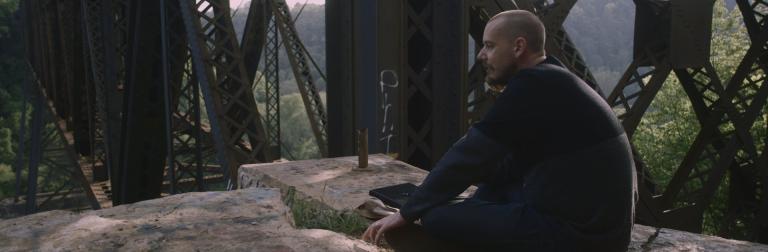
The fastest-growing religious group in North America may be the group that claims no religious affiliation whatsoever. Up to one in four people now say “None of the above” when asked if they belong to one of the traditional religions. But, precisely because so-called “Nones” do not identify with a religious community, they don’t often find opportunities to talk about what they believe, and what they don’t believe.
Kentucky-based filmmaker Nathan Jacobs tries to remedy that somewhat in Becoming Truly Human, a documentary (opening August 22) that profiles several Nones — individually and as a group — who cover the spectrum from those who have no religion at all to those who broadened their definition of religion beyond the narrow parameters of their upbringing. Along the way, Jacobs tells his own story as a None who eventually moved beyond None-ness.
I had a chance to speak to Jacobs by phone. What follows below — after the movie clip — is a lightly edited transcript of my conversation with Jacobs.
– – –
The press release for this film, and some of the promotion around it, focuses on the Nones, how the film looks at the Nones – and we’re not talking about N-U-N-S, of course –
Jacobs: Right!
— but there’s also your own story, which is woven throughout the film, and right at the beginning, the opening company credits include Ancient Faith Films and 5 Sees Films, which are Orthodox companies. So is this a film about Nones? Is it a film about Orthodoxy? Is it a film about both? How would you characterize that?
Jacobs: I would characterize it as a film about Nones, and even my own story — it ultimately ends up in Eastern Orthodoxy — I still see my journey in there as a journey of a None. So if you track the parallels between my story and the other Nones, mine parallels theirs for 75% of it. It is a journey with all the steps along the way that they have, in terms of having some kind of a religious upbringing, some kind of disillusionment, a moving away, an exploration of spirituality outside of organized religion, and it’s only sort of down that road that I eventually end up pulling on a thread that leads me to Eastern Orthodoxy ultimately.
I think how I see my story relating to the Nones in this film really is that what my story raises implicitly is the question of: Just because a person is a None and they’ve walked away from religion, does that mean they are in perpetuity religiously unaffiliated, or does it mean that they’ve simply walked away from religion in a specific way in which they have experienced it? And from everything I’ve found in interviewing Nones and of course looking at my own experience as a former None, that’s what I’ve tended to find, is that when they say they are unaffiliated with religion, what they really mean, is “I was raised Baptist and I don’t believe that any more,” or “I was raised Catholic and I don’t believe that any more.”
In my case I was raised Lutheran, and I don’t believe that any more. And that tends to be what they mean: they have a very narrow sense in which they are saying they are religiously unaffiliated. Many of them, in their stories, when they talk about moving away from religion, that movement is— For example, Kristen, the African-American gal who you see in the trailer, it was actually reading about other world religions that moved her away from her Christian upbringing. So it wasn’t as if religion, full stop, didn’t appeal to her. It was actually that other non-Christian ideas started to appeal to her, and that’s what moved her away from Christianity in the very narrow sense in which she experienced it. And there’s something very similar about that with me. I moved away from a very specific form of western Christianity but still embraced the God of the philosophers, and had sort of created this syncretistic philosophical secular religion — as I called it, becoming religious without religion — and only later started finding kindred spirits in eastern Christianity.
So I suppose that would be the bottom line, because in my own story, I think I was asking big questions, and I don’t think that I was “lost” or something like that just because I walked away from Lutheranism. And that’s really what the film is raising. Just because they’re religiously unaffiliated and they’ve walked away from that specific religious upbringing, does that mean that their journey is over and they’re Nones in perpetuity? Or does it mean that they’re merely searching for something that does resonate with them, and right now that’s outside of religion?
One of the questions that comes up whenever one of these surveys comes out and they say a large percentage of the population identifies as “none of the above”, you sometimes see atheists point to that as evidence of how their numbers are increasing, but in many cases it’s been said that it might be more accurate to say that these people are non-denominational, they haven’t abandoned a form of theism necessarily but it’s become sort of harder to define for them.
Jacobs: Right. We screened probably upwards of fifty Nones in preparation for the film, before we selected our group, so we have a sense of the spectrum, and our screening of the Nones did show us just that. Very few of the folks we screened were self-identified atheists. That was a very small percentage of the Nones that we found. I would say the largest percentage leans toward agnostic, but even those who say they are agnostic lean theist in the sense that they believe in a higher power, they’re just not sure if it’s an anthropomorphic deity, they don’t feel a need to put a name on that, or whatever it may be. And so in my case, the case of Basil [the name Jacobs goes by in the film], my story was I was a philosophical pantheist, so in our surveys we had people who were theists, they lean toward “I do believe in God,” or explicitly “I believe in God,” they were sort of agnostic with theistic leanings, and some of them are pantheists, and some of them are atheists, but I would say in our screening of about fifty Nones, only about two were explicitly self-identified atheists.
Did either of those two make it into your final group? I’m guessing at least one of them did.
Jacobs: Joshua.
Joshua, right, that’s what I thought. Because he’s the one who said he was looking for “a measurable God.”
Jacobs: That’s right. He likes measuring molecules, that’s what he does for his job, so he wanted a God for whom he could do the same.
I was going to ask how you found these people. You say you screened fifty people, where did you find them all? From a certain group? From across the country?
Jacobs: We’re working with groups from all over, so one of the distribution entities is in L.A., one of our advertising entities is in Nashville, one of the post houses we worked with is in Vancouver, but I myself am actually based in Kentucky. So since we knew we were going to be shooting there, we had a criterion where we knew, given the limitations of our budget, we could only really address people who were within a reasonable driving distance. And so that wasn’t necessarily limited to Kentucky — Laura, for example, is from Cincinnati — but we did try to limit the scope of who we were surveying, given the limitations of our operating budget.
But I would say the person who deserves the most credit for finding the Nones would be Josh Lourie, who is our associate producer on the film. Josh would basically just go out and he would go anyplace where he could find people and start randomly talking to them. So for example, there’s an open mic night at the bar, he’d go up and announce, “Hey, I’m a film producer and we’re working on this film and it’s about Nones, the religiously unaffiliated, and here’s what the group is and here’s the stats and if you hear that and you think you fit into that group, I’ll be sitting over there at that table, come talk to me.” And basically Josh would do things like that.
It wasn’t limited to any one location. It was anything from open mic nights to parties to bars to word of mouth, going to people and saying, “Hey, would you know any Nones?” And I think we may have even had a Craigslist ad or something. It wasn’t any particular way we found them.
I’m slightly intrigued or amused when you say you would ask people, “Hey, do you know any Nones?” Did that word have to be explained to people?
Jacobs: Yeah, normally it has to be explained several times, actually. I was familiar with the experience in some of these greetings where I’d say, “We’re doing a film on Nones. Now that’s not N-U-N, it’s N-O-N-E, None,” and then I would explain the term, and they’re nodding, “Okay, okay, I got it,” and then as I get into talking about the film, they’re like, “So nuns are walking away from religion, huh?” And I’d say, “Now hold on, are you going back to Catholic nuns or something like that?” So we’d go back to the term and explain it because it wouldn’t always stick the first time.
Given the very undefined nature of belief for people in this category, what was it like getting them to sit down and essentially commit to the record what their thoughts are right now? I think Tiffany in particular says she doesn’t know where she’ll be in a couple years. So was there any trepidation about saying anything now, knowing that in five years they could see this film and say, “Oh, but that’s not me any more”?
Jacobs: Well, that’s what I expected, that there probably would be a general hesitation to talk, that they’d sort of have their guard up. But what I actually found — surprisingly, to me — was the exact opposite. I found that they were very open to talking, and that as I asked questions, because all along, I never divulged what my religious beliefs are, if any. I always just treated them as an interviewer or as the director on this project — “Don’t worry about what I think” — and I just asked them questions, and they’re similar sort of questions to what you see in the film: Did you have any kind of religious upbringing? What were your parents like? Were both of your parents religous? Etc., etc. Those are the sorts of things that would come up. And they just really opened up right away.
And what I found most surprising was that the Nones — and I guess this just didn’t occur to me until we were working on pre-production — but the Nones, as people who have walked away from religion, typically don’t have any outlet for talking about religion, so folks who maybe go to church, it’s normal for them, they go to church, they hear a preacher talk about God, they maybe go to coffee hour and a theological topic comes up, people ask what you’re reading, they have these conversations all the time. The Nones, having walked away from that, typically — from our screening of them — don’t have anybody to talk to about this. They believe these things, they don’t say them out loud, they don’t hear other people say them out loud, it’s just not something they discuss.
In fact, just to give you a sense of how extreme that can get, one couple that we interviewed — and I really loved them and wanted to cast them for the film, but there was a scheduling conflict and we couldn’t work it out — but they’ve been married for three years, and had never once discussed whether they believed in God, and so, sitting with me interviewing them was the first time they had heard what the other person thought about that topic, and they discovered in that discussion that one leans heavily atheist — she was the other one who was an explicit atheist — but the other one leans heavily theist, and they didn’t even know that about each other until I was asking them questions! And they were shocked! Who is this person I’m married to? They had no idea.
And I also found that many of the Nones that I interviewed, just because they identify as no longer religiously affiliated, that doesn’t mean they’re necessarily comfortable with that. A lot of them almost wanted me to engage them. I mean, I was really clear, “I’m not here to argue with you or debate you or try to persuade you of anything, I’m just interviewing you.” And some of them really started to say, “If you have something to offer me, if you can persuade me of something other than what I currently believe, please do. I’m not comfortable with where I am, it’s just where I am.” And I often found that once we had the initial cut of the film, and we showed snippets to other Nones, I found that some Nones found it a very emotional experience to hear someone say out loud things that they think that they never get to say.
So that was something that was most surprising for me, was to realize that Nones aren’t an outspoken regularly dialoguing group, in fact this is very internal, very personal, and rarely — because of their disassociation from religion — rarely do they have an opportunity to talk about this.
So basically they don’t have that community outlet that people of a more religious bent would have.
Jacobs: That’s right. And in many of the cases, as you see in the interviews, for whatever reason they walked away with either the impression that asking hard impressions is not welcome or that there aren’t really any good answers to their questions and they just stopped asking. So, who else are they going to go to, then, at that point?
Just backing up a bit: Did you say that when you spoke to them or interviewed them, you didn’t reveal your own story to them yet? I assume the people you profile in the film have seen the film by now–
Jacobs: Actually, they have not.
Oh really!
Jacobs: I’m showing it to them tomorrow. It’s the first time they’ll see the entire movie. So I wish I had that information for you, but not until tomorrow. But here’s what I told them: I did tell them the structure of the film. I explained that in this film, three things are going to be woven throughout: there’s these individual stories, which are your stories; there’s these group discussions, where we show the spectrum of all the Nones by allowing you to interact with and disagree with each other; and then there’s also a third story of a None who ultimately ends up in Eastern Orthodoxy. So I told them all of that, and I laid out what the intent of the film was, but I did not tell them that I was the third story. So they know that there’s one in there, but they didn’t know who it was. Now, the fact that they’ve all seen the opening four minutes of the film — I presume they now know that that’s me. But during filming, they didn’t know. They didn’t know if I was a None or an atheist or a theist or a Christian or a Muslim, they had no idea.
I was going to ask what kind of reaction they had to the film. Have they reacted to the first four minutes at all, to your knowledge?
Jacobs: They have. Their reaction to the first four minutes is very enthusiastic. I have shown the entire film to a lot of different people: religious folks, Nones, it’s just that that group of Nones I was trying to get together all at one time, and that’s tomorrow. But their reaction to the first four minutes has been very positive, very enthusiastic, they think it looks beautiful, and they’ve had these sorts of emotional reactions, like it’s just really powerful to hear people say out loud the things I’ve thought but you never say.
Also, a lot of them tend to immediately react and say, “Man, that’s something that my friend always says,” so they tend to start to latch hold of some of the soundbites, so to speak, and say that “that person represents me”. “This person who said that, they’re so much like this other person I know.” And so there is this tendency to self-identify with [the interviewees], and that’s been part of the reaction. But I’ll be very curious to see their reaction to the whole.
I have seen other Nones react to the film as a whole, and their reaction has been very positive, including one of the Nones — this one couple that I watched it with — they thought it was the best thing they’ve ever seen on religion, and everyone should watch it. So that was a very encouraging reaction. I don’t know if all the Nones will react that way, but the responses from the Nones have been positive. I would say the most negative responses to the film — which are not that many, I’d say about 90 percent of the viewers we’ve screened it with have been positive — but the most negative reactions have probably been from Christians who have seen it.
What kind of reactions are you getting from them?
Jacobs: Usually one of the things I find — and it always disheartens me to share this, but again, I would say that this is a smaller percentage — there’s sort of this ten percent who in many ways start to articulate the sorts of reactions to the Nones that the Nones themselves articulate having experienced growing up, that moved them toward None-ery. So there are people who say, “I don’t understand why they’re asking these questions? I don’t understand why they think this way? I don’t know why I’m listening to these people? Why doesn’t somebody just shake them and get their head on right? Why doesn’t someone react to them? Why are you letting them, in this film, talk? Why aren’t you shutting them down and debating with them?” And it’s basically all this stuff — this lack of sympathy response to it, lack of understanding, lack of humanizing in reaction to that — those are the harshest reactions.
As well as some who don’t just react that way to the Nones, but even to my entire story. “There’s so much book-learning and studying and asking all these questions throughout the film. I know that for me, it’s just, the Bible says so, and it’s not about religion, it’s about relationship,” and really this sort of bumper-sticker-like reaction that none of the Nones are okay with. “Okay, just have faith.” “Well I don’t, so now what do I do?” “The Bible says so.” “Well I don’t believe the Bible, so what do I do?” And those have always been the sort of harshest reactions, perhaps to no surprise, but it’s also disheartening, because part of the point of the film was to humanize the Nones and let them be vulnerable and real people with real experiences and real journeys and real struggles, which they put out there for an audience, which isn’t easy to do.
– – –
Becoming Truly Human will start showing in churches and other “alternative venues” on August 22. See the film’s website and Facebook page for more info.
Previous Post

July 26, 2017
Watch: The first trailer for Sony Animation's The Star
Next Post

August 21, 2017 Mary Magdalene gets bumped to Easter
Browse Our Archives
Select a Category Anglican Planet Articles BC Christian News BC Report Bible Movies Bible Review Blog Books & Culture Campus Times CBC Radio Christianity Today ChristianWeek Essays Faith Today Festival Cinemas Guide Film Journals Georgia Straight Interviews MB Herald National Catholic Register Salvationist Today's Christian Two Chairs Ubyssey Uncategorized Vancouver Courier Vancouver Sun
Select a Month August 2025 April 2025 January 2025 December 2024 November 2024 May 2024 February 2024 December 2023 May 2023 March 2023 November 2022 July 2022 June 2022 May 2022 April 2022 February 2022 January 2022 December 2021 November 2021 October 2021 September 2021 August 2021 July 2021 June 2021 April 2021 March 2021 February 2021 January 2021 December 2020 November 2020 October 2020 August 2020 July 2020 June 2020 May 2020 March 2020 February 2020 January 2020 December 2019 November 2019 September 2019 July 2019 May 2019 April 2019 March 2019 February 2019 January 2019 December 2018 November 2018 October 2018 September 2018 July 2018 June 2018 May 2018 April 2018 March 2018 February 2018 January 2018 December 2017 November 2017 October 2017 September 2017 August 2017 July 2017 June 2017 May 2017 April 2017 March 2017 February 2017 January 2017 December 2016 November 2016 October 2016 September 2016 August 2016 July 2016 June 2016 May 2016 April 2016 March 2016 February 2016 January 2016 December 2015 November 2015 October 2015 September 2015 August 2015 July 2015 June 2015 May 2015 April 2015 March 2015 February 2015 January 2015 December 2014 November 2014 October 2014 September 2014 August 2014 July 2014 June 2014 May 2014 April 2014 March 2014 February 2014 January 2014 December 2013 November 2013 October 2013 September 2013 August 2013 July 2013 June 2013 May 2013 April 2013 March 2013 February 2013 January 2013 December 2012 November 2012 October 2012 September 2012 August 2012 July 2012 June 2012 April 2012 January 2012 January 2011 December 2010 November 2010 October 2010 September 2010 August 2010 July 2010 June 2010 May 2010 April 2010 March 2010 February 2010 January 2010 December 2009 November 2009 October 2009 September 2009 August 2009 July 2009 June 2009 May 2009 April 2009 March 2009 February 2009 January 2009 December 2008 November 2008 October 2008 September 2008 August 2008 July 2008 June 2008 May 2008 April 2008 March 2008 February 2008 January 2008 December 2007 November 2007 October 2007 September 2007 August 2007 July 2007 June 2007 May 2007 April 2007 March 2007 February 2007 January 2007 December 2006 November 2006 October 2006 September 2006 August 2006 July 2006 June 2006 May 2006 April 2006 March 2006 February 2006 January 2006 December 2005 November 2005 October 2005 September 2005 August 2005 July 2005 June 2005 May 2005 April 2005 March 2005 January 2005 December 2004 November 2004 October 2004 September 2004 August 2004 July 2004 June 2004 May 2004 April 2004 March 2004 February 2004 January 2004 November 2003 October 2003 August 2003 July 2003 June 2003 May 2003 January 2003 December 2002 November 2002 August 2002 July 2002 June 2002 May 2002 March 2002 January 2002 December 2001 November 2001 September 2001 August 2001 July 2001 June 2001 April 2001 March 2001 February 2001 December 2000 November 2000 October 2000 September 2000 August 2000 July 2000 June 2000 May 2000 April 2000 March 2000 January 2000 October 1999 August 1999 May 1999 April 1999 February 1999 January 1999 December 1998 November 1998 October 1998 August 1998 July 1998 June 1998 April 1998 March 1998 January 1998 November 1997 September 1997 July 1997 June 1997 April 1997 March 1997 February 1997 January 1997 December 1996 October 1996 September 1996 June 1996 March 1996 February 1996 January 1996 April 1995 November 1994 September 1994 September 1991
Follow Us!
TAKE THE
Religious Wisdom Quiz
According to Colossians, in whom are hidden all the treasures of wisdom and knowledge?
Select your answer to see how you score.
God the Father The Scriptures Christ The Holy Spirit
Related posts from FilmChat

Joseph of Egypt – the Chosen spin-off announces...

Exclusive: A clip from Angel Studios' The King...

Exclusive: Watch a clip from Angel Studios' Brave...

Exclusive: Watch a clip from Angel Studios' Homestead
TRENDING AT PATHEOS Religious Music & Entertainment

"Les Diabolique" and Transgression
Alongside something like Arrival, Vertigo, or Charade, Les Diaboliques is a...

"The Plague Dogs" and Mortality
So, flashback to the late 70s, early 80s. Walt Disney Studios is...

With the recent and highly successful release of Christopher Nolan’s epic film,...

"L'avventura" and Human Weakness
Today's piece is going to be a little different for a few...

I first want to apologize for not posting or writing anything. I'm...

I've engaged in the multi-year project of reading through the Church Fathers,...
view all Religious Music & Entertainment blogs
Ad-Free & Subscriber Log-In Subscription Support
- About Us
- 2026 Calendar
- Videos
- Podcasts
- Library of World Religions
- Faith In Media Tracker
- Advertise With Us
- Write for Us
- Privacy Policy
- Terms of Service
- Do Not Sell My Data
- Contact Us
- Radiant Digital
- Manage Newsletter Subscriptions
- Unsubscribe From Notifications
- Sitemap
Copyright 2008-2026, Patheos. All rights reserved.
Subscription Support Ad-Free & Subscriber Log-In
Follow Patheos