
BuddhistCatholicContemplativeEvangelicalGeneral ChristianHinduJewishLatter-day SaintMuslimNew VisionsProgressive Christian
Beliefs
- Buddhist
- Catholic
- Contemplative
- Evangelical
- General Christian
- Hindu
- Jewish
- Latter-day Saint
- More Voices
- Muslim
- New Visions
- Pagan
- Progressive Christian
Topics
- Religion News
- Food and Religion
- Sports and Religion
- Religious Art
- Religious Music and Entertainment
- Religious Events
- History and Religion
- Style and Religion
- Politics and Religion
- Women in Religion
- Recreation Outdoors and Religion
- Business Finance and Religion
- Careers Workplace and Religion
- Education and Religion
- Family Parenting and Religion
- Health Fitness and Religion
- Home and Religion
- Relationships and Religion
- Technology and Religion
- Travel and Religion
Columnists
- Buddhist Columnists
- Business Finance and Religion Columnists
- Careers Workplace and Religion Columnists
- Catholic Columnists
- Contemplative Columnists
- Education and Religion Columnists
- Evangelists Columnists
- Family Parenting and Religion Columnists
- General Christian Columnists
- Health Fitness and Religion Columnists
- Hindu Columnists
- History and Religion Columnists
- Home and Religion Columnists
- Jewish Columnists
- More Voices Columnists
- Latter Day Columnists
- Muslim Columnists
- New Visions Columnists
- Nonreligious Columnists
- Pagan Columnists
- Politics and Religion Columnists
- Progressive Columnists
- Recreation Outdoors and Religion Columnists
- Relationships and Religion Columnists
- Religion News Columnists
- Religious Art Columnists
- Religious Events Columnists
- Religious Music and Entertainment Columnists
- Sports and Religion Columnists
- Style and Religion Columnists
- Technology and Religion Columnists
- Travel and Religion Columnists
- Women in Religion Columnists
Resource Library
- 2026 Calendar
- Library of World Religions
- The 100 Most Holy Places on Earth
- Patheos Answers
- Podcasts
- Videos
- Faith Leaders Database
- Anglican Episcopalian
- Bahai
- Baptist
- Buddhism
- Christianity
- Confucianism
- Eastern Orthodoxy
- Hinduism
- Holiness and Pentecostal
- ISKCON
- Islam
- Judaism
- Lutheran
- Methodist
- The Church of Jesus Christ of Latter-day Saints
- New Age
- Paganism
- Presbytarian and Reformed
- Protestantism
- Religion Behind the Scenes
- Roman Catholic
- Scientology
- Shia Islam
- Sikhism
- Sufism
- Sunni Islam
- Taoism
- Zen
- See all religions
Research Tools
 Ad-Free & Subscriber Log-In Subscription Support
Ad-Free & Subscriber Log-In Subscription Support
Follow Patheos 

- Trending:
- Forgiveness
- |
- Marriage
- |
- Consciousness
- |
- Death Penalty
- |
- Election
- |
- Halloween

-
Articles
- Home
- Religious Music & Entertainment
- The Nativity Story marks its 10th anniversary today
The Nativity Story marks its 10th anniversary today
Last updated on: December 1, 2016 at 10:34 pm by Peter T. Chattaway
The Nativity Story marks its 10th anniversary today 2016-12-01T22:34:23-08:00 Peter T. Chattaway
Patheos Explore the world's faith through different perspectives on religion and spirituality! Patheos has the views of the prevalent religions and spiritualities of the world.
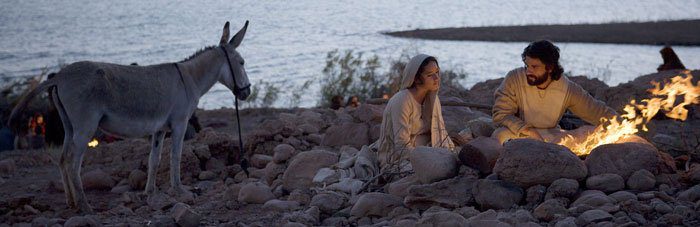
Today marks the tenth anniversary of the theatrical release of The Nativity Story — the first attempt by a big-ish Hollywood studio to replicate the box-office success that Mel Gibson had found two years earlier with The Passion of the Christ.
As we now know, things didn’t quite turn out the way the studio hoped, but the film had its merits, and a few of the people involved went on to bigger and better things — notably director Catherine Hardwicke, who went on to direct the first film in the Twilight franchise (one of the top-grossing films ever made by a female director), and co-star Oscar Isaac, who went on to win critical and fanboy praise for films as diverse as Ex Machina, Inside Llewyn Davis and Star Wars: The Force Awakens.
I wrote several articles about the film and its place within the Bible-movie genre when it first came out, and I’ve mentioned it in a few blog posts since then too. Here’s a quick rundown of some of the things I have written about this film:
My interview with Hardwicke, Isaac and Shohreh Aghdashloo (November 23, 2006):
Whereas Mel Gibson’s movie was very masculine, Hardwicke’s is more feminine; The Passion of the Christ is full of scenes in which men beat up other men, but The Nativity Story takes time out to show Mary and her kinswoman Elizabeth, mother of John the Baptist, feeling the movements of the babies in each other’s wombs. “That’s kind of girly, huh?” Hardwicke laughs. “That’s kind of the chick flick part of it.”
She says she wanted to be as true to the material as she could, and not get too distracted by modern debates over the place of women in religion — but if this part of the gospel story happens to cast women in a positive light, then so much the better. “Of course, Mary has inspired women all over the world for two thousand or more years,” says Hardwicke, “so I think that, yes, I wanted to portray them with strength and dignity and beauty and continue inspiring people by these women.”
My article on ethnically appropriate casting in Jesus films (November 24, 2006):
In 1961, Metro–Goldwyn–Mayer produced King of Kings, the first major Hollywood film about the life of Christ since the silent era. The virgin Mary was played by Siobhan McKenna, a respected Irish actress in her late 30s, and the villainous Herod the Great was described by the narrator as “an Arab of the Bedouin tribe.”
Nearly half a century later, things have flipped around. The Nativity Story, produced by New Line Cinema (the same studio that made The Lord of the Rings), casts an Irishman as King Herod; and several of the supporting actors were born in primarily Muslim territories, such as Iran and Sudan, or can trace their family roots there.
Mary in the new film is played by Keisha Castle-Hughes, a 16-year-old New Zealander who was nominated for an Oscar for her role in Whale Rider. Although Castle-Hughes is part Maori, this is at least the second time she has played a Middle Easterner; two years ago, she played an Arab-American in a music video by Prince.
Gone are the days when blue-eyed, blonde-haired actors and actresses could pass themselves off as the Jewish Messiah or his immediate friends and family. Audiences expect more “authenticity” these days, and filmmakers eager to promote their films as something new and different are more than willing to provide it.
My interview with screenwriter Mike Rich and producers Marty Bowen and Wyck Godfrey (November 30, 2006):
As universal as the film may be, it still contains a number of messages that can only be described as deeply and particularly Christian. For example, one of the Magi declares, upon seeing the Christ child, that the baby in Mary’s arms is “God made into flesh.” Did [screenwriter Mike] Rich have to fight to keep that line in? Was he concerned at all that the studio or the filmmakers might try to tone that sort of thing down?
“It was on the bubble, from start to finish, it really was,” says Rich. “But I’m glad we got it in there. It was a line that follows up [an earlier line, in which Jesus is called] ‘the greatest of kings born in the most humble of places’ — and there’s nothing to validate or confirm that that statement was made at that particular moment, but it’s the overriding backbone to Christian faith, so I wanted to get it in there.”
My article on how Mary has been depicted in the movies (November 30, 2006):
Fortunately, because it is rooted so firmly in the Bible, the birth of Jesus provides an excellent place for Christians of all stripes to explore the character of Mary. And as far as the movies are concerned, The Nativity Story just may be the boldest attempt yet to flesh out the one from whom God the Son himself took flesh.
My review of the film (December 1, 2006):
Here is where the tension between the film’s ancient and modern sensibilities is at its most obvious. Director Catherine Hardwicke spent years as a production designer before she got behind the camera, and her quest for authenticity is all over The Nativity Story’s set design, especially when she throws in brief educational cutaway shots of peasants treading grapes or milking goats. But the film also gives Mary and her parents a taste of the intergenerational friction that was a major theme in Hardwicke’s previous directorial efforts, Thirteen and Lords of Dogtown — and at times, the interactions within Mary’s family feel a tad anachronistic.
The audio commentary I recorded with my priest (March 27, 2007):
I almost always enjoy conversational audio commentaries more than commentaries where a person talks all by himself, and I think this commentary is a lot better than it would have been if it had been just me yakking. That said, it was a challenge to hold on to some trains of thought, as Fr. Justin and I picked up on different aspects of the movie simultaneously, and especially as we tried to keep up with the movie; there are quite a few points where Fr. Justin and I comment on a scene that has already passed, because during the scene we were busy talking about something else!
My post on films that have depicted Jesus in the nude (April 23, 2013):
In this film, the baby is shown in all its messy nakedness for more or less the same reason the filmmakers made a point of casting actors of a certain ethnicity or showing the details of everyday life in a first-century village; it’s all part of a general effort to be “realistic”. But the “realism” of this scene only goes so far. While this film, like a few others, does show Mary experiencing labour pains, it does not show Joseph or anyone else cutting an umbilical cord; the baby seems to have come out of the womb untethered. Even more interestingly, there is a point during the delivery of Jesus when the film suddenly fades to white. Details like these, intentionally or not, seem to hark back to a tradition that is at least as old as the 2nd-century Infancy Gospel of James, which holds that “a great light appeared in the cave so that their eyes could not bear it. And a little while later the same light withdrew until an infant appeared.”
My post on the politics of the Magnificat in film (December 25, 2014):
The only film I can find that keeps the more political bits of the Magnificat — not counting the Genesis Project, which was obliged to keep those bits by virtue of being a complete word-for-word adaptation of the text — is, perhaps surprisingly, The Nativity Story (2006), which was criticized when it first came out for being too mild for a Bible film released only two years after The Passion of the Christ.
Significantly, this film omits the Magnificat from the scene in which Mary first meets Elizabeth, but it makes up for this by giving the Magnificat the last word, by placing it at the end of the movie and allowing it to sum up what the story was about. . . .
Putting the Magnificat at the end of the film also allows the filmmakers to develop a character arc for Mary. She has doubts at first — doubts about her betrothal to Joseph, doubts about her destiny as the mother of the Messiah — but those doubts are resolved by the end of the film. In addition to summing up the movie’s themes, the Magnificat reflects the confidence that Mary has found in her calling.
You can find more posts about the film via this tag and this index. Enjoy!

Browse Our Archives
Select a Category Anglican Planet Articles BC Christian News BC Report Bible Movies Bible Review Blog Books & Culture Campus Times CBC Radio Christianity Today ChristianWeek Essays Faith Today Festival Cinemas Guide Film Journals Georgia Straight Interviews MB Herald National Catholic Register Salvationist Today's Christian Two Chairs Ubyssey Uncategorized Vancouver Courier Vancouver Sun
Select a Month August 2025 April 2025 January 2025 December 2024 November 2024 May 2024 February 2024 December 2023 May 2023 March 2023 November 2022 July 2022 June 2022 May 2022 April 2022 February 2022 January 2022 December 2021 November 2021 October 2021 September 2021 August 2021 July 2021 June 2021 April 2021 March 2021 February 2021 January 2021 December 2020 November 2020 October 2020 August 2020 July 2020 June 2020 May 2020 March 2020 February 2020 January 2020 December 2019 November 2019 September 2019 July 2019 May 2019 April 2019 March 2019 February 2019 January 2019 December 2018 November 2018 October 2018 September 2018 July 2018 June 2018 May 2018 April 2018 March 2018 February 2018 January 2018 December 2017 November 2017 October 2017 September 2017 August 2017 July 2017 June 2017 May 2017 April 2017 March 2017 February 2017 January 2017 December 2016 November 2016 October 2016 September 2016 August 2016 July 2016 June 2016 May 2016 April 2016 March 2016 February 2016 January 2016 December 2015 November 2015 October 2015 September 2015 August 2015 July 2015 June 2015 May 2015 April 2015 March 2015 February 2015 January 2015 December 2014 November 2014 October 2014 September 2014 August 2014 July 2014 June 2014 May 2014 April 2014 March 2014 February 2014 January 2014 December 2013 November 2013 October 2013 September 2013 August 2013 July 2013 June 2013 May 2013 April 2013 March 2013 February 2013 January 2013 December 2012 November 2012 October 2012 September 2012 August 2012 July 2012 June 2012 April 2012 January 2012 January 2011 December 2010 November 2010 October 2010 September 2010 August 2010 July 2010 June 2010 May 2010 April 2010 March 2010 February 2010 January 2010 December 2009 November 2009 October 2009 September 2009 August 2009 July 2009 June 2009 May 2009 April 2009 March 2009 February 2009 January 2009 December 2008 November 2008 October 2008 September 2008 August 2008 July 2008 June 2008 May 2008 April 2008 March 2008 February 2008 January 2008 December 2007 November 2007 October 2007 September 2007 August 2007 July 2007 June 2007 May 2007 April 2007 March 2007 February 2007 January 2007 December 2006 November 2006 October 2006 September 2006 August 2006 July 2006 June 2006 May 2006 April 2006 March 2006 February 2006 January 2006 December 2005 November 2005 October 2005 September 2005 August 2005 July 2005 June 2005 May 2005 April 2005 March 2005 January 2005 December 2004 November 2004 October 2004 September 2004 August 2004 July 2004 June 2004 May 2004 April 2004 March 2004 February 2004 January 2004 November 2003 October 2003 August 2003 July 2003 June 2003 May 2003 January 2003 December 2002 November 2002 August 2002 July 2002 June 2002 May 2002 March 2002 January 2002 December 2001 November 2001 September 2001 August 2001 July 2001 June 2001 April 2001 March 2001 February 2001 December 2000 November 2000 October 2000 September 2000 August 2000 July 2000 June 2000 May 2000 April 2000 March 2000 January 2000 October 1999 August 1999 May 1999 April 1999 February 1999 January 1999 December 1998 November 1998 October 1998 August 1998 July 1998 June 1998 April 1998 March 1998 January 1998 November 1997 September 1997 July 1997 June 1997 April 1997 March 1997 February 1997 January 1997 December 1996 October 1996 September 1996 June 1996 March 1996 February 1996 January 1996 April 1995 November 1994 September 1994 September 1991
Follow Us!
TAKE THE
Religious Wisdom Quiz
Who interpreted the handwriting on the wall?
Select your answer to see how you score.
Paul Joseph Daniel Peter
Related posts from FilmChat

Joseph of Egypt – the Chosen spin-off announces...

Exclusive: A clip from Angel Studios' The King...

Exclusive: Watch a clip from Angel Studios' Brave...

Exclusive: Watch a clip from Angel Studios' Homestead
TRENDING AT PATHEOS Religious Music & Entertainment

"Les Diabolique" and Transgression
Alongside something like Arrival, Vertigo, or Charade, Les Diaboliques is a...

"The Plague Dogs" and Mortality
So, flashback to the late 70s, early 80s. Walt Disney Studios is...

With the recent and highly successful release of Christopher Nolan’s epic film,...

"L'avventura" and Human Weakness
Today's piece is going to be a little different for a few...

I first want to apologize for not posting or writing anything. I'm...

I've engaged in the multi-year project of reading through the Church Fathers,...
view all Religious Music & Entertainment blogs
Ad-Free & Subscriber Log-In Subscription Support
- About Us
- 2026 Calendar
- Videos
- Podcasts
- Library of World Religions
- Faith In Media Tracker
- Advertise With Us
- Write for Us
- Privacy Policy
- Terms of Service
- Do Not Sell My Data
- Contact Us
- Radiant Digital
- Manage Newsletter Subscriptions
- Unsubscribe From Notifications
- Sitemap
Copyright 2008-2026, Patheos. All rights reserved.
Subscription Support Ad-Free & Subscriber Log-In
Follow Patheos