
BuddhistCatholicContemplativeEvangelicalGeneral ChristianHinduJewishLatter-day SaintMuslimNew VisionsProgressive Christian
Beliefs
- Buddhist
- Catholic
- Contemplative
- Evangelical
- General Christian
- Hindu
- Jewish
- Latter-day Saint
- More Voices
- Muslim
- New Visions
- Pagan
- Progressive Christian
Topics
- Religion News
- Food and Religion
- Sports and Religion
- Religious Art
- Religious Music and Entertainment
- Religious Events
- History and Religion
- Style and Religion
- Politics and Religion
- Women in Religion
- Recreation Outdoors and Religion
- Business Finance and Religion
- Careers Workplace and Religion
- Education and Religion
- Family Parenting and Religion
- Health Fitness and Religion
- Home and Religion
- Relationships and Religion
- Technology and Religion
- Travel and Religion
Columnists
- Buddhist Columnists
- Business Finance and Religion Columnists
- Careers Workplace and Religion Columnists
- Catholic Columnists
- Contemplative Columnists
- Education and Religion Columnists
- Evangelists Columnists
- Family Parenting and Religion Columnists
- General Christian Columnists
- Health Fitness and Religion Columnists
- Hindu Columnists
- History and Religion Columnists
- Home and Religion Columnists
- Jewish Columnists
- More Voices Columnists
- Latter Day Columnists
- Muslim Columnists
- New Visions Columnists
- Nonreligious Columnists
- Pagan Columnists
- Politics and Religion Columnists
- Progressive Columnists
- Recreation Outdoors and Religion Columnists
- Relationships and Religion Columnists
- Religion News Columnists
- Religious Art Columnists
- Religious Events Columnists
- Religious Music and Entertainment Columnists
- Sports and Religion Columnists
- Style and Religion Columnists
- Technology and Religion Columnists
- Travel and Religion Columnists
- Women in Religion Columnists
Resource Library
- 2026 Calendar
- Library of World Religions
- The 100 Most Holy Places on Earth
- Patheos Answers
- Podcasts
- Videos
- Faith Leaders Database
- Anglican Episcopalian
- Bahai
- Baptist
- Buddhism
- Christianity
- Confucianism
- Eastern Orthodoxy
- Hinduism
- Holiness and Pentecostal
- ISKCON
- Islam
- Judaism
- Lutheran
- Methodist
- The Church of Jesus Christ of Latter-day Saints
- New Age
- Paganism
- Presbytarian and Reformed
- Protestantism
- Religion Behind the Scenes
- Roman Catholic
- Scientology
- Shia Islam
- Sikhism
- Sufism
- Sunni Islam
- Taoism
- Zen
- See all religions
Research Tools
 Ad-Free & Subscriber Log-In Subscription Support
Ad-Free & Subscriber Log-In Subscription Support
Follow Patheos 

- Trending:
- Forgiveness
- |
- Marriage
- |
- Consciousness
- |
- Death Penalty
- |
- Election
- |
- Halloween

-
Articles
- Home
- Religious Music & Entertainment
- Prophet Joseph — episodes forty-three to forty-five
Prophet Joseph — episodes forty-three to forty-five
Last updated on: October 27, 2016 at 9:40 pm by Peter T. Chattaway
Prophet Joseph — episodes forty-three to forty-five 2016-10-27T21:40:42-07:00 Peter T. Chattaway
Patheos Explore the world's faith through different perspectives on religion and spirituality! Patheos has the views of the prevalent religions and spiritualities of the world.
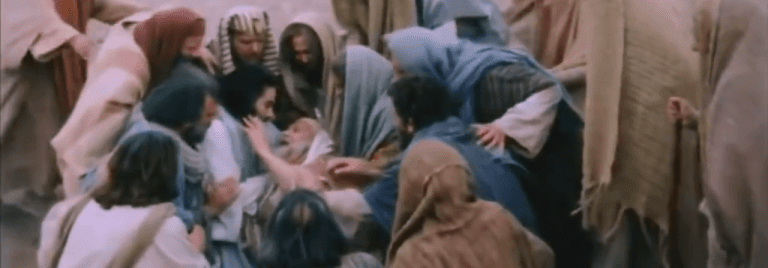
Synopsis. The sons of Jacob prepare to go to Egypt. Jacob dictates a letter to the Egyptian governor, who unbeknownst to him is his son Joseph. Meanwhile, in Egypt, Akhenaten visits Joseph’s house and decrees that Zuleikha must marry Joseph. Joseph speaks to a crowd — many of whom have become technically enslaved to the Pharaoh in exchange for wheat — and declares that everyone in Egypt is free now, except for those who owned slaves and exploited the poor before the famine. Joseph’s brothers arrive and ask him to let Benjamin go back to Canaan. Joseph produces the bill of sale that they signed when they sold him into slavery, and reads it aloud.
As the 44th episode begins, the brothers claim that the document Joseph just read to them concerned a maid’s son that they sold into slavery. Benjamin says they never had such a slave, and Joseph says the brothers are still lying. Joseph finally reveals his true identity to his brothers, and Levi in particular begs for forgiveness. Joseph sends the brothers back to Canaan with the heavenly shirt that Jacob once gave him, and tells them to put it over Jacob’s eyes. When they do, it cures Jacob of his blindness — but now he that knows Joseph is alive, and he realizes that his sons have been lying to him for decades about Joseph’s “death”. He chastises his sons, but eventually the whole family prepares to move to Egypt, and the Canaanites bid them a sad farewell.
As the 45th episode begins, Jacob asks God to forgive his sons. The people of Thebes prepare to welcome Joseph’s extended family, and Joseph and Jacob have a tearful reunion. The family bows down before Joseph, just as Joseph once dreamed that they would. The old man who appeared to Joseph in the well appears again, and tells Joseph he has given people a glimpse of the beauty of divine rule under one of God’s chosen — and he says there will be an even greater ruler than Joseph one day, who will rule over all people. Judah turns to Simeon and tells him, ominously, that the future of the Israelite nation will belong to his descendants rather than Joseph’s. The old man who spoke to Joseph walks through the rain outdoors. The end.
Differences from Genesis. The biblical Joseph enslaved the people of Egypt during the famine (Genesis 47:13-26), but the Joseph of this series declares that everyone who became enslaved to the Pharaoh as a result of the famine is now free — except for those who owned slaves and deprived people of freedom before the famine.
The biblical Judah begged Joseph to let Benjamin go back to Canaan (Genesis 44:18-34), but in this series it is Levi who pleads with Joseph.
The biblical Jacob and Joseph were reunited in Goshen (Genesis 46:28-29), and only Jacob and five of Joseph’s brothers met the Pharaoh (Genesis 47:1-10), but in this series, Jacob and his entire clan meet Joseph and the Pharaoh in Thebes.
The biblical Joseph also told his family they were settling in Goshen, far from the urban centres of Egypt, because the Egyptians find shepherds “detestable” (Genesis 46:31-34), but the Egyptians of this series — who have come to love living under Joseph’s rule — welcome Jacob and his clan with big ceremonies.
Muslim tradition. The Koran describes how the brothers of Joseph made a third trip to Egypt (12.87-88), how Joseph revealed his true identity to them (12.89-93), how Jacob detected Joseph’s “scent” as the brothers made their way home (12.94-95), how Jacob’s eyes were healed by Joseph’s shirt (12.96), how Jacob pleaded with God to forgive his sons (12.97-98), and how Jacob was reunited with Joseph when his family moved to Egypt (12.99-101). The final voice-over that concludes the series is also taken directly from the final verse in the sura about Joseph (12.111).
Jacob tells his grandchildren he knows the last prophet (i.e. Mohammed), and he says all the prophets know the last prophet. Jacob says this prophet’s name is “Ahmad”, and he says this prophet will be the son (descendant?) of his uncle Ishmael.
Both Jacob and the old man who appears to Joseph predict that a Promised One will one day rule over the world and be its lord. Presumably this refers to the Mahdi, a prophesied redeemer who, according to Islamic teaching, will rid the world of evil and rule it for a certain number of years prior to the Day of Judgment.
The final line of dialogue goes to Judah when he says it is his descendants, rather than Joseph’s, that will determine the fate of Jacob’s line; the children of Israel, he says, will be called “Judaists”, not “Josephists”. This presumably reflects the Muslim belief that Judaism and Christianity have corrupted the teachings of the earlier prophets with erroneous teachings that were corrected by Mohammed and the Koran.
Pious Joseph. Joseph humbly says his good deeds are not his own, and the old man who appears to Joseph tells him that he (Joseph) has given people a glimpse of how beautiful it can be to be ruled by one of God’s chosen. When the old man predicts the coming of the Promised One, Joseph replies that the old man will undoubtedly see the Promised One too, and he asks the old man to give the Promised One his regards.
The supernatural. Joseph gives Levi the shirt that God once gave to Abraham, and when Levi puts the shirt over Jacob’s eyes, they are healed. Jacob remarks that this is the same shirt that saved Abraham from Nimrod’s fire. The old man appears to Jacob and tells him the shirt would not have worked for him before, because his belief in God’s authority still needed improvement — but it works for him now.
Jacob can smell Joseph’s “scent” before the brothers have even left Egypt.
An angel’s voice speaks to Joseph when his family enters the palace, and the old man who visited Joseph in the well appears to him again after the family is reunited.
Before he reveals his true identity, Joseph tells the brothers he knows all about how they treated their younger brother because the chalice that was found in Benjamin’s sack tells him everything; at one point he taps it and there are sounds of Joseph’s younger self crying on the soundtrack. It is not clear whether this is an actual instance of the supernatural or a cinematic device signifying Joseph’s own memories. But the biblical Joseph did claim that he used the cup for “divination” (Genesis 44:5,15).
Family dynamics. At last, Joseph’s son is clearly identified as Ephraim, which is his name in the Bible. (An earlier episode had called him “Aflatoon”.)
Canaanites. The Canaanites bid a tearful farewell to Jacob, and he says it is hard for him to say goodbye too — but perhaps Joseph can teach the Egyptians monotheism.
Egypt. As Jacob’s caravan makes its way through Egypt, Levi points out the pyramids and tells his father they were built over the graves of three Pharaohs — which is true!
The series ends 12 years into Akhenaten’s rule, at a time when Joseph is pushing for even more monotheistic reforms. The real-life Akhenaten ruled for 17 years, and his monotheistic reforms were undone by a general-turned-Pharaoh named Horemheb who took the throne roughly 30 years after Akhenaten’s death. As it happens, the Akhenaten of this series has a general named Horemheb who has privately expressed his ongoing belief in the Egyptian gods in earlier episodes — a foreshadowing of how Horemheb will undo Joseph’s reforms after Akhenaten is gone, presumably?
Geography. Joseph says he wants to settle his family in Goshen, which he says is near Memphis. Scholars are not sure where Goshen was exactly, but they tend to place it “in the eastern Delta of the Nile,” whereas Memphis was at the mouth of the Delta and possibly just a bit south of it (it is about 30km south of present-day Cairo).
Timeline issues. Joseph’s brothers say they’ve been facing famine for five years, and they say it will rain in two years as Joseph predicted. This confirms that we are still 12 years into Joseph’s rule over Egypt (7 years of plenty + 5 years of famine), which began when he was 30 years old — so Joseph should be 42 in these episodes.
Joseph says it has been 30 years since he last saw his father, and Akhenaten says it has been more than 30 years. This is accurate, as Joseph was 10 or 11 years old when his brothers sold him into slavery, so he has been away from his father for 31 or 32 years when these episodes begin. However, Jacob says a few times that his sons have caused him 40 years of pain; perhaps he is exaggerating because the pain is so great.
Nemisabu also says that Joseph was in prison for 12 years, but the actual number — spelled out very clearly by an angel at the time — was closer to eight years.
Travel times between Egypt and Canaan seem to have gotten shorter. Jacob, sitting in Canaan, says he can smell Joseph’s “scent” at a point in time when his sons are about to leave Egypt — and Levi arrives home in Canaan ten days later. In a previous episode, it was said that travel between Egypt and Canaan would take twenty days.
In the final episode, a messenger travels from the Egyptian border to Thebes by chariot, and it takes him six days to make the trip — but it takes the family an extra three days to arrive in Thebes, because their caravan moves more slowly.
Themes. Zuleikha doesn’t know at first if she wants to marry Joseph. She says she doesn’t need Joseph’s love if she has God’s love, but her love for God began with Joseph. Malek tells her there is a bond between human and divine love, so long as she doesn’t forget the divine love. Zuleikha later appears to Joseph, just after he has freed the Egyptians, and tells him she doesn’t want freedom; she wants to be “enslaved” to him. This is how she lets him know she is finally ready to be married to him.
Ties to other traditions. In his letter to the Egyptian governor (i.e. Joseph), Jacob mentions how Abraham was tested with Nimrod’s fire, and how Ishmael was almost sacrificed. These traditions are dramatized in Abraham, the Friend of God.
–
Episodes: 1-2 | 3-4 | 5-6 | 7-8 | 9-10 | 11-12 | 13-14 | 15-16 | 17-18 | 19-20 | 21-22 | 23-24 | 25-26 | 27-28 | 29-30 | 31-32 | 33-34 | 35-36 | 37-38 | 39-40 | 41-42 | 43-45
–
The subtitled version of these episodes begins at the 1:38:48 mark in this video:
https://www.youtube.com/watch?v=ZW5sWRNpHgQ&t=1h38m48s
And here are the English-dubbed versions of these episodes:
https://www.youtube.com/watch?v=Aym3D_Ucqeg
https://www.youtube.com/watch?v=gUN8JidpfVg
https://www.youtube.com/watch?v=kwfSgZmafYs
Previous Post

October 26, 2016
Review: Inferno (dir. Ron Howard, 2016)
Next Post
October 28, 2016 Newsbites: Methuselah! Samson and Delilah!
Browse Our Archives
Select a Category Anglican Planet Articles BC Christian News BC Report Bible Movies Bible Review Blog Books & Culture Campus Times CBC Radio Christianity Today ChristianWeek Essays Faith Today Festival Cinemas Guide Film Journals Georgia Straight Interviews MB Herald National Catholic Register Salvationist Today's Christian Two Chairs Ubyssey Uncategorized Vancouver Courier Vancouver Sun
Select a Month August 2025 April 2025 January 2025 December 2024 November 2024 May 2024 February 2024 December 2023 May 2023 March 2023 November 2022 July 2022 June 2022 May 2022 April 2022 February 2022 January 2022 December 2021 November 2021 October 2021 September 2021 August 2021 July 2021 June 2021 April 2021 March 2021 February 2021 January 2021 December 2020 November 2020 October 2020 August 2020 July 2020 June 2020 May 2020 March 2020 February 2020 January 2020 December 2019 November 2019 September 2019 July 2019 May 2019 April 2019 March 2019 February 2019 January 2019 December 2018 November 2018 October 2018 September 2018 July 2018 June 2018 May 2018 April 2018 March 2018 February 2018 January 2018 December 2017 November 2017 October 2017 September 2017 August 2017 July 2017 June 2017 May 2017 April 2017 March 2017 February 2017 January 2017 December 2016 November 2016 October 2016 September 2016 August 2016 July 2016 June 2016 May 2016 April 2016 March 2016 February 2016 January 2016 December 2015 November 2015 October 2015 September 2015 August 2015 July 2015 June 2015 May 2015 April 2015 March 2015 February 2015 January 2015 December 2014 November 2014 October 2014 September 2014 August 2014 July 2014 June 2014 May 2014 April 2014 March 2014 February 2014 January 2014 December 2013 November 2013 October 2013 September 2013 August 2013 July 2013 June 2013 May 2013 April 2013 March 2013 February 2013 January 2013 December 2012 November 2012 October 2012 September 2012 August 2012 July 2012 June 2012 April 2012 January 2012 January 2011 December 2010 November 2010 October 2010 September 2010 August 2010 July 2010 June 2010 May 2010 April 2010 March 2010 February 2010 January 2010 December 2009 November 2009 October 2009 September 2009 August 2009 July 2009 June 2009 May 2009 April 2009 March 2009 February 2009 January 2009 December 2008 November 2008 October 2008 September 2008 August 2008 July 2008 June 2008 May 2008 April 2008 March 2008 February 2008 January 2008 December 2007 November 2007 October 2007 September 2007 August 2007 July 2007 June 2007 May 2007 April 2007 March 2007 February 2007 January 2007 December 2006 November 2006 October 2006 September 2006 August 2006 July 2006 June 2006 May 2006 April 2006 March 2006 February 2006 January 2006 December 2005 November 2005 October 2005 September 2005 August 2005 July 2005 June 2005 May 2005 April 2005 March 2005 January 2005 December 2004 November 2004 October 2004 September 2004 August 2004 July 2004 June 2004 May 2004 April 2004 March 2004 February 2004 January 2004 November 2003 October 2003 August 2003 July 2003 June 2003 May 2003 January 2003 December 2002 November 2002 August 2002 July 2002 June 2002 May 2002 March 2002 January 2002 December 2001 November 2001 September 2001 August 2001 July 2001 June 2001 April 2001 March 2001 February 2001 December 2000 November 2000 October 2000 September 2000 August 2000 July 2000 June 2000 May 2000 April 2000 March 2000 January 2000 October 1999 August 1999 May 1999 April 1999 February 1999 January 1999 December 1998 November 1998 October 1998 August 1998 July 1998 June 1998 April 1998 March 1998 January 1998 November 1997 September 1997 July 1997 June 1997 April 1997 March 1997 February 1997 January 1997 December 1996 October 1996 September 1996 June 1996 March 1996 February 1996 January 1996 April 1995 November 1994 September 1994 September 1991
Follow Us!
TAKE THE
Religious Wisdom Quiz
What island was John on when he wrote Revelation?
Select your answer to see how you score.
Cyprus Patmos Malta Crete
Related posts from FilmChat

Joseph of Egypt – the Chosen spin-off announces...

Exclusive: A clip from Angel Studios' The King...

Exclusive: Watch a clip from Angel Studios' Brave...

Exclusive: Watch a clip from Angel Studios' Homestead
TRENDING AT PATHEOS Religious Music & Entertainment

"Les Diabolique" and Transgression
Alongside something like Arrival, Vertigo, or Charade, Les Diaboliques is a...

"The Plague Dogs" and Mortality
So, flashback to the late 70s, early 80s. Walt Disney Studios is...

With the recent and highly successful release of Christopher Nolan’s epic film,...

"L'avventura" and Human Weakness
Today's piece is going to be a little different for a few...

I first want to apologize for not posting or writing anything. I'm...

I've engaged in the multi-year project of reading through the Church Fathers,...
view all Religious Music & Entertainment blogs
Ad-Free & Subscriber Log-In Subscription Support
- About Us
- 2026 Calendar
- Videos
- Podcasts
- Library of World Religions
- Faith In Media Tracker
- Advertise With Us
- Write for Us
- Privacy Policy
- Terms of Service
- Do Not Sell My Data
- Contact Us
- Radiant Digital
- Manage Newsletter Subscriptions
- Unsubscribe From Notifications
- Sitemap
Copyright 2008-2026, Patheos. All rights reserved.
Subscription Support Ad-Free & Subscriber Log-In
Follow Patheos