
BuddhistCatholicContemplativeEvangelicalGeneral ChristianHinduJewishLatter-day SaintMuslimNew VisionsProgressive Christian
Beliefs
- Buddhist
- Catholic
- Contemplative
- Evangelical
- General Christian
- Hindu
- Jewish
- Latter-day Saint
- More Voices
- Muslim
- New Visions
- Pagan
- Progressive Christian
Topics
- Religion News
- Food and Religion
- Sports and Religion
- Religious Art
- Religious Music and Entertainment
- Religious Events
- History and Religion
- Style and Religion
- Politics and Religion
- Women in Religion
- Recreation Outdoors and Religion
- Business Finance and Religion
- Careers Workplace and Religion
- Education and Religion
- Family Parenting and Religion
- Health Fitness and Religion
- Home and Religion
- Relationships and Religion
- Technology and Religion
- Travel and Religion
Columnists
- Buddhist Columnists
- Business Finance and Religion Columnists
- Careers Workplace and Religion Columnists
- Catholic Columnists
- Contemplative Columnists
- Education and Religion Columnists
- Evangelists Columnists
- Family Parenting and Religion Columnists
- General Christian Columnists
- Health Fitness and Religion Columnists
- Hindu Columnists
- History and Religion Columnists
- Home and Religion Columnists
- Jewish Columnists
- More Voices Columnists
- Latter Day Columnists
- Muslim Columnists
- New Visions Columnists
- Nonreligious Columnists
- Pagan Columnists
- Politics and Religion Columnists
- Progressive Columnists
- Recreation Outdoors and Religion Columnists
- Relationships and Religion Columnists
- Religion News Columnists
- Religious Art Columnists
- Religious Events Columnists
- Religious Music and Entertainment Columnists
- Sports and Religion Columnists
- Style and Religion Columnists
- Technology and Religion Columnists
- Travel and Religion Columnists
- Women in Religion Columnists
Resource Library
- 2026 Calendar
- Library of World Religions
- The 100 Most Holy Places on Earth
- Patheos Answers
- Podcasts
- Videos
- Faith Leaders Database
- Anglican Episcopalian
- Bahai
- Baptist
- Buddhism
- Christianity
- Confucianism
- Eastern Orthodoxy
- Hinduism
- Holiness and Pentecostal
- ISKCON
- Islam
- Judaism
- Lutheran
- Methodist
- The Church of Jesus Christ of Latter-day Saints
- New Age
- Paganism
- Presbytarian and Reformed
- Protestantism
- Religion Behind the Scenes
- Roman Catholic
- Scientology
- Shia Islam
- Sikhism
- Sufism
- Sunni Islam
- Taoism
- Zen
- See all religions
Research Tools
 Ad-Free & Subscriber Log-In Subscription Support
Ad-Free & Subscriber Log-In Subscription Support
Follow Patheos 

- Trending:
- Forgiveness
- |
- Marriage
- |
- Consciousness
- |
- Death Penalty
- |
- Election
- |
- Halloween

-
Articles
- Home
- Religious Music & Entertainment
- Prophet Joseph — episodes twenty-seven and twenty-eight
Prophet Joseph — episodes twenty-seven and twenty-eight
Last updated on: October 27, 2016 at 10:22 pm by Peter T. Chattaway
Prophet Joseph — episodes twenty-seven and twenty-eight 2016-10-27T22:22:28-07:00 Peter T. Chattaway
Patheos Explore the world's faith through different perspectives on religion and spirituality! Patheos has the views of the prevalent religions and spiritualities of the world.
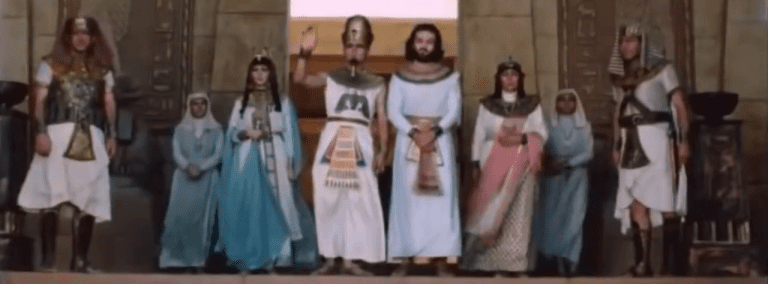
Synopsis. Amenhotep holds a public ceremony to promote Joseph to one of the highest positions in the land, and Joseph tells the people his plans for getting through the upcoming seven years of famine. The priests of Amon try to sow seeds of doubt in the crowd, but every time they raise a question about Joseph’s plans, Joseph happens to say something that answers their question. Later, Joseph organizes a team of assistants that includes his former prisonmates, his fellow ex-slave Nemisabu, and Malek, the Ishmaelite who sold him to Potiphar nearly twenty years earlier. Potiphar’s health is failing, and the priests convince the queen mother Tiye to tell her son that an officer named Horenhob should get Potiphar’s job if and when he passes away.
As the 28th episode begins, Joseph tells Amenhotep they need to conduct a census so that they know what sort of resources they will have. He also addresses the people and proposes various ways of paying for the grain that they will have to store. Potiphar passes away, and within hours Amenhotep makes Joseph the “Lord of Egypt” in Potiphar’s place — but he also makes Horenhob commander of the army. Inarus and Nemisabu spy on some priests who are planning to hoard wheat in their silos. Joseph says not to worry: only he knows how to store wheat for seven years, so the priests’ wheat will go bad after two years, and the famine will undermine the priests’ power over Egypt. A servant overhears this and reports back to the priests, who tell him to alert the assassin Ninifer Keptah the next time Joseph leaves the palace.
Differences from Genesis. In these episodes, it is stated that all of the land in Egypt currently belongs to the Pharaoh, and Joseph proposes to give some of that land to the farmers in exchange for the grain that they give to the Pharaoh’s storehouses; Joseph also explicitly states that the famine will play a role in undermining the power of Egypt’s priests. But the book of Genesis describes a very different scenario: there, Joseph uses the famine to enslave the Egyptians, who give up their freedom and their property in exchange for food, and Joseph lets the priests keep their land while the Pharaoh gives the priests a regular allotment of food (Genesis 47:13-26).
Pious Joseph. Joseph is somewhat self-effacing throughout these episodes, telling the Egyptians he is their servant and not their master, and telling Malek that he hopes God will forgive him for being the reason that Malek has been homeless in Egypt for the past two decades. Joseph assures Malek that he had to be a slave so that he could one day rise to his current position in Egypt — he accepts his fate — and he tells both Malek and Inarus not to bow to him or kiss his hand (which results in some humorous moments as Inarus keeps bowing out of habit and then apologizes for doing so).
The supernatural. There is nothing overtly supernatural in these episodes, but it is a little… uncanny… how Joseph, speaking to the crowd, happens to address every concern raised by the priests mere moments after the priests raise them.
God versus the gods. Joseph tells his former prisonmates to spread the news that his God defeated the priests of Amon when it came to interpreting Pharaoh’s dream. Joseph also tells Amenhotep the famine will eventually allow them to take possession of the temples of Amon. However, when Joseph addresses the people, he tells them that he is speaking in the name of both the Egyptian gods and his own God.
Amenhotep’s mother, Tiye, tells him to oust Joseph because, she says, an unbeliever shouldn’t seize power in the city of Amon. She also eventually declares that everyone in the royal court is a heretic, because they are standing up for Joseph.
Just before he dies, Potiphar says he wishes he and Zuleikha had worshiped Joseph’s God instead of Amon. Joseph, who apparently hasn’t seen Potiphar for a long time, returns the sentiment when he watches Potiphar’s funeral and says he wishes he could have introduced Potiphar to the religion of his great-grandfather Abraham.
Egypt. Potiphar is placed in a sarcophagus only two hours after his death, and he doesn’t appear to have been mummified at all. (He’s certainly not wrapped in cloths of any kind.) Is the mummification supposed to take place on the other side of the Nile, where the dead bodies are sent, or was the process skipped in his case? If so, why?
Amenhotep’s wife Nefertiti is very involved in the discussions that take place in the royal court, advocating for Joseph (and his fellow ex-prisoners!) and commenting on whether Horenhob would be able to handle any non-military responsibilities.
Themes. Social class and a concern for the poor continue to be major themes in these episodes. Joseph welcomes all of the ex-prisoners into the palace, telling them their looks don’t matter (they are all still wearing the clothes they had in prison at that point). A woman in the crowd says she wishes the Pharaoh would be fair to poor and rich equally. And Joseph nixes raising taxes and duties (to fund his preparations for the seven years of famine) because the poor wouldn’t be able to pay them.
–
Episodes: 1-2 | 3-4 | 5-6 | 7-8 | 9-10 | 11-12 | 13-14 | 15-16 | 17-18 | 19-20 | 21-22 | 23-24 | 25-26 | 27-28 | 29-30 | 31-32 | 33-34 | 35-36 | 37-38 | 39-40 | 41-42 | 43-45
–
The subtitled version of these episodes runs from about 1:36:17 to 3:11:58 in this video:
https://www.youtube.com/watch?v=IGnX1Wbrbfs&t=1h36m17s
And here are the English-dubbed versions of these episodes:
https://www.youtube.com/watch?v=Gcycs0R3Eps
https://www.youtube.com/watch?v=Oh5_ku7S0MU
Previous Post

July 29, 2016
Is Ben-Hur in box-office trouble?
Next Post
July 31, 2016 Box office: Jason Bourne shoots his way to the top
Browse Our Archives
Select a Category Anglican Planet Articles BC Christian News BC Report Bible Movies Bible Review Blog Books & Culture Campus Times CBC Radio Christianity Today ChristianWeek Essays Faith Today Festival Cinemas Guide Film Journals Georgia Straight Interviews MB Herald National Catholic Register Salvationist Today's Christian Two Chairs Ubyssey Uncategorized Vancouver Courier Vancouver Sun
Select a Month August 2025 April 2025 January 2025 December 2024 November 2024 May 2024 February 2024 December 2023 May 2023 March 2023 November 2022 July 2022 June 2022 May 2022 April 2022 February 2022 January 2022 December 2021 November 2021 October 2021 September 2021 August 2021 July 2021 June 2021 April 2021 March 2021 February 2021 January 2021 December 2020 November 2020 October 2020 August 2020 July 2020 June 2020 May 2020 March 2020 February 2020 January 2020 December 2019 November 2019 September 2019 July 2019 May 2019 April 2019 March 2019 February 2019 January 2019 December 2018 November 2018 October 2018 September 2018 July 2018 June 2018 May 2018 April 2018 March 2018 February 2018 January 2018 December 2017 November 2017 October 2017 September 2017 August 2017 July 2017 June 2017 May 2017 April 2017 March 2017 February 2017 January 2017 December 2016 November 2016 October 2016 September 2016 August 2016 July 2016 June 2016 May 2016 April 2016 March 2016 February 2016 January 2016 December 2015 November 2015 October 2015 September 2015 August 2015 July 2015 June 2015 May 2015 April 2015 March 2015 February 2015 January 2015 December 2014 November 2014 October 2014 September 2014 August 2014 July 2014 June 2014 May 2014 April 2014 March 2014 February 2014 January 2014 December 2013 November 2013 October 2013 September 2013 August 2013 July 2013 June 2013 May 2013 April 2013 March 2013 February 2013 January 2013 December 2012 November 2012 October 2012 September 2012 August 2012 July 2012 June 2012 April 2012 January 2012 January 2011 December 2010 November 2010 October 2010 September 2010 August 2010 July 2010 June 2010 May 2010 April 2010 March 2010 February 2010 January 2010 December 2009 November 2009 October 2009 September 2009 August 2009 July 2009 June 2009 May 2009 April 2009 March 2009 February 2009 January 2009 December 2008 November 2008 October 2008 September 2008 August 2008 July 2008 June 2008 May 2008 April 2008 March 2008 February 2008 January 2008 December 2007 November 2007 October 2007 September 2007 August 2007 July 2007 June 2007 May 2007 April 2007 March 2007 February 2007 January 2007 December 2006 November 2006 October 2006 September 2006 August 2006 July 2006 June 2006 May 2006 April 2006 March 2006 February 2006 January 2006 December 2005 November 2005 October 2005 September 2005 August 2005 July 2005 June 2005 May 2005 April 2005 March 2005 January 2005 December 2004 November 2004 October 2004 September 2004 August 2004 July 2004 June 2004 May 2004 April 2004 March 2004 February 2004 January 2004 November 2003 October 2003 August 2003 July 2003 June 2003 May 2003 January 2003 December 2002 November 2002 August 2002 July 2002 June 2002 May 2002 March 2002 January 2002 December 2001 November 2001 September 2001 August 2001 July 2001 June 2001 April 2001 March 2001 February 2001 December 2000 November 2000 October 2000 September 2000 August 2000 July 2000 June 2000 May 2000 April 2000 March 2000 January 2000 October 1999 August 1999 May 1999 April 1999 February 1999 January 1999 December 1998 November 1998 October 1998 August 1998 July 1998 June 1998 April 1998 March 1998 January 1998 November 1997 September 1997 July 1997 June 1997 April 1997 March 1997 February 1997 January 1997 December 1996 October 1996 September 1996 June 1996 March 1996 February 1996 January 1996 April 1995 November 1994 September 1994 September 1991
Follow Us!
TAKE THE
Religious Wisdom Quiz
Which Psalm did Moses write?
Select your answer to see how you score.
Psalm 72 Psalm 23 Psalm 119 Psalm 90
Related posts from FilmChat

Joseph of Egypt – the Chosen spin-off announces...

Exclusive: A clip from Angel Studios' The King...

Exclusive: Watch a clip from Angel Studios' Brave...

Exclusive: Watch a clip from Angel Studios' Homestead
TRENDING AT PATHEOS Religious Music & Entertainment

"Les Diabolique" and Transgression
Alongside something like Arrival, Vertigo, or Charade, Les Diaboliques is a...

"The Plague Dogs" and Mortality
So, flashback to the late 70s, early 80s. Walt Disney Studios is...

With the recent and highly successful release of Christopher Nolan’s epic film,...

"L'avventura" and Human Weakness
Today's piece is going to be a little different for a few...

I first want to apologize for not posting or writing anything. I'm...

I've engaged in the multi-year project of reading through the Church Fathers,...
view all Religious Music & Entertainment blogs
Ad-Free & Subscriber Log-In Subscription Support
- About Us
- 2026 Calendar
- Videos
- Podcasts
- Library of World Religions
- Faith In Media Tracker
- Advertise With Us
- Write for Us
- Privacy Policy
- Terms of Service
- Do Not Sell My Data
- Contact Us
- Radiant Digital
- Manage Newsletter Subscriptions
- Unsubscribe From Notifications
- Sitemap
Copyright 2008-2026, Patheos. All rights reserved.
Subscription Support Ad-Free & Subscriber Log-In
Follow Patheos