
BuddhistCatholicContemplativeEvangelicalGeneral ChristianHinduJewishLatter-day SaintMuslimNew VisionsProgressive Christian
Beliefs
- Buddhist
- Catholic
- Contemplative
- Evangelical
- General Christian
- Hindu
- Jewish
- Latter-day Saint
- More Voices
- Muslim
- New Visions
- Pagan
- Progressive Christian
Topics
- Religion News
- Food and Religion
- Sports and Religion
- Religious Art
- Religious Music and Entertainment
- Religious Events
- History and Religion
- Style and Religion
- Politics and Religion
- Women in Religion
- Recreation Outdoors and Religion
- Business Finance and Religion
- Careers Workplace and Religion
- Education and Religion
- Family Parenting and Religion
- Health Fitness and Religion
- Home and Religion
- Relationships and Religion
- Technology and Religion
- Travel and Religion
Columnists
- Buddhist Columnists
- Business Finance and Religion Columnists
- Careers Workplace and Religion Columnists
- Catholic Columnists
- Contemplative Columnists
- Education and Religion Columnists
- Evangelists Columnists
- Family Parenting and Religion Columnists
- General Christian Columnists
- Health Fitness and Religion Columnists
- Hindu Columnists
- History and Religion Columnists
- Home and Religion Columnists
- Jewish Columnists
- More Voices Columnists
- Latter Day Columnists
- Muslim Columnists
- New Visions Columnists
- Nonreligious Columnists
- Pagan Columnists
- Politics and Religion Columnists
- Progressive Columnists
- Recreation Outdoors and Religion Columnists
- Relationships and Religion Columnists
- Religion News Columnists
- Religious Art Columnists
- Religious Events Columnists
- Religious Music and Entertainment Columnists
- Sports and Religion Columnists
- Style and Religion Columnists
- Technology and Religion Columnists
- Travel and Religion Columnists
- Women in Religion Columnists
Resource Library
- 2026 Calendar
- Library of World Religions
- The 100 Most Holy Places on Earth
- Patheos Answers
- Podcasts
- Videos
- Faith Leaders Database
- Anglican Episcopalian
- Bahai
- Baptist
- Buddhism
- Christianity
- Confucianism
- Eastern Orthodoxy
- Hinduism
- Holiness and Pentecostal
- ISKCON
- Islam
- Judaism
- Lutheran
- Methodist
- The Church of Jesus Christ of Latter-day Saints
- New Age
- Paganism
- Presbytarian and Reformed
- Protestantism
- Religion Behind the Scenes
- Roman Catholic
- Scientology
- Shia Islam
- Sikhism
- Sufism
- Sunni Islam
- Taoism
- Zen
- See all religions
Research Tools
 Ad-Free & Subscriber Log-In Subscription Support
Ad-Free & Subscriber Log-In Subscription Support
Follow Patheos 

- Trending:
- Forgiveness
- |
- Marriage
- |
- Consciousness
- |
- Death Penalty
- |
- Election
- |
- Halloween

-
Articles
- Home
- Religious Music & Entertainment
- Prophet Joseph — episodes thirteen and fourteen
Prophet Joseph — episodes thirteen and fourteen
Last updated on: October 27, 2016 at 10:18 pm by Peter T. Chattaway
Prophet Joseph — episodes thirteen and fourteen 2016-10-27T22:18:13-07:00 Peter T. Chattaway
Patheos Explore the world's faith through different perspectives on religion and spirituality! Patheos has the views of the prevalent religions and spiritualities of the world.
Synopsis. Zuleikha takes Joseph to the temple of Amon. Malek tries to follow them but is stopped by the temple guards. The priests of Amon perform an “awakening” ceremony, in which they wash and clothe the statue of Amon and carry it outside to be worshiped by the public. Joseph asks how Amon can possibly take care of Egyptians when so many people have to take care of Amon. Back at home, Zuleikha tells Potiphar she didn’t know how to answer Joseph’s questions, so Potiphar says he will take Joseph to the temple instead — but once he gets there with Joseph, he reveals that he actually wants Joseph to see the greed and corruption of the priests. A priest of Amon drives his chariot recklessly through the streets. Potiphar stops him, and even briefly clashes swords with him, and then Potiphar reports the incident to the Pharaoh. Joseph asks if he can become physically brave like Potiphar, so Potiphar takes him to someone who starts training him with wooden swords.
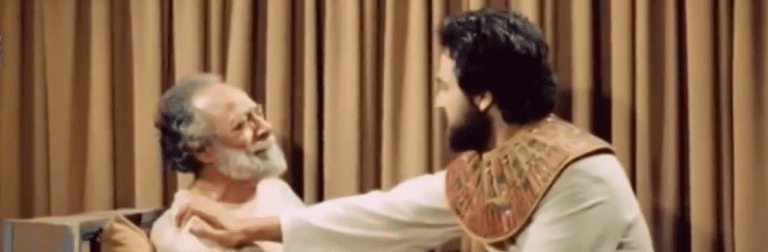
After a few last scenes of Joseph as a boy — training with the soldiers and befriending the servants — the 14th episode jumps ahead 11 years, to when he is a young man. In Canaan, Dinah tells Jacob it has been so long since Joseph disappeared, it would be better to forget him now. Jacob reminds her of the dream which indicated that Joseph is superior to all of them. Back in Egypt, Honifer is old and sick, and Potiphar puts Joseph in charge of the palace’s affairs. Joseph teaches the children in the palace to be monotheists, not polytheists, while Zuleikha watches him intently — and the servants start gossiping about her interest in Joseph. Tensions grow between the Pharaoh and the priests of Amon, and the Pharaoh’s wife warns the priests that her husband is going to act against them soon. Honifer passes away, but not before proclaiming his belief in Joseph’s God. His mummified body is sent across the Nile for burial.
Differences from Genesis. One of the Pharaoh’s advisers says the name Yusuf (i.e. Joseph) means “sorrowful”. That does not seem to be accurate in Arabic, and it is certainly not accurate in Hebrew, where the name means “may he add”. (Genesis 30 says that when Rachel gave birth to her first son, after years of trying to have a child, she named him Joseph and said, “May YHWH add to me another son.”)
These episodes seem to be setting up a storyline in which Joseph will eventually take a stand against the corrupt polytheistic priests and their grain-hoarding. (Potiphar shows Joseph their grain elevators.) But Genesis 47 indicates that the biblical Joseph actually gave the priests preferential treatment, inasmuch as he reduced the entire population of Egypt to servitude during the famine except for the priests.
Pious Joseph. Joseph continues to evangelize and to express an interest in the poor. He openly teaches the children in Potiphar’s palace about monotheism — without being penalized, apparently — and he takes platters filled with upper-class food to the servants’ quarters and shares them with the residents there. As an adult, Joseph converts his old mentor Honifer to monotheism, tells Honifer he needs to believe in all of God’s “messengers”, and reveals that he, Joseph, is the last prophet “in this time.” Honifer replies, “If I knew it, I would have believed in you many years ago.”
Also, as a boy, Joseph impresses the Pharaoh by saying that power should be used to serve the poor. When Pharaoh’s son presents Joseph with a necklace, he bows to Joseph and promptly says he did so “unconsciously”, after his mother reprimands him for bowing to a slave. And so it is that this prince, who will grow up to become the monotheistic Pharaoh Akhenaten, recognizes that Joseph is a holy man.
God versus the gods. Joseph peppers Zuleikha with lots of questions about the pagan Egyptian religious ceremony they attend: What if someone prays to Amon while he’s asleep? Can anyone pray to Amon when they are not in the presence of one of his statues? How can Amon take care of Egyptians when he needs Egyptians to wash, clothe, feed and transport him? Back at Potiphar’s palace, Joseph teaches the children that humans are above all other things in this world, and therefore the stonemason who makes Amon is above Amon — and when one of the children asks if God can be seen, Joseph replies, “God is more than visible things, so he shouldn’t be seen.”
Family dynamics. Jacob lives in his shack, separate from the rest of his family, and talks only to his wife Leah, his youngest son Benjamin and his daughter Dinah. He does not talk to any of Joseph’s older brothers, one of whom — Judah — grumbles that Jacob did not let them help him build his “shack of grief”. Years later, Jacob thanks Benjamin for helping him to bear the 11 years that Joseph has been missing.
When Leah asks Jacob if it is possible for a prophet to be superior to other prophets — i.e. if it is possible for Joseph to be superior to Jacob — Jacob replies that it is, if a prophet fulfills the aims and wishes of other prophets. (This has obvious implications for Mohammed’s status relative to the prophets that preceded him in Islam.)
Egypt. These episodes introduce us to Amenhotep III, who ruled Egypt between 1388 and 1350 BC, as well as his wife Tiye and their son, the future Akhenaten.
The Wikipedia entry for Amenhotep states that Egypt “reached the peak of its artistic and international power” under his rule. The entry for Tiye adds that she “wielded a great deal of power during both her husband’s and son’s reigns,” and that she was “the first Egyptian queen to have her name recorded on official acts.”
The Pharaohs in general, of course, were regarded as divine by the ancient Egyptians, and it seems that Amenhotep III in particular took this further and facilitated the worship of his wife as a sort of goddess. The series, however, suggests that Amenhotep is as much a religious skeptic as Potiphar is — he even dismisses the god Amon as a “lifeless stone” — and that this causes a rift between Amenhotep and his wife.
These episodes also foreshadow the fact that the son of Amenhotep and Tiye will grow up to become the religious reformer named Akhenaten. Tiye expresses concern that Amenhotep’s blasphemy will shake their son’s beliefs, and Akhenaten himself — who is also called Amenhotep — bows to Joseph “unconsciously”, as if recognizing that there is something special about Joseph and the beliefs he represents.
The 13th episode depicts an elaborate ritual in which a statue of Amon is washed, clothed, “fed” and then presented to the people to be worshiped. I do not know to what degree this reflects actual ancient Egyptian practice and to what degree it represents a modern Muslim view of how the pre-monotheistic Egyptians worshiped.
Potiphar also shows Joseph a long line of people bringing tribute to Pharaoh. Joseph seems concerned that Egypt is taking so much from the surrounding nations, but Potiphar says they should be grateful because Egyptian culture as they know it would not be sustainable without these tributes. It will be interesting to see how this ties into Joseph’s concern for the poor elsewhere, especially when the nations of the world come to Egypt for help (i.e. to buy Egypt’s grain) during the seven-year famine.
Timeline issues. Past episodes have established that Joseph was born in 1160 BC, that Benjamin was born five years later, and that Joseph was 11 years old when he was sold into slavery. The 14th episode takes place 11 years after that — so it should be taking place in 1138 BC, and Joseph should be 22 and Benjamin should be 17.
There are a few problems with that, though. The biggest is that Amenhotep III, who is Pharaoh before and after the series jumps ahead in time, ruled Egypt between 1388 and 1350 BC — over two centuries earlier than the dates set by this series. Benjamin also looks at least a few years older than 17; he has a full beard, for one thing.
Incidentally, what happened to Malek? The last time we saw him, he had sworn to stay in Egypt until he could rescue Joseph and send him back to Jacob — and he was blocked from following Joseph and Zuleikha into the temple of Amon. That was before the series jumped ahead in time. Is Malek still in Egypt? After all this time, is he still waiting for a chance to “save” Joseph, who is now an adult in his own right?
Theological issues. Honifer worries that he will go to “hell” because he converted to monotheism so late in life (on his deathbed, in fact). This reflects ideas about divine judgment and the afterlife that had not yet developed at this point in time.
–
Episodes: 1-2 | 3-4 | 5-6 | 7-8 | 9-10 | 11-12 | 13-14 | 15-16 | 17-18 | 19-20 | 21-22 | 23-24 | 25-26 | 27-28 | 29-30 | 31-32 | 33-34 | 35-36 | 37-38 | 39-40 | 41-42 | 43-45
–
The subtitled version of these episodes runs from about 59:28 to 2:29:14 in this video:
https://www.youtube.com/watch?v=NMVXGXM9Yvs&t=59m28s
And here are the English-dubbed versions of these episodes:
https://www.youtube.com/watch?v=fzmh6WZEAgk
https://www.youtube.com/watch?v=QO5x6XLmEUE
Next Post

June 4, 2016 Sam Worthington walks with God in the poster for The Shack
Browse Our Archives
Select a Category Anglican Planet Articles BC Christian News BC Report Bible Movies Bible Review Blog Books & Culture Campus Times CBC Radio Christianity Today ChristianWeek Essays Faith Today Festival Cinemas Guide Film Journals Georgia Straight Interviews MB Herald National Catholic Register Salvationist Today's Christian Two Chairs Ubyssey Uncategorized Vancouver Courier Vancouver Sun
Select a Month August 2025 April 2025 January 2025 December 2024 November 2024 May 2024 February 2024 December 2023 May 2023 March 2023 November 2022 July 2022 June 2022 May 2022 April 2022 February 2022 January 2022 December 2021 November 2021 October 2021 September 2021 August 2021 July 2021 June 2021 April 2021 March 2021 February 2021 January 2021 December 2020 November 2020 October 2020 August 2020 July 2020 June 2020 May 2020 March 2020 February 2020 January 2020 December 2019 November 2019 September 2019 July 2019 May 2019 April 2019 March 2019 February 2019 January 2019 December 2018 November 2018 October 2018 September 2018 July 2018 June 2018 May 2018 April 2018 March 2018 February 2018 January 2018 December 2017 November 2017 October 2017 September 2017 August 2017 July 2017 June 2017 May 2017 April 2017 March 2017 February 2017 January 2017 December 2016 November 2016 October 2016 September 2016 August 2016 July 2016 June 2016 May 2016 April 2016 March 2016 February 2016 January 2016 December 2015 November 2015 October 2015 September 2015 August 2015 July 2015 June 2015 May 2015 April 2015 March 2015 February 2015 January 2015 December 2014 November 2014 October 2014 September 2014 August 2014 July 2014 June 2014 May 2014 April 2014 March 2014 February 2014 January 2014 December 2013 November 2013 October 2013 September 2013 August 2013 July 2013 June 2013 May 2013 April 2013 March 2013 February 2013 January 2013 December 2012 November 2012 October 2012 September 2012 August 2012 July 2012 June 2012 April 2012 January 2012 January 2011 December 2010 November 2010 October 2010 September 2010 August 2010 July 2010 June 2010 May 2010 April 2010 March 2010 February 2010 January 2010 December 2009 November 2009 October 2009 September 2009 August 2009 July 2009 June 2009 May 2009 April 2009 March 2009 February 2009 January 2009 December 2008 November 2008 October 2008 September 2008 August 2008 July 2008 June 2008 May 2008 April 2008 March 2008 February 2008 January 2008 December 2007 November 2007 October 2007 September 2007 August 2007 July 2007 June 2007 May 2007 April 2007 March 2007 February 2007 January 2007 December 2006 November 2006 October 2006 September 2006 August 2006 July 2006 June 2006 May 2006 April 2006 March 2006 February 2006 January 2006 December 2005 November 2005 October 2005 September 2005 August 2005 July 2005 June 2005 May 2005 April 2005 March 2005 January 2005 December 2004 November 2004 October 2004 September 2004 August 2004 July 2004 June 2004 May 2004 April 2004 March 2004 February 2004 January 2004 November 2003 October 2003 August 2003 July 2003 June 2003 May 2003 January 2003 December 2002 November 2002 August 2002 July 2002 June 2002 May 2002 March 2002 January 2002 December 2001 November 2001 September 2001 August 2001 July 2001 June 2001 April 2001 March 2001 February 2001 December 2000 November 2000 October 2000 September 2000 August 2000 July 2000 June 2000 May 2000 April 2000 March 2000 January 2000 October 1999 August 1999 May 1999 April 1999 February 1999 January 1999 December 1998 November 1998 October 1998 August 1998 July 1998 June 1998 April 1998 March 1998 January 1998 November 1997 September 1997 July 1997 June 1997 April 1997 March 1997 February 1997 January 1997 December 1996 October 1996 September 1996 June 1996 March 1996 February 1996 January 1996 April 1995 November 1994 September 1994 September 1991
Follow Us!
TAKE THE
Religious Wisdom Quiz
What does "Shema" mean in Hebrew?
Select your answer to see how you score.
Wait Hear Pray Obey
Related posts from FilmChat

Joseph of Egypt – the Chosen spin-off announces...

Exclusive: A clip from Angel Studios' The King...

Exclusive: Watch a clip from Angel Studios' Brave...

Exclusive: Watch a clip from Angel Studios' Homestead
TRENDING AT PATHEOS Religious Music & Entertainment

"Les Diabolique" and Transgression
Alongside something like Arrival, Vertigo, or Charade, Les Diaboliques is a...

"The Plague Dogs" and Mortality
So, flashback to the late 70s, early 80s. Walt Disney Studios is...

With the recent and highly successful release of Christopher Nolan’s epic film,...

"L'avventura" and Human Weakness
Today's piece is going to be a little different for a few...

I first want to apologize for not posting or writing anything. I'm...

I've engaged in the multi-year project of reading through the Church Fathers,...
view all Religious Music & Entertainment blogs
Ad-Free & Subscriber Log-In Subscription Support
- About Us
- 2026 Calendar
- Videos
- Podcasts
- Library of World Religions
- Faith In Media Tracker
- Advertise With Us
- Write for Us
- Privacy Policy
- Terms of Service
- Do Not Sell My Data
- Contact Us
- Radiant Digital
- Manage Newsletter Subscriptions
- Unsubscribe From Notifications
- Sitemap
Copyright 2008-2026, Patheos. All rights reserved.
Subscription Support Ad-Free & Subscriber Log-In
Follow Patheos