
BuddhistCatholicContemplativeEvangelicalGeneral ChristianHinduJewishLatter-day SaintMuslimNew VisionsProgressive Christian
Beliefs
- Buddhist
- Catholic
- Contemplative
- Evangelical
- General Christian
- Hindu
- Jewish
- Latter-day Saint
- More Voices
- Muslim
- New Visions
- Pagan
- Progressive Christian
Topics
- Religion News
- Food and Religion
- Sports and Religion
- Religious Art
- Religious Music and Entertainment
- Religious Events
- History and Religion
- Style and Religion
- Politics and Religion
- Women in Religion
- Recreation Outdoors and Religion
- Business Finance and Religion
- Careers Workplace and Religion
- Education and Religion
- Family Parenting and Religion
- Health Fitness and Religion
- Home and Religion
- Relationships and Religion
- Technology and Religion
- Travel and Religion
Columnists
- Buddhist Columnists
- Business Finance and Religion Columnists
- Careers Workplace and Religion Columnists
- Catholic Columnists
- Contemplative Columnists
- Education and Religion Columnists
- Evangelists Columnists
- Family Parenting and Religion Columnists
- General Christian Columnists
- Health Fitness and Religion Columnists
- Hindu Columnists
- History and Religion Columnists
- Home and Religion Columnists
- Jewish Columnists
- More Voices Columnists
- Latter Day Columnists
- Muslim Columnists
- New Visions Columnists
- Nonreligious Columnists
- Pagan Columnists
- Politics and Religion Columnists
- Progressive Columnists
- Recreation Outdoors and Religion Columnists
- Relationships and Religion Columnists
- Religion News Columnists
- Religious Art Columnists
- Religious Events Columnists
- Religious Music and Entertainment Columnists
- Sports and Religion Columnists
- Style and Religion Columnists
- Technology and Religion Columnists
- Travel and Religion Columnists
- Women in Religion Columnists
Resource Library
- 2026 Calendar
- Library of World Religions
- The 100 Most Holy Places on Earth
- Patheos Answers
- Podcasts
- Videos
- Faith Leaders Database
- Anglican Episcopalian
- Bahai
- Baptist
- Buddhism
- Christianity
- Confucianism
- Eastern Orthodoxy
- Hinduism
- Holiness and Pentecostal
- ISKCON
- Islam
- Judaism
- Lutheran
- Methodist
- The Church of Jesus Christ of Latter-day Saints
- New Age
- Paganism
- Presbytarian and Reformed
- Protestantism
- Religion Behind the Scenes
- Roman Catholic
- Scientology
- Shia Islam
- Sikhism
- Sufism
- Sunni Islam
- Taoism
- Zen
- See all religions
Research Tools
 Ad-Free & Subscriber Log-In Subscription Support
Ad-Free & Subscriber Log-In Subscription Support
Follow Patheos 

- Trending:
- Forgiveness
- |
- Marriage
- |
- Consciousness
- |
- Death Penalty
- |
- Election
- |
- Halloween

-
Articles
- Home
- Religious Music & Entertainment
- The chronological Noah: an illustrated integration of the three origin stories in Darren Aronofsky’s film
The chronological Noah: an illustrated integration of the three origin stories in Darren Aronofsky’s film
Last updated on: March 30, 2015 at 4:23 pm by Peter T. Chattaway
The chronological Noah: an illustrated integration of the three origin stories in Darren Aronofsky’s film 2015-03-30T16:23:29-07:00 Peter T. Chattaway
Patheos Explore the world's faith through different perspectives on religion and spirituality! Patheos has the views of the prevalent religions and spiritualities of the world.
There are two Creation stories in Genesis, and the details don’t always mesh. Likewise, there are three origin stories in Darren Aronofsky’s Noah — the opening prologue, the story of the Watchers told by Og, and the story of Creation and the Fall told by Noah — and the details there don’t always fit together all that comfortably, either.
Films, children’s books and other retellings of the Creation story sometimes integrate the two Genesis stories by omitting some details and rearranging the rest, so that, for example, Adam names the animals and Eve is taken from Adam’s rib (a la Genesis 2) before God tells the man and woman to be fruitful and multiply (a la Genesis 1).
Similarly, I thought it might be fun to take the three origin stories in Noah and weave them together into a single narrative that shows the creation and fall of the Watchers and early humans together. The screencaps below are only a sampling of the images from these sequences, but I have kept every word that accompanied them.
Ex nihilo.
Prologue: “In the beginning there was nothing…”
Noah: “In the beginning, there was nothing. Nothing but the silence of an infinite darkness.”
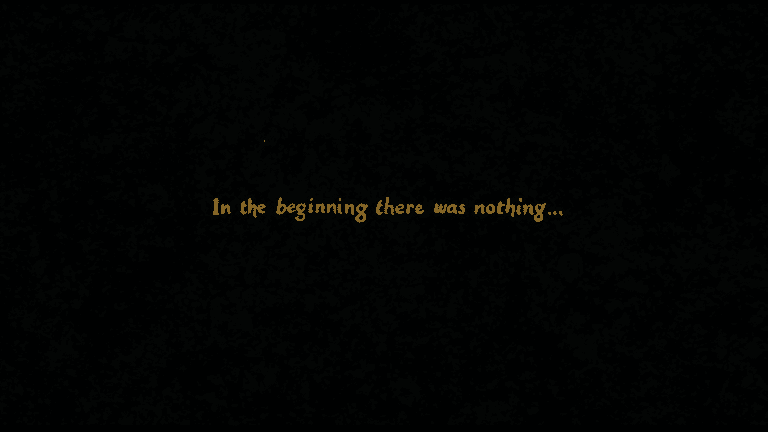
The first day.
Noah: “But the breath of the Creator fluttered against the face of the void, whispering, ‘Let there be light.’ And light was. And it was good. The first day.”
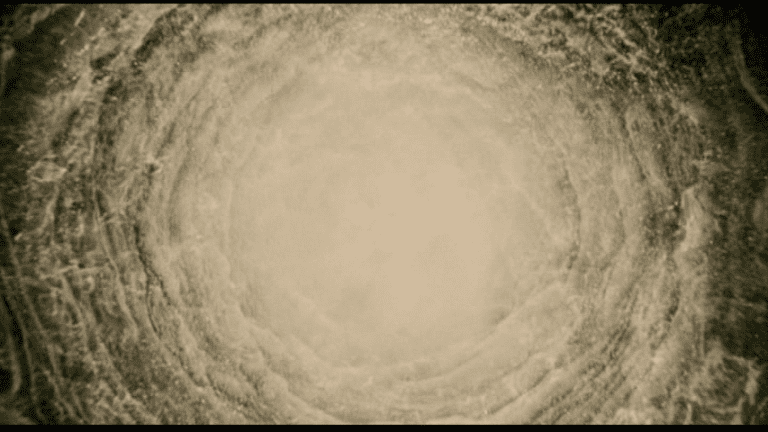
The second day.
Noah: “And then the formless light began to take on substance and shape. A second day.”
Og: “The Creator formed us on the second day. The day He made the heavens.”
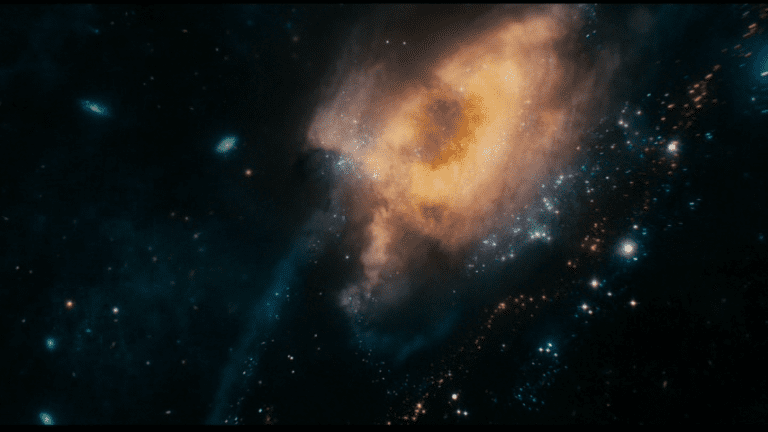

The third and fourth days.
Noah: “And our world was born. Our beautiful, fragile home. And a great, warming light nurtured its days. And a lesser light ruled the nights. And there was evening. And morning. Another day. And the waters of the world gathered together, and in their midst emerged dry land. Another day passed. And the ground put forth the growing things. A thick blanket of green stretching across all Creation.”
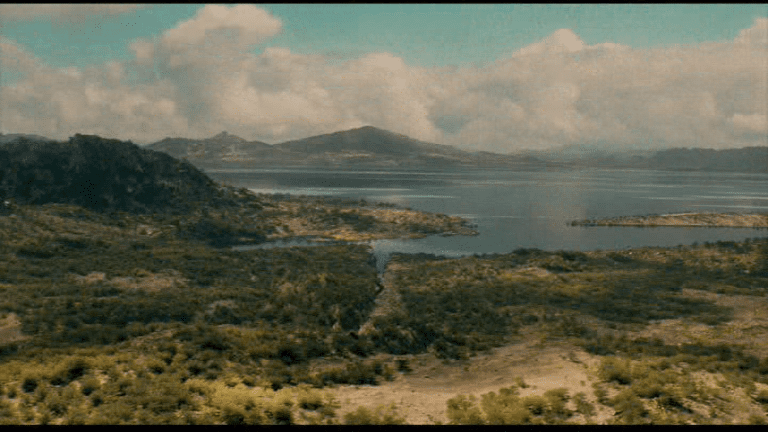
The fifth and sixth days.
Noah: “And the waters, too, teemed with life. Great creatures of the deep that are no more. Vast multitudes of fish, some of which may still swim beneath these seas. And soon the sky was streaming with birds. And there was evening. And there was morning. A fifth day. Now the whole world was full of living beings. Everything that creeps, everything that crawls, and every beast that walks upon the ground. And it was good. It was all good. There was light and air and water and soil, all clean and unspoiled. There were plants and fish and fowl and beast, each after their own kind. All part of the greater whole. All in their place. And all was in balance. It was paradise. A jewel in the Creator’s palm.”

The creation of man and woman.
Noah: “Then the Creator made Man. And by his side, Woman. Father and mother of us all.”
Og: “We watched over Adam and Eve. Saw their frailty and their love.”

The Fall.
Prologue: “Temptation led to sin…”
Noah: “He gave them a choice. Follow the temptation of darkness or hold on to the blessing of light. But they ate from the forbidden fruit. Their innocence was extinguished.”
Og: “And then we saw their fall. And we pitied them.”

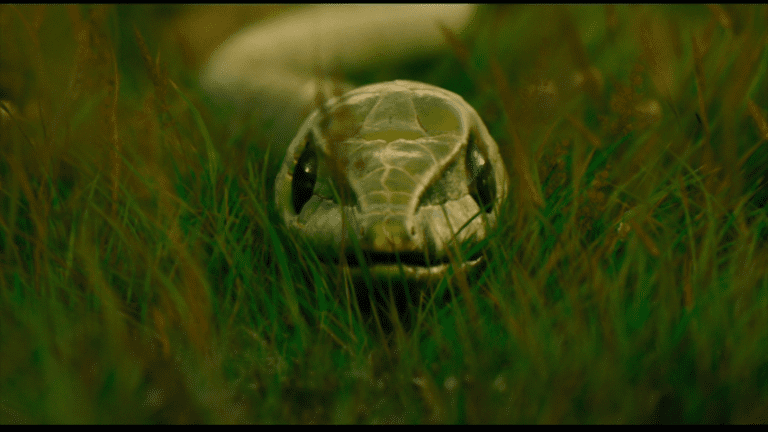
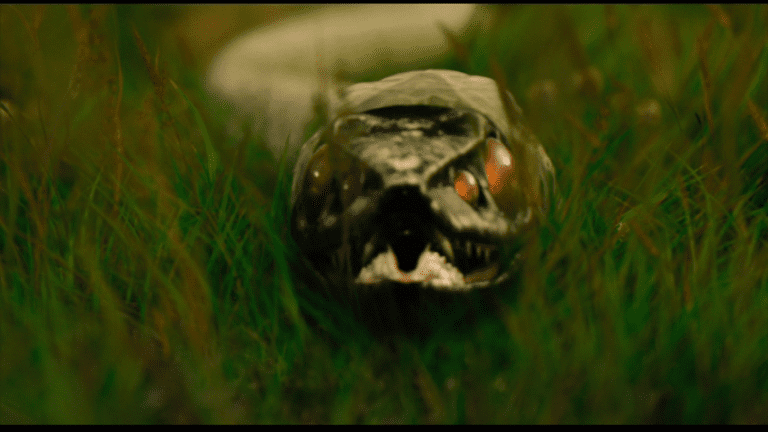
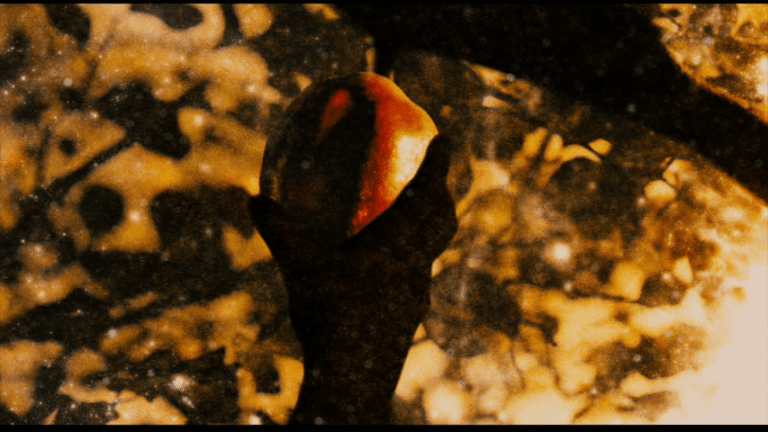
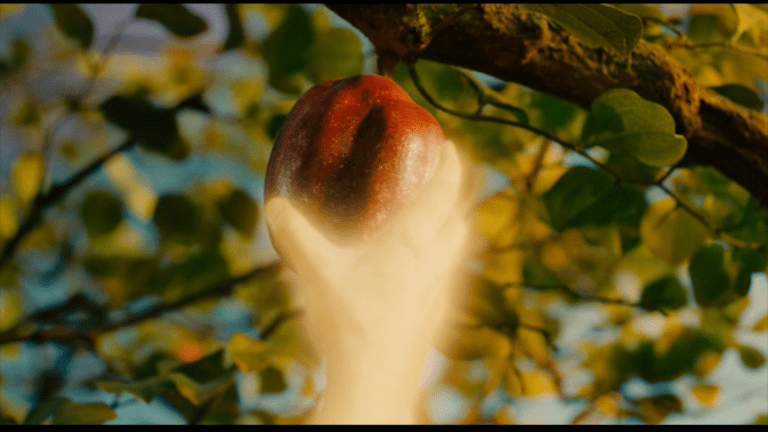
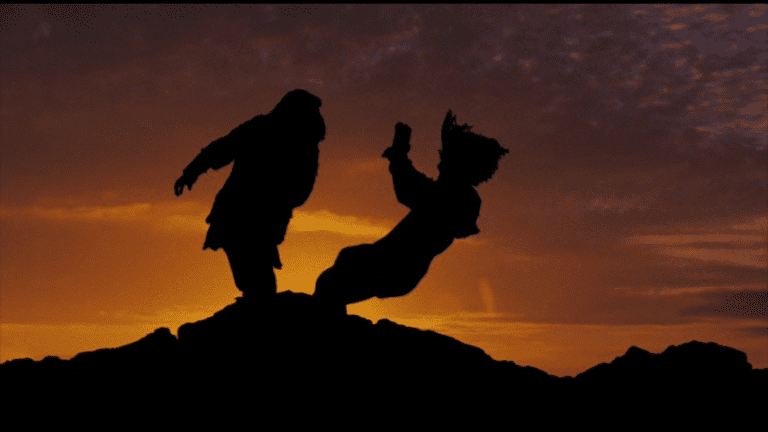
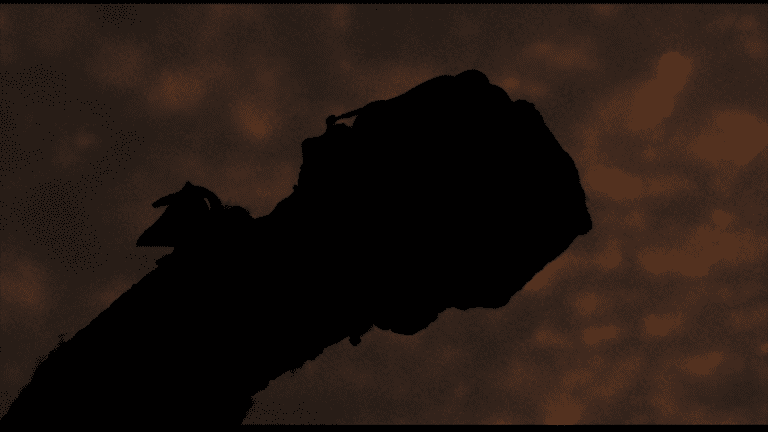
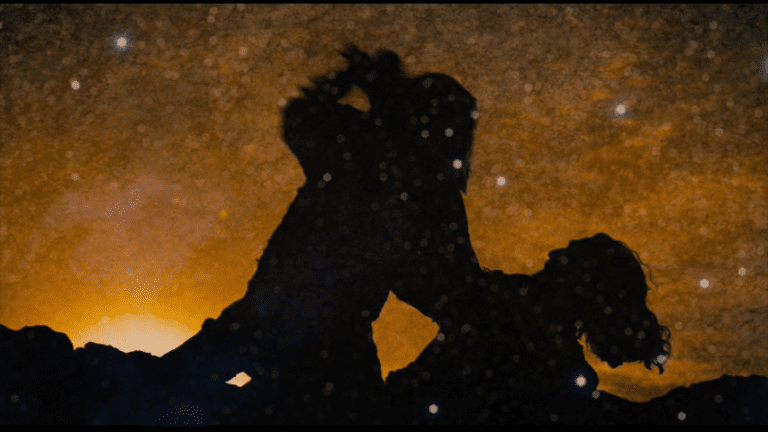
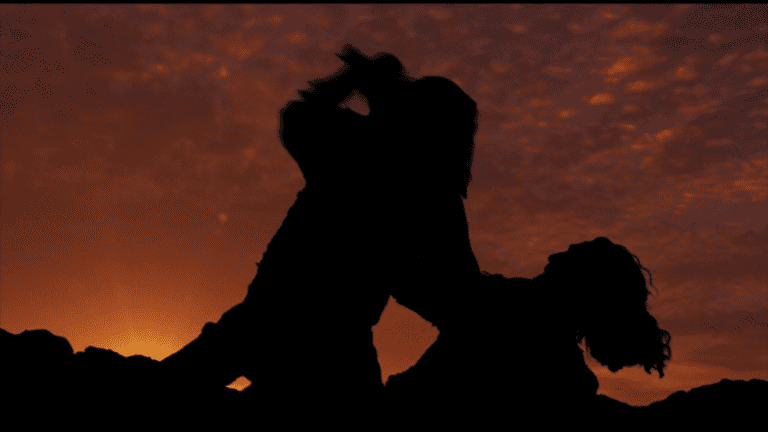
Cain kills Abel.
Prologue: “Cast out of Eden, Adam and Eve had three sons: Cain, Abel and Seth. Cain killed Abel and fled to the East…”

The Watchers come down to Earth.
Og: “We were not stone then, but light. It was not our place to interfere. Yet we chose to try and help mankind. And when we disobeyed the Creator, He punished us. We were encrusted by your world. Rock and mud shackled our fiery glow.”
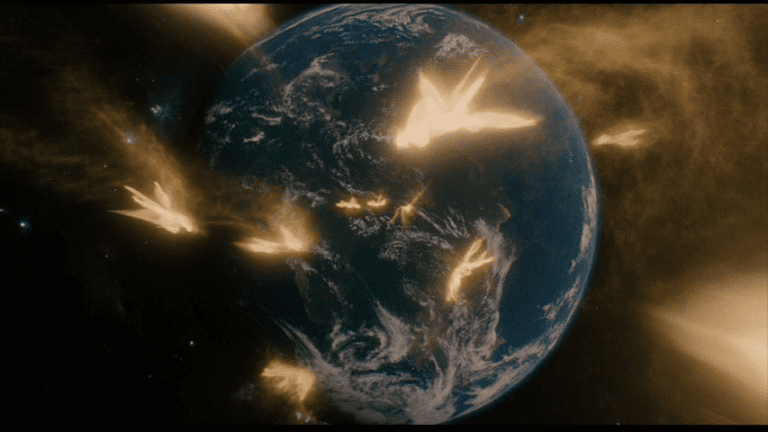
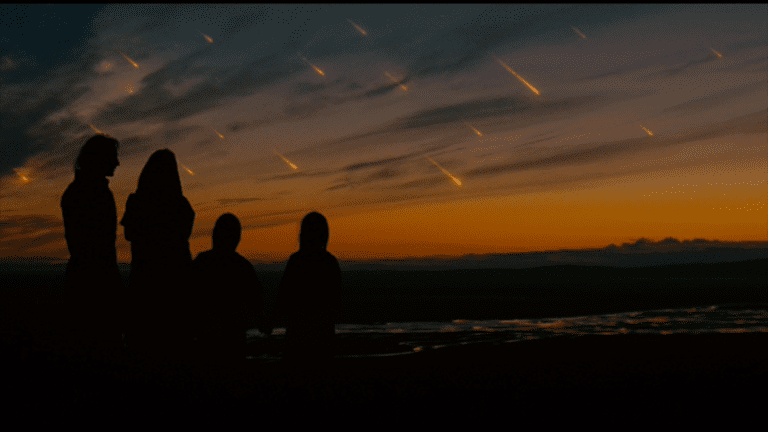

The Watchers help the descendants of Cain.
Prologue: “…where he was sheltered by a band of fallen angels: The Watchers. These Watchers helped Cain’s descendants build a great industrial civilization.”
Og: “Still, we taught mankind all we knew of Creation. With our help, they rose from the dust, became great and mighty.”
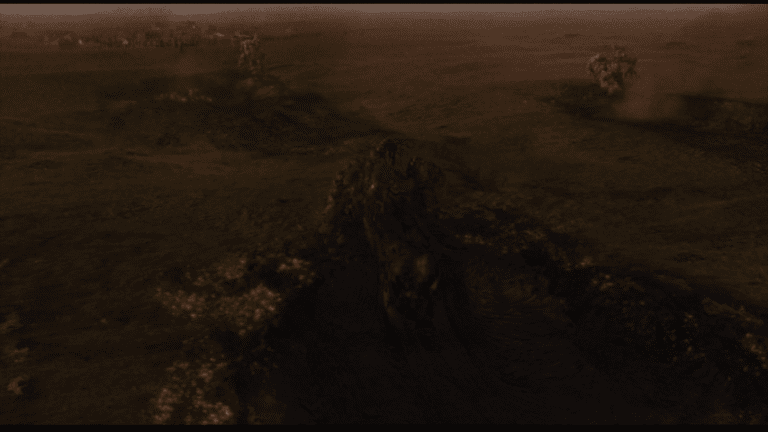
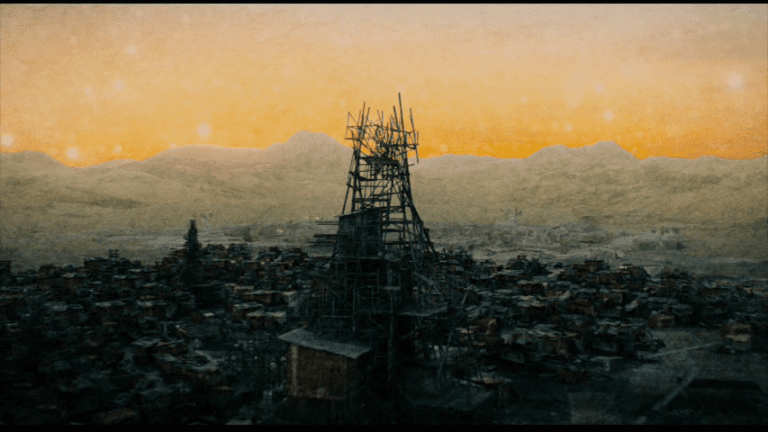
The wickedness of Cain’s descendants and/or humanity as a whole.
Prologue: “Cain’s cities spread wickedness, devouring the World.”
Noah: “And so for the ten generations since Adam, sin has walked within us. Brother against brother. Nation against nation. Man against Creation. We murdered each other. We broke the world. We did this. Man did this. Everything that was beautiful, everything that was good, we shattered.”
Og: “But then they turned our gifts to violence. Only one man protected us. Your grandfather Methuselah. We were hunted. Most of us killed.”

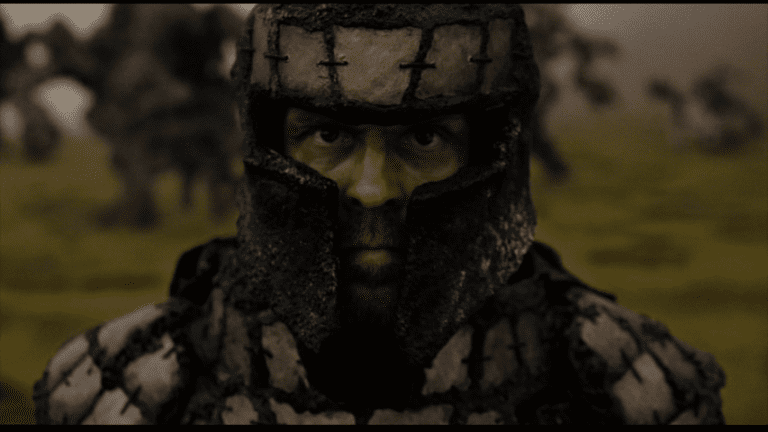
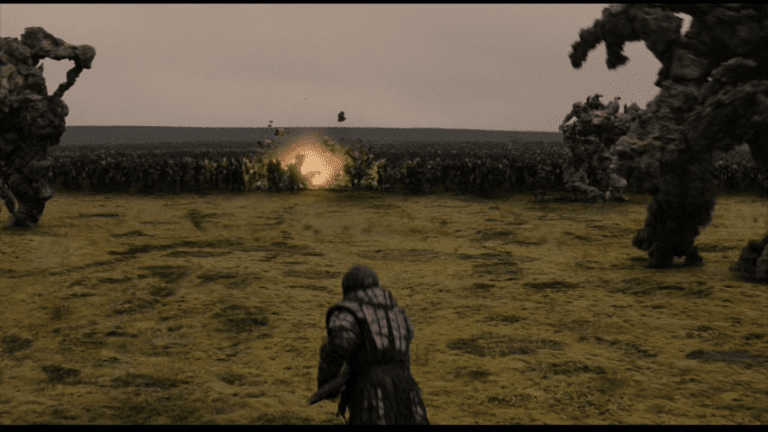
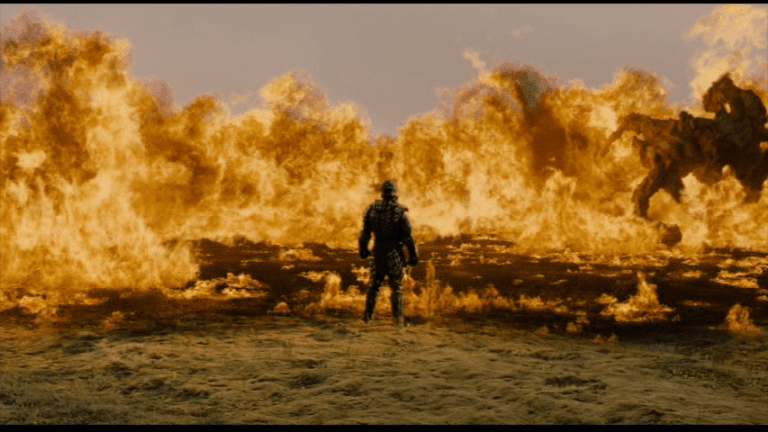
Tubal-Cain enslaves the Watchers and kills Lamech.
Prologue: “Only the descendants of Seth defend and protect what is left of Creation. Today, the last of Seth’s line becomes a man.”
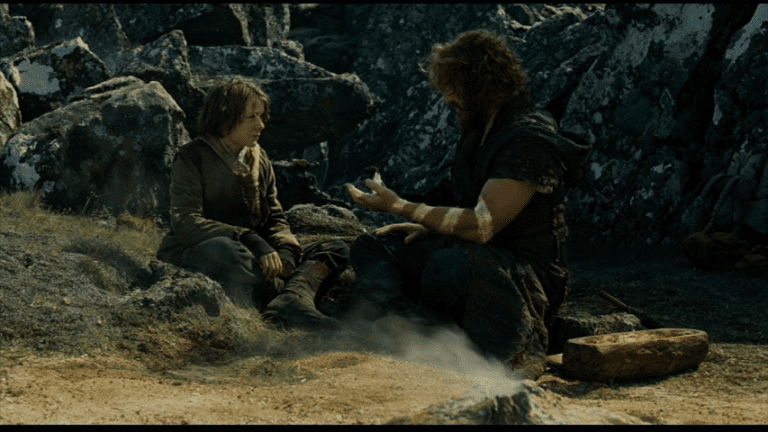
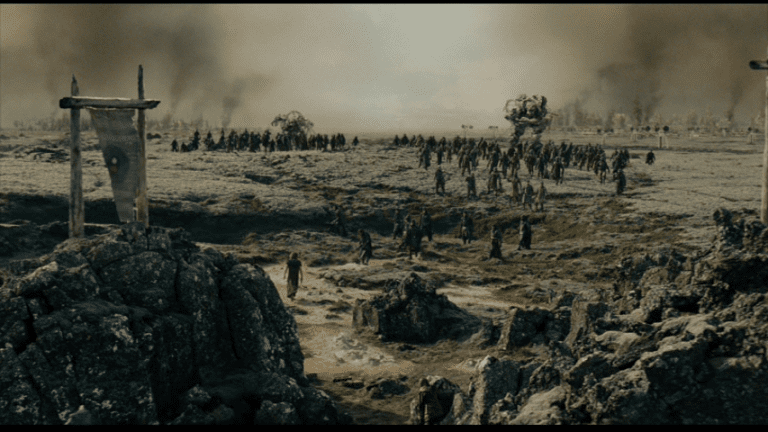
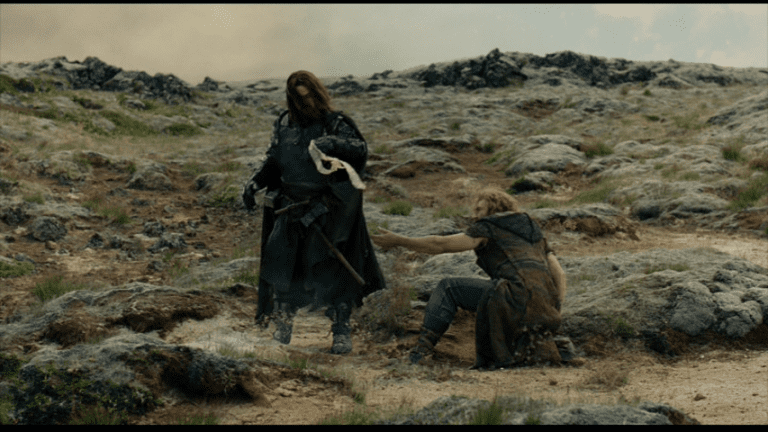
The Watchers who are not killed or enslaved long for home.
Og: “Those who lived were left prisoners in these stony shells, marooned upon this barren land. We begged the Creator to take us home. But He was always silent.”
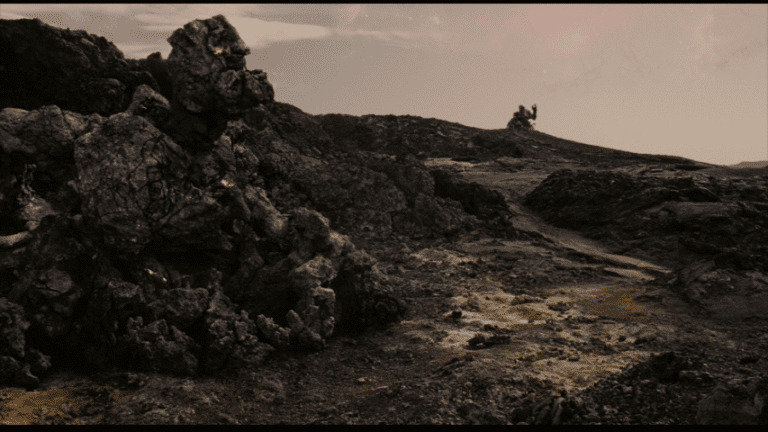
A few notes:
First, the film’s take on the second day of creation is full of fascinating details.
For example, Genesis 1:6-8 specifies that God created a vault to separate the waters of heaven from the waters of the earth, but the film, in order to synthesize the Genesis story with our current scientific understanding of the origin of the universe, changes this to a statement about “formless light” taking on “substance and shape”. This matches the current scientific belief that the universe consisted of nothing but energy at first, before some of it was converted to matter; but it also fits the basic thrust of Genesis, which is that God brought order out of the waters of chaos.
Also, the Bible never specifies when, exactly, the angels were created, but the Midrash Rabbah says they were created on the second day because Psalm 104 seems to indicate that they were created after the creation of the firmament. Another tradition holds that the angels were created on the second day, rather than the first, so that no one would think God had needed their help to create the world out of nothing.
Note also that the angels are made of tzohar, the primordial light that God created on the first day before there was any sun, moon or stars to give light. This tzohar also appears in the film as a mineral that the humans mine from the earth (Noah uses it for illumination on the Ark, while Tubal-Cain uses it as a weapon). In the published screenplay and both novelizations, Og even says that humans turned against the Watchers and killed them so that they could access “the tzohar inside us.”
Second, perhaps the hardest thing to reconcile here is Og’s claim that he and his fellow Watchers came to help “Adam” and the prologue’s statement that the Watchers helped the descendants of Cain specifically. Indeed, in the visuals that accompany Og’s monologue, you can see how there is already a growing human settlement near the place where the Watchers fell — which means that, for all the pity the Watchers felt for Adam and Eve, the Watchers did not actually come down to earth until long after Adam, Eve and their descendants had been fruitful and multiplied. Indeed, it is even possible that they did not come until long after Cain had killed his brother.
Third, note how when the humans kill the Watchers here, there is a flash of light as the Watchers die and their tzohar is exposed, but these Watchers do not ascend into Heaven as the other Watchers will when they die defending Noah’s Ark.
Finally, it is not clear whether Methuselah’s defense of the Watchers — and his slaying of thousands of humans with a single blow — happened before or after Tubal-Cain murdered Lamech. I have placed it before because of Methuselah’s age (when Noah meets him two or three decades after the murder of Lamech, Methuselah is supposed to be a lot older than he is here), but I could see a case for placing it after.
For one thing, Og makes it sound like Methuselah protected the Watchers when they were the targets of a full-scale genocide, but Tubal-Cain has a couple of Watchers working for him as slaves when he meets Lamech; perhaps the humans did not kill the Watchers en masse until later. Also, one could argue that Methuselah took up arms against the other humans partly as revenge for the murder of his son.
However, Tubal-Cain is nowhere to be seen when Methuselah wipes out thousands of humans with one blow, and I am inclined to think that Methuselah did not hand the snakeskin over to Lamech until after he had retired from foe-vanquishing.
Which is all to say, if this film is a “midrash” that fills in some of the gaps in the Bible, then we may need another midrash to fill in some of the gaps in this film!
Previous Post

March 13, 2015
Of Kings and Prophets finds its David... and Jesus (sort of)
Browse Our Archives
Select a Category Anglican Planet Articles BC Christian News BC Report Bible Movies Bible Review Blog Books & Culture Campus Times CBC Radio Christianity Today ChristianWeek Essays Faith Today Festival Cinemas Guide Film Journals Georgia Straight Interviews MB Herald National Catholic Register Salvationist Today's Christian Two Chairs Ubyssey Uncategorized Vancouver Courier Vancouver Sun
Select a Month August 2025 April 2025 January 2025 December 2024 November 2024 May 2024 February 2024 December 2023 May 2023 March 2023 November 2022 July 2022 June 2022 May 2022 April 2022 February 2022 January 2022 December 2021 November 2021 October 2021 September 2021 August 2021 July 2021 June 2021 April 2021 March 2021 February 2021 January 2021 December 2020 November 2020 October 2020 August 2020 July 2020 June 2020 May 2020 March 2020 February 2020 January 2020 December 2019 November 2019 September 2019 July 2019 May 2019 April 2019 March 2019 February 2019 January 2019 December 2018 November 2018 October 2018 September 2018 July 2018 June 2018 May 2018 April 2018 March 2018 February 2018 January 2018 December 2017 November 2017 October 2017 September 2017 August 2017 July 2017 June 2017 May 2017 April 2017 March 2017 February 2017 January 2017 December 2016 November 2016 October 2016 September 2016 August 2016 July 2016 June 2016 May 2016 April 2016 March 2016 February 2016 January 2016 December 2015 November 2015 October 2015 September 2015 August 2015 July 2015 June 2015 May 2015 April 2015 March 2015 February 2015 January 2015 December 2014 November 2014 October 2014 September 2014 August 2014 July 2014 June 2014 May 2014 April 2014 March 2014 February 2014 January 2014 December 2013 November 2013 October 2013 September 2013 August 2013 July 2013 June 2013 May 2013 April 2013 March 2013 February 2013 January 2013 December 2012 November 2012 October 2012 September 2012 August 2012 July 2012 June 2012 April 2012 January 2012 January 2011 December 2010 November 2010 October 2010 September 2010 August 2010 July 2010 June 2010 May 2010 April 2010 March 2010 February 2010 January 2010 December 2009 November 2009 October 2009 September 2009 August 2009 July 2009 June 2009 May 2009 April 2009 March 2009 February 2009 January 2009 December 2008 November 2008 October 2008 September 2008 August 2008 July 2008 June 2008 May 2008 April 2008 March 2008 February 2008 January 2008 December 2007 November 2007 October 2007 September 2007 August 2007 July 2007 June 2007 May 2007 April 2007 March 2007 February 2007 January 2007 December 2006 November 2006 October 2006 September 2006 August 2006 July 2006 June 2006 May 2006 April 2006 March 2006 February 2006 January 2006 December 2005 November 2005 October 2005 September 2005 August 2005 July 2005 June 2005 May 2005 April 2005 March 2005 January 2005 December 2004 November 2004 October 2004 September 2004 August 2004 July 2004 June 2004 May 2004 April 2004 March 2004 February 2004 January 2004 November 2003 October 2003 August 2003 July 2003 June 2003 May 2003 January 2003 December 2002 November 2002 August 2002 July 2002 June 2002 May 2002 March 2002 January 2002 December 2001 November 2001 September 2001 August 2001 July 2001 June 2001 April 2001 March 2001 February 2001 December 2000 November 2000 October 2000 September 2000 August 2000 July 2000 June 2000 May 2000 April 2000 March 2000 January 2000 October 1999 August 1999 May 1999 April 1999 February 1999 January 1999 December 1998 November 1998 October 1998 August 1998 July 1998 June 1998 April 1998 March 1998 January 1998 November 1997 September 1997 July 1997 June 1997 April 1997 March 1997 February 1997 January 1997 December 1996 October 1996 September 1996 June 1996 March 1996 February 1996 January 1996 April 1995 November 1994 September 1994 September 1991
Follow Us!
TAKE THE
Religious Wisdom Quiz
Who visited Job and tried to explain his suffering?
Select your answer to see how you score.
His brothers Three friends His servants His sons
Related posts from FilmChat

Joseph of Egypt – the Chosen spin-off announces...

Exclusive: A clip from Angel Studios' The King...

Exclusive: Watch a clip from Angel Studios' Brave...

Exclusive: Watch a clip from Angel Studios' Homestead
TRENDING AT PATHEOS Religious Music & Entertainment

"Les Diabolique" and Transgression
Alongside something like Arrival, Vertigo, or Charade, Les Diaboliques is a...

"The Plague Dogs" and Mortality
So, flashback to the late 70s, early 80s. Walt Disney Studios is...

With the recent and highly successful release of Christopher Nolan’s epic film,...

"L'avventura" and Human Weakness
Today's piece is going to be a little different for a few...

I first want to apologize for not posting or writing anything. I'm...

I've engaged in the multi-year project of reading through the Church Fathers,...
view all Religious Music & Entertainment blogs
Ad-Free & Subscriber Log-In Subscription Support
- About Us
- 2026 Calendar
- Videos
- Podcasts
- Library of World Religions
- Faith In Media Tracker
- Advertise With Us
- Write for Us
- Privacy Policy
- Terms of Service
- Do Not Sell My Data
- Contact Us
- Radiant Digital
- Manage Newsletter Subscriptions
- Unsubscribe From Notifications
- Sitemap
Copyright 2008-2026, Patheos. All rights reserved.
Subscription Support Ad-Free & Subscriber Log-In
Follow Patheos