
BuddhistCatholicContemplativeEvangelicalGeneral ChristianHinduJewishLatter-day SaintMuslimNew VisionsProgressive Christian
Beliefs
- Buddhist
- Catholic
- Contemplative
- Evangelical
- General Christian
- Hindu
- Jewish
- Latter-day Saint
- More Voices
- Muslim
- New Visions
- Pagan
- Progressive Christian
Topics
- Religion News
- Food and Religion
- Sports and Religion
- Religious Art
- Religious Music and Entertainment
- Religious Events
- History and Religion
- Style and Religion
- Politics and Religion
- Women in Religion
- Recreation Outdoors and Religion
- Business Finance and Religion
- Careers Workplace and Religion
- Education and Religion
- Family Parenting and Religion
- Health Fitness and Religion
- Home and Religion
- Relationships and Religion
- Technology and Religion
- Travel and Religion
Columnists
- Buddhist Columnists
- Business Finance and Religion Columnists
- Careers Workplace and Religion Columnists
- Catholic Columnists
- Contemplative Columnists
- Education and Religion Columnists
- Evangelists Columnists
- Family Parenting and Religion Columnists
- General Christian Columnists
- Health Fitness and Religion Columnists
- Hindu Columnists
- History and Religion Columnists
- Home and Religion Columnists
- Jewish Columnists
- More Voices Columnists
- Latter Day Columnists
- Muslim Columnists
- New Visions Columnists
- Nonreligious Columnists
- Pagan Columnists
- Politics and Religion Columnists
- Progressive Columnists
- Recreation Outdoors and Religion Columnists
- Relationships and Religion Columnists
- Religion News Columnists
- Religious Art Columnists
- Religious Events Columnists
- Religious Music and Entertainment Columnists
- Sports and Religion Columnists
- Style and Religion Columnists
- Technology and Religion Columnists
- Travel and Religion Columnists
- Women in Religion Columnists
Resource Library
- 2026 Calendar
- Library of World Religions
- The 100 Most Holy Places on Earth
- Patheos Answers
- Podcasts
- Videos
- Faith Leaders Database
- Anglican Episcopalian
- Bahai
- Baptist
- Buddhism
- Christianity
- Confucianism
- Eastern Orthodoxy
- Hinduism
- Holiness and Pentecostal
- ISKCON
- Islam
- Judaism
- Lutheran
- Methodist
- The Church of Jesus Christ of Latter-day Saints
- New Age
- Paganism
- Presbytarian and Reformed
- Protestantism
- Religion Behind the Scenes
- Roman Catholic
- Scientology
- Shia Islam
- Sikhism
- Sufism
- Sunni Islam
- Taoism
- Zen
- See all religions
Research Tools
 Ad-Free & Subscriber Log-In Subscription Support
Ad-Free & Subscriber Log-In Subscription Support
Follow Patheos 

- Trending:
- Forgiveness
- |
- Marriage
- |
- Consciousness
- |
- Death Penalty
- |
- Election
- |
- Halloween

-
Articles
- Home
- Religious Music & Entertainment
- Cornelius and Caligula: biblical and secular history come together in two shows called A.D.
Cornelius and Caligula: biblical and secular history come together in two shows called A.D.
Last updated on: May 31, 2015 at 11:11 pm by Peter T. Chattaway
Cornelius and Caligula: biblical and secular history come together in two shows called A.D. 2015-05-31T23:11:57-07:00 Peter T. Chattaway
Patheos Explore the world's faith through different perspectives on religion and spirituality! Patheos has the views of the prevalent religions and spiritualities of the world.
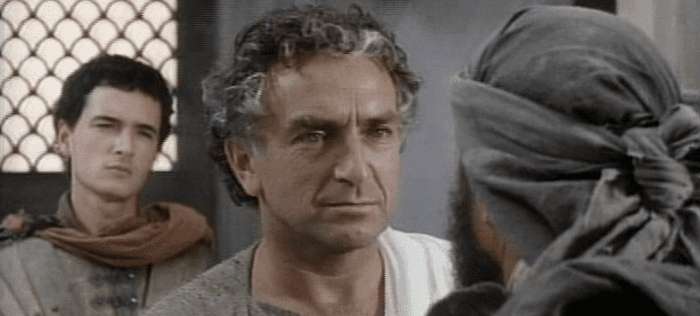
One of the things I have always loved about the 1985 miniseries A.D.: Anno Domini is the way it links the conversion of Cornelius, the first Gentile Christian, to Caligula’s efforts to have a statue of himself placed inside the Jerusalem temple.
In this telling, Cornelius, who is a Roman centurion, reacts to the insanity of Caligula’s decree by abandoning paganism altogether, while Peter and the other Christians argue over whether they, as Jews, should still regard the temple as “theirs” in some sense. Caligula’s plans to desecrate the temple, which we know about from writers such as Philo and Josephus, provoke a number of identity crises that are so interesting, you begin to wonder why the book of Acts itself never mentions this episode.
Now comes word that A.D.: The Bible Continues, which premieres April 5 on NBC — the same network that showed the 1985 miniseries! — may do something similar. My colleague Rebecca Cusey interviewed producer Mark Burnett recently, and he told her the series will feature a scene, taken from history, in which the Romans have the opportunity to kill some Jewish protestors but decide not to, because Cornelius is the centurion in charge and he is a recent, but secret, convert to Christianity.
It will be interesting to see how similar — and different — the two shows are in their handling of this subplot. One difference already stands out: In the 1985 miniseries, Cornelius talks about the fact that he must go to Jerusalem and carry out Caligula’s order, but we never see him leave his home in Caesarea. In the new series, on the other hand, Cornelius will be in the thick of it — and the emphasis will be on violence, threatened or actual, just as it was in Burnett’s previous series, The Bible.
One other difference stands out too: In the 1985 miniseries, we don’t see Cornelius until shortly before his conversion, when he is talking to Marcellus, the procurator who replaced Pontius Pilate in AD 37. But in the new series, Cornelius will apparently share scenes with Pilate himself. Indeed, you can already see him standing next to Pilate (to our right) in this photo that was released a few months ago:
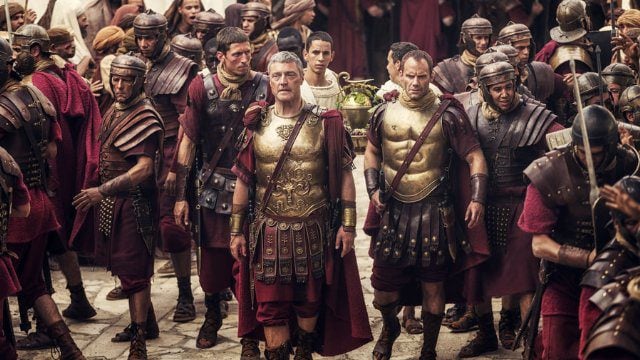
So it looks like Cornelius will be fleshed out quite a bit more in The Bible Continues than he was in Anno Domini. I’m guessing he might play a role in this series similar to the role Nicodemus played in The Bible: an assistant to one of the chief antagonists who eventually switches sides and casts his lot with the Christians.
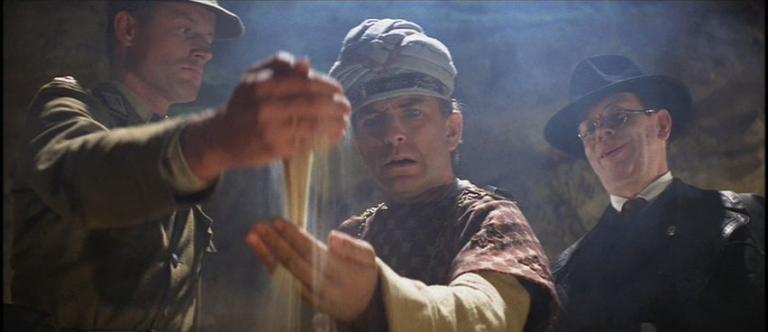
Incidentally, the actor who played Cornelius in the 1985 miniseries was Paul Freeman — who also appeared in The Bible two years ago as the prophet Samuel!

But you might remember him best for another movie with a sort of Bible connection:
A few extra points:
First, in case you’re wondering if it’s possible that the conversion of Cornelius could have coincided with the crisis surrounding Caligula’s statue, the answer is yes. The statue incident began in AD 40 and came to an end when Caligula was assassinated by his own guards in AD 41. In the book of Acts, the conversion of Cornelius takes place in chapter 10, which is after Paul’s escape from Damascus in Acts 9 (which must have happened before the death of the Nabatean king Aretas in AD 40) and before a story in Acts 11 that takes place during the reign of Claudius (which began in AD 41).
Second, while the episode with Caligula’s statue is never mentioned in the book of Acts, some historians think it might lurk behind certain passages in the gospels and Paul’s letters. The more obvious reference point for those passages is an even earlier desecration that took place under the Greeks about two centuries earlier, but the Caligula incident might have made those memories a little fresher.
Third, for those who haven’t seen A.D.: Anno Domini, I have taken the liberty of transcribing most of the key scenes involving Cornelius and his conversion.
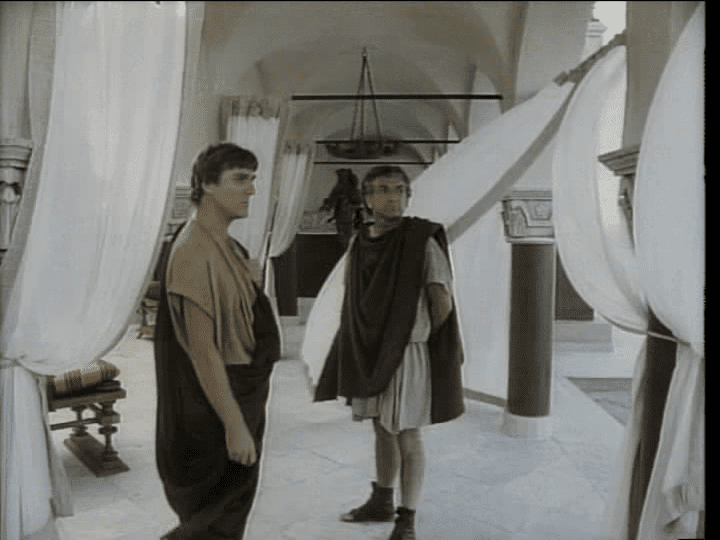
Here is the first scene, featuring Cornelius and the procurator Marcellus. It sets up the centurion as someone who is educated in the ways of Jewish religion, and it sets up the tension between Caligula’s orders and the desire of the local authorities to keep the peace. It also includes a nod to a certain passage in Suetonius:
Marcellus: So it has arrived. The statue of our divine Caligula. What will I do, Cornelius?
Cornelius: Temporize. Delay. Try to shift responsibility. The true art of the ruler. On the other hand, if you want a general massacre on both sides, obey the man — or god, as he thinks he is. I needn’t point out to you the blasphemy of this business.
Marcellus: Blasphemy? I hear that word all the time from the Jews. I don’t understand it. Perhaps I’ve had the wrong sort of education. If they believe in one God, then why can’t the image of this one god stand in their damned temple?
Cornelius: Yes, the wrong sort of education. You mean they should pretend that the image of deified Gaius Caligula is really the image of their only God, a God that has no images?
Marcellus: I understood that, according to this new Jewish sect, God had turned himself into a man. A slave called Chrestus.
Cornelius: Slight confusion there, procurator. Chrestus, I grant, is a common enough name among slaves. What does it mean: Cheerful? Useful? Helpful? The name you mean is Christus, and that’s attached to a man who is not a slave but a son of the royal house of David: Jesus of Nazareth. His followers are called Nazarenes. Christus means “anointed with sacred oil”, like a king. They call him the King of the Jews, the Messiah.
Marcellus: I must remember to stop seeking information from you, Cornelius. You give me far too much. But I will take your advice. The divine Caligula had better go into temporary storage. I’ve got enough trouble with these damned Jews and their unholy Temple. You’ve also given me an idea. Rome shall be told that this whole matter had better be entrusted to a higher authority, to Publius, governor of Syria. Yes, let him deal with it.
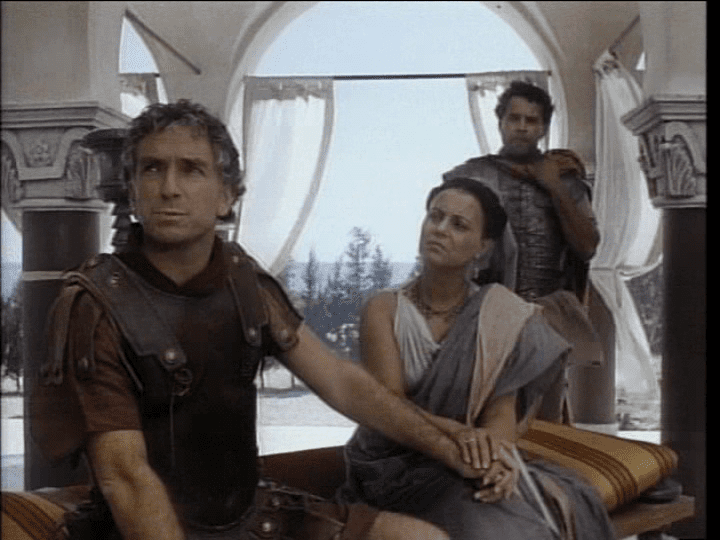
The next time we see Cornelius, it is after Caligula has summoned Marcellus back to Rome as punishment for failing to install the statue. Cornelius talks to two of his soldiers, and also to a third soldier who represents the governor of Syria, while pacing about his home and stopping to hold the hands of his wife and son:
Cornelius: Look, the situation is not clear. The situation never is when Rome is involved. We stay, the procurator goes.
Soldier #1: No procurator? So who are we responsible to?
Cornelius: You’re responsible to me. I seem to be directly responsible to this man in Syria — Publius Petronius, is it?
Soldier #2: Publius Petronius, the governor.
Soldier #1: So we move to Jerusalem.
Cornelius: We’ll be needed more in Jerusalem than in Caesarea, when the statue is put in.
Soldier #3: I can’t see that. I can’t see how the Jews will ever allow it.
Cornelius: It seems to be up to the Roman army to make sure that they do, meaning us — and the auxiliaries from Syria. The “god” Caligula. The Jews and Romans alike? I don’t think I can stand much more of the world’s madness. You know where sanity lies, don’t you?
Soldier #1: You’ve said something about it, centurion.
Cornelius: I need somebody to talk to us. The man I mean isn’t far from here. Providential? I wonder. I want your men to ride to Jaffa–
Soldier #3: Joppa.
Cornelius: Whatever they call it! A fisherman. A humble man for humble men. He’s been doing strange things there.
Soldier #1: Strange?
Cornelius: Oh, wonderful! I don’t know what words to use! Even words are losing their meaning in this time of the world’s madness. Ask for the man Peter. Everyone will know where he is. You and you. Bring him here.
Note how there is no reference here to the angel that visited Cornelius and told him to summon Peter, as reported in Acts 10. Instead, the Cornelius of this film merely “wonders” if it is “providential” that Peter is nearby.
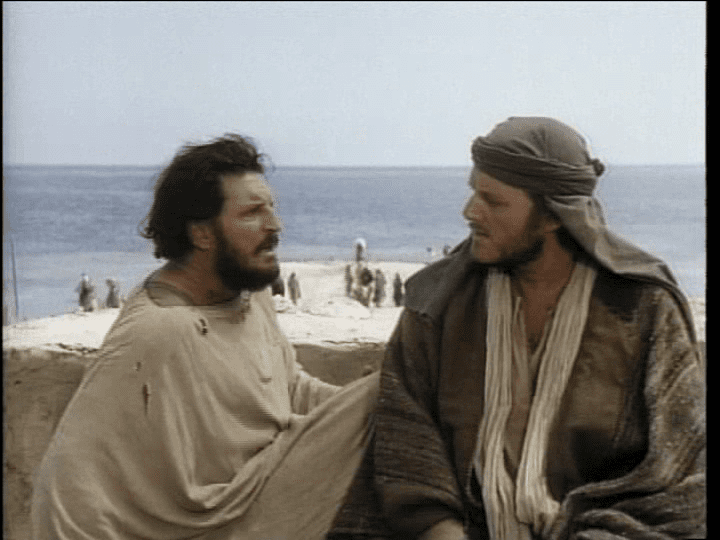
Next, there is the scene in which Peter has a vision in a dream — a vision that prepares him to baptize a Gentile for the first time ever. Peter is woken by Thomas:
Thomas: Calm down. Calm down, Peter.
Peter: Pig flesh, washed down with goat’s milk? Unclean food! No, no, our laws forbid it!
Thomas: You’ve been dreaming again.
Peter: Dreaming? I saw this awning come down on me, and it was filled with all sorts of animals, the ones we’re permitted to eat together with the forbidden ones. And a voice said, “Rise, Peter. Kill and eat.” Three times, I heard it.
Thomas: It’s just a bad dream, Peter. It means you’re hungry.
Peter: It means we must not be afraid of breaking bread with the Gentiles, Thomas! Of eating their food, if we are to bring them the good news! Do you remember the time when Jesus disputed with the scribes about what we should and shouldn’t eat according to our ancient laws? He said, “It is not what goes into a man’s stomach that defiles him, but what comes out of his heart!”
That last line comes from the gospels — and in its original context, Jesus was talking about whether it was okay to eat without washing your hands first. But the gospel of Mark, written years after Gentiles were welcomed into the Church, interprets this saying to mean that all foods are clean, and so does Peter in this scene.
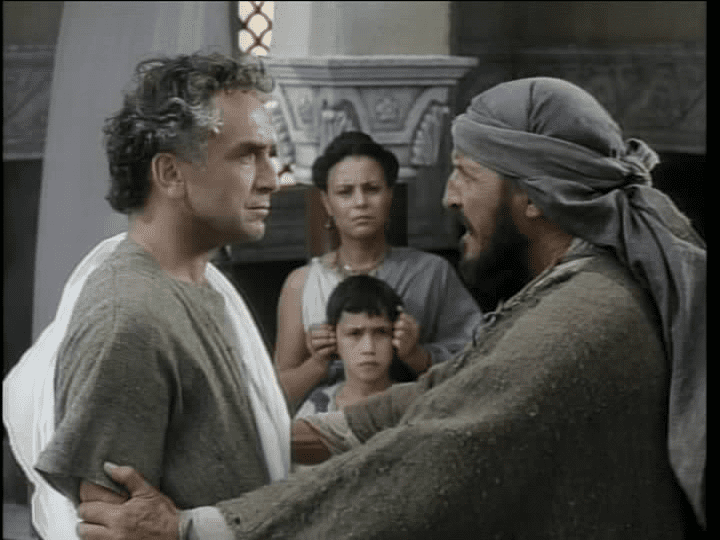
Men from Cornelius arrive, and Peter and Thomas travel to Caesarea, arguing all the way over whether they should enter the Roman’s house. When Peter steps inside Cornelius’s home, the centurion begins to kneel, and Peter stops him:
Peter: Up! Up! I’m a man like you! I offer you peace, according to God’s commandments.
Cornelius: I know the commandments of your leaders, master.
Peter: Oh not master, please. Please, not master.
Cornelius: It’s unlawful for you to mix with the uncircumcised Romans, the oppressing Romans? You’re defiled by entering my house? Yet for me, you defy the rules. That’s why I honour you.
Peter: It’s clear that God is no respecter of persons. Every nation that fears him and does right seems to be acceptable to him. You seek baptism in the name of the Lord Jesus Christ?
Cornelius: Yes.
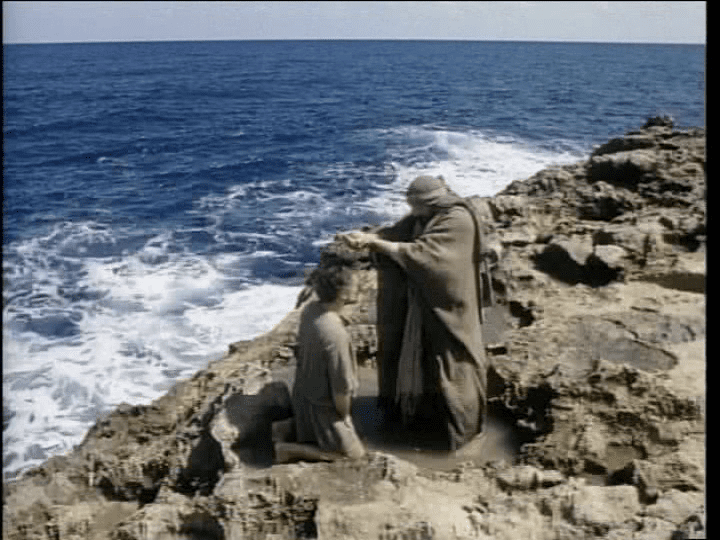
Peter then steps outside and baptizes Cornelius in the name of the Father, Son and Holy Spirit, while Cornelius’s family and a few of his soldiers watch.
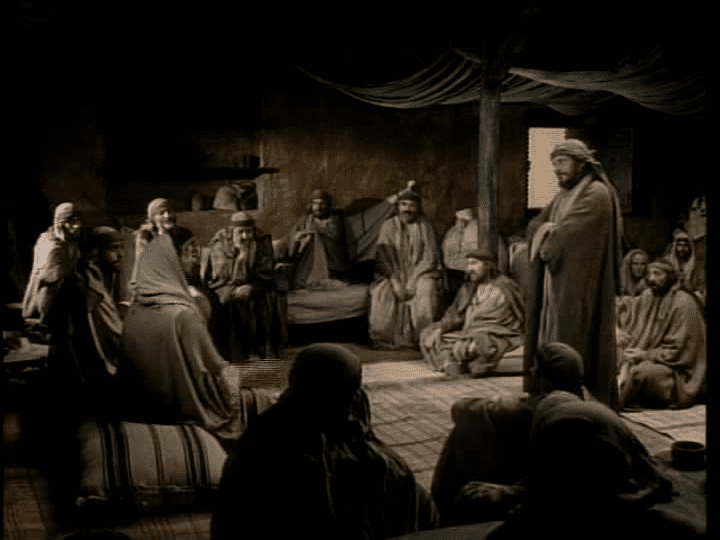
Finally, Peter argues with his fellow Christians back in Jerusalem about the rightness of converting a Gentile, in a scene loosely based on Acts 11 (I think the anonymous apostle who starts talking near the end is James, but I’m not 100% sure):
John: It’s laid down, Peter. Everything’s laid down in the scriptures. The Law of Moses is not changed by the new law.
Peter: You mean that I have to turn a Roman centurion into a Jew, circumcise him, before I can turn him into a Christian?
John: The only way to the New Testament is through the Old! You cannot be a Christian unless you abide by the rules laid down in our Torah! You can’t turn a man into a Jew — you have to be born a Jew! But if you’re born a Jew, then you can become a Christian. It’s as simple as that.
Peter: So we ignore the Gentiles? We were told, as I remember, that we had to go out all over the world and bring the message to whoever would listen! We were told nothing about being made unclean if we enter the houses of the Gentiles!
John: We didn’t need to be told! We knew it already! It’s laid down in the Covenant of the Law!
Peter: Right, right, so I baptize a dozen soldiers who believe that Jesus is the Son of God, and I do wrong. And if a man eats a piece of beef and washes it down with a cup of goat’s milk, that’s wrong too? Is that it?
Thomas: Here we go.
Peter: You seem to forget sometimes that we were given a burden to carry. He said to me, “You are Peter, you are the rock,” so he sends down a vision, I accept that vision, now you tell me that I’m wrong? I get the call to bring the good news to a number of Romans, and that’s wrong too? You are slow to learn! Stephen was not slow. That’s why they killed him. Stephen saw that a new way began where the old ended.
John: I cannot accept it. I cannot!
Peter: Will not, is more like it. You still need to be cured of your stubbornness. And if the bloodstained Caligula himself saw the light and said he wanted to be Christian, what do we do? Do we say, “No, your imperial bloodstained majesty, you are not a Jew, so you cannot be a Christian”? It seems to me that you all have a great deal of rethinking to do.
Apostle (to John): How about the temple?
Peter: What about the temple?
Apostle: Is it still our temple? Do we join up with the other Jews who are not Nazarenes and die for the temple?
Peter: They too are martyrs, and we respect them. But we know that our heart is the Lord’s temple.
Apostle: You don’t understand me, Peter. We’re still part of the history of the Jews, which means we have to defend the Temple. He would have stood up there with a whip, you know that!
Peter: So we, who are whipped and stoned and jailed, we now have to fight for a statue? Is that what you mean?
Apostle: No, no no no.
Thomas: They threaten to desecrate our Temple by shoving into it a statue of their emperor god.
Peter: We have work to do. We cannot afford to be knifed or strung up on a cross. The Romans want us to fight back but we must not yield to the temptations that they offer us! We have work to do!
Note how this scene ends with the argument unresolved. This is presumably because the question of welcoming Gentiles without circumcision will come up again at the Council of Jerusalem, in a scene based on Acts 15. The Bible indicates that the argument was resolved in favour of the Gentiles on both occasions, but it arguably makes more dramatic sense to give this subplot more of a dramatic arc.
Finally, A.D.: The Bible Continues will not be the first series produced by Burnett that depicts the conversion of Cornelius. Two years ago, the final episode of The Bible incorporated this story too, but without tying it to secular history:
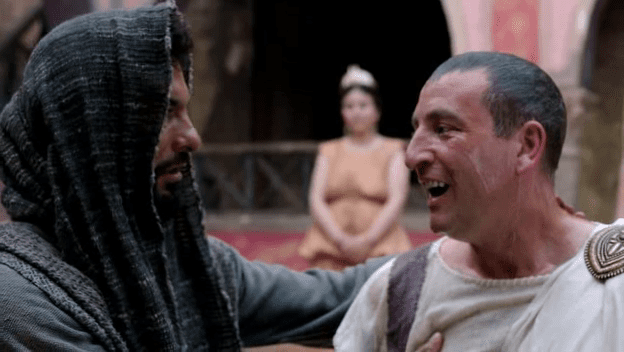
However, like so much else in that miniseries, the story of Cornelius is drastically oversimplified. Peter never has to defend his actions to the other Christians, nor does he wrestle with a vision in which he is told to kill and eat unclean animals; instead, Jesus simply appears to Peter and tells him to go with Cornelius’s men:
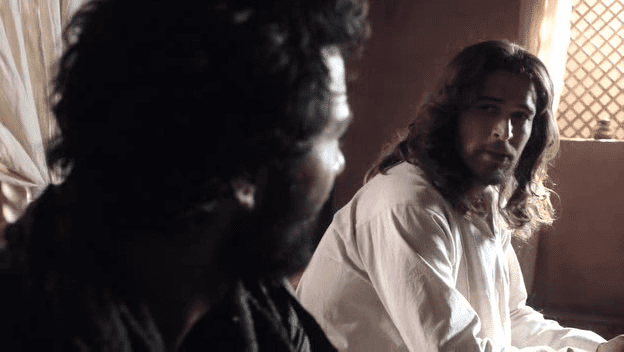
Also: neither The Bible nor the original version of A.D. shows Cornelius speaking in tongues. In Acts 10, Peter is still preaching to Cornelius and his relatives when they all begin to speak in tongues, and Peter realizes that he might as well baptize them all with water since they have already received the Holy Spirit. But in both of these shows, Peter baptizes Cornelius almost immediately after he arrives at the house.
It will be interesting to see if the new A.D. is more… accurate… in this regard.
Previous Post

February 12, 2015
Our first look at Rodrigo Santoro as Jesus in Ben-Hur
Next Post
February 18, 2015 Review: Selma (dir. Ana DuVernay, 2014)
Browse Our Archives
Select a Category Anglican Planet Articles BC Christian News BC Report Bible Movies Bible Review Blog Books & Culture Campus Times CBC Radio Christianity Today ChristianWeek Essays Faith Today Festival Cinemas Guide Film Journals Georgia Straight Interviews MB Herald National Catholic Register Salvationist Today's Christian Two Chairs Ubyssey Uncategorized Vancouver Courier Vancouver Sun
Select a Month August 2025 April 2025 January 2025 December 2024 November 2024 May 2024 February 2024 December 2023 May 2023 March 2023 November 2022 July 2022 June 2022 May 2022 April 2022 February 2022 January 2022 December 2021 November 2021 October 2021 September 2021 August 2021 July 2021 June 2021 April 2021 March 2021 February 2021 January 2021 December 2020 November 2020 October 2020 August 2020 July 2020 June 2020 May 2020 March 2020 February 2020 January 2020 December 2019 November 2019 September 2019 July 2019 May 2019 April 2019 March 2019 February 2019 January 2019 December 2018 November 2018 October 2018 September 2018 July 2018 June 2018 May 2018 April 2018 March 2018 February 2018 January 2018 December 2017 November 2017 October 2017 September 2017 August 2017 July 2017 June 2017 May 2017 April 2017 March 2017 February 2017 January 2017 December 2016 November 2016 October 2016 September 2016 August 2016 July 2016 June 2016 May 2016 April 2016 March 2016 February 2016 January 2016 December 2015 November 2015 October 2015 September 2015 August 2015 July 2015 June 2015 May 2015 April 2015 March 2015 February 2015 January 2015 December 2014 November 2014 October 2014 September 2014 August 2014 July 2014 June 2014 May 2014 April 2014 March 2014 February 2014 January 2014 December 2013 November 2013 October 2013 September 2013 August 2013 July 2013 June 2013 May 2013 April 2013 March 2013 February 2013 January 2013 December 2012 November 2012 October 2012 September 2012 August 2012 July 2012 June 2012 April 2012 January 2012 January 2011 December 2010 November 2010 October 2010 September 2010 August 2010 July 2010 June 2010 May 2010 April 2010 March 2010 February 2010 January 2010 December 2009 November 2009 October 2009 September 2009 August 2009 July 2009 June 2009 May 2009 April 2009 March 2009 February 2009 January 2009 December 2008 November 2008 October 2008 September 2008 August 2008 July 2008 June 2008 May 2008 April 2008 March 2008 February 2008 January 2008 December 2007 November 2007 October 2007 September 2007 August 2007 July 2007 June 2007 May 2007 April 2007 March 2007 February 2007 January 2007 December 2006 November 2006 October 2006 September 2006 August 2006 July 2006 June 2006 May 2006 April 2006 March 2006 February 2006 January 2006 December 2005 November 2005 October 2005 September 2005 August 2005 July 2005 June 2005 May 2005 April 2005 March 2005 January 2005 December 2004 November 2004 October 2004 September 2004 August 2004 July 2004 June 2004 May 2004 April 2004 March 2004 February 2004 January 2004 November 2003 October 2003 August 2003 July 2003 June 2003 May 2003 January 2003 December 2002 November 2002 August 2002 July 2002 June 2002 May 2002 March 2002 January 2002 December 2001 November 2001 September 2001 August 2001 July 2001 June 2001 April 2001 March 2001 February 2001 December 2000 November 2000 October 2000 September 2000 August 2000 July 2000 June 2000 May 2000 April 2000 March 2000 January 2000 October 1999 August 1999 May 1999 April 1999 February 1999 January 1999 December 1998 November 1998 October 1998 August 1998 July 1998 June 1998 April 1998 March 1998 January 1998 November 1997 September 1997 July 1997 June 1997 April 1997 March 1997 February 1997 January 1997 December 1996 October 1996 September 1996 June 1996 March 1996 February 1996 January 1996 April 1995 November 1994 September 1994 September 1991
Follow Us!
TAKE THE
Religious Wisdom Quiz
What does "Shiloh" (where the Tabernacle stood) mean?
Select your answer to see how you score.
Land of Bread House of Prayer Well of Water Place of Peace
Related posts from FilmChat

Joseph of Egypt – the Chosen spin-off announces...

Exclusive: A clip from Angel Studios' The King...

Exclusive: Watch a clip from Angel Studios' Brave...

Exclusive: Watch a clip from Angel Studios' Homestead
TRENDING AT PATHEOS Religious Music & Entertainment

"Les Diabolique" and Transgression
Alongside something like Arrival, Vertigo, or Charade, Les Diaboliques is a...

"The Plague Dogs" and Mortality
So, flashback to the late 70s, early 80s. Walt Disney Studios is...

With the recent and highly successful release of Christopher Nolan’s epic film,...

"L'avventura" and Human Weakness
Today's piece is going to be a little different for a few...

I first want to apologize for not posting or writing anything. I'm...

I've engaged in the multi-year project of reading through the Church Fathers,...
view all Religious Music & Entertainment blogs
Ad-Free & Subscriber Log-In Subscription Support
- About Us
- 2026 Calendar
- Videos
- Podcasts
- Library of World Religions
- Faith In Media Tracker
- Advertise With Us
- Write for Us
- Privacy Policy
- Terms of Service
- Do Not Sell My Data
- Contact Us
- Radiant Digital
- Manage Newsletter Subscriptions
- Unsubscribe From Notifications
- Sitemap
Copyright 2008-2026, Patheos. All rights reserved.
Subscription Support Ad-Free & Subscriber Log-In
Follow Patheos