
BuddhistCatholicContemplativeEvangelicalGeneral ChristianHinduJewishLatter-day SaintMuslimNew VisionsProgressive Christian
Beliefs
- Buddhist
- Catholic
- Contemplative
- Evangelical
- General Christian
- Hindu
- Jewish
- Latter-day Saint
- More Voices
- Muslim
- New Visions
- Pagan
- Progressive Christian
Topics
- Religion News
- Food and Religion
- Sports and Religion
- Religious Art
- Religious Music and Entertainment
- Religious Events
- History and Religion
- Style and Religion
- Politics and Religion
- Women in Religion
- Recreation Outdoors and Religion
- Business Finance and Religion
- Careers Workplace and Religion
- Education and Religion
- Family Parenting and Religion
- Health Fitness and Religion
- Home and Religion
- Relationships and Religion
- Technology and Religion
- Travel and Religion
Columnists
- Buddhist Columnists
- Business Finance and Religion Columnists
- Careers Workplace and Religion Columnists
- Catholic Columnists
- Contemplative Columnists
- Education and Religion Columnists
- Evangelists Columnists
- Family Parenting and Religion Columnists
- General Christian Columnists
- Health Fitness and Religion Columnists
- Hindu Columnists
- History and Religion Columnists
- Home and Religion Columnists
- Jewish Columnists
- More Voices Columnists
- Latter Day Columnists
- Muslim Columnists
- New Visions Columnists
- Nonreligious Columnists
- Pagan Columnists
- Politics and Religion Columnists
- Progressive Columnists
- Recreation Outdoors and Religion Columnists
- Relationships and Religion Columnists
- Religion News Columnists
- Religious Art Columnists
- Religious Events Columnists
- Religious Music and Entertainment Columnists
- Sports and Religion Columnists
- Style and Religion Columnists
- Technology and Religion Columnists
- Travel and Religion Columnists
- Women in Religion Columnists
Resource Library
- 2026 Calendar
- Library of World Religions
- The 100 Most Holy Places on Earth
- Patheos Answers
- Podcasts
- Videos
- Faith Leaders Database
- Anglican Episcopalian
- Bahai
- Baptist
- Buddhism
- Christianity
- Confucianism
- Eastern Orthodoxy
- Hinduism
- Holiness and Pentecostal
- ISKCON
- Islam
- Judaism
- Lutheran
- Methodist
- The Church of Jesus Christ of Latter-day Saints
- New Age
- Paganism
- Presbytarian and Reformed
- Protestantism
- Religion Behind the Scenes
- Roman Catholic
- Scientology
- Shia Islam
- Sikhism
- Sufism
- Sunni Islam
- Taoism
- Zen
- See all religions
Research Tools
 Ad-Free & Subscriber Log-In Subscription Support
Ad-Free & Subscriber Log-In Subscription Support
Follow Patheos 

- Trending:
- Forgiveness
- |
- Marriage
- |
- Consciousness
- |
- Death Penalty
- |
- Election
- |
- Halloween

-
Articles
- Home
- Religious Music & Entertainment
- Noah interview round-up: Oscar buzz, lessons learned, musical links between Aronofsky’s films, and more
Noah interview round-up: Oscar buzz, lessons learned, musical links between Aronofsky’s films, and more
Last updated on: December 15, 2014 at 10:01 pm by Peter T. Chattaway
Noah interview round-up: Oscar buzz, lessons learned, musical links between Aronofsky’s films, and more 2014-12-15T22:01:27-08:00 Peter T. Chattaway
Patheos Explore the world's faith through different perspectives on religion and spirituality! Patheos has the views of the prevalent religions and spiritualities of the world.
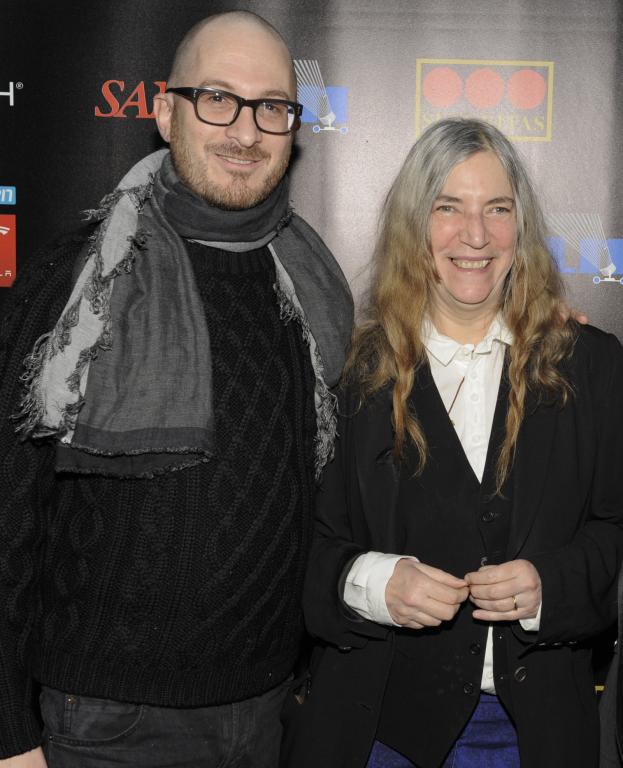 As far as I can tell, there have been three times in the Academy’s history when it nominated two different Bible movies for Oscars in the same year: in 1951, when Quo Vadis and David and Bathsheba received over a dozen nominations combined (neither film won anything); in 1959, when Ben-Hur won a record-setting 11 awards and The Big Fisherman also scored a few nominations; and in 1966, when arthouse favorite The Gospel According to St. Matthew received three nominations while the big-budget film The Bible: In the Beginning… received just one.
Could it happen again this year? It’s a sign of how strong the Bible-movie revival is right now that Oscar buzz has followed both of the year’s major entries in that genre. Ridley Scott’s Exodus: Gods and Kings comes out in December, right in the thick of awards season, and while it might not be a front-runner just yet, no one can forget how, the last time Scott made an ancient epic (i.e. Gladiator), it won Best Picture. And then there is Darren Aronofsky’s Noah.
There was some Oscar buzz when Noah first came out in March, but that was seven months ago. Now the film’s publicists are working to reintroduce the film into the awards-season discussion — arranging interviews with key creative personnel, hosting screenings of the film followed by Q&As with the filmmakers, and so on.
The ball started rolling last week when Patti Smith gave a few interviews to discuss her work on the film’s theme song, ‘Mercy Is’. Then, on Friday night, Aronofsky took part in a post-screening Q&A with sound mixers Craig Henighan and Skip Lievsay.
Since then, Aronofsky has done award-themed interviews with Oscar pundits like Kristopher Tapley at Hitfix and Jeffrey Wells at Hollywood Elsewhere.
It doesn’t sound like Aronofsky or anyone else expects the film to win Best Picture or anything like that. But Aronofsky has said he hopes the Academy will recognize some of the talent who worked on it, such as production designer Mark Friedberg, who designed the film’s massive Ark, as well as cinematographer Matthew Libatique, costume designer Mike Wilkinson, composer Clint Mansell and others.
In a non-awards vein, Aronofsky also spoke to IndieWire this week about how he is still “processing” the various reactions to his film:
Speaking of “Noah,” which was an incredible film that elicited some really strong and very mixed responses, and then went on to be this huge box office success in the U.S. and internationally, what did you learn from that experience? The reception of the film, did that go at all like you expected?
It was strange because I’m still learning from it. And I think the studio which has done this many times is learning from it. It was a very very different experience for everyone involved. And things didn’t play out in any way that was expected or seen before. And that happened with the making of the film as well as the release of the film. So I’m still processing to be honest about it all. There were a lot of vocal people who had a lot of different opinions. It didn’t matter if you were a believer or a non-believer or a filmgoer, the reactions were really really varied. But I think I get that on all my movies. This was just on a much bigger scale, and because when you’re working on a title that has a lot of preconceptions to it, it just magnified it. But I think if you look at everything I’ve done before, the reactions are always all over the map. For me that’s what’s exciting is having discussion.
A big goal for me was to take this Bible story, which really belongs — it’s one of humanity’s oldest stories and it belongs to not just the three main religions that subscribe to it but it belongs to everyone on the planet because it’s one of the great antiquities, one of the great treasures, one of the great literary works, like “Ulysses,” like “The Odyssey.” So taking that kind of source material and translating it to the big screen for the first time was to hopefully present it in a way that belonged to everyone, not just one group. And I think that suddenly a lot of the groups that had felt they had ownership of it got very disturbed by that. I think that was going to happen because the exercise itself was to say this is a mythology that belongs to everyone and anyone can take these stories and interpret it to make meaning out of their life, out of their experiences, and out of the world like we do with all myths. Sort of like you take the story of Icarus and apply it to “don’t have too much hubris.” There are great messages in these ancient myths that can apply to us and the reason we’ve been telling these stories over and over again is because they’re so rich with ideas that can apply to us.
Would you be inspired to return to those old stories in the Bible to adapt something else?
Look, I think they’re such great, powerful stories and I think…most of my films reference parts of the Bible so I imagine it will be a source of inspiration for a long time.
In related news, Tapley also interviewed Clint Mansell last week. An excerpt:
. . . unlike “Black Swan” or “The Wrestler,” which had music that went in completely different directions, the “Noah” score feels like it’s working from a similar emotional spectrum to “The Fountain.”
Yes, very much so, to be honest. I don’t know whether we’ll ever get an opportunity to do part three but I feel that it’s there somewhere. I mean there are sort of musical phrases, whilst not the same, but are related to stuff from “The Fountain,” and that was a very conscious choice, really. It felt of that world, you know? And yeah it would be cool to see if there was a third element.
You favor strings a lot in your compositions, I’ve noticed. Why is that?
To me they’re so emotive, really, and I think the thing with “Noah” was it’s sort of difficult to totally place them, whereas I think if you hear piano on the film score, it has a certain thing about it. There are so many sort of textural things you can do with strings, from being emotive to being jarring to being, you know, atonal. It feels like you’ve got quite a palette to play with.
Meanwhile, in a completely non-awards-oriented context, The Wrap spoke a couple weeks ago to Marton Csokas, a New Zealander who has appeared in several films this year including Noah, where he played the title character’s father, Lamech:
And what about “Noah?” What was it like working with Darren Aronofsky?
My time was brief. We shot that in Iceland and I had a blast. Darren is very particular in the casting process, so it was quite a long journey. I didn’t know what he was going to be like on set, but I found him very present and easy to work with. I didn’t have anything to do with Russell [Crowe] directly but I studied some of his physical mannerisms, since I was playing his father.
Finally, last week Ray Winstone discussed his career at a BAFTA event in London, and he had this to say about his character in Noah:
When it came to his villainous character Tubal-cain, matched opposite Russell Crowe in Noah, Winstone had an interesting take. “I actually thought I was the good guy in that,” Winstone said. “My character wants to save the human race. Noah just wanted to save the animals.”
As for why he finds himself attracted to playing gangsters and bad guys, Winstone had the perfect answer: “There’s a bit of bad guy in all of us.”
If I find any other awards-season interviews, I will add them to this post.
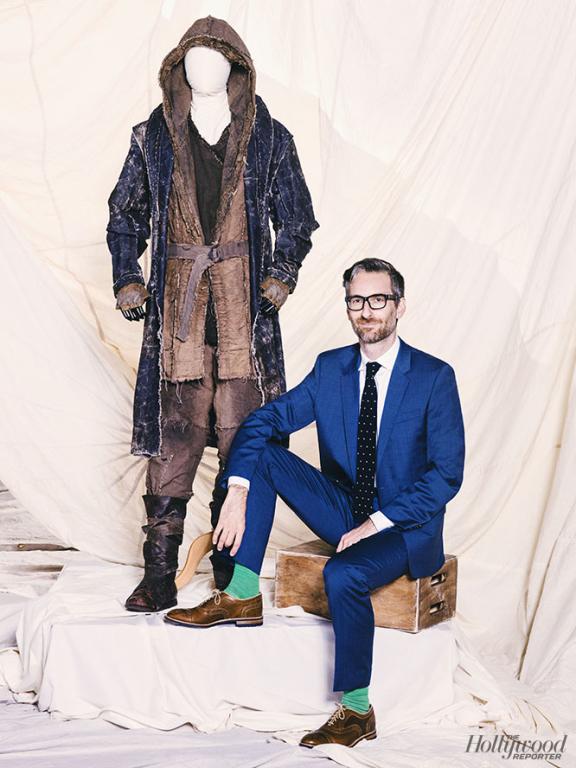 November 29 update: Noah’s Michael Wilkinson is one of the costumer designers profiled in a new Oscar-themed Hollywood Reporter article:
The directive Darren Aronofsky gave to Wilkinson on the antediluvian epic starring Russell Crowe, Jennifer Connelly and Anthony Hopkins was: "No robes. No sandals." Recalls the costume designer, "The challenge was the inherent ambiguity about whether the film takes place 5,000 years in the past or 5,000 years into the future."
Wilkinson designed mix-and-match pieces from rough, raw textiles, a style he calls "modern primitive." He says, "For Noah, everything was knit, woven, distressed, aged, dyed and boiled by hand." Utilitarian silhouettes were distinguished by touches of high-tech outdoor gear, cowl-neck scarves and black vinyl hoods. Subliminal clues of chronological ambiguity were woven in, from plastic straws to loose cassette tape, which Wilkinson felt could have survived the apocalypse.
Examined closely, some costumes look similar to the work of Martin Margiela, an avant-garde designer Wilkinson long has admired. That was intentional: "We wanted to create something that today's audiences could relate to," he says.
There are two groups in the film with differing worldviews. Noah's nomadic, vegan survivalists colored their clothes with berry dyes, while the marauders led by Tubal-cain sported bones, skins, feathers, even horse tails to display dominance over beasts. One of Wilkinson's favorite costumes stands apart: Hopkins' Methuselah. "We laminated a silver fabric, scraped it away, painted then cracked it. It looked as if he had become one with his costume and the costume was becoming one with his cave."
Aronofsky also spoke to Variety a few weeks ago about the work that cinematographer Matthew Libatique, production designer Mark Friedberg, editor Andrew Weisblum, visual effects supervisor Dan Schrecker, composer Clint Mansell and songwriter Patti Smith contributed to the film, again with an eye towards the Oscars.
December 1 update: Aronofsky spoke to Gold Derby, the awards prognostication website, about the film’s Oscar-worthy merits (the production design, etc.):
December 5 update: I forgot to link to this article that Deadline posted last week on the film’s visual effects (the article also looks at Exodus: Gods and Kings):
For Noah, VFX supervisor Ben Snow took his cues from two orders on high: the book of Genesis and Darren Aronofsky.
The Bible part was pretty straightforward. The flood narrative takes up only three chapters of Genesis but gets specific about the boat: It’s to be 450 feet long, 50 feet wide and 30 feet high, with three decks and a side entrance.
Aronofsky’s vision was less detailed. The director, whose visual feasts include Requiem for a Dream and The Fountain, was not a fan of classic sword-and-sandal filmmaking.
“Part of the challenge was meeting Darren’s vision of visual fury,” Snow says. “From the start, he said, ‘I don’t want to make your father’s Bible movie. I want to reinvent the Bible movie for the modern audience.’ He didn’t want Noah on a boat with two giraffes sticking out the back. He wanted to tweak the world, which gives you a lot of room to get creative.”
For Noah, Aronofsky and Snow combed over dozens of religious paintings to get a sense of the iconography of the period. “It’s not like other special effects, because most people already have their own visions of what things should look like,” Snow says. Religious-themed films require “an integration of faith you don’t have to worry about in other movies.”
So Snow began by establishing a historical foundation from which audiences could leap, employing sets so large they would have made Cecil B. DeMille proud. . . .
Alas, the Academy revealed today that Noah is not on the visual-effects shortlist, and will thus not be nominated for an Oscar in that category come January 15.
December 12 update: Cinematographer Matthew Libatique did a brief interview with Variety, which I have added to my Libatique interview round-up.
December 15 update: The film made the makeup & hairstyling shortlist.
Previous Post

October 14, 2014
Will Clavius take place before or after the Resurrection?
Next Post
October 15, 2014 Ben-Hur has found its Esther and its Pontius Pilate
Browse Our Archives
Select a Category Anglican Planet Articles BC Christian News BC Report Bible Movies Bible Review Blog Books & Culture Campus Times CBC Radio Christianity Today ChristianWeek Essays Faith Today Festival Cinemas Guide Film Journals Georgia Straight Interviews MB Herald National Catholic Register Salvationist Today's Christian Two Chairs Ubyssey Uncategorized Vancouver Courier Vancouver Sun
Select a Month August 2025 April 2025 January 2025 December 2024 November 2024 May 2024 February 2024 December 2023 May 2023 March 2023 November 2022 July 2022 June 2022 May 2022 April 2022 February 2022 January 2022 December 2021 November 2021 October 2021 September 2021 August 2021 July 2021 June 2021 April 2021 March 2021 February 2021 January 2021 December 2020 November 2020 October 2020 August 2020 July 2020 June 2020 May 2020 March 2020 February 2020 January 2020 December 2019 November 2019 September 2019 July 2019 May 2019 April 2019 March 2019 February 2019 January 2019 December 2018 November 2018 October 2018 September 2018 July 2018 June 2018 May 2018 April 2018 March 2018 February 2018 January 2018 December 2017 November 2017 October 2017 September 2017 August 2017 July 2017 June 2017 May 2017 April 2017 March 2017 February 2017 January 2017 December 2016 November 2016 October 2016 September 2016 August 2016 July 2016 June 2016 May 2016 April 2016 March 2016 February 2016 January 2016 December 2015 November 2015 October 2015 September 2015 August 2015 July 2015 June 2015 May 2015 April 2015 March 2015 February 2015 January 2015 December 2014 November 2014 October 2014 September 2014 August 2014 July 2014 June 2014 May 2014 April 2014 March 2014 February 2014 January 2014 December 2013 November 2013 October 2013 September 2013 August 2013 July 2013 June 2013 May 2013 April 2013 March 2013 February 2013 January 2013 December 2012 November 2012 October 2012 September 2012 August 2012 July 2012 June 2012 April 2012 January 2012 January 2011 December 2010 November 2010 October 2010 September 2010 August 2010 July 2010 June 2010 May 2010 April 2010 March 2010 February 2010 January 2010 December 2009 November 2009 October 2009 September 2009 August 2009 July 2009 June 2009 May 2009 April 2009 March 2009 February 2009 January 2009 December 2008 November 2008 October 2008 September 2008 August 2008 July 2008 June 2008 May 2008 April 2008 March 2008 February 2008 January 2008 December 2007 November 2007 October 2007 September 2007 August 2007 July 2007 June 2007 May 2007 April 2007 March 2007 February 2007 January 2007 December 2006 November 2006 October 2006 September 2006 August 2006 July 2006 June 2006 May 2006 April 2006 March 2006 February 2006 January 2006 December 2005 November 2005 October 2005 September 2005 August 2005 July 2005 June 2005 May 2005 April 2005 March 2005 January 2005 December 2004 November 2004 October 2004 September 2004 August 2004 July 2004 June 2004 May 2004 April 2004 March 2004 February 2004 January 2004 November 2003 October 2003 August 2003 July 2003 June 2003 May 2003 January 2003 December 2002 November 2002 August 2002 July 2002 June 2002 May 2002 March 2002 January 2002 December 2001 November 2001 September 2001 August 2001 July 2001 June 2001 April 2001 March 2001 February 2001 December 2000 November 2000 October 2000 September 2000 August 2000 July 2000 June 2000 May 2000 April 2000 March 2000 January 2000 October 1999 August 1999 May 1999 April 1999 February 1999 January 1999 December 1998 November 1998 October 1998 August 1998 July 1998 June 1998 April 1998 March 1998 January 1998 November 1997 September 1997 July 1997 June 1997 April 1997 March 1997 February 1997 January 1997 December 1996 October 1996 September 1996 June 1996 March 1996 February 1996 January 1996 April 1995 November 1994 September 1994 September 1991
Follow Us!
TAKE THE
Religious Wisdom Quiz
True or False: Job's three friends were named Eliphaz, Bildad, and Zophar.
Select your answer to see how you score.
FALSE TRUE
Related posts from FilmChat

Joseph of Egypt – the Chosen spin-off announces...

Exclusive: A clip from Angel Studios' The King...

Exclusive: Watch a clip from Angel Studios' Brave...

Exclusive: Watch a clip from Angel Studios' Homestead
TRENDING AT PATHEOS Religious Music & Entertainment

"Les Diabolique" and Transgression
Alongside something like Arrival, Vertigo, or Charade, Les Diaboliques is a...

"The Plague Dogs" and Mortality
So, flashback to the late 70s, early 80s. Walt Disney Studios is...

With the recent and highly successful release of Christopher Nolan’s epic film,...

"L'avventura" and Human Weakness
Today's piece is going to be a little different for a few...

I first want to apologize for not posting or writing anything. I'm...

I've engaged in the multi-year project of reading through the Church Fathers,...
view all Religious Music & Entertainment blogs
Ad-Free & Subscriber Log-In Subscription Support
- About Us
- 2026 Calendar
- Videos
- Podcasts
- Library of World Religions
- Faith In Media Tracker
- Advertise With Us
- Write for Us
- Privacy Policy
- Terms of Service
- Do Not Sell My Data
- Contact Us
- Radiant Digital
- Manage Newsletter Subscriptions
- Unsubscribe From Notifications
- Sitemap
Copyright 2008-2026, Patheos. All rights reserved.
Subscription Support Ad-Free & Subscriber Log-In
Follow Patheos