
BuddhistCatholicContemplativeEvangelicalGeneral ChristianHinduJewishLatter-day SaintMuslimNew VisionsProgressive Christian
Beliefs
- Buddhist
- Catholic
- Contemplative
- Evangelical
- General Christian
- Hindu
- Jewish
- Latter-day Saint
- More Voices
- Muslim
- New Visions
- Pagan
- Progressive Christian
Topics
- Religion News
- Food and Religion
- Sports and Religion
- Religious Art
- Religious Music and Entertainment
- Religious Events
- History and Religion
- Style and Religion
- Politics and Religion
- Women in Religion
- Recreation Outdoors and Religion
- Business Finance and Religion
- Careers Workplace and Religion
- Education and Religion
- Family Parenting and Religion
- Health Fitness and Religion
- Home and Religion
- Relationships and Religion
- Technology and Religion
- Travel and Religion
Columnists
- Buddhist Columnists
- Business Finance and Religion Columnists
- Careers Workplace and Religion Columnists
- Catholic Columnists
- Contemplative Columnists
- Education and Religion Columnists
- Evangelists Columnists
- Family Parenting and Religion Columnists
- General Christian Columnists
- Health Fitness and Religion Columnists
- Hindu Columnists
- History and Religion Columnists
- Home and Religion Columnists
- Jewish Columnists
- More Voices Columnists
- Latter Day Columnists
- Muslim Columnists
- New Visions Columnists
- Nonreligious Columnists
- Pagan Columnists
- Politics and Religion Columnists
- Progressive Columnists
- Recreation Outdoors and Religion Columnists
- Relationships and Religion Columnists
- Religion News Columnists
- Religious Art Columnists
- Religious Events Columnists
- Religious Music and Entertainment Columnists
- Sports and Religion Columnists
- Style and Religion Columnists
- Technology and Religion Columnists
- Travel and Religion Columnists
- Women in Religion Columnists
Resource Library
- 2026 Calendar
- Library of World Religions
- The 100 Most Holy Places on Earth
- Patheos Answers
- Podcasts
- Videos
- Faith Leaders Database
- Anglican Episcopalian
- Bahai
- Baptist
- Buddhism
- Christianity
- Confucianism
- Eastern Orthodoxy
- Hinduism
- Holiness and Pentecostal
- ISKCON
- Islam
- Judaism
- Lutheran
- Methodist
- The Church of Jesus Christ of Latter-day Saints
- New Age
- Paganism
- Presbytarian and Reformed
- Protestantism
- Religion Behind the Scenes
- Roman Catholic
- Scientology
- Shia Islam
- Sikhism
- Sufism
- Sunni Islam
- Taoism
- Zen
- See all religions
Research Tools
 Ad-Free & Subscriber Log-In Subscription Support
Ad-Free & Subscriber Log-In Subscription Support
Follow Patheos 

- Trending:
- Forgiveness
- |
- Marriage
- |
- Consciousness
- |
- Death Penalty
- |
- Election
- |
- Halloween

-
Articles
- Home
- Religious Music & Entertainment
- An African Jesus / Reimagined as a political activist.
An African Jesus / Reimagined as a political activist.
Last updated on: April 2, 2015 at 4:11 pm by Peter T. Chattaway
An African Jesus / Reimagined as a political activist. 2015-04-02T16:11:18-07:00 Peter T. Chattaway
Patheos Explore the world's faith through different perspectives on religion and spirituality! Patheos has the views of the prevalent religions and spiritualities of the world.
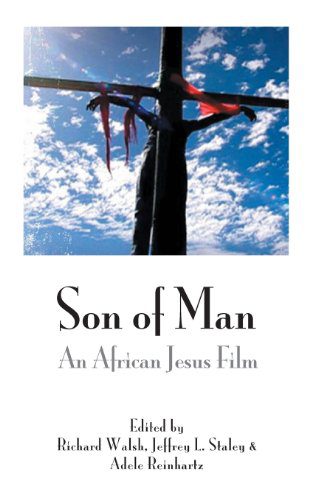 The story of Jesus has become so familiar to us that we sometimes fail to grasp just how shocking, disturbing, or ultimately motivating it really is. Even films designed to take us back to first-century Judea can tend to come across as soothing or reassuring, which hardly matches how the apostles would have experienced those events. Sometimes it takes a radical reimagining to get us to really think about the implications of that story, and how it might be applied to our present-day reality. And one of the most interesting such reimaginings — certainly in recent years — is Son of Man, a South African production that depicts Jesus as a political activist working in a war-torn modern African country.
Like most independent foreign films, Son of Man has kept a relatively low profile — it didn’t even come out on DVD on this continent until four years after it premiered at the Sundance festival in 2006 — but it can now be streamed on Netflix in the U.S., and it has attracted a fair bit of attention in some circles. The conversation surrounding the film is now further illuminated by Son of Man: An African Jesus Film, a collection of 16 essays that look at the film within the contexts of African culture and the Jesus-film tradition as a whole.
Edited by Richard Walsh, Jeffrey L. Staley, and Adele Reinhartz, all of whom have written on Bible films in the past, the book illuminates such details as the way the film mixes the biblical baptism and temptation of Jesus with Xhosa circumcision rituals, or the way the Jesus of this film is much more interested in political activism than theology, or the way the film makes Mary a far more prominent figure than she is in other Jesus films, because it is she who compels her son to bear witness to the atrocities around them when he is still a boy, and it is she, rather than any of the disciples, who plays the primary role in shaping his community after he dies, by leading his followers in a song of protest.
Interestingly, in fusing the biblical narrative and the African setting, the film sometimes ends up straying from the realities of both. This is perhaps most evident in the film’s treatment of the crucifixion and resurrection of Jesus. In the film, Jesus is not executed in public but killed privately by the authorities, and it is his mother who exhumes his body and hangs it from a cross to expose what the authorities have done. The “crucifixion” thus becomes a kind of “resurrection,” since it is the display of his body that motivates his mother and his followers to continue as a community that confronts the authorities. But if this sequence takes liberties with the Bible, it also takes liberties with African social norms; as Jeremy Punt notes in his essay, the mother’s action here “opposes the African custom of honouring the dead.”
Perhaps the most interesting essays in this book are those that surprise the most. I was not expecting to see, for example, an essay by Staley comparing and contrasting Son of Man with the 1973 hippie musical Godspell, but the points of contact between the two films are fascinating, once you notice them. Among other things, both films make significant use of songs, and they both feature disciples of both genders, a Jesus whose face is painted at least some of the time, and red ribbons symbolizing blood when Jesus is “crucified.” On the other hand, where Godspell emphasizes the parables but leaves out the miracles, Son of Man depicts the miracles but leaves out the parables; and where Godspell imagines that one can react to the problems of this life by retreating into a world of childlike play, Son of Man is all about confronting the powers of this world and working toward social change.
Similarly, the very first essay in the book — by Gerald West, a biblical hermeneutics teacher at the University of KwaZulu-Natal — summarizes the reactions of West’s students to a screening of Son of Man. Unlike many North Americans, who have immediately praised the film for its social relevance, West reports that his students wondered at times if the film was contributing to an “Afro-pessimist” caricature of their continent, not least by the way it mixes South African political concerns with images of violence taken from the conflicts in Rwanda and other countries. West also notes how the film allows the biblical narrative to trump African political realities at times: for example, the terrorists in the film kill the children they find, just like Herod’s soldiers in the Bible, but in reality they would have drafted the boys into their armies as child-soldiers. Similarly, the story of the adulteress who was about to be stoned to death is here turned into a story about an adulteress who is about to be “necklaced,” i.e., burned to death with a gasoline-filled tire placed around her neck — but in the real world, “necklacing” was reserved for those accused of political collaboration.
I was also intrigued by an essay by Darren J. N. Middleton and S. Brent Plate that looks at Son of Man in the context of other films that have deviated from the standard filmic interpretation of Jesus, in which he is seemingly always played by someone of European descent.1 Among other things, the authors cover films like Jesus, the Spirit of God and Karunamayudu — which were made in Iran and India, respectively, and which naturally reflect the beliefs and stylistic norms of the cultures in which they were made — as well as The Color of the Cross, an American film that supposes the historical Jesus was black.
The book is not as accessible as it could have been. Several of the essays trade in the sort of impenetrable academic jargon that could be off-putting to readers who are otherwise interested in learning more about this film, and a few make gratuitously strident claims that perpetuate stereotypes of their own, as when George Aichele begins his otherwise interesting essay on the transmission and betrayal of tradition (transmission and betrayal having the same root in Greek) by asserting that Son of Man will be offensive to “bigoted, capitalistic, nationalistic, arrogant, or otherwise narrow-minded Christians, which are in abundant supply here in the United States, at least.”
Other essays assume a position of analyzing the film in relation to American politics, which seems strangely provincial, given that the film — directed by a British-born South African — is at least as concerned with European colonialism as it is with any other foreign power. Some readers might also object to the casual use of phrases such as one in the introductory essay that lumps “the Gospel” in with “other forms of Western imperialism.”
I was also surprised to find that there was virtually no discussion of Dornford-May’s previous film, U-Carmen eKhayelitsha, which won the Golden Bear when it premiered at the Berlin International Film Festival in 2005. Like Son of Man, which sets the story of Jesus in a South African township, U-Carmen was an adaptation of the Bizet opera Carmen that was also set in a South African township. Both films also starred Dornford-May’s wife, Pauline Malefane (as Carmen and Mary), and were produced with a group of stage actors, currently known as the Isago Ensemble, who specialize in recontextualizing “Western” stories.
Last fall, shortly after the publication of Son of Man: An African Jesus, Dornford-May finished a third film that was both biblical and operatic: Unogumbe, based on Benjamin Britten’s Noye’s Fludde. In Dornford-May’s film, it is Malefane as Mrs. Noah who builds the Ark, and it is her husband who spends all his time drinking — a gender switch that was prompted, according to the Ensemble’s music director, by the fact that many South African children are raised by single mothers and the “men don’t pull their weight.”2 Interestingly, Britten’s opera was based on the Chester Mystery Plays and, as Son of Man: An African Jesus makes clear, there are elements in Dornford-May’s Jesus film that borrow from those plays too.
Unogumbe was not yet available when this book was written, but U-Carmen certainly was — so, as valuable as it is to look at Son of Man as a product of South African culture and as a contribution to the Jesus-movie genre, it might have been profitable if at least one essay had looked at the film specifically through an auteurist lens, or through the lens of the ongoing recontextualization of “Western” stories that Dornford-May and his ensemble are engaged in.
In any case, Son of Man is one of the most bracing Jesus films to come down the pike in a long time, and it is worth a look, whatever one’s theology or politics. And whatever flaws the book might have, Son of Man: An African Jesus Film does offer some excellent insights into the movie’s cultural reference points and its connections to the Jesus-movie genre that might not be apparent to the casual viewer. On that level, it’s an essential companion to the film.
Peter T. Chattaway is a freelance film critic and blogger at Patheos.com with a special interest in Bible movies. He lives with his family in Surrey, B.C.
1. I am reminded of how the promotional materials for the Jesus film (1979) made much of the fact that most of the film’s actors were from Israel or other Middle Eastern territories — but the actor playing Jesus himself was an Englishman.
2. David Weininger, “In Church — and on Screen — ‘Noye’s Fludde’ delights,” The Boston Globe, April 3, 2014.
— A version of this article was first published in Books & Culture*.*
Next Post

September 1, 2014 Newsbites: Clavius! The Dovekeepers! Black Nativity! Book of Amos!
Browse Our Archives
Select a Category Anglican Planet Articles BC Christian News BC Report Bible Movies Bible Review Blog Books & Culture Campus Times CBC Radio Christianity Today ChristianWeek Essays Faith Today Festival Cinemas Guide Film Journals Georgia Straight Interviews MB Herald National Catholic Register Salvationist Today's Christian Two Chairs Ubyssey Uncategorized Vancouver Courier Vancouver Sun
Select a Month August 2025 April 2025 January 2025 December 2024 November 2024 May 2024 February 2024 December 2023 May 2023 March 2023 November 2022 July 2022 June 2022 May 2022 April 2022 February 2022 January 2022 December 2021 November 2021 October 2021 September 2021 August 2021 July 2021 June 2021 April 2021 March 2021 February 2021 January 2021 December 2020 November 2020 October 2020 August 2020 July 2020 June 2020 May 2020 March 2020 February 2020 January 2020 December 2019 November 2019 September 2019 July 2019 May 2019 April 2019 March 2019 February 2019 January 2019 December 2018 November 2018 October 2018 September 2018 July 2018 June 2018 May 2018 April 2018 March 2018 February 2018 January 2018 December 2017 November 2017 October 2017 September 2017 August 2017 July 2017 June 2017 May 2017 April 2017 March 2017 February 2017 January 2017 December 2016 November 2016 October 2016 September 2016 August 2016 July 2016 June 2016 May 2016 April 2016 March 2016 February 2016 January 2016 December 2015 November 2015 October 2015 September 2015 August 2015 July 2015 June 2015 May 2015 April 2015 March 2015 February 2015 January 2015 December 2014 November 2014 October 2014 September 2014 August 2014 July 2014 June 2014 May 2014 April 2014 March 2014 February 2014 January 2014 December 2013 November 2013 October 2013 September 2013 August 2013 July 2013 June 2013 May 2013 April 2013 March 2013 February 2013 January 2013 December 2012 November 2012 October 2012 September 2012 August 2012 July 2012 June 2012 April 2012 January 2012 January 2011 December 2010 November 2010 October 2010 September 2010 August 2010 July 2010 June 2010 May 2010 April 2010 March 2010 February 2010 January 2010 December 2009 November 2009 October 2009 September 2009 August 2009 July 2009 June 2009 May 2009 April 2009 March 2009 February 2009 January 2009 December 2008 November 2008 October 2008 September 2008 August 2008 July 2008 June 2008 May 2008 April 2008 March 2008 February 2008 January 2008 December 2007 November 2007 October 2007 September 2007 August 2007 July 2007 June 2007 May 2007 April 2007 March 2007 February 2007 January 2007 December 2006 November 2006 October 2006 September 2006 August 2006 July 2006 June 2006 May 2006 April 2006 March 2006 February 2006 January 2006 December 2005 November 2005 October 2005 September 2005 August 2005 July 2005 June 2005 May 2005 April 2005 March 2005 January 2005 December 2004 November 2004 October 2004 September 2004 August 2004 July 2004 June 2004 May 2004 April 2004 March 2004 February 2004 January 2004 November 2003 October 2003 August 2003 July 2003 June 2003 May 2003 January 2003 December 2002 November 2002 August 2002 July 2002 June 2002 May 2002 March 2002 January 2002 December 2001 November 2001 September 2001 August 2001 July 2001 June 2001 April 2001 March 2001 February 2001 December 2000 November 2000 October 2000 September 2000 August 2000 July 2000 June 2000 May 2000 April 2000 March 2000 January 2000 October 1999 August 1999 May 1999 April 1999 February 1999 January 1999 December 1998 November 1998 October 1998 August 1998 July 1998 June 1998 April 1998 March 1998 January 1998 November 1997 September 1997 July 1997 June 1997 April 1997 March 1997 February 1997 January 1997 December 1996 October 1996 September 1996 June 1996 March 1996 February 1996 January 1996 April 1995 November 1994 September 1994 September 1991
Follow Us!
TAKE THE
Religious Wisdom Quiz
What does the name "Elijah" mean?
Select your answer to see how you score.
God Provides The Lord is my God The Chosen One God Saves
Related posts from FilmChat

Exclusive: A clip from Angel Studios' The King...

Oscar Isaac, Forest Whitaker join animated Jesus movie

Watch: The Chosen's creators on Season 4's big...

Which Bible movies are getting the most views...
TRENDING AT PATHEOS Religious Music & Entertainment

"Les Diabolique" and Transgression
Alongside something like Arrival, Vertigo, or Charade, Les Diaboliques is a...

"The Plague Dogs" and Mortality
So, flashback to the late 70s, early 80s. Walt Disney Studios is...

With the recent and highly successful release of Christopher Nolan’s epic film,...

"L'avventura" and Human Weakness
Today's piece is going to be a little different for a few...

I first want to apologize for not posting or writing anything. I'm...

I've engaged in the multi-year project of reading through the Church Fathers,...
view all Religious Music & Entertainment blogs
Ad-Free & Subscriber Log-In Subscription Support
- About Us
- 2026 Calendar
- Videos
- Podcasts
- Library of World Religions
- Faith In Media Tracker
- Advertise With Us
- Write for Us
- Privacy Policy
- Terms of Service
- Do Not Sell My Data
- Contact Us
- Radiant Digital
- Manage Newsletter Subscriptions
- Unsubscribe From Notifications
- Sitemap
Copyright 2008-2026, Patheos. All rights reserved.
Subscription Support Ad-Free & Subscriber Log-In
Follow Patheos