
BuddhistCatholicContemplativeEvangelicalGeneral ChristianHinduJewishLatter-day SaintMuslimNew VisionsProgressive Christian
Beliefs
- Buddhist
- Catholic
- Contemplative
- Evangelical
- General Christian
- Hindu
- Jewish
- Latter-day Saint
- More Voices
- Muslim
- New Visions
- Pagan
- Progressive Christian
Topics
- Religion News
- Food and Religion
- Sports and Religion
- Religious Art
- Religious Music and Entertainment
- Religious Events
- History and Religion
- Style and Religion
- Politics and Religion
- Women in Religion
- Recreation Outdoors and Religion
- Business Finance and Religion
- Careers Workplace and Religion
- Education and Religion
- Family Parenting and Religion
- Health Fitness and Religion
- Home and Religion
- Relationships and Religion
- Technology and Religion
- Travel and Religion
Columnists
- Buddhist Columnists
- Business Finance and Religion Columnists
- Careers Workplace and Religion Columnists
- Catholic Columnists
- Contemplative Columnists
- Education and Religion Columnists
- Evangelists Columnists
- Family Parenting and Religion Columnists
- General Christian Columnists
- Health Fitness and Religion Columnists
- Hindu Columnists
- History and Religion Columnists
- Home and Religion Columnists
- Jewish Columnists
- More Voices Columnists
- Latter Day Columnists
- Muslim Columnists
- New Visions Columnists
- Nonreligious Columnists
- Pagan Columnists
- Politics and Religion Columnists
- Progressive Columnists
- Recreation Outdoors and Religion Columnists
- Relationships and Religion Columnists
- Religion News Columnists
- Religious Art Columnists
- Religious Events Columnists
- Religious Music and Entertainment Columnists
- Sports and Religion Columnists
- Style and Religion Columnists
- Technology and Religion Columnists
- Travel and Religion Columnists
- Women in Religion Columnists
Resource Library
- 2026 Calendar
- Library of World Religions
- The 100 Most Holy Places on Earth
- Patheos Answers
- Podcasts
- Videos
- Faith Leaders Database
- Anglican Episcopalian
- Bahai
- Baptist
- Buddhism
- Christianity
- Confucianism
- Eastern Orthodoxy
- Hinduism
- Holiness and Pentecostal
- ISKCON
- Islam
- Judaism
- Lutheran
- Methodist
- The Church of Jesus Christ of Latter-day Saints
- New Age
- Paganism
- Presbytarian and Reformed
- Protestantism
- Religion Behind the Scenes
- Roman Catholic
- Scientology
- Shia Islam
- Sikhism
- Sufism
- Sunni Islam
- Taoism
- Zen
- See all religions
Research Tools
 Ad-Free & Subscriber Log-In Subscription Support
Ad-Free & Subscriber Log-In Subscription Support
Follow Patheos 

- Trending:
- Forgiveness
- |
- Marriage
- |
- Consciousness
- |
- Death Penalty
- |
- Election
- |
- Halloween

-
Articles
- Home
- Religious Music & Entertainment
- Are Exodus: Gods and Kings — and other Moses movies — picking on Ramses II unfairly?
Are Exodus: Gods and Kings — and other Moses movies — picking on Ramses II unfairly?
Last updated on: July 13, 2014 at 2:24 am by Peter T. Chattaway
Are Exodus: Gods and Kings — and other Moses movies — picking on Ramses II unfairly? 2014-07-13T02:24:18-07:00 Peter T. Chattaway
Patheos Explore the world's faith through different perspectives on religion and spirituality! Patheos has the views of the prevalent religions and spiritualities of the world.
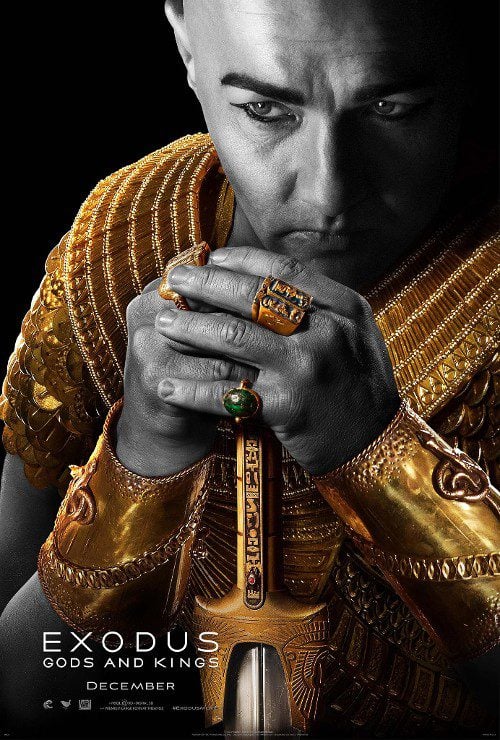 Donna Dickens has an amusing post up at Hitfix in which she begs Hollywood to “please stop character assassinating Ramses II”.
The Bible, you see, never says precisely who was the Pharaoh of the Exodus, but most big-screen versions of the story — from The Ten Commandments to The Prince of Egypt to Ridley Scott’s upcoming Exodus: Gods and Kings — have assumed it was Ramses II, one of the most powerful Pharaohs who ever lived.
There are reasons for this, which I’ll get to in a moment, but Dickens proposes an alternative theory. Instead of dating the Exodus to the time of Ramses, who lived in the 13th century BC, she proposes dating it to the time of Thutmose III, an accomplished Pharaoh in his own right who ruled in the 15th century BC.
Why so much earlier? Partly because I Kings 6:1 tells us that Solomon began building the Temple 480 years after the Israelites came out of Egypt, and that he did this during the fourth year of his own reign. So Solomon began his reign 476 years after the Exodus, and if you date the beginning of Solomon’s reign to about 970 BC, as Dickens apparently does, then all you have to do is add 476 years and — voila! — the Exodus took place in 1446 BC, right in the middle of Thutmose’s reign.
I used to subscribe to this theory, or at least a version of it, myself.
Thirty years ago, I wrote a “novel” about the life of Moses in which Thutmose III was Pharaoh when Moses went into exile, and his son Amenhotep II was Pharaoh when Moses came back and led the Hebrews out of bondage. Even better — and influenced, as I recall, by Halley’s Bible Handbook — I imagined that the Egyptian woman who adopted Moses was none other than Thutmose’s stepmother Hatshepsut, who was one of the very few women to rule Egypt as Pharaoh, fake beard and all.
So imagine my delight when I saw that Dickens had also proposed making Hatshepsut the adoptive mother of Moses!
Dickens, like me, imagines that Thutmose would have hated Hatshepsut for ruling in his place (she was initially supposed to be his regent, but when he became old enough to rule on his own, she held on to the throne), and that he would have “seethed” against her and her adopted son — so when Hatshepsut died and Thutmose became sole ruler of Egypt, Moses was no longer safe. Cue exile.
As it happens, I no longer subscribe to the idea that the Exodus (whatever we mean by that, historically) took place this early.
For one thing, the Old Testament frequently measures time in multiples of 40 years, and I currently lean towards the view that this unit of time basically represents “one generation”, so that when I Kings says Solomon began building the Temple “480 years” after the Exodus, it really means something like “12 generations”.
What’s more, Solomon’s reign itself is said to have lasted 40 years — just like his father David’s — and this, too, looks suspiciously rounded-up. (All of the subsequent kings have reigns of various lengths, but the reigns of David and Solomon — the two “Golden Age” kings — are suspiciously “perfect”.) So even if we can confidently say that Solomon’s son took the throne around 930 BC, we can’t necessarily say that Solomon began his own reign in 970 BC. He may have started quite a bit later, in which case the date of the Exodus would also have to move a bit later.
All of which makes dating the Exodus to Ramses’ day look more plausible.
At this point, I’m not sure if each filmmaker has his own historical reasons for making Ramses the villain,* or if they’re all just copying the precedent set by earlier films. But the reasons for making Ramses the Pharaoh are pretty straightforward.
First, the Bible itself claims that the Hebrews built a city called Ramesses, which most scholars have identified with Pi-Ramesses, a place that was substantially expanded during the reign of Ramses II when he made it his new capital.
And second, Ramses’ son Merneptah erected a stele in which he boasted that he had defeated the Israelites during a military campaign in Canaan. If the Israelites were already there in the Promised Land when Ramses’ son was Pharaoh, presumably they must have left Egypt no later than the reign of Ramses himself.**
Many people will argue that this whole conversation is ridiculous because there’s no historical or archaeological evidence that the Exodus ever took place. Personally, though, I’m inclined to think that something like what we read in the Torah did take place, if only because it seems unlikely that a nation would have created a past for itself in which everyone was a slave, or that the Israelites would have invented a leader for themselves who just happened to have an Egyptian name.
The story may have grown over time, and tribes that were not originally Israelite may have grafted themselves onto this nation, thereby retroactively inserting themselves into the story (see my post on the origins of Dan, the tribe from which Samson came). But I do think there’s a core of historical fact in there somewhere.
As for the question of who the Pharaoh in Moses’ day would have been, I have no strong opinions one way or the other. Ramses II is as good a candidate as any, and the fact that he’s one of the best-known Pharaohs does make him attractive from a dramatic point of view. (The many monuments he erected to himself have also given production designers plenty to work with.)
But I sympathize with those who wish that filmmakers would pick on somebody else. It does seem a shame that a Pharaoh who accomplished so much else in his lifetime should be known today primarily, or even exclusively, because of his highly speculative association with a story that, in its original form, never mentions him.
–
* It’s an open question whether Scott knows how to separate history from fiction in this case. When he first revealed that he was making Exodus, he said: “What’s interesting to me about Moses isn’t the big stuff that everybody knows. It’s things like his relationship with Ramses [II, the pharaoh]. I honestly wasn’t paying attention in school when I was told the story of Moses. Some of the details of his life are extraordinary.” Given that the Bible never mentions Ramses and secular history never mentions Moses, what “details” could Scott’s teachers have told him about?
** Interestingly, some of the more high-profile TV-movies about Moses — such as Moses the Lawgiver and the TNT miniseries Moses — have speculated that the Pharaoh of the Exodus was actually Merneptah. Ramses II therefore appears in those films as the Pharaoh who reigned when Moses went into exile.
Next Post

July 10, 2014 Adam and Eve in Noah: now they glow, now they don't
Browse Our Archives
Select a Category Anglican Planet Articles BC Christian News BC Report Bible Movies Bible Review Blog Books & Culture Campus Times CBC Radio Christianity Today ChristianWeek Essays Faith Today Festival Cinemas Guide Film Journals Georgia Straight Interviews MB Herald National Catholic Register Salvationist Today's Christian Two Chairs Ubyssey Uncategorized Vancouver Courier Vancouver Sun
Select a Month August 2025 April 2025 January 2025 December 2024 November 2024 May 2024 February 2024 December 2023 May 2023 March 2023 November 2022 July 2022 June 2022 May 2022 April 2022 February 2022 January 2022 December 2021 November 2021 October 2021 September 2021 August 2021 July 2021 June 2021 April 2021 March 2021 February 2021 January 2021 December 2020 November 2020 October 2020 August 2020 July 2020 June 2020 May 2020 March 2020 February 2020 January 2020 December 2019 November 2019 September 2019 July 2019 May 2019 April 2019 March 2019 February 2019 January 2019 December 2018 November 2018 October 2018 September 2018 July 2018 June 2018 May 2018 April 2018 March 2018 February 2018 January 2018 December 2017 November 2017 October 2017 September 2017 August 2017 July 2017 June 2017 May 2017 April 2017 March 2017 February 2017 January 2017 December 2016 November 2016 October 2016 September 2016 August 2016 July 2016 June 2016 May 2016 April 2016 March 2016 February 2016 January 2016 December 2015 November 2015 October 2015 September 2015 August 2015 July 2015 June 2015 May 2015 April 2015 March 2015 February 2015 January 2015 December 2014 November 2014 October 2014 September 2014 August 2014 July 2014 June 2014 May 2014 April 2014 March 2014 February 2014 January 2014 December 2013 November 2013 October 2013 September 2013 August 2013 July 2013 June 2013 May 2013 April 2013 March 2013 February 2013 January 2013 December 2012 November 2012 October 2012 September 2012 August 2012 July 2012 June 2012 April 2012 January 2012 January 2011 December 2010 November 2010 October 2010 September 2010 August 2010 July 2010 June 2010 May 2010 April 2010 March 2010 February 2010 January 2010 December 2009 November 2009 October 2009 September 2009 August 2009 July 2009 June 2009 May 2009 April 2009 March 2009 February 2009 January 2009 December 2008 November 2008 October 2008 September 2008 August 2008 July 2008 June 2008 May 2008 April 2008 March 2008 February 2008 January 2008 December 2007 November 2007 October 2007 September 2007 August 2007 July 2007 June 2007 May 2007 April 2007 March 2007 February 2007 January 2007 December 2006 November 2006 October 2006 September 2006 August 2006 July 2006 June 2006 May 2006 April 2006 March 2006 February 2006 January 2006 December 2005 November 2005 October 2005 September 2005 August 2005 July 2005 June 2005 May 2005 April 2005 March 2005 January 2005 December 2004 November 2004 October 2004 September 2004 August 2004 July 2004 June 2004 May 2004 April 2004 March 2004 February 2004 January 2004 November 2003 October 2003 August 2003 July 2003 June 2003 May 2003 January 2003 December 2002 November 2002 August 2002 July 2002 June 2002 May 2002 March 2002 January 2002 December 2001 November 2001 September 2001 August 2001 July 2001 June 2001 April 2001 March 2001 February 2001 December 2000 November 2000 October 2000 September 2000 August 2000 July 2000 June 2000 May 2000 April 2000 March 2000 January 2000 October 1999 August 1999 May 1999 April 1999 February 1999 January 1999 December 1998 November 1998 October 1998 August 1998 July 1998 June 1998 April 1998 March 1998 January 1998 November 1997 September 1997 July 1997 June 1997 April 1997 March 1997 February 1997 January 1997 December 1996 October 1996 September 1996 June 1996 March 1996 February 1996 January 1996 April 1995 November 1994 September 1994 September 1991
Follow Us!
TAKE THE
Religious Wisdom Quiz
Which book directly follows Joshua?
Select your answer to see how you score.
Numbers Ruth Leviticus Judges
Related posts from FilmChat

Joseph of Egypt – the Chosen spin-off announces...

Exclusive: A clip from Angel Studios' The King...

Exclusive: Watch a clip from Angel Studios' Brave...

Exclusive: Watch a clip from Angel Studios' Homestead
TRENDING AT PATHEOS Religious Music & Entertainment

"Les Diabolique" and Transgression
Alongside something like Arrival, Vertigo, or Charade, Les Diaboliques is a...

"The Plague Dogs" and Mortality
So, flashback to the late 70s, early 80s. Walt Disney Studios is...

With the recent and highly successful release of Christopher Nolan’s epic film,...

"L'avventura" and Human Weakness
Today's piece is going to be a little different for a few...

I first want to apologize for not posting or writing anything. I'm...

I've engaged in the multi-year project of reading through the Church Fathers,...
view all Religious Music & Entertainment blogs
Ad-Free & Subscriber Log-In Subscription Support
- About Us
- 2026 Calendar
- Videos
- Podcasts
- Library of World Religions
- Faith In Media Tracker
- Advertise With Us
- Write for Us
- Privacy Policy
- Terms of Service
- Do Not Sell My Data
- Contact Us
- Radiant Digital
- Manage Newsletter Subscriptions
- Unsubscribe From Notifications
- Sitemap
Copyright 2008-2026, Patheos. All rights reserved.
Subscription Support Ad-Free & Subscriber Log-In
Follow Patheos