
BuddhistCatholicContemplativeEvangelicalGeneral ChristianHinduJewishLatter-day SaintMuslimNew VisionsProgressive Christian
Beliefs
- Buddhist
- Catholic
- Contemplative
- Evangelical
- General Christian
- Hindu
- Jewish
- Latter-day Saint
- More Voices
- Muslim
- New Visions
- Pagan
- Progressive Christian
Topics
- Religion News
- Food and Religion
- Sports and Religion
- Religious Art
- Religious Music and Entertainment
- Religious Events
- History and Religion
- Style and Religion
- Politics and Religion
- Women in Religion
- Recreation Outdoors and Religion
- Business Finance and Religion
- Careers Workplace and Religion
- Education and Religion
- Family Parenting and Religion
- Health Fitness and Religion
- Home and Religion
- Relationships and Religion
- Technology and Religion
- Travel and Religion
Columnists
- Buddhist Columnists
- Business Finance and Religion Columnists
- Careers Workplace and Religion Columnists
- Catholic Columnists
- Contemplative Columnists
- Education and Religion Columnists
- Evangelists Columnists
- Family Parenting and Religion Columnists
- General Christian Columnists
- Health Fitness and Religion Columnists
- Hindu Columnists
- History and Religion Columnists
- Home and Religion Columnists
- Jewish Columnists
- More Voices Columnists
- Latter Day Columnists
- Muslim Columnists
- New Visions Columnists
- Nonreligious Columnists
- Pagan Columnists
- Politics and Religion Columnists
- Progressive Columnists
- Recreation Outdoors and Religion Columnists
- Relationships and Religion Columnists
- Religion News Columnists
- Religious Art Columnists
- Religious Events Columnists
- Religious Music and Entertainment Columnists
- Sports and Religion Columnists
- Style and Religion Columnists
- Technology and Religion Columnists
- Travel and Religion Columnists
- Women in Religion Columnists
Resource Library
- 2026 Calendar
- Library of World Religions
- The 100 Most Holy Places on Earth
- Patheos Answers
- Podcasts
- Videos
- Faith Leaders Database
- Anglican Episcopalian
- Bahai
- Baptist
- Buddhism
- Christianity
- Confucianism
- Eastern Orthodoxy
- Hinduism
- Holiness and Pentecostal
- ISKCON
- Islam
- Judaism
- Lutheran
- Methodist
- The Church of Jesus Christ of Latter-day Saints
- New Age
- Paganism
- Presbytarian and Reformed
- Protestantism
- Religion Behind the Scenes
- Roman Catholic
- Scientology
- Shia Islam
- Sikhism
- Sufism
- Sunni Islam
- Taoism
- Zen
- See all religions
Research Tools
 Ad-Free & Subscriber Log-In Subscription Support
Ad-Free & Subscriber Log-In Subscription Support
Follow Patheos 

- Trending:
- Forgiveness
- |
- Marriage
- |
- Consciousness
- |
- Death Penalty
- |
- Election
- |
- Halloween

-
Articles
- Home
- Religious Music & Entertainment
- Noah interview round-up: d.p. Matthew Libatique
Noah interview round-up: d.p. Matthew Libatique
Last updated on: December 30, 2014 at 9:35 am by Peter T. Chattaway
Noah interview round-up: d.p. Matthew Libatique 2014-12-30T09:35:50-08:00 Peter T. Chattaway
Patheos Explore the world's faith through different perspectives on religion and spirituality! Patheos has the views of the prevalent religions and spiritualities of the world.
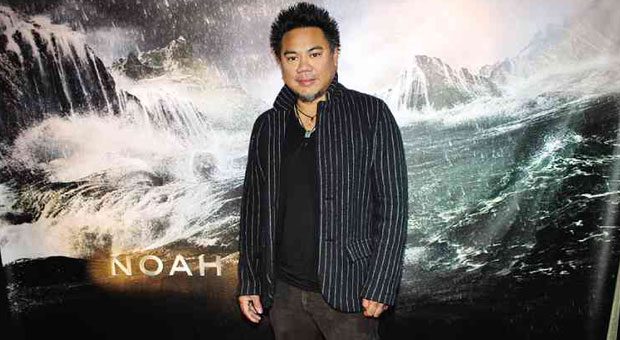 I already have “interview round-ups” for director Darren Aronofsky and co-writer Ari Handel, so hey, why not one for cinematographer Matthew Libatique, who actually shot the images without which a film like Noah couldn’t exist?
Libatique went to film school with Aronofsky and has shot all but one of his feature films (the exception being 2008’s The Wrestler). Libatique even shot a couple of Aronofsky’s early short films!
Libatique has also worked multiple times with filmmakers like Spike Lee (She Hate Me, Inside Man, Miracle at St. Anna), Joel Schumacher (Tigerland, Phone Booth, The Number 23) and Jon Favreau (Iron Man, Iron Man 2, Cowboys & Aliens).
The immediate impetus for this post is an interview with Libatique that appeared in Variety yesterday, but I’ve had a few other interviews banked for a while, too.
In the Variety interview, he talks about the “naturalism” that he and Aronofsky were looking for, and about the visual effects and other things, too. A sampling:
The setting and look of “Noah” suggests both a pre-civilized and post-apocalyptic world. What was your aesthetic approach in achieving this?
It was a focus on naturalism. The film ultimately goes in a place where you’re basically telling the story of a myth. If we went too severe atmospherically, photographically, I think we would have lost the audience. Darren (Aronofsky) and I both had the same goals, keeping it as naturalistic as possible.What is your theory on exterior lighting? Those Icelandic landscapes are so exotic that there’s already an otherworldly quality about them.
I don’t typically like to light my exteriors. I try to block accordingly to the situation and the time and the place and the natural position of the light. I mean, Iceland in the summer, I don’t know if you’ve been but Reykjavik is the northernmost capital of the world and the sun at 11 o’clock at night is just skirting through the horizon. So you have this beautiful low light. Of course it was challenging because (of) the weather.Was this your most FX-laden film?
“Iron Man” and “Cowboys & Aliens” were big effects-wise. This one was big as well. But you know, we didn’t do very much green screen. A lot of it was working with plates. And all the visual effects with ILM were rooted in the live action, versus the other way around, which would be a virtual world.What is your philosophy on creating invented worlds vs. real worlds?
The light has to be recognizable to me. Whether it’s a real world or a created one, I think it’s important that the light communicates an atmosphere that is familiar so that people don’t get disconnected to it. I have a problem with films in virtual worlds. I think they’ve done really well. “Avatar” was beautiful and “Life of Pi” was beautiful. But I think that if you go the route of, say, “300,” I get lost in that artificiality. It’s almost plastic. I’d rather it be wood.
The American Society of Cinematographers also spoke to Libatique:
A handheld camera seems like an unusual approach for an epic set in that era.
Libatique: Darren is very particular about the camera. He wants something very controlled that also moves fluidly and naturally. If the camera can move with the actor’s performance without a device like a crane or dolly, that’s what we do. . . .
What are some things that differentiate Noah from your other collaborations?
Libatique: Darren doesn’t usually work outside, so Iceland presented a strange situation for him because we had to worry about weather and light. We were fortunate in that there were a lot of opportunities for overcast light, which is very favorable for photographing faces. When we did have sunlight with more than one person in the scene, we tried to block to backlight the actors. As long as their faces were in a similar realm, I could match them using a polarizer to mitigate some of the sunshine when it popped out, or to create more reflectivity on a face when the sunlight disappeared. Another challenge was fighting the urge to make every image beautiful. The story begins in a land devoid of trees and water — a barren, otherworldly place. There was some moss, but depending on the light, it sometimes just looked like part of the ground, not necessarily a living thing. . . .
What were some of the ways in which you used Iceland’s natural terrain to create the story’s environment?
Libatique: We started out not too far from the volcano that erupted, in the southeast part of the country, and then we spent some time in the north. The only thing that kept us from shooting everywhere in Iceland was that we had a company of 300 people to move around. The Watchers’ land is a combination of lava fields of different ages. We traveled to the north to shoot plates on young, scorched land, and then we shot our night-exterior scenes with principal talent in the older lava fields of the south. We did our one night exterior in Iceland, the scene in which Noah and his family are captured by the Watchers and put in a pit. Our pit was about 40 feet deep on one rock face and 20 feet deep on the other. We had a couple of 18Ks on Condors for separation, but we lit the scene predominantly with daylight-balanced Lumapanels [28 4-foot T8 fluorescent globes]. They were the only lights I could see working because I didn’t want to use a lot of hard backlight; I just needed some soft definition for the actors.
Methuselah’s mountain and cave were also natural locations. In the film, the mountain is a symbol of life. It’s green and lush, and at its base are black gravel and decrepit lava. The cave was underground, and our production designer, Mark Friedberg, made it more accommodating for shooting by creating navigable walkways out of the rocks that were there. I knew we could work with natural light because there was a giant aperture in the roof of the cave. We put a 30-by-30 frame of Full Grid over it, and above that we had four Arrimax 18K Pars spaced out evenly to cover different angles. . . .
Did you shoot the ark interiors on location?
Libatique: Very little was shot inside the practical ark. One shot we did there shows Noah closing the ark door during the battle against Tubal Cain and telling Shem to protect the family. However, we shot the reverse of Shem at the Marcy Armory in Brooklyn, where we built a three-level ark-interior set, as well as part of the exterior ark door. Many shots of Noah at the door of the ark looking out were done against a bluescreen. After the deluge comes the part of the story we call ‘40 Days and 40 Nights,’ where the ark is completely sealed up. We wanted it to feel almost coffin-like, and from a lighting standpoint it was a challenge because of the interesting but difficult angles by which we had to bend the light. Also, there’s the conceit that all the light is motivated by a furnace shaft in the center of the ark and the main furnace, which is located on the mammal deck. . . .
Is there an overarching narrative in terms of color and quality of light?
Libatique: For me, the visual language of the film was built around the fact that I knew an entire reel of the movie, ‘40 Days and 40 Nights,’ would be in dark, warm light. ‘100 Days’ would be a reprieve from that, and then, finally, we’d be in bright sunlight when the ark finds land. But we didn’t get sun at the end of the shoot! We didn’t get any consistent weather at the beginning of the shoot; we didn’t get consistent weather in the forest; and we didn’t get cloudy weather for the battle. So, we reacted accordingly and did what we could on the 85-day schedule that was given to us.
Libatique discussed “biblical accuracy” and the movie’s themes with The Daily Beast:
What were the earliest conversations like as far as the look of the film goes? As the film progresses, you go from these beautiful desert vistas to a much darker, grimmer look.
Our earliest conversations were about how we were going to cover the scenes, and the movie’s palette. Zohar [sic] was a key element in understanding the color of what we were going to do light-wise. Everything’s rooted in the narrative.
Unfortunately, your source material here is only a few pages long, so the look really had to completely spring from the imagination.
This is the first time I’ve ever made a movie with no references. I didn’t have any. But we scouted Iceland and it’s just stunning. There are these beautiful vistas and the atmosphere’s so clear that you can’t tell the distance between mountains. Ultimately, this film is a road movie and it’s episodic, and it jumps off in Iceland which serves as the catalyst for the movie since it was born out of naturalism. The things that are up to discussion in terms of the Biblical accuracy—that seems like an oxymoron, “Biblical accuracy”—the naturalism was going to help the film be rooted in something that people could feel connected to.
Darren really wanted to capture the moss, and the geothermal quality of it. It feels like the beginning there—like a land untouched by man. That was the largest them of the film: environmentalism. In the marketing of the film they shy away from it. I don’t know why it’s a taboo thing to say “environmentalism” cause you’re going to scare off half the population because they’ve been told “environmentalism” is a bad thing? The idea that we have to stay away from the issue because we’re going to polarize half the audience speaks to how fucking dysfunctional we are.
What is the film’s environmentalist message?
I love the environmentalism allegory. It hasn’t been talked about much because of this fear. But one of the things I appreciate about the film is its statement and about how timely it is with climate change. People are wholeheartedly denying climate change because they’ve been told to deny it. So the fact that we’re still in a society where people are denying climate change is happening is insane. Science and religion have always been in conflict.
And the story of Noah really sees these two things—religion and science—in conflict.
I think that’s what we’re dealing with in our world, and that’s why the film’s important. If you think about the conflict between science and religion, it speaks to that. One of the great characters in the film is Tubal-cain. I’ve seen things written that he’s a shallow, thinly written villain. I disagree. Listen to the man’s words! Those are not Marvel lines, man. He bites the head off a lizard and Ham says, “What are you doing? That was precious! There’s only two of them!” And he says, “There’s only one of me. You have to seize it. The Creator’s created this for us—to take dominion over all the things that He created, He created man.” That idea is happening now. Nobody says it. John Boehner doesn’t say it. But that’s what he fucking feels. It’s insane. . . .
I’m curious about you and Darren’s DP/director relationship. Did you have any disagreements on Noah?
I can’t remember many, to be honest. We’ve come a long way. We used to fight incessantly. We’ve always had a creative-but-combative relationship with each other, even in school, but we just like working together. And Darren really is brilliant. I would never tell him that because he’s a good friend—and he’s so full of shit, too—but he is. I love the guy. The Fountain was one long fight, The Wrestler was divorce, and then we reconciled on Black Swan. But The Fountain was a tough movie for both of us. Everything happened. It got shut down in Australia, we made it for $35 million, which was less than half of what we had when we began. This was a three-time period film that we made for $35 million! It was the most high-pressure situation I’ve ever been in, and we ended up not getting along so well. I was going through a divorce; he’d just had his first kid; he was working with his partner at the time, Rachel Weisz. A lot of stuff was going on. But it wasn’t aesthetic stuff, we just argue about silly things. He had this big New Yorker article come out and I said to him, “Hey, did you really say in that that working with me was like being in a bad marriage?” And he said, “Yeah, I did.” And I said, “Well, fuck you, man!” [Laughs]
I must say, I’m not really sure what is meant by the idea that “religion” and “science” are “in conflict” in Noah. Is Noah himself supposed to be the scientist or the religious guy? And which one is Tubal-Cain? Methinks those categories don’t apply here — except perhaps to the extent that Noah not only believes in the existence of God but tries to follow his will, as well, which could make him “religious”. Anyway.
Because Libatique is a Filipino-American, he was also profiled by the Philippine Daily Inquirer (I have put the questions in bold type to clarify what is what here):
Is “Noah” the most difficult film you’ve shot?
It’s hard to say. “The Fountain” was, in its way, a very difficult film to make, not just in terms of my particular work but how hard it was for Darren to make because that [movie], in many ways, was an even closer story to him…
But, logistically, this film is up there. I don’t know if it’s the hardest film I ever had to make but it’s… up there. If this film were made by somebody else and with the same amount of money, maybe it wouldn’t be as difficult. Darren is demanding as a director, and he should be. He’s uncompromising; he likes to put everything, all the money, on the screen.
How much of a contrast was shooting this film and working with Darren on “Black Swan”?
It’s not that different, really. Working with Darren is the same whether we’re making a $5 million or $130 million movie. Maybe he’s become a little more fluid. He’s gotten older, more comfortable in his directorial style. . . .
Some scenes were simple yet so striking, that visual effects were barely needed. Russell and Jennifer’s conversing, silhouetted figures were some of the most beautiful images we’ve ever seen.
We didn’t know how beautiful it was going to be. This is not a lie—we shot it at 2 in the morning… I wish the whole thing was just in silhouette but it was so stunning. I don’t think we’ve been so blown away before. We were sitting there at 2 a.m. and the sun was actually coming up. It’s on its way up from the sunrise. It would stay beneath the horizon only for an hour and then come back up, so it was just incredible. We shot that whole scene as is.
Obviously, they put some stars into the background. But that’s the color of the sky at 2 a.m. in June in Iceland, right outside of Reykjavik. It was incredible.
The Creation story segment was also stunning.
When I read that sequence, I was excited… Ari (Handel) and Darren wrote a very beautiful piece. The funny thing is, when we shot Russell delivering that, on his close-up we could have just stayed there the entire time and he held that close-up for that entirety of the soliloquy. . . .
Were you on board this project from the beginning?
I think it was after either “The Fountain” or “Black Swan” that Darren mentioned it to me. My first thought was, how are we going to deal with the water?
But all the tidal wave movies came out. Clint Eastwood’s “Hereafter” had the big tsunami. As soon as that film came out, I knew that “Noah” could be made. That’s when I stopped worrying, except for whether or not somebody was going to give Darren the money to make the film.
Libatique’s interview with the Philippine Daily Inquirer concluded here.
Many of the points Libatique makes in the interviews above were also made in an interview he did with Bill Desowitz for Thompson on Hollywood.
December 12 update: Libatique did an awards-season interview with Variety:
On “Noah,” with longtime collaborator Darren Aronofsky, Matthew Libatique also worked with elaborate exterior sets built on a grand scale. Libatique, an Oscar nominee for “Black Swan,” says so much stylization was built into the production design that his photography best served the story and characters through restrained naturalism.
“There was so much going in the locations, and in the hair, makeup and wardrobe that I felt I didn’t need to go the extra mile by putting a patina on top of that,” Libatique says. “So I shot it straight, with the palette mainly controlled in the production design.
“Unlike our previous projects, Darren and I didn’t use many visual references,” he says. “Our references were more written and scholarly in nature, with an eye toward the screenplay. The scale was big, but the jumping-off point for the story was the internal family struggle.”
You can read more about the Oscar campaign for Noah here.
December 30 update: Libatique spoke to Deadline for an article about the pros and cons of working with the same director on multiple films:
The relationship between director and cinematographer sometimes can be too intense, acknowledges Matthew Libatique, director of photography on Darren Aronofsky’s Noah. Like Iñárritu and Hernandez, Libatique and Aronofsky have been collaborators since film school days. But one troubled collaboration, 2006’s The Fountain, caused Libatique to take a break from Aronofsky for The Wrestler (2008) before rejoining him for Black Swan in 2010*.*
The Fountain shut down production midway due to casting changes and subsequent cost overruns, but was later completed at about half of its original $70 million budget. “Even though, ultimately, when you look at the film our ideas were the same, but we were bickering anyway,” Libatique admits. “It was a lot of money for us—I’m sure it was the biggest film that we’d both done.”
Add that to relationship problems in their private lives and it seemed like time to take a step back, Libatique says. But after The Wrestler, when the D.P. and Aronofsky found themselves on a subway tossing around ideas for Black Swan, it seemed like the most natural thing in the world.
Libatique has collaborated on multiple films with other directors, including Spike Lee and Jon Favreau. “There’s a responsibility about being the cinematographer that is rewarding unto itself, but to actually be part of a person’s body of work, it gives me a sense of purpose,” he says.
As ever, if I find more interviews with Libatique, I will add them to this post.
Previous Post

April 24, 2014
Ridley Scott to direct aliens-in-ancient-Egypt show Pharaoh
Next Post
April 25, 2014 Ben-Hur gets Mark Burnett, Roma Downey & a release date
Browse Our Archives
Select a Category Anglican Planet Articles BC Christian News BC Report Bible Movies Bible Review Blog Books & Culture Campus Times CBC Radio Christianity Today ChristianWeek Essays Faith Today Festival Cinemas Guide Film Journals Georgia Straight Interviews MB Herald National Catholic Register Salvationist Today's Christian Two Chairs Ubyssey Uncategorized Vancouver Courier Vancouver Sun
Select a Month August 2025 April 2025 January 2025 December 2024 November 2024 May 2024 February 2024 December 2023 May 2023 March 2023 November 2022 July 2022 June 2022 May 2022 April 2022 February 2022 January 2022 December 2021 November 2021 October 2021 September 2021 August 2021 July 2021 June 2021 April 2021 March 2021 February 2021 January 2021 December 2020 November 2020 October 2020 August 2020 July 2020 June 2020 May 2020 March 2020 February 2020 January 2020 December 2019 November 2019 September 2019 July 2019 May 2019 April 2019 March 2019 February 2019 January 2019 December 2018 November 2018 October 2018 September 2018 July 2018 June 2018 May 2018 April 2018 March 2018 February 2018 January 2018 December 2017 November 2017 October 2017 September 2017 August 2017 July 2017 June 2017 May 2017 April 2017 March 2017 February 2017 January 2017 December 2016 November 2016 October 2016 September 2016 August 2016 July 2016 June 2016 May 2016 April 2016 March 2016 February 2016 January 2016 December 2015 November 2015 October 2015 September 2015 August 2015 July 2015 June 2015 May 2015 April 2015 March 2015 February 2015 January 2015 December 2014 November 2014 October 2014 September 2014 August 2014 July 2014 June 2014 May 2014 April 2014 March 2014 February 2014 January 2014 December 2013 November 2013 October 2013 September 2013 August 2013 July 2013 June 2013 May 2013 April 2013 March 2013 February 2013 January 2013 December 2012 November 2012 October 2012 September 2012 August 2012 July 2012 June 2012 April 2012 January 2012 January 2011 December 2010 November 2010 October 2010 September 2010 August 2010 July 2010 June 2010 May 2010 April 2010 March 2010 February 2010 January 2010 December 2009 November 2009 October 2009 September 2009 August 2009 July 2009 June 2009 May 2009 April 2009 March 2009 February 2009 January 2009 December 2008 November 2008 October 2008 September 2008 August 2008 July 2008 June 2008 May 2008 April 2008 March 2008 February 2008 January 2008 December 2007 November 2007 October 2007 September 2007 August 2007 July 2007 June 2007 May 2007 April 2007 March 2007 February 2007 January 2007 December 2006 November 2006 October 2006 September 2006 August 2006 July 2006 June 2006 May 2006 April 2006 March 2006 February 2006 January 2006 December 2005 November 2005 October 2005 September 2005 August 2005 July 2005 June 2005 May 2005 April 2005 March 2005 January 2005 December 2004 November 2004 October 2004 September 2004 August 2004 July 2004 June 2004 May 2004 April 2004 March 2004 February 2004 January 2004 November 2003 October 2003 August 2003 July 2003 June 2003 May 2003 January 2003 December 2002 November 2002 August 2002 July 2002 June 2002 May 2002 March 2002 January 2002 December 2001 November 2001 September 2001 August 2001 July 2001 June 2001 April 2001 March 2001 February 2001 December 2000 November 2000 October 2000 September 2000 August 2000 July 2000 June 2000 May 2000 April 2000 March 2000 January 2000 October 1999 August 1999 May 1999 April 1999 February 1999 January 1999 December 1998 November 1998 October 1998 August 1998 July 1998 June 1998 April 1998 March 1998 January 1998 November 1997 September 1997 July 1997 June 1997 April 1997 March 1997 February 1997 January 1997 December 1996 October 1996 September 1996 June 1996 March 1996 February 1996 January 1996 April 1995 November 1994 September 1994 September 1991
Follow Us!
TAKE THE
Religious Wisdom Quiz
What does "Zion" (as in Mount Zion) mean?
Select your answer to see how you score.
Light Fortress River Spirit
Related posts from FilmChat

Joseph of Egypt – the Chosen spin-off announces...

Exclusive: A clip from Angel Studios' The King...

Exclusive: Watch a clip from Angel Studios' Brave...

Exclusive: Watch a clip from Angel Studios' Homestead
TRENDING AT PATHEOS Religious Music & Entertainment

"Les Diabolique" and Transgression
Alongside something like Arrival, Vertigo, or Charade, Les Diaboliques is a...

"The Plague Dogs" and Mortality
So, flashback to the late 70s, early 80s. Walt Disney Studios is...

With the recent and highly successful release of Christopher Nolan’s epic film,...

"L'avventura" and Human Weakness
Today's piece is going to be a little different for a few...

I first want to apologize for not posting or writing anything. I'm...

I've engaged in the multi-year project of reading through the Church Fathers,...
view all Religious Music & Entertainment blogs
Ad-Free & Subscriber Log-In Subscription Support
- About Us
- 2026 Calendar
- Videos
- Podcasts
- Library of World Religions
- Faith In Media Tracker
- Advertise With Us
- Write for Us
- Privacy Policy
- Terms of Service
- Do Not Sell My Data
- Contact Us
- Radiant Digital
- Manage Newsletter Subscriptions
- Unsubscribe From Notifications
- Sitemap
Copyright 2008-2026, Patheos. All rights reserved.
Subscription Support Ad-Free & Subscriber Log-In
Follow Patheos