
BuddhistCatholicContemplativeEvangelicalGeneral ChristianHinduJewishLatter-day SaintMuslimNew VisionsProgressive Christian
Beliefs
- Buddhist
- Catholic
- Contemplative
- Evangelical
- General Christian
- Hindu
- Jewish
- Latter-day Saint
- More Voices
- Muslim
- New Visions
- Pagan
- Progressive Christian
Topics
- Religion News
- Food and Religion
- Sports and Religion
- Religious Art
- Religious Music and Entertainment
- Religious Events
- History and Religion
- Style and Religion
- Politics and Religion
- Women in Religion
- Recreation Outdoors and Religion
- Business Finance and Religion
- Careers Workplace and Religion
- Education and Religion
- Family Parenting and Religion
- Health Fitness and Religion
- Home and Religion
- Relationships and Religion
- Technology and Religion
- Travel and Religion
Columnists
- Buddhist Columnists
- Business Finance and Religion Columnists
- Careers Workplace and Religion Columnists
- Catholic Columnists
- Contemplative Columnists
- Education and Religion Columnists
- Evangelists Columnists
- Family Parenting and Religion Columnists
- General Christian Columnists
- Health Fitness and Religion Columnists
- Hindu Columnists
- History and Religion Columnists
- Home and Religion Columnists
- Jewish Columnists
- More Voices Columnists
- Latter Day Columnists
- Muslim Columnists
- New Visions Columnists
- Nonreligious Columnists
- Pagan Columnists
- Politics and Religion Columnists
- Progressive Columnists
- Recreation Outdoors and Religion Columnists
- Relationships and Religion Columnists
- Religion News Columnists
- Religious Art Columnists
- Religious Events Columnists
- Religious Music and Entertainment Columnists
- Sports and Religion Columnists
- Style and Religion Columnists
- Technology and Religion Columnists
- Travel and Religion Columnists
- Women in Religion Columnists
Resource Library
- 2026 Calendar
- Library of World Religions
- The 100 Most Holy Places on Earth
- Patheos Answers
- Podcasts
- Videos
- Faith Leaders Database
- Anglican Episcopalian
- Bahai
- Baptist
- Buddhism
- Christianity
- Confucianism
- Eastern Orthodoxy
- Hinduism
- Holiness and Pentecostal
- ISKCON
- Islam
- Judaism
- Lutheran
- Methodist
- The Church of Jesus Christ of Latter-day Saints
- New Age
- Paganism
- Presbytarian and Reformed
- Protestantism
- Religion Behind the Scenes
- Roman Catholic
- Scientology
- Shia Islam
- Sikhism
- Sufism
- Sunni Islam
- Taoism
- Zen
- See all religions
Research Tools
 Ad-Free & Subscriber Log-In Subscription Support
Ad-Free & Subscriber Log-In Subscription Support
Follow Patheos 

- Trending:
- Forgiveness
- |
- Marriage
- |
- Consciousness
- |
- Death Penalty
- |
- Election
- |
- Halloween

-
Articles
- Home
- Religious Music & Entertainment
- Noah interview round-up: co-writer Ari Handel
Noah interview round-up: co-writer Ari Handel
Last updated on: September 7, 2014 at 8:03 am by Peter T. Chattaway
Noah interview round-up: co-writer Ari Handel 2014-09-07T08:03:19-07:00 Peter T. Chattaway
Patheos Explore the world's faith through different perspectives on religion and spirituality! Patheos has the views of the prevalent religions and spiritualities of the world.
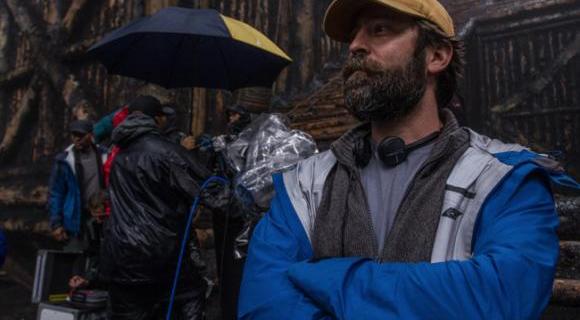 Two weeks ago, I posted a collection of interviews with Noah director Darren Aronofsky, and I have updated that post with new interview clips ever since. But in the meantime — especially as Aronofsky has gone overseas to promote the film — there have also been a number of interviews with his co-writer Ari Handel. So I figured I should start a post to collect those, too.
I interviewed Aronofsky and Handel together myself back in February, and I linked to a more recent interview with Handel in my post on the infamous snakeskin.
Handel was also featured prominently in a “faith leaders” video that I posted a couple weeks ago, and I have previously linked to interviews that he has done with Hollywood Jesus and Hugh Hewitt. See also the interviews that Handel and Aronofsky did together to promote the Noah graphic novel here, here and here.
And now for the new stuff. First, The Hollywood Reporter spoke to him at (or maybe just before) the film’s New York premiere two weeks ago:
“We never wanted to contradict anything in the Bible,” Handel told The Hollywood Reporter ahead of the film’s U.S. premiere in New York on Wednesday night. “So we started there, and basically what we wanted to look at were: What are the themes and questions that the story’s bringing forward that we should be grappling with? So we read Genesis very carefully to look at what we thought it was about, and then we tried to dramatize that and make it human.” . . .
Handel added that although Noah has a much bigger budget than Aronofsky’s previous films, at more than $125 million, the core elements are the same as those on his smaller pictures.
“The essential things are the same, which is you’re struggling to make everything as coherent as you can and make the story go together as well as you can,” Handel said. “There’s obviously more tools, and there’s therefore more complexity and more things that could go wrong, but fundamentally the concerns are the same.”
Handel also spoke to Catholic News Service shortly before the film came out:
“We worried about making the story work, looking at the Noah story in Genesis, grappling with it, grappling with what the themes were, and trying to make that dramatic, and trying to make that there for people to feel the things that are present in that text,” Handel said.
“We didn’t worry about the marketing and the selling, and who it’s for and all. We worried about making this story the right story and making it a powerful and effective piece of cinema.”
The Jewish Week spoke to Handel shortly after the film came out:
In what way did your Judaism impact your filmmaking?
I’d say here there was my fascination with the story of Noah, midrash and tradition and how you can take on the text and look at its closely. There are a lot of questions that are left unanswered and can be interpreted in different ways. As a storyteller, you look at it and wonder about how Noah lived when it doesn’t say it in the text.
There is a scene where we hear the cries of and see the people who are about to drown. Did you have any concern that audience would think you were portraying God as evil?
We’re telling the story, maybe in an evocative way, but the fact is that all the other people were wiped out. This is a film that doesn’t shy away from questions. You have to think about what kind of world are we living in and what sort of film are we making. We weren’t making a film just about Noah with his family, and they’re happy and smiley and everyone is under one roof. There are a lot of things it doesn’t say in the text, and you have to imagine how it might have been. Our goal was to create a film that would bring the Noah story to the 21st century that examined the truths that there was wickedness and destruction.
In the film, Noah sees another version of himself. Are you trying to say that everyone should guard against being taken over by their darker impulses?
One of the things we feel the story is about as a myth and as a parable is that there is goodness and wickedness in all man, and we’re trying to grapple with that. There are good people but that doesn’t mean they are totally good. After the flood, you flip the page and you have the story of the Tower of Babel and there is wickedness again.
Jacob Sahms spoke to Handel for another Hollywood Jesus interview:
Why do you think that the story of Noah matters to so many people, from such different backgrounds and perspectives?
AH: The flood narratives are everywhere. There’s something iconic and mythical about the whole world being nearly destroyed and then we’re given a second chance. Maybe we deserve [a second chance] but we’ve got to work for it.
If Noah was alive today, what might he tell us about wickedness versus righteousness?
AH:That’s a good question. There’s a direct parallel between making sure we have dominion which we know we have over the earth and also being good stewards. We’re supposed to tend to everything and keep the garden. We’re living in the second chance that the world received through Noah. . . .
Watching the film and discussing it with my wife, we talked about how Noah gets the vision of what he believes the Creator wants him to do but he can’t fulfill it without his wife, Naameh. How did you decide on that relationship as key, especially when it came to working out justice and mercy?
AH: Look, we’re trying to find the relationship that would allow us to figure out who Noah is. We know they live in this time where Enoch walked with God and was taken up; it’s living memory. Noah is righteous. Naameh believes God has spoken to Noah and has complete faith in him. She’s the humanistic family foil. It’s not about a sense of right and wrong. It’s not justice or mercy.
So what is righteousness in the context of the story?
AH: Righteousness is the correct balance of justice and mercy. We don’t read that story and normally think about those who don’t survive. For all we know Na’el [Ham’s momentary love interest] might’ve been righteous. She might have been wicked. There’s wickedness in all of us. But Ham made the connection, so we care.
It grieved God’s heart—we know, because it says it right there in the Scripture—he didn’t lightly take the lives of all of those people. There was a baby born that day that didn’t make it onto the ark. It’s not black and white. God was prepared to let people who moved his heart to not be saved because that’s what needed to happen.
For what it’s worth, Handel’s “there was a baby born that day” comment reminds me of how Jesus characterized life before the Flood: “People were eating, drinking, marrying and being given in marriage up to the day Noah entered the ark.”
Handel also spoke to Emma Koonse at The Christian Post last week:
The native New Yorker also explained why he thought “Noah” did so well in theaters during its opening weekend.
“Well, ultimately, at heart, Noah is a deeply powerful story that resonated with people,” Handel told CP. “A lot of the baggage people had with the story, deep down, made the film interesting and moving. Also, it’s a film unlike any other out there and people responded to it. ‘Noah’ makes people think and ask questions, and you aren’t sure exactly that to make of it, which isn’t that common. People like that challenge.” . . .
Given his impassioned work on “Noah,” Handel revealed his surprise over the widespread controversy sparked by the film ahead of its release.
“I was initially surprised because if you’ve seen the film, you’d see we are not disrespectful, not mocking [Scripture],” the writer told CP. “If anything, we took it very, very seriously. Where we went with the story may not be where others go, that’s fine. But to say that we grafted artificial ideas or a political agenda- we were just wrestling with the text.”
Finally (for now!), Patheos blogger David R. Henson spoke to Handel last week:
One of the things that leapt out at me as I was watching was just how fantastic and imaginative and bold the world you created for Noah was but also how faithful it was not just to the biblical text but to midrashic tradition and all the other things that have been written about it. How hard was it for you as a writer to balance those two demands of the actual biblical text but also the need to be imaginative and creative to bring this thing to life?
Ari Handel: I think we thought it was going to be hard, but then we discovered that it was easier than we thought because it turns out as you look at the midrashic texts and even when you do a close look at Genesis, the antediluvian world in Genesis is magical and fantastic. It’s funny because we don’t have that idea in our heads. We have the idea in our head that it’s set in Mesopotamia or ancient Judea but it’s not. It’s a really strange world. There are no rainbows. The sky and light are different in some way. People are living hundreds and thousands of years. There are sea monsters and giant monsters of the deep that are no more. Eden is located at a position that you could walk to across the world becuase there’s an angel with a flaming sword that won’t let you into it. These things sound more like Middle Earth than the hills of Judea. . . .
Given how faithful you guys were to the text and the tradition have you been surprised by the kind of pushback you got, particularly for evangelical Christians.
AH: I was not surprised that people would say, “Hey, wait a second.” Because sometimes unless you think about it carefully, it may seem we are contradicting something. I would hold that we’re not. But that may not be obvious. What surprised me, I think, sometimes was the vitriol of that. That people felt like we were being disrespectful, or antagonistic, or trying to mock, which is really not where we were coming from at all. Some of that has gone away as people have actually seen the film. For instance, people say, “God’s not even in the movie.” If you’ve seen the movie, to say God’s not in the movie, then we’re not even talking about the same thing. . . .
I love that you guys offer a really unflinching view of human wickedness and of our complicity in it. But this is something I can wrestle with in the text: Does God become complicit in that kind of cycle of violence by sending the Flood and causing that much destruction, and how do you deal with that?
AH: To be totally clear we don’t feel like we have all the answers. We want to find a way to raise these question in a visceral way for people. So if you’re asking my opinion about that, it’s complicated. We decided to view this a little as a test. Like God said, “I don’t know what to do about this, let’s see if you find mercy in your heart.”
I’m so glad you said that. It leads right into my next question because you guys have talked about that movement from justice to mercy, from punishment to mercy. What I found really striking is there are threads of mercy throughout your film. The Watchers take mercy on humanity and are punished for it. When Ham has mercy on Nael and he is kind of punished for that. And then Noah at the very end chooses mercy with the twins. And the question that I appreciate you all leaving open-ended was whether that was defiance of God. I appreciate you not answering every question but leaving it out there because I think it is more faithful to the text that way.
AH: In the Abraham story, when God destroys Sodom, Abraham says, “Please God be merciful.” And God learns something from Abraham. So, — I’m tiptoeing — because I know that is some Christian communities it may be a heretical thing to say that God can learn something from man, but when I look at the Abraham story, I see that. So I see no reason why God couldn’t put this decision in Noah’s hands, and say, “Here is a really good man. Here is a really just man. Here’s man who sees the wickedness of mankind as clearly as I (God) see it. I’m going to let him decide. And if he choses mercy, I’ll chose mercy.” I’m not saying that’s the only interpretation, but that’s an interpretation that we can play with.
And you see that a lot in the Hebrew scriptures with God changing God’s mind, and if you look at the original language, it actually seems to mean something like repentance. There is that present in the Scriptures. I appreciate you guys tackling that straight-on and not having it in a tidy bow.
As a writer myself, some of the most beautiful lines in the film were when your characters talked about the silence or absence of God. Were those intentional things you guys were wrestling with in the text and the silence of God and what’s the significance of that for the struggle you create in the film.
AH: It’s a funny thing because in the film we wanted to God to feel incredibly present — all the time, everywhere. And yet we wanted to have some amount of distance between God and people, because of where we are now. It’s obscure sometimes now. And that seemed like an interesting way to go, to capture the ambiguity of the relationship and the challenge of that relationship. At first, you’ve got God and Adam together and they walk in the garden. They were very close. In some ways you can see Genesis as a slow retreat of God from the world, as a physical presence. So there’s a little bit of that there too. By the time you get Moses, you can’t walk with God. You can’t even look up the face of God. So God is behind a burning bush or within a column of smoke. So this notion of a retreat. As this antedilluvian world changed with the Flood into our world I think we also wanted to feel some kind of distant in the way that our world is.
And that’s it for now. If I come across any more interviews, I’ll add them to this post.
April 18 update: Three weeks ago, Sojourners published an interview that Cathleen Falsani did with Handel during the junket in Los Angeles. A sampling:
CF: I know what Darren says about his interest in the Noah story and where it came from and how it started. I think it probably started even earlier than he’s aware. How did you come to it?
AH: I’m Jewish. Raised mildly observant. What that meant was I went to synagogue every Saturday for probably 10 years. …
I read all these stories. I read the Jonah story a million times and the Noah story. So I knew all these stories. They were in my mind. I didn’t read them for meaning. I read them for stories. I don’t even know if I was old enough to get some of these other things. But when Darren said, ‘What do you think about trying to tell the Noah story?’ I was immediately excited about it. You can pick it up and look at it and you notice two things: First you realize wow — this is everything that people want to make movies about. Good versus evil and the end of the world. All of that stuff is there. It’s got all that great stuff. But then it’s so much more of a darker, poignant, confusing story that we already know. We have the opportunity to dive really deep in a certain way into the story but also to uncover some things that people put aside in their daily life or their daily understanding of the story.
So much of what we get is the sweet, happy, animal-saving story, which it is. I don’t think it’s accidental that [the Noah story] wound up in the nursery room. Because we really didn’t want to think about some of the other things. ‘Let’s put it over there where it’ll be safe.’ It’s a really troubling, dark story.
Bill Maher has this whole thing where he says God is a genocidal so and so. And there’s not a lot to defend against that. I mean, everyone but eight people die. There’s a lot of destruction and death. I think you have to face that and then ask, ‘OK, what is this story telling us? What is this about? What does it mean?’
CF: The Watchers — the Nephilim — that’s also a part of the account that we often skip over. What on earth was that about? Angels had sex with human women and these were the progeny? What?
AH: It’s a crazy line, right? There were fallen angels and they saw that human women were beautiful and they had children with them.
CF: Horny angels?
AH: Right. And I suppose there’s some version of the story where we could have riffed off of that. But we’re PG-13. So we looked at that in a far more metaphorical way. Angels that loved mankind. What does that mean?
The Book of Enoch and The Book of Jubilees that talk about these guys; there’s a tradition that gets tied to the fallen angels and Satan, angels with hubris fell and they had anger with mankind. We thought it was far more interesting to think about angels that loved mankind. And we thought, let’s not think about that physically or sexually. Let’s think about that emotionally. What if you’re an angel and you see mankind born and you love mankind? And then you see the original sin and man is kicked out of the garden, expelled from the garden and they have to toil the soil. And all of a sudden we go from a lovely place to a really hard place. And you love them and God’s punished them. What if you felt pity for them and came to earth to help? So that’s the place where we started from. That’s the kind of love we talked about.
There’s a big theme in the film about mercy and justice and the balance. That allowed us to have a character, which is the Nephilim, who maybe had an excess of mercy. Where God was judging, the angels were being merciful. So the angels move from a place of mercy to a place of justice, the same way that Noah and God in the story move from a place a justice toward a place of mercy.
More interviews later, if I find any.
April 15 update: Handel addressed the ethnicity of the movie’s characters in another interview, and I have written an entire post about that here.
August 7 update: Now that the film is out on Blu-Ray, we’re starting to see interviews with the filmmakers again — including this one at CraveOnline, in which Handel discusses the berries and rock monsters, among other things:
Tell me about something really specific, like the berries Methuselah is obsessed with. Where did that come from?
That was a piece of writing, ultimately, of character building. Why berries particularly?
Sure.
Because they’re a simple pleasure, and because they are in some ways… you know, there’s a theme here about the value of the natural world, and the purity of the natural world, and the beauty of all of the things that have been created. In some ways, what’s more beautiful and perfectly delicious than a berry? And kind of fragile at the same time. But no, the berries are not mentioned specifically in Genesis.
If I find any more interviews, I’ll add them to this post.
Previous Post

April 9, 2014
Quick updates on The Leftovers and the Left Behind reboot
Next Post
April 9, 2014 How I helped Jon Stewart get one of his Noah facts wrong
Browse Our Archives
Select a Category Anglican Planet Articles BC Christian News BC Report Bible Movies Bible Review Blog Books & Culture Campus Times CBC Radio Christianity Today ChristianWeek Essays Faith Today Festival Cinemas Guide Film Journals Georgia Straight Interviews MB Herald National Catholic Register Salvationist Today's Christian Two Chairs Ubyssey Uncategorized Vancouver Courier Vancouver Sun
Select a Month August 2025 April 2025 January 2025 December 2024 November 2024 May 2024 February 2024 December 2023 May 2023 March 2023 November 2022 July 2022 June 2022 May 2022 April 2022 February 2022 January 2022 December 2021 November 2021 October 2021 September 2021 August 2021 July 2021 June 2021 April 2021 March 2021 February 2021 January 2021 December 2020 November 2020 October 2020 August 2020 July 2020 June 2020 May 2020 March 2020 February 2020 January 2020 December 2019 November 2019 September 2019 July 2019 May 2019 April 2019 March 2019 February 2019 January 2019 December 2018 November 2018 October 2018 September 2018 July 2018 June 2018 May 2018 April 2018 March 2018 February 2018 January 2018 December 2017 November 2017 October 2017 September 2017 August 2017 July 2017 June 2017 May 2017 April 2017 March 2017 February 2017 January 2017 December 2016 November 2016 October 2016 September 2016 August 2016 July 2016 June 2016 May 2016 April 2016 March 2016 February 2016 January 2016 December 2015 November 2015 October 2015 September 2015 August 2015 July 2015 June 2015 May 2015 April 2015 March 2015 February 2015 January 2015 December 2014 November 2014 October 2014 September 2014 August 2014 July 2014 June 2014 May 2014 April 2014 March 2014 February 2014 January 2014 December 2013 November 2013 October 2013 September 2013 August 2013 July 2013 June 2013 May 2013 April 2013 March 2013 February 2013 January 2013 December 2012 November 2012 October 2012 September 2012 August 2012 July 2012 June 2012 April 2012 January 2012 January 2011 December 2010 November 2010 October 2010 September 2010 August 2010 July 2010 June 2010 May 2010 April 2010 March 2010 February 2010 January 2010 December 2009 November 2009 October 2009 September 2009 August 2009 July 2009 June 2009 May 2009 April 2009 March 2009 February 2009 January 2009 December 2008 November 2008 October 2008 September 2008 August 2008 July 2008 June 2008 May 2008 April 2008 March 2008 February 2008 January 2008 December 2007 November 2007 October 2007 September 2007 August 2007 July 2007 June 2007 May 2007 April 2007 March 2007 February 2007 January 2007 December 2006 November 2006 October 2006 September 2006 August 2006 July 2006 June 2006 May 2006 April 2006 March 2006 February 2006 January 2006 December 2005 November 2005 October 2005 September 2005 August 2005 July 2005 June 2005 May 2005 April 2005 March 2005 January 2005 December 2004 November 2004 October 2004 September 2004 August 2004 July 2004 June 2004 May 2004 April 2004 March 2004 February 2004 January 2004 November 2003 October 2003 August 2003 July 2003 June 2003 May 2003 January 2003 December 2002 November 2002 August 2002 July 2002 June 2002 May 2002 March 2002 January 2002 December 2001 November 2001 September 2001 August 2001 July 2001 June 2001 April 2001 March 2001 February 2001 December 2000 November 2000 October 2000 September 2000 August 2000 July 2000 June 2000 May 2000 April 2000 March 2000 January 2000 October 1999 August 1999 May 1999 April 1999 February 1999 January 1999 December 1998 November 1998 October 1998 August 1998 July 1998 June 1998 April 1998 March 1998 January 1998 November 1997 September 1997 July 1997 June 1997 April 1997 March 1997 February 1997 January 1997 December 1996 October 1996 September 1996 June 1996 March 1996 February 1996 January 1996 April 1995 November 1994 September 1994 September 1991
Follow Us!
TAKE THE
Religious Wisdom Quiz
What New Testament letter addresses a runaway slave returning to his master?
Select your answer to see how you score.
Titus Philemon Colossians 2 John
Related posts from FilmChat

Joseph of Egypt – the Chosen spin-off announces...

Exclusive: A clip from Angel Studios' The King...

Exclusive: Watch a clip from Angel Studios' Brave...

Exclusive: Watch a clip from Angel Studios' Homestead
TRENDING AT PATHEOS Religious Music & Entertainment

"Les Diabolique" and Transgression
Alongside something like Arrival, Vertigo, or Charade, Les Diaboliques is a...

"The Plague Dogs" and Mortality
So, flashback to the late 70s, early 80s. Walt Disney Studios is...

With the recent and highly successful release of Christopher Nolan’s epic film,...

"L'avventura" and Human Weakness
Today's piece is going to be a little different for a few...

I first want to apologize for not posting or writing anything. I'm...

I've engaged in the multi-year project of reading through the Church Fathers,...
view all Religious Music & Entertainment blogs
Ad-Free & Subscriber Log-In Subscription Support
- About Us
- 2026 Calendar
- Videos
- Podcasts
- Library of World Religions
- Faith In Media Tracker
- Advertise With Us
- Write for Us
- Privacy Policy
- Terms of Service
- Do Not Sell My Data
- Contact Us
- Radiant Digital
- Manage Newsletter Subscriptions
- Unsubscribe From Notifications
- Sitemap
Copyright 2008-2026, Patheos. All rights reserved.
Subscription Support Ad-Free & Subscriber Log-In
Follow Patheos